
TL;DR:
- APOS therapy is a biomechanical rehabilitation method that uses a personalized foot-worn device to retrain gait and reduce joint loading. Patients wear the device during daily activities, and professional assessment ensures correct configuration for effective relief and neuromuscular retraining.
APOS therapy is a biomechanical rehabilitation method that uses a personalised foot-worn device to retrain gait, reduce joint loading, and relieve musculoskeletal pain during normal daily activities. Unlike conventional physiotherapy programmes, this step by step APOS therapy rehabilitation guide requires no dedicated exercise sessions or clinic visits for the core treatment. You wear the device while going about your day, and the rehabilitation happens as you move. That distinction makes APOS therapy one of the most practical options for people managing knee osteoarthritis, joint pain, or post-injury mobility loss.
What equipment and assessments do you need before starting APOS therapy?
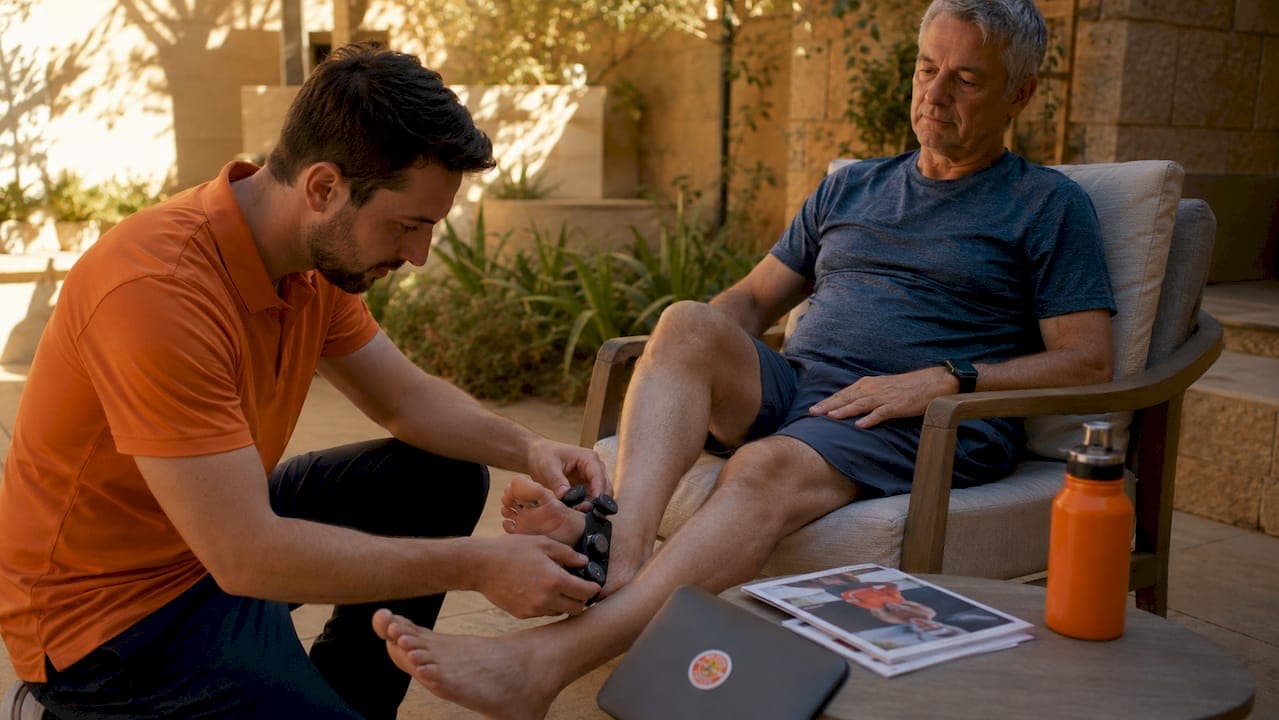
The APOS therapy device is a foot-worn unit fitted with two adjustable convex pods on the sole. These pods redistribute joint forces by shifting your centre of pressure, which unloads the painful compartments of the knee or hip. The result is immediate mechanical relief combined with longer-term neuromuscular retraining.
Before you receive the device, a clinician conducts a comprehensive biomechanical assessment. This includes gait analysis using software that measures velocity, step length, and single limb support time. The data from that assessment directly determines where the convex pods are positioned on your device. No two configurations are identical, because no two patients walk identically.
What the initial assessment covers:
- Gait analysis measuring walking speed, step symmetry, and single limb support
- Postural evaluation to identify mechanical dysfunction in the lower limb chain
- Pain mapping to locate the specific joint compartments under abnormal load
- Health screening to rule out contraindications such as severe balance disorders
- A professional consultation to set your starting pod configuration
Pro Tip: Wear your usual everyday footwear to the assessment appointment. Clinicians need to see your natural gait pattern, not a modified one caused by unfamiliar shoes.
The table below summarises the key prerequisites before therapy begins.
| Prerequisite | Purpose |
|---|---|
| Biomechanical gait assessment | Determines pod placement to address your specific mechanical dysfunction |
| Pain and mobility screening | Confirms APOS therapy is appropriate and safe for your condition |
| Custom device fitting | Ensures the convex pods are calibrated to your individual gait profile |
| Baseline functional scoring | Provides a reference point to measure progress throughout rehabilitation |
The initial gait assessment is the single most important step in the entire process. A poorly configured device will not deliver the intended mechanical correction and may cause unnecessary discomfort.
Step by step process: how to start and progress APOS therapy at home
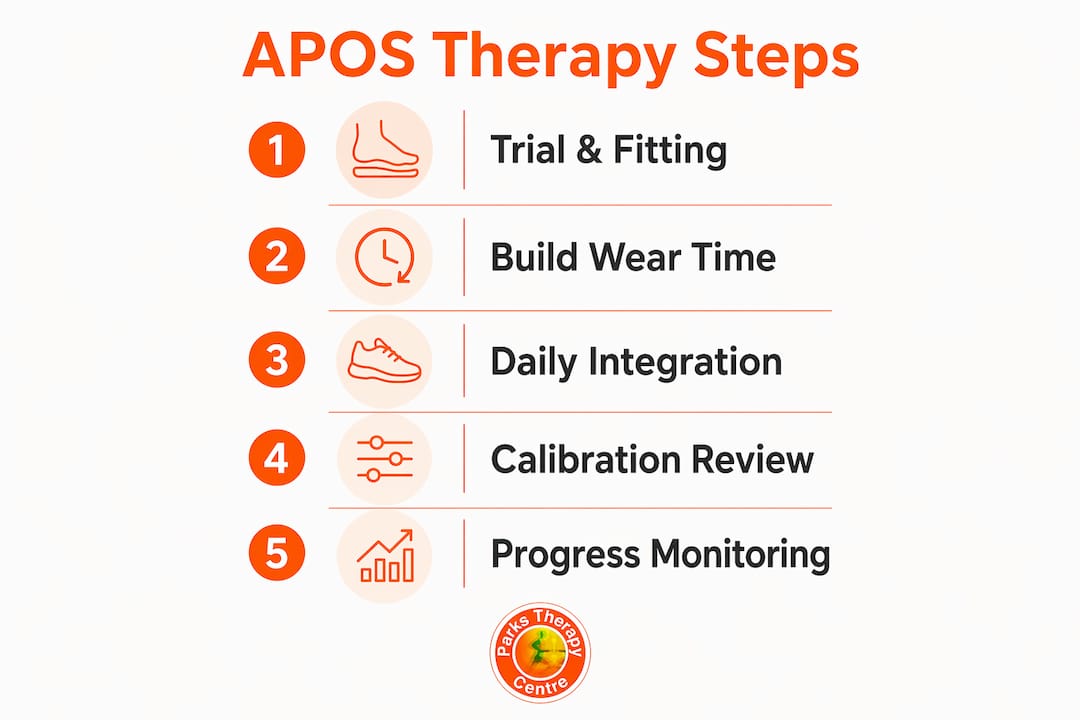
The APOS treatment plan follows a structured progression. Rushing this process is the most common mistake patients make. The protocol is designed to allow your neuromuscular system to adapt gradually to the controlled instability the device creates.
Step 1: Trial and fitting (Week 1)
Your clinician fits the device and sets the pods at their lowest instability level. You wear the device for 10–15 minutes on the first day, walking at a comfortable pace on a flat surface indoors. The goal is familiarisation, not endurance. Note any areas of discomfort and report them at your follow-up.

Step 2: Building daily wear time (Weeks 2–4)
Increase wear time by approximately five minutes every two to three days, provided you experience no significant discomfort. The target wear time is approximately one hour daily during weight-bearing activities. This progression mirrors how athletes build training load: gradual enough to allow adaptation, consistent enough to drive change.
Step 3: Integration into daily activities (Weeks 3 onwards)
Once you reach 30 minutes of comfortable wear, begin integrating the device into routine tasks. Washing up, light housework, and short walks to the shops all count. APOS therapy requires no special exercises because the rehabilitation occurs through normal movement patterns. This is the feature that sets it apart from most physiotherapy home exercise programmes.
Step 4: Regular calibration and feedback sessions
Every few weeks, return to your clinician or attend a telehealth session for a device review. The pod positions are adjusted as your gait improves and your pain levels change. This ongoing tuning is not optional. Without it, the device configuration quickly becomes mismatched to your improving biomechanics.
Step 5: Monitoring your own progress
Keep a simple daily log noting wear time, pain levels on a scale of 0–10, and any activities completed while wearing the device. This record helps clinicians make precise adjustments and helps you recognise genuine improvement over time.
Pro Tip: Set a daily phone reminder for your wear sessions. Consistency matters far more than duration in the early weeks. Ten minutes every day outperforms sixty minutes twice a week.
How does APOS therapy fit into a multidisciplinary rehabilitation plan?
APOS therapy works best when it sits within a broader multidisciplinary rehabilitation approach rather than operating in isolation. The device addresses biomechanical dysfunction directly, but sustainable recovery also requires attention to muscle strength, body weight, and patient education.
"The device is dynamic, distinct from simple orthotics, and most effective when combined with multidisciplinary care including weight management and patient education." — Foot Health Guide
Combining APOS therapy with weight management and health education significantly strengthens the long-term sustainability of rehabilitation outcomes. Every kilogram of body weight reduction decreases the compressive load on the knee joint during walking. That mechanical benefit compounds the relief the device already provides.
The controlled instability created by the convex pods also delivers neuromuscular re-education. The pods engage stabilising muscles through dynamic challenge rather than passive support, which is the fundamental difference between APOS therapy and a standard orthotic insole. Your stabilising muscles are forced to activate with every step, gradually rebuilding the neuromuscular control that joint pain and injury erode.
Complementary therapies that strengthen outcomes:
- Physiotherapy targeting hip abductor and quadriceps strength to support knee stability
- Health education covering joint protection strategies and activity modification
- Weight management programmes to reduce mechanical load on affected joints
- Home exercise routines that build the muscular support the device relies on
- Acupuncture or manual therapy for pain management during the early adaptation phase
Professional monitoring throughout this process is non-negotiable. Telehealth consultations and regular adjustments improve both outcomes and patient safety. A clinician reviewing your gait data remotely can identify compensatory movement patterns before they cause secondary problems.
What are the common challenges during APOS therapy rehabilitation?
The most frequently reported challenge is adapting to the sensation of controlled instability. The convex pods make the ground feel slightly unstable beneath your feet. This is intentional and therapeutic, but it can feel disconcerting in the first week. Most patients describe the sensation as unfamiliar rather than painful, and it typically resolves within the first two weeks of consistent use.
Premature prolonged wear is the second most common problem. Patients who feel early improvement often increase wear time too quickly, which leads to muscle fatigue and temporary discomfort. The gradual progression protocol exists precisely to prevent this. Treat it as a firm boundary, not a suggestion.
Common challenges and how to address them:
- Instability sensation: Wear the device on a flat, familiar surface indoors first. Avoid stairs or uneven ground until you are fully comfortable.
- Foot or calf fatigue: This signals that stabilising muscles are working, but it also means you have reached your limit for that session. Stop and rest.
- Increased joint pain: A temporary mild increase in awareness of the joint is normal. Significant pain increase means the pod configuration needs professional review.
- Motivational dip: Progress in neuromuscular rehabilitation is rarely linear. A plateau in weeks three to five is common and does not indicate failure.
- Footwear conflicts: The device fits inside specific shoe types. Confirm compatible footwear with your clinician at the fitting appointment.
Pro Tip: If you experience discomfort that persists beyond 24 hours after a wear session, reduce your wear time by half and contact your clinician. Do not push through persistent pain.
Knowing when to seek professional input is part of the rehabilitation process guide, not a sign that therapy has failed. Clinicians expect to make adjustments, particularly in the first six weeks. A detailed pain management approach alongside device use helps you distinguish normal adaptation from a genuine problem requiring review.
Key takeaways
APOS therapy rehabilitation succeeds when patients follow a structured progression, combine device use with complementary therapies, and maintain consistent professional monitoring throughout recovery.
| Point | Details |
|---|---|
| Start with a biomechanical assessment | Gait analysis determines pod placement and ensures the device matches your specific dysfunction. |
| Follow the gradual wear protocol | Begin at 10–15 minutes daily and increase slowly to avoid overuse and discomfort. |
| Integrate therapy into daily life | Wear the device during normal activities such as housework; no separate exercise sessions are required. |
| Combine with complementary therapies | Physiotherapy, weight management, and health education strengthen long-term rehabilitation outcomes. |
| Maintain regular professional reviews | Telehealth or in-clinic adjustments keep the device calibrated as your gait and pain levels improve. |
What I have learned from watching patients use APOS therapy
The patients who get the most from APOS therapy are not the ones who wear the device longest in week one. They are the ones who treat the protocol like a training plan and respect the progression. I have seen people push too hard in the first fortnight, experience a flare, and then lose confidence in the therapy entirely. That is a shame, because the underlying mechanism is genuinely effective when followed correctly.
What strikes me most is how well the home-based model suits people who struggle to attend regular clinic appointments. The therapy happens during your day, not instead of it. For a parent managing school runs, or someone working full time, that distinction is the difference between completing a rehabilitation course and abandoning it.
The integration with physiotherapy and weight management is where I see the biggest long-term gains. The device alone retrains your gait. Combine it with stronger hip and quadriceps muscles, and you are addressing the problem from two directions simultaneously. Patients who engage with the full physiotherapy recovery roadmap alongside their APOS device consistently report better outcomes at six months than those using the device alone.
My honest advice: track your progress weekly, attend every review appointment, and do not skip the complementary work. The device is a tool. You are the rehabilitation.
— Ivan
How Parkstherapycentre supports your APOS therapy rehabilitation
Parkstherapycentre has been delivering multidisciplinary musculoskeletal care across Bedfordshire and Buckinghamshire since 1986. The team includes physiotherapists, podiatrists, and sports injury specialists who can conduct the biomechanical assessments and ongoing device reviews that APOS therapy requires.
Whether you are managing knee osteoarthritis, recovering from a lower limb injury, or looking to improve your mobility long term, Parkstherapycentre offers personalised assessments and telehealth monitoring to keep your rehabilitation on track. The centre accepts most major insurance providers and offers online booking for your convenience. Visit Parkstherapycentre to book your initial biomechanical assessment and take the first step in your rehabilitation programme.
FAQ
What is APOS therapy and how does it work?
APOS therapy is a biomechanical rehabilitation method using a foot-worn device with adjustable convex pods that shift joint loading and retrain gait. The pods create controlled instability, which engages stabilising muscles and reduces pain in affected joints during normal walking.
How long does it take to see results from APOS therapy?
Most patients notice a reduction in pain and improvement in walking comfort within the first four to six weeks of consistent use. Full neuromuscular adaptation and sustained mobility improvements typically develop over three to six months of regular wear combined with professional monitoring.
Can I do APOS therapy at home without clinic visits?
The core therapy happens at home during daily activities, requiring no dedicated exercise sessions. However, regular professional reviews are necessary to adjust pod placement as your gait improves, so some clinical contact remains part of the standard treatment protocol.
Is APOS therapy suitable for sports injuries as well as osteoarthritis?
APOS therapy is primarily studied for knee osteoarthritis, but its biomechanical principles apply to a range of lower limb conditions. For sports-related tendon and ligament injuries, nonsurgical rehabilitation options including APOS-style gait retraining can form part of a broader recovery plan.
What should I do if the device causes increased pain?
Reduce your wear time immediately and contact your clinician for a pod configuration review. A temporary mild increase in joint awareness is normal in the first week, but persistent or significant pain increase signals that the device needs professional adjustment rather than continued use.