

TL;DR:
- Acupuncture provides drug-free pain relief during labour by stimulating endorphin and oxytocin release.
- Pre-birth acupuncture starting at 36 weeks can improve cervical readiness and reduce medical interventions.
Acupuncture is defined as the insertion of fine needles into specific points on the body to stimulate the nervous system and trigger the release of natural pain-relieving chemicals. The role of acupuncture in childbirth is to provide drug-free pain relief, support natural labour onset, and help the body progress through labour more efficiently. Clinical evidence supports the use of specific points, particularly LI4 (located between the thumb and index finger) and SP6 (on the inner lower leg), as the most studied and effective sites during labour. Parkstherapycentre, which has offered specialist acupuncture services since 1986, recognises this therapy as a credible complement to standard maternity care for women across Bedfordshire and Buckinghamshire.
How does acupuncture alleviate pain during labour?
Acupuncture reduces labour pain by triggering the release of endorphins, the body's natural painkillers, and by stimulating oxytocin production, which supports uterine contractions. It also reduces cortisol levels and shifts the nervous system into a parasympathetic state. That shift means your body moves from a stress response into a calmer, more receptive mode, which is exactly what you need during active labour.

The most studied technique for labour pain is LI4 acupressure. A 2026 meta-analysis found that firm, continuous LI4 pressure during active labour produced a mean pain reduction of 2.24 points, with statistical significance at p<0.00001. That result is particularly strong at cervical dilation of 4–7 cm, which is typically the most intense phase of active labour.
Moxibustion at SP6, which involves applying heat from burning dried mugwort near the acupuncture point, also produces measurable results. In one clinical study, SP6 moxibustion during labour reduced pain scores from 7.88 to 5.13 on a 0–10 numeric scale (p<0.001). A drop of nearly three points on that scale represents a clinically meaningful shift in how a woman experiences contractions.
There is an important distinction between acupuncture and acupressure worth understanding:
- Acupuncture uses fine sterile needles inserted by a qualified practitioner, typically before or during early labour.
- Acupressure uses firm manual pressure on the same points and can be applied by a trained partner or midwife during contractions.
- Both approaches target the same meridian points but differ in depth of stimulation and who can safely administer them.
- Acupressure is more accessible during active labour when a practitioner may not be present.
Pro Tip: Apply LI4 acupressure during a contraction, not between them. Pressure applied at the peak of a contraction produces the strongest pain-relief response.
Can acupuncture help prepare the body for labour naturally?
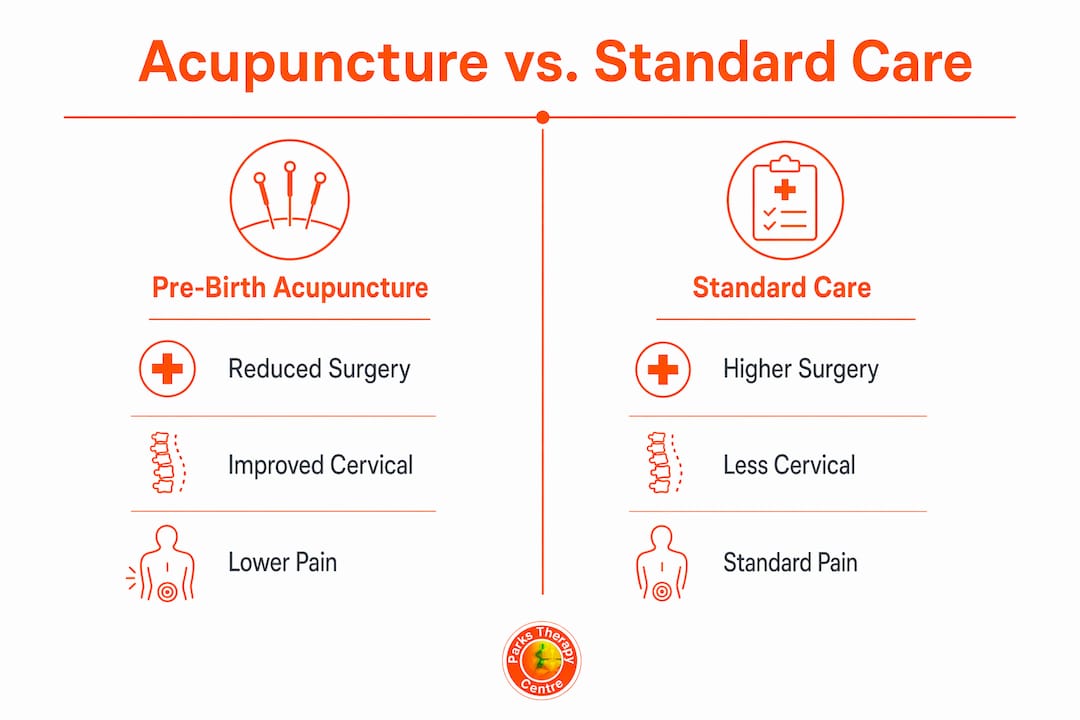
Pre-birth acupuncture is a structured series of weekly sessions, typically starting at 36–37 weeks of pregnancy, designed to improve cervical readiness and encourage the body toward spontaneous labour onset. The goal is not to force labour prematurely. It is to prepare the cervix and pelvic tissues so that when labour begins naturally, the body is already in a favourable state.
Pre-birth acupuncture sessions starting around 36–37 weeks are associated with reduced rates of surgical birth and lower use of pharmacological pain relief during labour. Women who complete a course of pre-birth acupuncture tend to experience fewer medical interventions overall. That outcome matters because every intervention avoided reduces recovery time and the risk of complications.
The table below compares outcomes for women who received pre-birth acupuncture against those who received standard care alone.
| Outcome | Pre-birth acupuncture | Standard care only |
|---|---|---|
| Cervical readiness at term | Improved in clinical studies | Dependent on individual factors |
| Rate of surgical birth | Reduced | Higher in comparison groups |
| Use of pharmacological pain relief | Lower | Higher |
| Spontaneous labour onset | More likely | Less predictable |
| Labour duration | Shorter in clinical trials | Longer on average |
Moxibustion is often used alongside acupuncture from around 34–35 weeks when a baby is in the breech position. The technique involves warming the BL67 point (at the outer corner of the little toenail) to encourage the baby to turn. This is a well-established application in traditional Chinese medicine and is increasingly recognised in Western midwifery practice.
Timing and point selection are critical. Certain acupuncture points are avoided before 37 weeks precisely because they have a stimulating effect on the uterus. A qualified practitioner knows which points to use and when, which is why self-treatment or treatment by an untrained person carries real risk.
What safety considerations should pregnant women know?
Acupuncture by a qualified practitioner is safe during pregnancy. The key word is qualified. Professional guidelines identify fewer than 10 forbidden points out of more than 360 points used in practice. Trained practitioners are specifically taught to avoid these points during pregnancy, so the risk profile is very low when you choose the right person.
The most common misconception is that all acupuncture is dangerous in pregnancy. That is not accurate. Targeted acupuncture with appropriate training is safe and well-tolerated. The risk comes from untrained practitioners who do not know which points to avoid, not from the therapy itself.
Here is what to check before booking an acupuncture session during pregnancy:
- Confirm the practitioner holds a recognised qualification, such as membership of the British Acupuncture Council (BAcC) or equivalent.
- Ask specifically whether they have experience treating pregnant patients.
- Inform your midwife or obstetrician that you are receiving acupuncture, so your care team has a complete picture.
- Avoid any practitioner who cannot clearly explain which points they will avoid during your pregnancy.
- Do not use acupuncture as a replacement for standard prenatal care. It works best as a complement to your existing maternity support.
Acupuncture does not replace your midwife, your antenatal appointments, or any prescribed treatment. It works alongside them. Think of it as an additional tool that addresses pain, anxiety, and physical preparation in ways that conventional care does not always cover.
Pro Tip: Bring a list of any medications or supplements you are taking to your first acupuncture appointment. Some herbal preparations interact with acupuncture's physiological effects, and your practitioner needs the full picture.
If you want to understand what a first session involves before you book, this step-by-step session guide from Parkstherapycentre walks you through exactly what to expect.
How can partners support acupuncture-based pain relief during labour?
Partners play a direct and practical role in acupressure-based pain relief during labour. Partner-applied pressure at LI4 and SP6 for 30 minutes during contractions provides effective, non-pharmaceutical pain relief. That is not a passive role. It is a clinical technique that partners can learn and apply with confidence.
Here is how to apply acupressure safely as a birth partner:
- LI4 point: Located in the webbing between the thumb and index finger. Apply firm, downward pressure with your thumb for the duration of a contraction. Release between contractions.
- SP6 point: Located four finger-widths above the inner ankle bone. Apply upward pressure toward the shin bone. This point also supports cervical dilation and labour progression.
- Pressure quality: Firm and continuous is more effective than intermittent or light pressure. The person in labour should feel a dull, aching sensation, not sharp pain.
- Duration: Aim for 30 minutes of consistent application during active labour. Short bursts are less effective.
- Communication: Ask the woman in labour to rate her comfort on a scale of 1–10 every few minutes. Adjust pressure based on her feedback.
SP6 acupressure shortens the first stage of labour compared to standard care, with statistically significant results (p<0.05). Shorter first-stage labour means less exhaustion for the mother and a more positive birth experience overall.
Partner involvement also has emotional benefits that go beyond the physical. When a partner has a specific, helpful task to focus on, anxiety decreases for both people in the room. That shared focus creates a calmer environment, which itself supports labour progression.
Pro Tip: Practise finding LI4 and SP6 before the birth. It takes less than five minutes to learn, and being confident in the technique means you can apply it without hesitation when contractions begin.
For a broader understanding of how acupuncture supports pain management during labour, Parkstherapycentre has published a detailed overview of the mechanisms involved.
Key takeaways
Acupuncture supports childbirth most effectively when it combines qualified prenatal sessions from 36 weeks, targeted point stimulation during labour, and informed partner-applied acupressure at LI4 and SP6.
| Point | Details |
|---|---|
| LI4 acupressure reduces pain | Firm, continuous pressure at LI4 during active labour produces clinically significant pain reduction. |
| Pre-birth sessions from 36 weeks | Weekly acupuncture from 36–37 weeks improves cervical readiness and reduces surgical birth rates. |
| SP6 shortens first-stage labour | SP6 acupressure reduces first-stage labour duration with statistically significant results. |
| Qualified practitioners are essential | Fewer than 10 forbidden points exist, but only trained practitioners know how to avoid them safely. |
| Partners can apply acupressure directly | Firm pressure at LI4 and SP6 for 30 minutes during contractions provides effective non-pharmaceutical relief. |
What I have seen working with pregnant patients
Working with pregnant patients at Parkstherapycentre over many years, the most consistent observation is this: women who start pre-birth acupuncture at 36 weeks arrive at labour in a noticeably different state than those who come for the first time at 39 weeks hoping for a quick fix. The preparation matters as much as the treatment itself.
The question I hear most often is whether acupuncture is safe. That anxiety is understandable, and it is also largely unfounded when you are working with a properly trained practitioner. The forbidden points are well-documented and easy to avoid. What concerns me more is the number of women who dismiss acupuncture entirely because of that misconception, and then struggle through labour without any of the non-pharmaceutical tools available to them.
The other thing worth saying plainly: acupuncture does not guarantee a pain-free birth. Nothing does. What it does is give you and your partner real, evidence-backed techniques to manage pain, reduce anxiety, and support your body's natural processes. That is a meaningful difference, especially when you want to minimise medical intervention without compromising safety.
My advice is always to start the conversation with your midwife early, book a consultation with a qualified acupuncturist around 34–35 weeks, and involve your partner in learning the acupressure points before your due date. Those three steps cost very little and can change the experience significantly.
— Ivan
Acupuncture for childbirth at Parkstherapycentre
Parkstherapycentre has provided specialist acupuncture services since 1986, with qualified practitioners experienced in treating pregnant patients across Bedfordshire and Buckinghamshire. Every treatment plan is tailored to the individual, with full attention to safety protocols and the specific needs of each stage of pregnancy.

Whether you are looking to start pre-birth sessions at 36 weeks, manage pregnancy-related discomfort, or prepare for labour with evidence-based techniques, Parkstherapycentre offers a professional, reassuring environment to do so. The team accepts insurance cover and offers online booking for your convenience. Visit the acupuncture services page to book your initial consultation or find out more about what to expect from pregnancy acupuncture. You can also explore physiotherapy options for pregnancy if you want to combine therapies for broader support.
FAQ
What acupuncture points are used during labour?
The most commonly used points during labour are LI4 (between the thumb and index finger) and SP6 (on the inner lower leg). Both are supported by clinical evidence for reducing pain and supporting labour progression.
When should I start pre-birth acupuncture?
Pre-birth acupuncture typically begins at 36–37 weeks as a series of weekly sessions. Starting at this stage supports cervical readiness without the risk of stimulating premature labour.
Is acupuncture safe during pregnancy?
Acupuncture is safe during pregnancy when performed by a qualified practitioner. Fewer than 10 specific points are avoided during pregnancy, and trained acupuncturists are taught to manage this carefully.
Can my partner apply acupressure during labour?
Yes. Partners can apply firm, continuous pressure at LI4 and SP6 during contractions for up to 30 minutes. Clinical evidence supports this as an effective non-pharmaceutical pain relief technique.
Does acupuncture replace standard maternity care?
Acupuncture complements standard maternity care but does not replace it. It works best alongside your midwife, antenatal appointments, and any prescribed treatment your care team recommends.