

TL;DR:
- Feeling uncertain before your first acupuncture session is normal, but proper preparation helps ensure a confident experience. Gathering your medical history, wearing loose clothing, and avoiding heavy meals or alcohol improves treatment effectiveness. Multiple sessions are typically needed for noticeable benefits, especially with chronic conditions, emphasizing the importance of ongoing communication with your practitioner.
Feeling uncertain before your first acupuncture session is entirely normal. Many adults across Bedfordshire and Buckinghamshire arrive at their first appointment unsure about what to wear, what to bring, or whether the needles will hurt. The good news is that a little preparation goes a long way. This guide walks you through every practical step, from gathering your paperwork to understanding what to expect on the day and beyond, so you can walk in with confidence rather than apprehension.
Table of Contents
- Gathering essentials before your acupuncture session
- Step by step: how to prepare on the day
- What happens during your first session?
- Course of treatment and realistic expectations
- The truth about acupuncture outcomes: what practitioners do not always explain
- Next steps: local resources and expert guidance
- Frequently asked questions
Key Takeaways
| Point | Details |
|---|---|
| Preparation matters | Organising your health details and choosing comfortable clothing can help ease anxiety and ensure a smoother session. |
| Expect assessment | Your acupuncturist will review your health history, perform clinical checks, and tailor treatment accordingly. |
| Multiple sessions needed | Acupuncture is most effective as a course of treatments, with improvement likely after several visits—typically 3 to 6. |
| Track your progress | Keeping a symptom diary will aid discussions and help gauge improvement over time. |
| Seek personalised advice | Consult local experts to address specific concerns and optimise your treatment plan. |
Gathering essentials before your acupuncture session
Now that you know what to expect broadly, let's focus on how to gather everything you will need for your first visit. Preparation is not just about calming your nerves; it directly supports your practitioner in tailoring the session to your specific needs.
What to bring
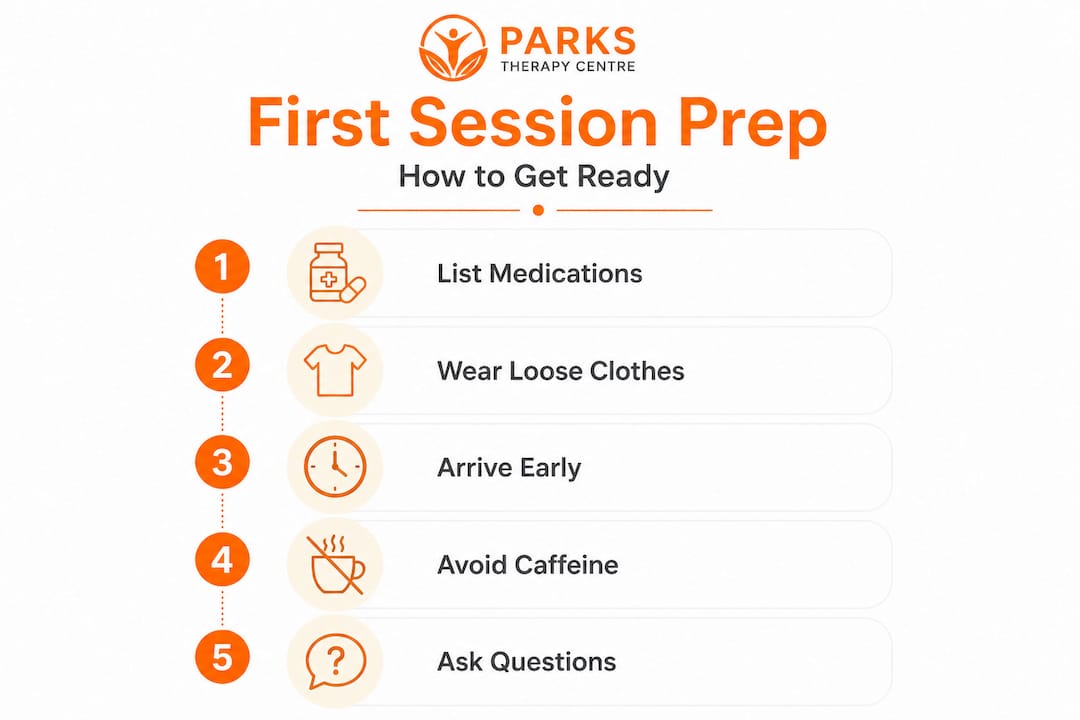
Before your first session, clinicians take a detailed health history and current medication list, and may also perform assessments such as pulse and tongue observation, depending on their approach. That means arriving without this information is a missed opportunity. Write down every medication you take, including over the counter supplements, and note any chronic or recurring conditions. A simple list on your phone or a folded sheet of paper works perfectly well.
You should also note any recent injuries, surgeries, or significant changes in your health over the past 12 months. Your acupuncturist will ask about these regardless, but having them written down ensures you do not forget something under the mild stress of a new appointment.
What to wear
Loose, comfortable clothing is your best friend here. Practitioners frequently need to access points on your lower legs, forearms, back, and abdomen, so clothing that rolls up easily or stretches is far more practical than fitted jeans or a formal shirt. Think tracksuit bottoms, soft leggings, or a loose-fitting t-shirt.
For more information on how acupuncture supports pain management and why specific body points matter, it helps to understand which areas your practitioner is likely to target beforehand.
What to avoid beforehand
- Avoid large, heavy meals in the two hours before your appointment. A light snack is fine; a three-course meal is not.
- Steer clear of alcohol for at least 24 hours before your session, as it can affect your body's response and the accuracy of any pulse assessment.
- Skip strenuous exercise on the same day, particularly immediately before your appointment. Your body should be in a rested, neutral state.
- Avoid strong perfumes or scented products, as some practitioners, particularly those using traditional Chinese medicine approaches, rely on subtle sensory observation.
Comparison: prepared vs. unprepared first visit
| Factor | Prepared patient | Unprepared patient |
|---|---|---|
| Medication list ready | Full picture for practitioner | Risk of incomplete treatment plan |
| Appropriate clothing | Smooth, uninterrupted session | Potential delays or discomfort |
| Light meal beforehand | Stable energy, minimal discomfort | Dizziness or nausea possible |
| Medical history written down | Faster, focused consultation | Key details forgotten under pressure |
Pro Tip: Compile your medical details the evening before, not on the morning of your appointment. Morning stress makes it easy to forget something important.
Step by step: how to prepare on the day
Once your preparations are in order, here is how to approach the day itself for the smoothest possible experience.
Your appointment day checklist
- Eat a light meal at least 90 minutes before your session. Something like toast, porridge, or a small salad gives your body steady energy without causing digestive interference.
- Drink water throughout the morning. Staying well hydrated supports circulation and helps your body respond well to treatment.
- Review your health list one final time before leaving the house. Check you have your medications note, any referral letters, and your insurance details if applicable.
- Wear suitable clothing as discussed above. If you are unsure, simply bring a pair of loose shorts or a vest top in your bag as a backup.
- Arrive 10 to 15 minutes early. Most clinics have intake paperwork for first-time patients, and arriving in good time means you are not flustered when you sit down with your practitioner.
- Silence your phone and try to mentally wind down before the session begins. Acupuncture is most effective when your nervous system is not in a heightened state of stress.
As Harvard Health notes, preparation mechanics include bringing a list of medical conditions and medications, wearing clothing that allows easy access to treatment areas, and avoiding factors that can make you uncomfortable, such as heavy meals immediately beforehand. These are not arbitrary suggestions; they directly shape the quality of your session.
Safety note: Your practitioner may ask you to remove or adjust clothing to access specific acupuncture points. This is standard clinical practice. If you have any concerns about this beforehand, do not hesitate to call the clinic in advance. A professional practitioner will always ensure your comfort and dignity throughout.
What to expect during arrival
| Time before session | Action |
|---|---|
| 15 minutes | Arrive, complete paperwork, use the bathroom |
| 10 minutes | Quiet waiting, steady breathing, review your notes |
| 5 minutes | Invited into the treatment room, introductions |
| Session start | Consultation begins, health history reviewed |
Pro Tip: Avoid caffeine in the two hours before your appointment. Caffeine raises your heart rate and can make pulse assessment less accurate, which matters if your practitioner uses pulse diagnosis.
If you are curious about the online booking process at Parks Therapy Centre, you can review your appointment details and complete any pre-session administration without needing to call ahead.
What happens during your first session?
When you arrive and sit down with your acupuncturist, this is what you can genuinely expect to take place.
The initial consultation
Your practitioner will begin by reviewing your health history in detail. This is not a brief formality; it often takes 20 to 30 minutes for a first-time patient. Expect detailed questions about health, lifestyle, behaviours, and medications, as well as assessments including pulse and tongue observation, and disinfecting of needle insertion spots as part of the process.
The questions may feel surprisingly broad. Your acupuncturist might ask about your sleep patterns, digestion, stress levels, and emotional wellbeing, not just the primary complaint that brought you in. This is intentional. Acupuncture considers the whole picture of your health rather than isolating a single symptom.
Needle insertion
Once the consultation is complete, your practitioner will guide you into a comfortable position on the treatment table. The specific points chosen depend entirely on your condition and your practitioner's assessment. Each needle is single-use and sterile, and insertion is typically very quick.

Most people describe the sensation as a mild dull ache, tingling, or slight pressure at the point of insertion. Some points produce more sensation than others. If anything feels sharp or acutely painful, tell your practitioner immediately, as that is not the intended experience.
Session length and aftercare
A first session typically runs between 60 and 90 minutes, with a larger portion allocated to consultation. Follow-up sessions are usually shorter, around 45 to 60 minutes. After the needles are removed, you may feel deeply relaxed, a little light-headed, or occasionally mildly tired. This is normal and usually passes within a few hours.
What to notice and track after your session:
- Any reduction in pain or discomfort in the treated area
- Changes in sleep quality in the nights following treatment
- Energy levels throughout the following days
- Any new or unexpected sensations (report these at your next visit)
Statistic to know: According to Cancer Research UK, most practitioners expect to see meaningful improvement after 3 to 6 sessions rather than after a single treatment. One session rarely tells the full story.
Understanding the full range of acupuncture therapy benefits can help you frame your own expectations before you begin.
Course of treatment and realistic expectations
Understanding the session process sets the stage for what comes next: how acupuncture fits into a broader course of treatment rather than functioning as a one-off fix.
Why courses are recommended
Acupuncture is commonly recommended as a course of several sessions rather than a single appointment, because improvement can take time and the cumulative effect of treatment builds over successive visits. Your nervous system, tissues, and pain signalling pathways do not reset after one hour on a treatment table. Change, when it comes, tends to accumulate gradually.
This is particularly true for chronic conditions. Someone dealing with long-standing lower back pain, persistent headaches, or chronic fatigue should expect a course of treatment rather than a rapid transformation. That is not a weakness of the therapy; it reflects the nature of the conditions it is treating.
Benchmarks to use
- Sessions 1 to 2: Primarily assessment and early intervention. You may notice subtle shifts in sleep or energy even if the main complaint feels unchanged.
- Sessions 3 to 4: This is typically when clearer patterns of improvement begin to emerge. Many patients report noticeable changes in pain levels or mobility.
- Sessions 5 to 6: A reasonable point to evaluate overall progress with your practitioner and decide whether to continue, reduce frequency, or shift focus.
Your practitioner may also recommend how acupuncture works alongside other therapies. For those recovering from sport-related injury, reading about acupuncture and sports recovery can provide useful context.
Pro Tip: Keep a simple symptom diary between sessions. Rate your pain, sleep quality, and energy on a scale of one to ten each morning. After four or five sessions, you will have a genuinely useful dataset to bring to your follow-up discussions.
The truth about acupuncture outcomes: what practitioners do not always explain
With the main facts about acupuncture courses laid out, here is something worth addressing directly: the gap between patient expectation and clinical reality.
Many people arrive hoping for a dramatic shift after their first or second session. And occasionally, particularly for acute conditions, that does happen. But for the majority of patients seeking relief from chronic pain, recurring tension, or systemic fatigue, the experience is more nuanced. Evidence suggests that outcomes vary by condition and patient, and effects may be modest or subtle initially.
What this means practically is that the absence of an immediate result is not evidence that acupuncture is not working for you. The body's response to acupuncture is not always linear, and some of the most meaningful changes, such as improved sleep, reduced reliance on pain medication, or better stress tolerance, happen quietly in the background before they become obvious.
We would argue that the single biggest factor in whether acupuncture works for someone is not the quality of the needles or even the skill of the practitioner (though that matters enormously). It is the patient's willingness to commit to a course, track their experience honestly, and communicate openly with their acupuncturist about what is and is not shifting.
This is why we genuinely advocate for keeping that symptom diary. Practitioners benefit from granular feedback. "I felt a bit better" is far less useful than "my sleep improved for three days after session four but my lower back pain returned by day five." That kind of specificity helps your practitioner refine their approach significantly.
Linking this to evidence-based pain management principles, the most successful outcomes we see come from patients who treat acupuncture as a collaborative process rather than a passive experience. You are not just lying on a table. You are an active participant in your own recovery.
Next steps: local resources and expert guidance
You now have a detailed blueprint for your first acupuncture session, from the paperwork you need to bring to the symptom diary you should start keeping. The next step is finding a qualified, experienced practitioner who can guide you through this process with the care it deserves.

At The Parks Therapy Centre, we have been providing acupuncture and physiotherapy services to patients across Bedfordshire and Buckinghamshire since 1986. Our qualified team works with a wide range of conditions, from chronic musculoskeletal pain to sports injuries and pregnancy-related discomfort. We accept most major insurance providers and offer online booking to make your first appointment as straightforward as possible. If you are ready to take the next step, or simply want to speak with a practitioner before committing to a session, we welcome your enquiry.
Frequently asked questions
Should I avoid anything before my first acupuncture session?
Yes, avoid heavy meals, alcohol, and strenuous activity immediately before your appointment, as these may interfere with your comfort or the practitioner's assessment accuracy and your overall experience during treatment.
How many acupuncture sessions will I need for improvement?
Research suggests you may see meaningful improvement after 3 to 6 sessions, particularly for chronic pain and similar longer-standing conditions.
What should I bring with me to my first appointment?
You should bring a written list of your medical conditions and all current medications, as clinicians take a detailed health history and may also perform pulse and tongue assessments during the initial consultation.
Is acupuncture safe for everyone?
Acupuncture is generally considered safe when performed by a qualified practitioner, but you should always disclose your full medical history and ask about any potential risks relevant to your individual circumstances before your first session.