
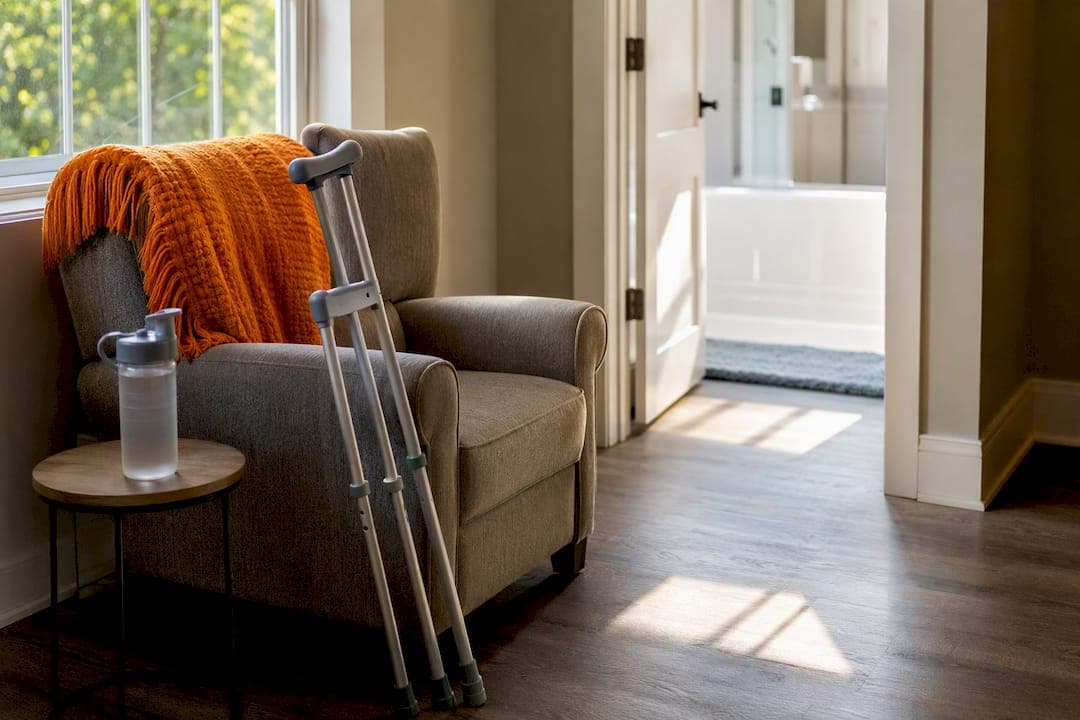
Most patients spend 1 to 3 days in hospital after a total knee replacement, with same-day discharge possible for those who meet specific health criteria. Meaningful improvement in mobility and pain typically arrives by 6 weeks, and gains continue for up to 12 months as tissue heals and strength rebuilds. Your immediate priorities are straightforward: control pain, get moving early, and follow your physiotherapy exercises daily.
- Hospital stay: usually 1 to 3 days
- Noticeable improvement: by 6 weeks
- Continued progress: up to 12 months
- Priority actions: pain control, early walking, daily exercises
Statistic: Most patients are discharged 1 to 3 days after surgery, and many are taught exercises in hospital ahead of a 6-week follow-up review.
Watch for warning signs throughout: fever, spreading redness, calf swelling, or a sudden inability to bear weight all need urgent attention, not a wait-and-see approach.
Key Takeaways
Knee replacement recovery follows a predictable arc: meaningful improvement by 6 weeks, continued strengthening to 12 months, and outcomes that depend heavily on consistent physiotherapy and early mobilisation.
| Point | Details |
|---|---|
| Hospital stay is short | Most patients go home 1 to 3 days after surgery, with same-day discharge possible in select cases. |
| Six weeks is a real milestone | Expect a clinical follow-up and noticeably easier daily movement by this point. |
| Pain and swelling persist for months | RICE and paced activity manage this safely without derailing rehab progress. |
| Exercises decide the outcome | Daily home exercises plus supervised physiotherapy drive better long-term function than either alone. |
| Parkstherapycentre supports every stage | Physiotherapy, prehab, and guided exercise sessions are available via private pay, insurance, or NHS referral. |
Table of Contents
- What happens in hospital during knee replacement recovery
- How do you care for your knee at home?
- What is the knee replacement recovery timeline?
- How much pain and swelling is normal?
- Which exercises help knee replacement rehab most?
- When can you stop using walking aids and drive again?
- What are the warning signs after knee replacement surgery?
- What prehab and clinic support actually help?
- Does diet affect how fast your knee heals?
- How do you cope emotionally during recovery?
- How long does a knee replacement actually last?
- How do you prepare your home before surgery?
- Frequently asked questions
- Sources
What happens in hospital during knee replacement recovery
You'll wake in a recovery area where staff monitor your blood pressure, wound, and pain levels closely. Pain control usually combines a nerve block placed during surgery with oral analgesics as the block wears off, giving you a window to start moving without being floored by discomfort.
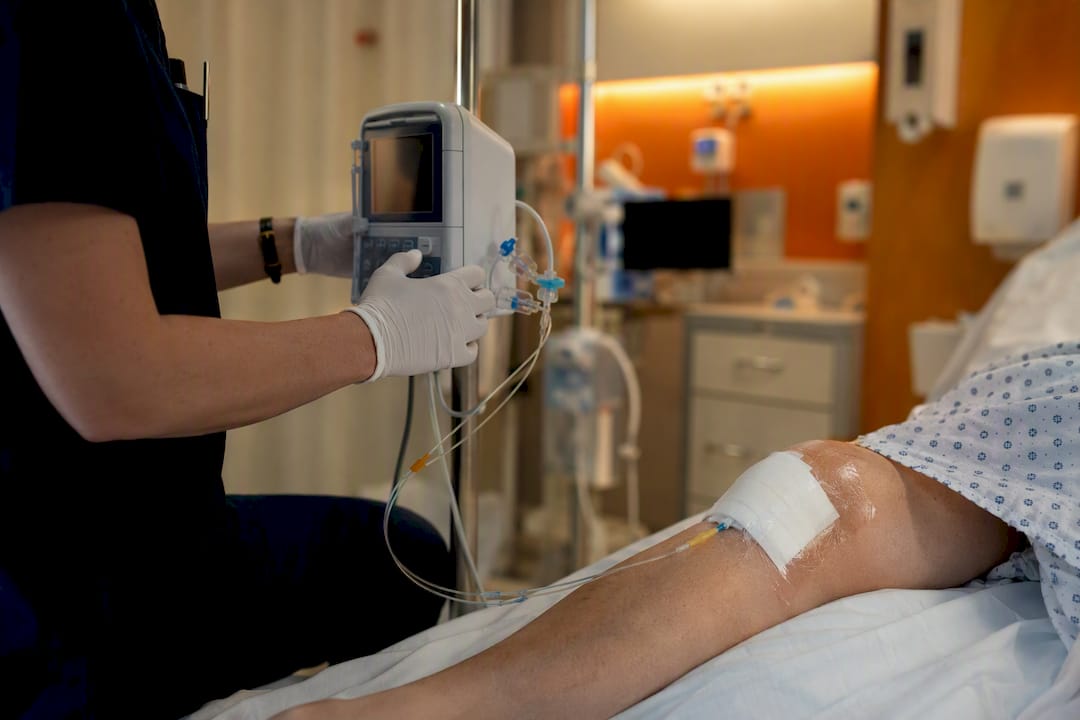
A physiotherapist will typically get you upright within hours, not days. That first walk uses a frame or crutches and covers a short distance, often just to the bathroom and back. It matters more than it sounds. Early mobilisation reduces stiffness and lowers clot risk.
Discharge depends on three things:
- Your wound looks clean and dry
- You can walk safely with your chosen aid
- Your pain is manageable on oral medication alone
Before you leave, staff will run through your home exercise programme and confirm you have the right equipment, including crutches and any raised toilet seat or chair aids arranged in advance.
How do you care for your knee at home?
Once home, your wound needs simple daily attention. Keep the dressing dry and intact, and expect stitches or staples to come out around 10 days post-surgery, often at a practice nurse appointment rather than back at hospital.
- Elevate the leg above hip height for periods through the day to control swelling.
- Apply ice for 15 to 20 minutes at a time, several times daily, particularly after activity.
- Walk short distances regularly rather than resting all day. Little and often beats one long push.
- Wear any prescribed compression stockings and take anticoagulant medication exactly as directed to guard against blood clots.
- Clear trailing rugs, loose cables, and clutter from walkways, and fit a non-slip mat in the shower or bath.
Small home adjustments prevent the two things that derail early recovery most often: falls and swelling that spirals out of control. A raised bed height or a chair with firm arms makes standing up dramatically easier in week one.
What is the knee replacement recovery timeline?
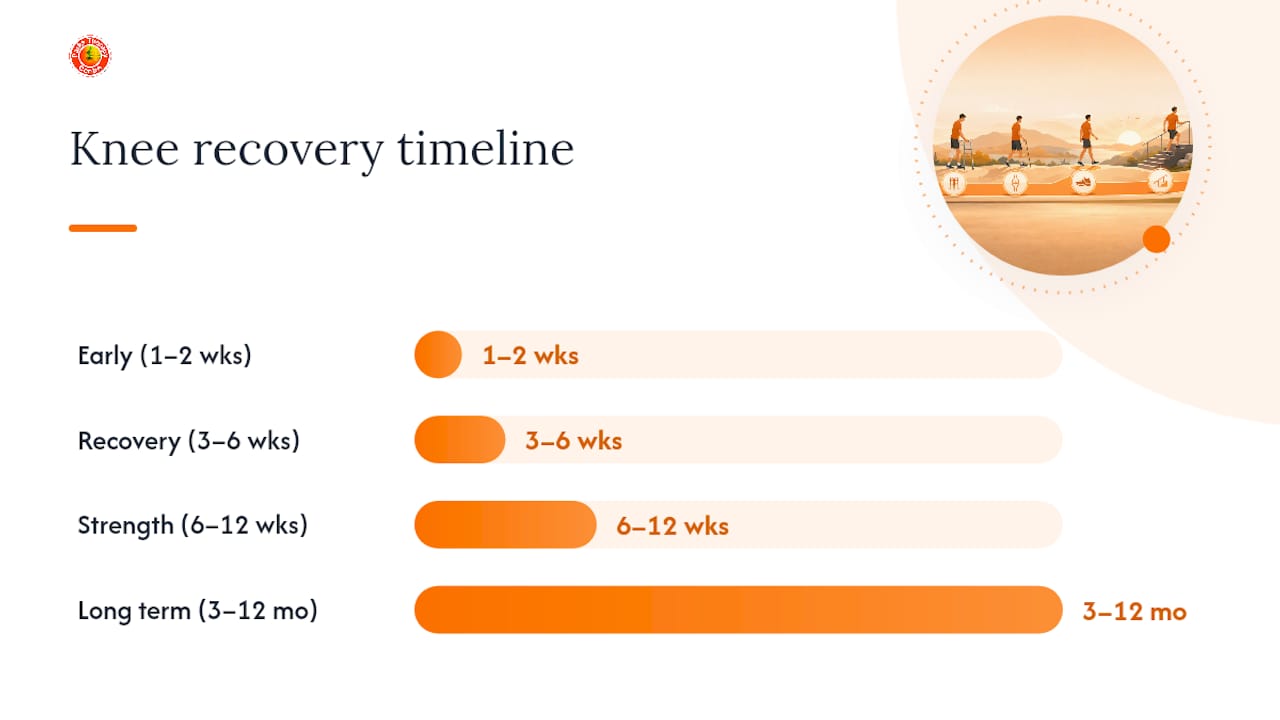
Recovery unfolds in fairly predictable stages, though your own pace will vary with fitness, age, and how closely you stick to your exercise programme.
- Week 1 to 2: Swelling peaks, the wound begins closing, and short supported walks become part of your daily rhythm.
- Week 3 to 6: Many people reduce from two crutches to one, or move to a stick, and start returning to light daily tasks like short trips out or cooking. Your 6-week follow-up appointment checks mobility and wound progress.
- Week 6 to 12: Strength building takes over. Most people are cleared to begin low-impact exercise such as swimming or stationary cycling during this window.
- Month 3 to 12: Improvements continue steadily. Most daily activities are back on the table, though high-impact sport usually waits longer and needs a clinical green light.
Statistic: Full recovery can take several months or longer, though many people resume most daily activities well before that milestone, often within 6 weeks to 3 months.
The 12-month mark isn't a deadline to hit. It's a realistic outer boundary for the last few percent of strength and swelling reduction, and most of your functional life returns long before then.
How much pain and swelling is normal?
Pain and swelling lingering for several months is normal, not a sign something has gone wrong. Tissue disrupted during surgery takes time to settle, and expecting a pain-free knee at 6 weeks sets you up for disappointment rather than progress.
- Use RICE. Rest, ice, compression, and elevation form the backbone of daily swelling control.
- Take prescribed analgesics as directed, particularly before physiotherapy sessions rather than after pain has already spiked.
- Pace activity deliberately. Pushing through a bad day tends to cause a worse one tomorrow.
- Flag persistent or worsening pain with your clinician rather than assuming it will resolve alone.
Pacing activity and using RICE helps balance rehabilitation progress against the tissue's need to heal.
Pro Tip: Take your pain medication around 30 to 45 minutes before exercises or a walk, not after discomfort takes hold. Timing it ahead of activity, rather than reacting to pain, keeps sessions productive instead of something to dread.
Which exercises help knee replacement rehab most?
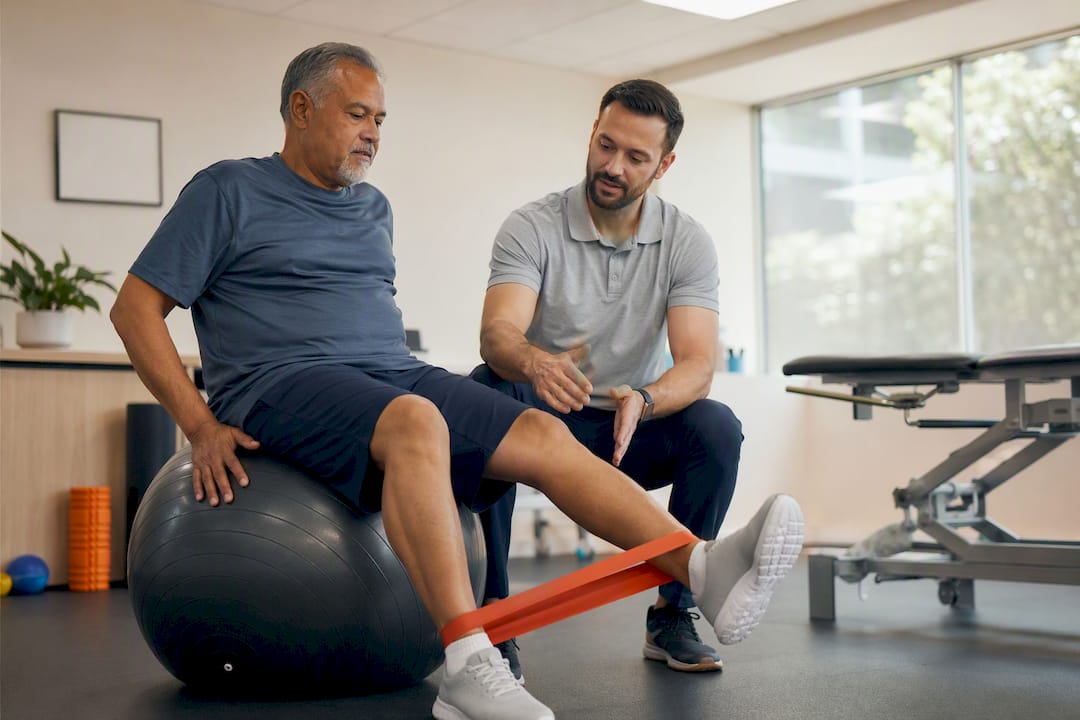
Daily home exercises paired with supervised physiotherapy sessions consistently produce better functional outcomes than either alone. The exercises themselves are unglamorous but effective, and skipping them is the single biggest reason recovery stalls.
Early exercises focus on waking the muscles back up:
- Ankle pumps to encourage circulation and reduce clot risk
- Heel slides to rebuild bending range
- Static quad contractions, holding the thigh muscle tight for a few seconds at a time
As healing progresses, the plan builds in stages:
- Active straight-leg raises once quad control returns
- Resisted strengthening using bands or light weights
- Low-impact cardio such as cycling or swimming from around 6 weeks onward, subject to your surgeon's clearance
Supervised physiotherapy is not a formality. It's where a therapist catches the small compensations, like favouring the other leg or locking the knee awkwardly, that you would never spot in your own front room.
Our own knee strengthening exercise guide walks through this progression step by step, and it's worth returning to if progress feels slower than expected. If your range of motion plateaus for more than a week or two, that's the moment to speak to a physiotherapist rather than push on alone.
When can you stop using walking aids and drive again?
Most people move from two crutches to one within the first few weeks, then to a walking stick, and finally to unaided walking, usually somewhere between week 4 and week 8 depending on strength and confidence.
- Practise stairs one step at a time, leading with the stronger leg going up and the operated leg going down.
- Keep a hand free for the rail, and never rush a transition just because a set number of weeks has passed.
- Driving typically resumes around 6 weeks after a total knee replacement, or around 3 weeks for a partial replacement, always with your surgeon's clearance first.
- Return to work depends heavily on job demands. Desk-based roles often resume within weeks; physically demanding jobs may need 3 months or longer.
What are the warning signs after knee replacement surgery?
Most recoveries proceed without incident, but knowing the red flags means you'll act fast if something does go wrong.
- Infection: increasing redness, warmth, discharge, or fever around the wound needs same-day medical attention.
- DVT or PE: calf swelling, tenderness, or sudden breathlessness and chest pain are medical emergencies. Call emergency services for breathlessness or chest pain.
- Falls: any fall followed by a sudden loss of weight-bearing ability needs urgent assessment, even without obvious injury.
Statistic: Your 6-week clinical review checks mobility and wound healing, and stitches are usually removed around 10 days, giving two clear checkpoints to flag any concerns early.
What prehab and clinic support actually help?
Strengthening quads, hamstrings, and hip stabilisers before surgery gives your knee a stronger foundation to rebuild from, reducing post-operative weakness and improving how quickly gait normalises afterwards.
A first physiotherapy session usually focuses on transitions: getting up from a chair safely, managing stairs, and practising the crutch-to-stick step-down under supervision before trying it alone at home.
- Review your current strength and movement patterns
- Practise aid transitions in a controlled setting
- Set a personalised exercise progression
Our rehabilitation exercise guide and prehab guidance cover both stages in detail.
Pro Tip: Practise your crutch-to-stick step-down in clinic first. A supervised setting catches wobbles before they become falls at home.
Does diet affect how fast your knee heals?
Healing tissue needs raw materials, and protein sits at the top of the list. Aim for protein at most meals, whether that's fish, eggs, poultry, beans, or dairy, since your body uses it to rebuild muscle weakened by surgery and days of reduced activity.
Vitamin C and zinc both support wound healing directly. Citrus fruits, peppers, and leafy greens cover vitamin C; nuts, seeds, and lean meat cover zinc. Neither needs a supplement if your diet is reasonably varied, but it's worth paying attention during the first few weeks when appetite often dips.
Hydration matters more than people expect, particularly if you're taking anticoagulant medication or anti-inflammatory painkillers, both of which can be harder on the digestive system when fluid intake drops.
Fibre deserves a mention too. Reduced mobility, opioid painkillers, and a change in routine commonly cause constipation after surgery, and a diet light on fibre makes that worse. Wholegrains, fruit, and vegetables help keep things moving, quite literally, while you're spending more time sitting or lying down than usual.
If you're carrying extra weight, your surgical team may have discussed this before your operation, since additional load on a new joint affects long-term wear. Recovery itself is not the moment for aggressive dieting. Your energy needs are higher while tissue repairs, and calorie restriction alongside major surgery can slow healing rather than help it.
How do you cope emotionally during recovery?
Frustration is one of the most common and least discussed parts of knee replacement recovery. Feeling capable and independent one week, then struggling to manage stairs the next, catches people off guard, and it's worth naming that dip before it arrives rather than after.

Sleep disruption compounds this. Discomfort when turning over, or the unfamiliar sensation of a new joint, often interrupts rest in the first few weeks, and poor sleep makes pain feel worse and motivation harder to summon the next day.
Isolation creeps in too, particularly if reduced mobility means skipping social plans or time away from work. Staying in contact with friends and family, even briefly, protects mood far more than people expect from something so simple.
Setting small, weekly goals rather than fixating on a single "back to normal" finish line tends to help. Managing five extra minutes of walking this week, or one fewer painkiller than last week, gives you something concrete to notice rather than measuring everything against a distant, undefined endpoint.
If low mood or anxiety persists beyond the first few weeks, particularly if it's affecting sleep, appetite, or motivation to do your exercises, that's worth raising with your GP alongside your physical recovery. Emotional recovery and physical recovery aren't separate processes. They move together, and struggling with one usually shows up in the other.
How long does a knee replacement actually last?
Most modern knee replacements function well for 15 to 20 years, and many patients never need a revision at all. Wear depends heavily on activity level, weight, and how well the surrounding muscles are maintained through ongoing exercise, which is precisely why physiotherapy doesn't stop mattering once the 12-month mark has passed.
Functional outcomes tend to be strong. The large majority of patients report significantly less pain than before surgery and a marked improvement in walking distance, stair climbing, and general daily function. Range of motion typically settles by around a year, though it varies by individual, prior joint condition, and how consistently exercises were followed.
High-impact activities such as running or contact sport put more repetitive stress on the joint and are generally discouraged long-term, not just in the first year. Low-impact pursuits like walking, swimming, cycling, and golf are usually well tolerated indefinitely and are often actively encouraged, since maintaining muscle strength around the joint is one of the biggest factors in how long it lasts.
Periodic check-ins, even once you feel fully recovered, help catch any gradual changes in mobility or discomfort early. A joint that feels fine day to day can still benefit from an occasional physiotherapy review, particularly if activity levels or weight change significantly over the years.
How do you prepare your home before surgery?
Preparing your home before surgery, rather than scrambling afterwards, removes a surprising amount of stress from the first two weeks.
Start with the bathroom. A raised toilet seat and a non-slip mat in the shower address two of the highest-risk moments in early recovery. If you have a bath rather than a walk-in shower, consider whether a shower chair or temporary alternative makes more sense until balance improves.
Sleeping arrangements matter too. If your bedroom is upstairs, think about whether a temporary setup downstairs makes the first week or two easier, particularly if stairs feel daunting on day one home.
Clear a walking path through every room you'll use regularly. Rugs, low furniture, and trailing cables are the most common causes of falls in early recovery, and they're the easiest to fix in advance.
Stock the kitchen and bathroom with essentials before surgery so you're not standing at a shop shelf on day three. Batch-cooked meals in the freezer solve a real problem: cooking while managing a new joint and reduced mobility is harder than it sounds.
Finally, arrange a seat with firm arms in your main living space. Soft sofas are surprisingly difficult to get out of in the first fortnight, and a chair you can push up from safely makes a noticeable daily difference.
A note from the clinic
Recovery is gradual, not linear, and that's entirely normal. If progress stalls, a clinic assessment can identify exactly what's holding you back.
Getting physiotherapy support for your recovery
Parkstherapycentre gives you supervised, hands-on physiotherapy support that a generic exercise sheet simply cannot replicate, catching compensations and stalled progress early rather than weeks later.
 Our multidisciplinary team offers physiotherapy, prehabilitation programmes, and guided exercise classes designed around exactly the milestones covered above, from early mobilisation through to strength rebuilding. Sessions are available through private payment or health insurance, and many patients also attend following an NHS referral. If your recovery feels slower than expected, or you'd simply value expert eyes on your progress before surgery, booking an assessment is the practical next step. Visit Parkstherapycentre to check availability and book a physiotherapy appointment suited to your stage of recovery.
Frequently asked questions
How long does knee replacement recovery usually take? Most people notice significant improvement by 6 weeks, with continued gains up to around 12 months as strength and swelling fully settle.
When can I climb stairs normally after surgery? Basic stair technique, leading with the stronger leg going up, starts within the first couple of weeks, though confident unaided stair use often takes several more weeks of practice.
Is it normal to still have swelling three months after surgery? Yes. Swelling and a feeling of heaviness can persist well beyond the early weeks, and ongoing elevation and icing helps manage it during this period.
When should I start physiotherapy exercises after knee replacement? Physiotherapists typically start you on ankle pumps and gentle range-of-motion exercises within hours of surgery, continuing daily through hospital and home recovery.
Can I return to sport after knee replacement? Low-impact sport such as swimming, cycling, and golf is usually well tolerated long-term, while high-impact or contact sport is generally discouraged due to added joint stress.
This article is general information, not a substitute for advice from a qualified doctor. Consult a qualified healthcare professional about your own circumstances before acting on anything here.
Sources
- Recovering from a knee replacement
- What Is the Recovery Time After a Knee Replacement?
- Physiotherapy following knee replacement surgery