

TL;DR:
- Prehabilitation before knee surgery involves targeted exercises and education to improve recovery and reduce complications.
- Engaging in prehab enhances muscle strength, primes the immune system, and prepares neural pathways, leading to faster, better outcomes.
- Starting prehab 4-8 weeks prior to surgery significantly decreases postoperative issues and accelerates return to daily activities.
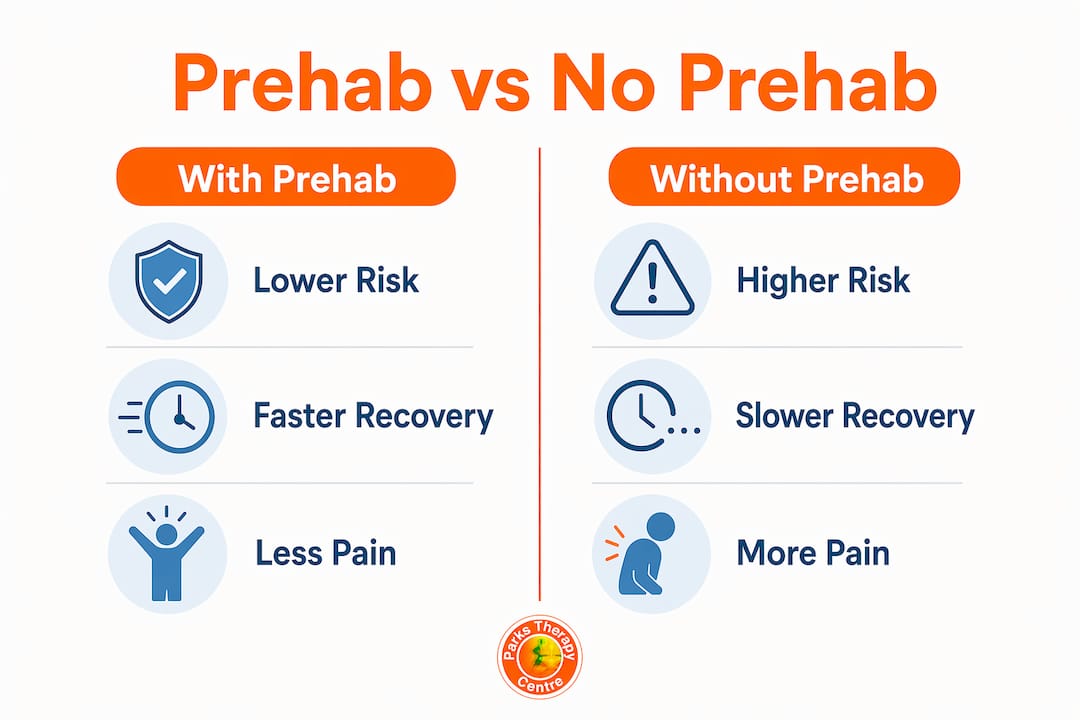
Prehabilitation before knee surgery is defined as a structured programme of targeted physical exercise and education completed before the operation to improve recovery outcomes and reduce complications. Patients who engage in exercise-based prehab have a 55% lower chance of postoperative complications compared with standard care. That figure alone makes the importance of knee prehab impossible to ignore. This article explains the mechanisms behind those results, the exercises that deliver them, and the realistic outcomes you can expect when you commit to a prehabilitation programme before your knee surgery.
Why prehab before knee surgery changes your recovery
Prehabilitation works by raising your physical and psychological baseline before the surgeon makes a single incision. The higher your baseline, the shorter and less demanding your recovery will be. Physiotherapists describe this as starting recovery from an elevated position, and the clinical logic is straightforward: a stronger, better-conditioned body tolerates surgical stress more effectively than a weakened one.
Three distinct mechanisms explain why prehab produces such consistent results.
Muscle strengthening around the joint. The quadriceps are the primary stabilisers of the knee. Surgery temporarily disrupts their function through pain, swelling, and nerve inhibition. Prehab builds quad strength in advance, so even after that disruption, residual strength remains above the threshold needed for basic function such as standing and walking.
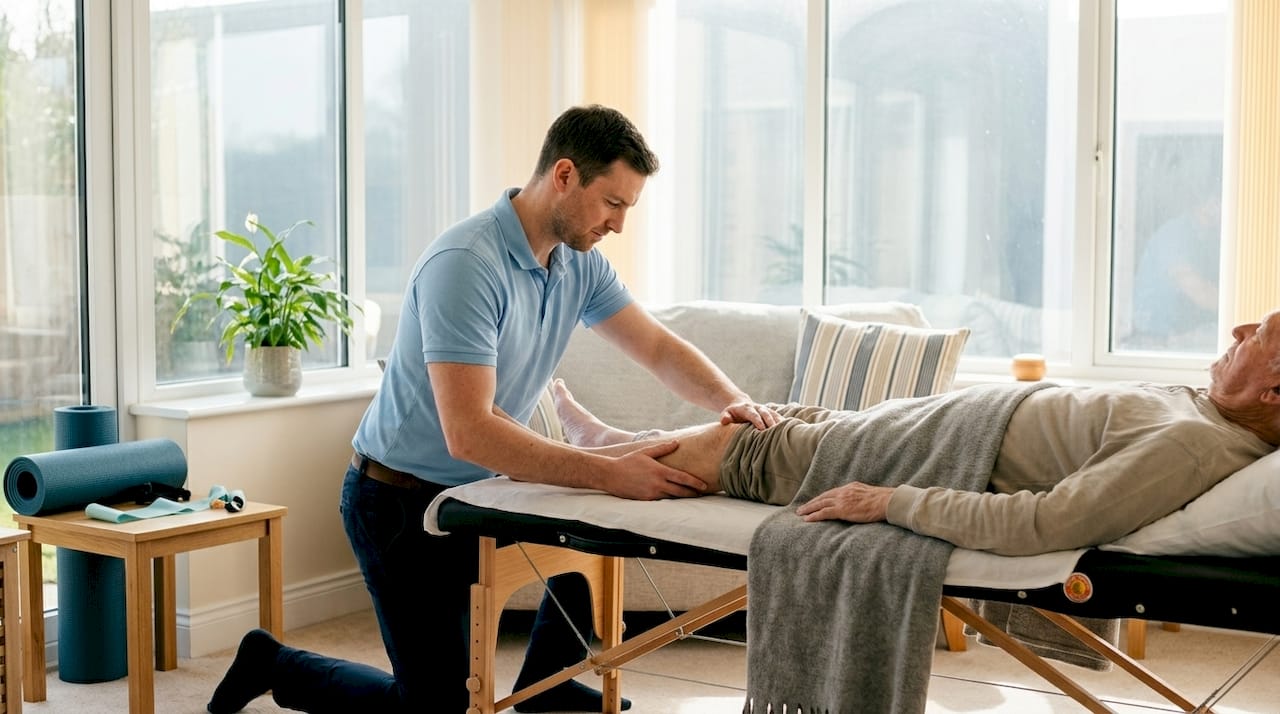
Immune system priming. Personalised prehab coaching influences immune cells to reduce over-reactivity and baseline inflammation before surgery. Lower pre-surgical inflammation means the body responds to the operative wound more efficiently, reducing infection risk and accelerating tissue repair.
Neuromuscular priming. Pain and swelling before surgery actively inhibit the quadriceps, creating a feedback loop where the muscles become harder to activate. Isometric quad sets break that inhibition by teaching the nervous system to recruit those muscles despite discomfort. After surgery, the neural pathways are already open, so muscle engagement returns faster.
Pro Tip: If your knee is too painful for standard exercises, begin with isometric contractions only. Tighten the quad without moving the joint, hold for five seconds, and release. This activates the muscle without loading the joint.
Education is the fourth and often overlooked mechanism. Understanding normal healing timelines, how to manage swelling, and how to use crutches or a walking frame correctly reduces post-operative anxiety significantly. Patients who arrive at surgery informed are less likely to panic at normal symptoms and less likely to require unnecessary medical contact during recovery.
What prehab exercises are best for knee surgery?
The most effective prehab exercises for knees target quadriceps strength, hip stability, flexibility, and balance. A well-structured programme addresses all four areas because weakness in any one of them creates compensatory patterns that slow recovery. The following exercises form the clinical foundation of most knee prehab programmes.
-
Quad sets. Lie flat with your leg straight. Tighten the quad by pressing the back of your knee into the floor. Hold for five seconds, then release. Complete 3 sets of 10–15 repetitions. This is the single most important exercise in any knee prehab programme because it directly addresses muscle inhibition caused by pre-surgical pain and swelling.
-
Straight leg raises. Lie flat, bend the non-surgical leg, and raise the straight leg to approximately 45 degrees. Hold briefly, then lower slowly. This builds quad and hip flexor strength without compressing the knee joint, making it safe even for patients with significant pre-surgical pain.
-
Terminal knee extensions. Stand with a resistance band looped behind the knee. Straighten the leg against the band's resistance. This targets the final degrees of knee extension, which are the hardest to regain after surgery and the most critical for normal walking.
-
Calf raises. Stand at a wall for support and rise onto your toes. Lower slowly. Calf strength supports the entire lower limb kinetic chain and reduces the risk of deep vein thrombosis after surgery by improving venous return.
-
Single-leg balance. Stand on the surgical leg for 20–30 seconds. Use a wall or chair for safety. Balance training activates the stabilising muscles around the knee and trains the proprioceptive system, which surgery temporarily disrupts.
-
Seated knee flexion and extension. Sit in a chair and slowly bend and straighten the knee through a comfortable range. This maintains joint mobility and prevents the stiffness that makes early post-operative physiotherapy more difficult.
Pro Tip: Use a rolled towel under your knee during quad sets if full extension is painful. This limits the range of motion to a pain-free arc and allows you to strengthen the muscle safely without aggravating the joint.
Structured prehab programmes typically run for 4–8 weeks, with sessions three to five times per week. Shorter periods still produce measurable benefits. Even two weeks of consistent exercise before surgery improves muscle activation and reduces post-operative pain compared with no preparation at all. For a broader view of how surgery rehabilitation exercises fit into the full recovery arc, the principles are consistent across different knee procedures.
When should you start prehab and what can you expect?
Physical therapists recommend starting prehab 4–8 weeks before surgery to achieve meaningful strength and mobility gains. That window gives the body enough time to adapt to training stress and consolidate neuromuscular improvements. If your surgery date is sooner, begin immediately. Any preparation is better than none.
The outcomes patients report after completing a prehab programme are consistent across multiple studies. The table below summarises what the evidence shows.
| Outcome | With Prehab | Without Prehab |
|---|---|---|
| Postoperative complications | 55% lower risk | Standard risk |
| Excellent outcomes at 6 weeks (ACL) | 72% of patients | 40% of patients |
| Pain score at 6 weeks (ACL) | 2.1 out of 10 | 3.4 out of 10 |
| Knee range of motion at 6 weeks | 128.5 degrees | 118.3 degrees |
| Daily activities resumed within 30 days | 66% of patients | 35% of patients |
These figures represent real differences in how quickly you regain independence. The gap between 66% and 35% resuming daily activities within 30 days is not a marginal statistical difference. It reflects whether you are cooking your own meals, managing stairs, and sleeping comfortably within a month of surgery.
Prehab also changes the psychological experience of recovery. Patients who complete a structured programme report higher quality-of-recovery scores, indicating better physical comfort and psychological well-being in the days immediately after surgery. Confidence in your body's ability to recover is itself a recovery tool. It reduces the catastrophising that leads to over-reliance on pain medication and under-participation in early physiotherapy.
For patients wanting to build a structured plan before their procedure, guidance on how to build a safe training plan around an existing injury is directly applicable to the prehab period.
Prehab vs rehab: what is the difference?
Prehab and rehab address the same goal through opposite timing. Rehab begins after surgery, working to restore function from a depleted baseline. Prehab raises that baseline before surgery, so the starting point for post-operative recovery is significantly higher.
The practical consequence is that prehab patients typically progress through post-operative rehabilitation faster. Their muscles are stronger, their movement patterns are better established, and their understanding of the recovery process is more accurate. Physiotherapists working with prehab patients spend less time on foundational strength work and more time on functional milestones such as stair climbing, return to driving, and sport-specific movement.
Studies comparing the two approaches show that prehab patients achieve better patient-reported outcomes at every measured time point in the first six weeks after surgery. The combination of prehab and rehab produces the best results of all. Prehab is not a replacement for post-operative physiotherapy. It is the preparation that makes post-operative physiotherapy more productive. For a detailed look at what recovery looks like after surgery, the post-surgery rehabilitation guide from Parkstherapycentre covers the full recovery timeline.
Prehab also addresses something rehab cannot: the pre-surgical period of functional decline. Many patients waiting for knee surgery become progressively less active due to pain, which accelerates muscle loss and joint stiffness. A structured prehab programme reverses that decline and arrives at surgery in better condition than if they had simply waited. Holistic prehab approaches that incorporate personalised nutrition alongside exercise further support the body's readiness for surgical stress.
Key takeaways
Prehabilitation before knee surgery reduces complications, accelerates functional recovery, and improves both physical and psychological outcomes compared with no preparation.
| Point | Details |
|---|---|
| Start prehab 4–8 weeks before surgery | Even shorter periods produce measurable benefits in strength and muscle activation. |
| Quad sets are the foundation exercise | Isometric quad sets directly address pre-surgical muscle inhibition and speed post-op engagement. |
| Prehab cuts complication risk by 55% | Exercise-based preparation reduces postoperative complications more than any single surgical technique adjustment. |
| Education is part of prehab | Understanding swelling, pain timelines, and assistive device use reduces post-operative anxiety and unnecessary medical contact. |
| Prehab and rehab work together | Prehab raises the baseline; post-operative physiotherapy builds from that higher starting point for faster milestones. |
The part most patients miss entirely
I have worked with patients preparing for knee surgery for many years, and the pattern I see repeatedly is this: patients focus entirely on what happens after the operation and give almost no thought to what they can do before it. They arrive at surgery having spent weeks resting, protecting the joint, and waiting. That waiting costs them weeks of recovery time on the other side.
The neuromuscular priming argument is the one that changes minds most reliably. When I explain that the brain's ability to activate the quadriceps is actively suppressed by pre-surgical pain and swelling, and that isometric exercises can reopen those neural pathways before surgery, patients understand immediately why prehab is not optional preparation. It is a clinical intervention with measurable consequences.
The psychological dimension matters just as much. Patients who understand what normal post-operative swelling looks like, who know that clicking or tightness in the first two weeks is expected, and who have already practised using crutches before surgery recover with far less distress. They are not surprised by their symptoms. They are prepared for them.
My honest view is that prehab is underused because it requires patients to take action during a period when they feel unwell and are waiting for someone else to fix the problem. The patients who push through that instinct and commit to a structured programme consistently have shorter, smoother recoveries. The evidence supports this. So does every clinical interaction I have had with patients who did the work before their surgery date.
— Ivan
Start your prehab programme with Parkstherapycentre
Parkstherapycentre has been delivering physiotherapy and musculoskeletal care across Bedfordshire and Buckinghamshire since 1986. If you are scheduled for knee surgery and want a structured, personalised prehab programme, the team at Parkstherapycentre will assess your current strength, mobility, and pain levels and build a plan around your specific procedure and timeline.
You can book a prehab assessment online, with appointments available across multiple locations. The team accepts most major insurance providers and offers patient-centred care from qualified physiotherapists who specialise in surgical preparation and recovery. Starting your prehab with professional guidance means every session is targeted, safe, and directly aligned with what your surgeon and recovery team need from you on the day of your operation.
FAQ
What is prehabilitation before knee surgery?
Prehabilitation is a structured programme of exercise and education completed before knee surgery to improve strength, mobility, and recovery outcomes. It reduces postoperative complications and helps patients regain independence faster after the operation.
How long before knee surgery should i start prehab?
Physical therapists recommend beginning prehab 4–8 weeks before surgery for the best results. Shorter periods still produce measurable benefits, so starting as soon as possible after your surgery date is confirmed is always the right approach.
Does prehab actually reduce pain after knee surgery?
Yes. Patients who complete a structured prehab programme report significantly lower pain scores after surgery. In ACL reconstruction studies, prehab patients scored 2.1 out of 10 for pain at six weeks compared with 3.4 for those without prehab.
Is it safe to exercise before knee surgery if my joint is painful?
Exercising before surgery is safe when you train around pain rather than through it. Isometric exercises such as quad sets strengthen the muscle without compressing the joint, and using a towel to limit range of motion keeps all movement within a pain-free arc.
Can prehab replace post-operative physiotherapy?
Prehab does not replace post-operative physiotherapy. The two work together: prehab raises your physical baseline before surgery, and post-operative physiotherapy builds from that higher starting point to achieve functional milestones faster.