
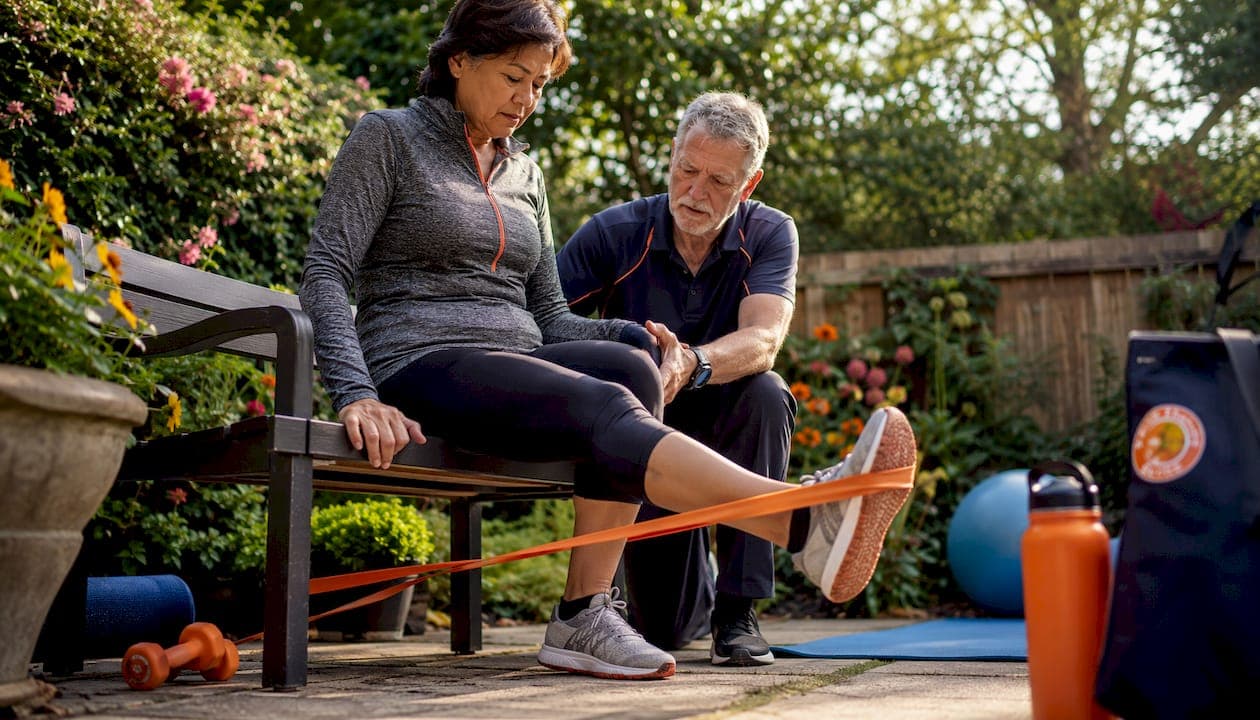
Recovery after knee surgery is not simply a matter of rest. The most effective rehabilitation programmes begin with gentle movement within the first 24 hours post-operation, progressing through structured phases of strengthening, balance, and functional exercise. This step-by-step guide to knee strengthening exercises post surgery draws on guidance from the AAOS and NHS to give you a clear, clinically grounded path back to full function.
Whether you have had a total knee replacement, ligament repair, or meniscus surgery, the principles are consistent: start early, progress gradually, and prioritise form over intensity. The exercises below are organised by recovery phase, so you always know what to do and when to do it.
Table of Contents
- Your step-by-step knee strengthening programme after surgery
- How to manage pain and progress safely after knee surgery
- Key exercise categories for a complete knee recovery
- How to set your exercise frequency and progress through recovery
- Expert guidance from Parkstherapycentre on optimising your recovery
- Parkstherapycentre: specialist post-surgical knee rehabilitation
- Key takeaways
Your step-by-step knee strengthening programme after surgery
According to AAOS guidance, exercises should begin within 24 hours of surgery, even while still in hospital. Early movement reduces swelling, prevents stiffness, and improves long-term pain outcomes. Many patients are surprised by this, expecting rest to be the priority. It is not. Controlled movement is.
The programme below is divided into three phases. Each phase builds on the last. Do not skip ahead, and always work within the range your surgical team or physiotherapist has approved.
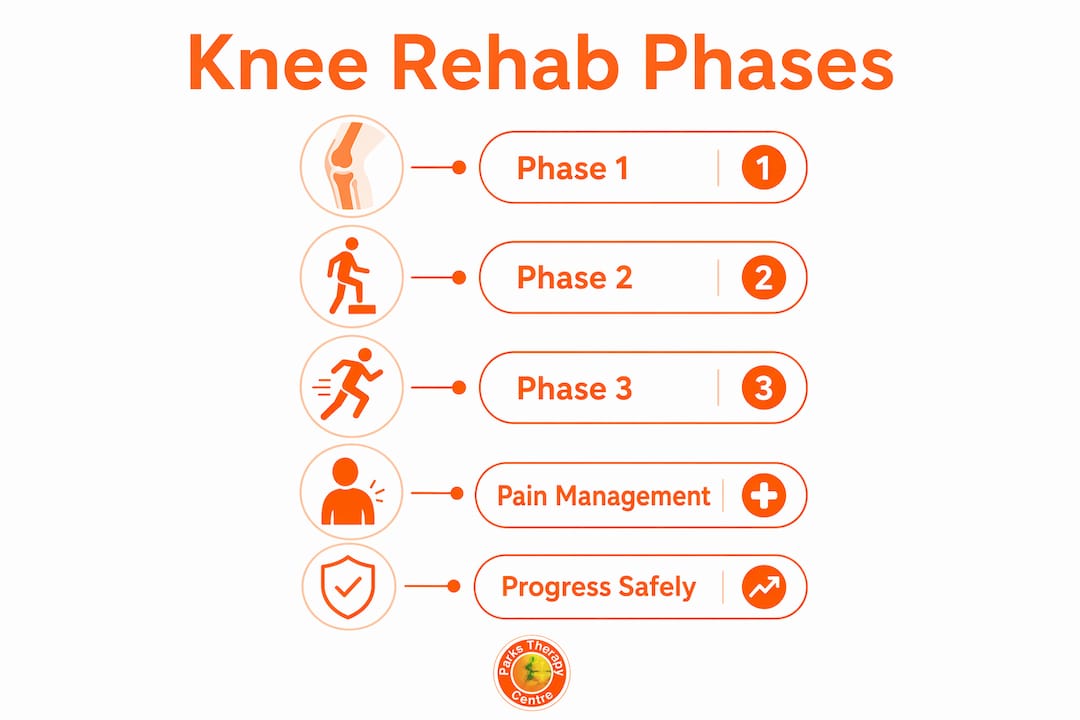
Phase 1: Early mobility exercises (days 1–14 post-op)
These exercises are performed lying in bed or sitting in a chair. They are low-load, low-risk, and designed to restore circulation, reduce swelling, and begin activating the muscles around the knee.
1. Ankle pumps
- Lie flat on your back with your legs extended.
- Flex your foot upward, pulling your toes toward your shin.
- Then point your foot downward.
- Repeat in a slow, rhythmic motion for a few minutes, several times per day.
This is often the very first exercise given post-operatively. It stimulates blood flow and reduces the risk of deep vein thrombosis.
2. Quad sets
- Lie on your back with your leg straight.
- Tighten the muscle on the front of your thigh (quadriceps) by pressing the back of your knee firmly into the bed.
- Hold for 5–10 seconds, then release.
- Aim for multiple repetitions several times daily.
Quad sets are deceptively simple but critical. The quadriceps are the primary stabilising muscle of the knee, and reactivating them early prevents the muscle wasting that commonly occurs after surgery.
3. Heel slides
- Lie on your back with your legs straight.
- Slowly slide your heel toward your buttock, bending the knee as far as comfortable.
- Hold the bent position briefly, then slide back to the start.
- Repeat 10 times per session, 3 times daily.
Heel slides restore knee flexion range of motion, which is often significantly restricted immediately after surgery. Progress the bend gradually over days, not hours.
4. Straight-leg raises
- Lie on your back with your unaffected leg bent and foot flat on the floor.
- Tighten the thigh of your affected leg and raise it 6–10 inches off the floor.
- Hold for several seconds, then lower slowly.
- Repeat 10 times, building to 3 sets.
This exercise strengthens the quadriceps without placing load through the knee joint itself, making it safe even in the earliest days of recovery.
Phase 2: Building strength (weeks 2–6 post-op)
As swelling reduces and you begin weight-bearing, the focus shifts to building functional strength. These exercises are performed standing or seated, often with support from a chair or wall.
5. Seated leg extensions
- Sit upright in a firm chair with your feet flat on the floor.
- Slowly straighten your affected leg until it is fully extended.
- Hold for 5 seconds, squeezing the thigh muscles.
- Lower with control. Repeat multiple times.
As this becomes easier, ankle weights can be introduced gradually. Begin with a light weight and increase only when you can complete all repetitions with good form.
6. Hamstring curls
- Stand behind a chair, holding the back for balance.
- Slowly bend your affected knee, raising your heel toward the ceiling as far as comfortable.
- Hold for 5 seconds, then lower with control.
- Repeat multiple times, working toward more sets.
Strong hamstrings are as important as strong quadriceps for knee stability. Neglecting them creates a muscular imbalance that can slow recovery and increase re-injury risk.
7. Calf raises
- Stand with both feet flat on the floor, holding a chair for support.
- Rise onto the toes of your affected foot, lifting the heel as high as possible.
- Lower slowly and with control.
- Repeat multiple times per set.
Calf strength supports the lower leg during walking and stair climbing. This exercise also improves circulation, which remains important throughout the early weeks of rehabilitation after knee surgery.
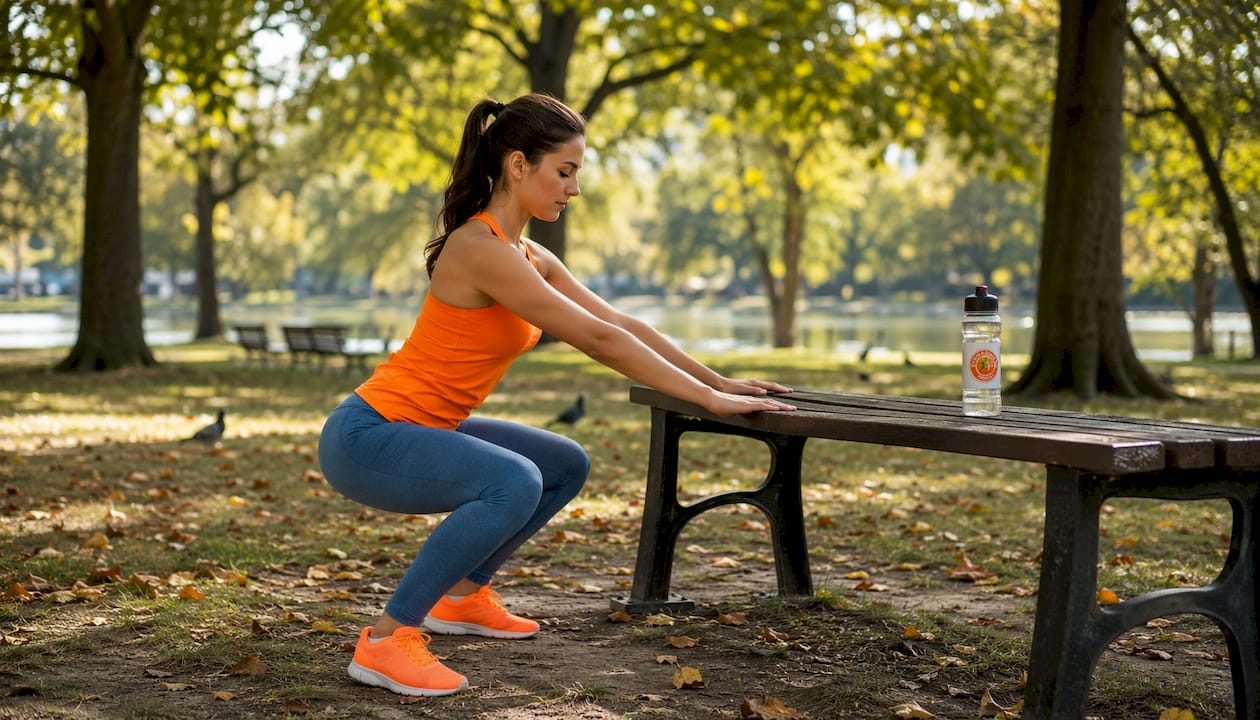
8. Mini-squats
- Stand with feet shoulder-width apart, holding a chair or wall for support.
- Slowly lower your hips approximately 10 inches, as though beginning to sit.
- Keep your chest upright and your weight through your heels.
- Hold for 5 seconds, then push through your heels to stand.
Knee alignment is critical here: your knee must track directly over your second toe throughout the movement. Allowing the knee to collapse inward places harmful stress on the joint and surrounding structures.
Phase 3: Functional and balance exercises (weeks 6 onwards)
Once you have built a solid base of strength, the programme progresses to exercises that replicate the demands of daily life: walking on uneven ground, climbing stairs, and standing on one leg.
9. Step-ups
- Stand in front of a low step (a stair works well).
- Step up with your affected leg, pressing through the heel to straighten the knee fully.
- Bring the other foot up, then step back down with control.
- Begin with 8–10 repetitions and build gradually.
Weight-bearing exercises like step-ups and step-downs are typically introduced several weeks post-op. Keep the knee tracking over the second toe throughout.
10. Hip abduction
- Lie on your side with your affected leg on top.
- Keeping the knee straight (not locked), raise the top leg to approximately 45 degrees.
- Hold for several seconds, then lower slowly.
- Repeat 10 times.
Hip strength is often overlooked in knee rehabilitation, but it plays a direct role in controlling leg alignment. Strengthening the hip abductors reduces abnormal stress across the knee joint during walking and functional movement.
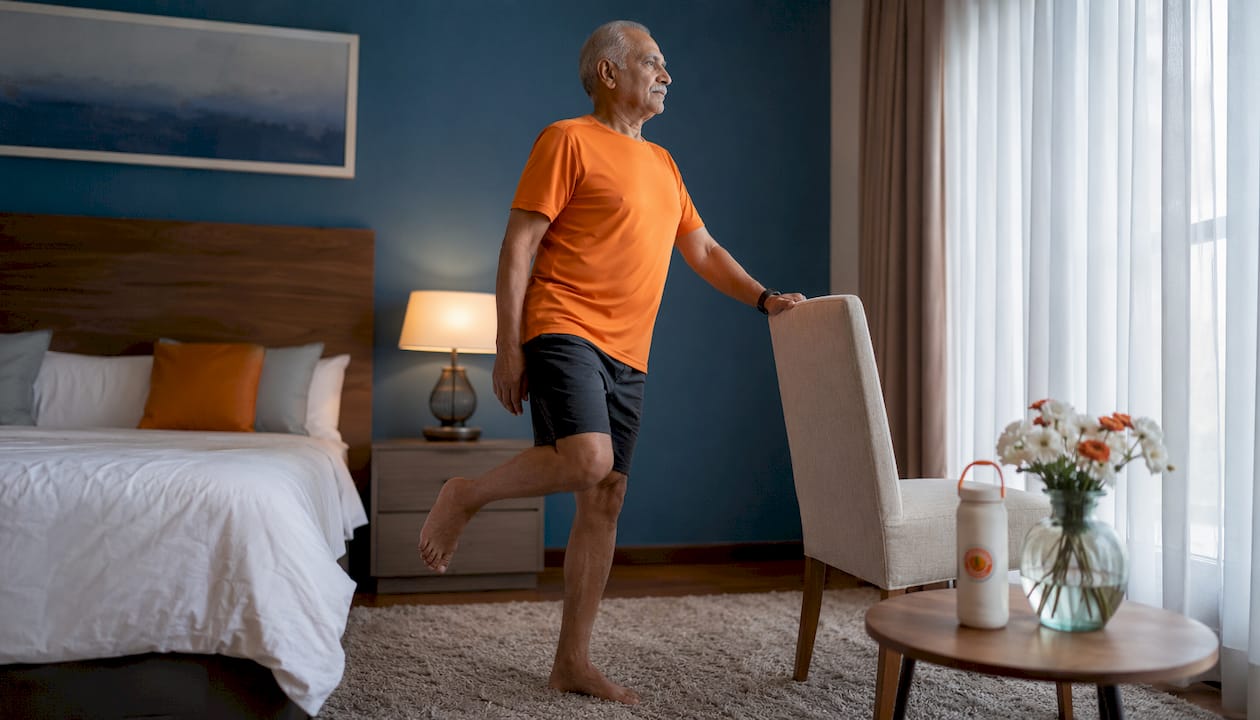
11. Single-leg balance
- Stand on your affected leg, holding a chair lightly for safety.
- Hold the position for 10–30 seconds, focusing on keeping the knee soft (slightly bent) and stable.
- Progress by reducing reliance on the chair as confidence builds.
Balance training is a non-negotiable part of recovery. It retrains the proprioceptive system, which is the body's ability to sense joint position, often disrupted by surgery and swelling.
12. Wall sits
- Stand with your back flat against a wall.
- Slide down until your knees are at a comfortable angle (start at 30–45 degrees rather than 90).
- Hold for 10–30 seconds, then slide back up.
- Repeat 3–5 times.
Wall sits build quadriceps endurance and are particularly useful for patients preparing to return to activities like walking longer distances or climbing stairs regularly.
Recommended session structure:
- Warm up with 5–10 minutes of low-impact activity such as stationary cycling or slow walking before each session.
- Complete your prescribed exercises, then finish with gentle stretching.
- Aim for 2–3 sessions per week for strength work, with daily gentle mobility exercises in the early weeks.
How to manage pain and progress safely after knee surgery
Pain during knee rehabilitation is expected, but not all pain is the same. Understanding the difference between productive discomfort and a warning signal is one of the most important skills you will develop during recovery.
What level of discomfort is normal?
Mild to moderate discomfort during exercise is acceptable and expected. Your muscles and joint are adapting to new demands. Sharp, stabbing, or worsening pain is a different matter entirely. Physical therapists advise that if pain increases during an exercise or fails to settle within 24 hours, you should reduce the intensity or stop and seek professional advice. If pain does not improve after one month of consistent effort, consult your clinician.
A useful rule of thumb: rate your pain on a scale of 0–10 before, during, and after exercise. Staying below 4 out of 10 during activity is a reasonable working target for most patients in the early phases.
Pain management strategies during rehabilitation
- Apply ice to the knee for 15–20 minutes after exercise to reduce swelling and discomfort.
- Elevate the leg above heart level when resting to assist fluid drainage.
- Take prescribed pain relief as directed by your surgical team, particularly before sessions in the early weeks.
- Avoid exercising through sharp or increasing pain; modify the movement or reduce the range instead.
- Rest adequately between sessions. Recovery happens during rest, not during the exercise itself.
Signs of overtraining or injury to watch for
Recovery is not linear. Some days will feel harder than others, and that is normal. However, the following signs indicate you may be pushing too hard or that something requires attention:
- Significant swelling that does not reduce within 24 hours of exercise.
- Redness, warmth, or skin changes around the knee.
- A sharp increase in pain during or after a session compared to previous days.
- Reduced range of motion compared to recent progress.
- Fever or general feeling of being unwell alongside knee symptoms.
If any of these occur, stop exercising and contact your physiotherapist or GP promptly.
Precautions and contraindications
Not every exercise suits every patient. High-impact activities such as running, jumping, or deep squatting are contraindicated in the early phases of recovery and should only be reintroduced under professional guidance. Patients with wound complications, active infection, or significant cardiovascular conditions should receive individual clearance before beginning any exercise programme.
Pro Tip: Keep a simple daily log of your pain score, exercises completed, and how you felt afterwards. Patterns in this data help your physiotherapist adjust your programme far more precisely than memory alone.
Key exercise categories for a complete knee recovery
Effective knee rehab exercises go beyond simply strengthening the quadriceps. A well-rounded programme addresses four distinct areas: strength, cardiovascular fitness, balance, and flexibility. Each serves a specific purpose in restoring full function.
Quadriceps, hamstring, and calf strengthening
The quadriceps are the primary movers for knee extension and the first priority in post-surgical rehabilitation. Quad sets, straight-leg raises, seated leg extensions, and mini-squats all target this muscle group progressively.
The hamstrings work in opposition to the quadriceps and are equally important for joint stability. Hamstring curls, prone straight-leg raises, and hip hinge movements (such as a controlled deadlift pattern) build posterior chain strength that protects the knee during walking and descending stairs.
Calf raises address the gastrocnemius and soleus, which contribute to lower leg stability and propulsion. They are also among the safest early-phase exercises because they place minimal direct load on the knee joint.
Cardiovascular fitness during recovery
Cardiovascular fitness often declines significantly in the weeks following surgery, and rebuilding it is a legitimate part of rehabilitation. Stationary cycling is the preferred option for most knee surgery patients: it maintains aerobic capacity, promotes synovial fluid production that nourishes cartilage, and keeps the joint moving through a controlled range without impact. Begin with low resistance and short durations, increasing gradually as comfort allows.
Brisk walking on flat surfaces is another appropriate option once weight-bearing is established. Swimming and aquatic therapy are excellent for patients who have access, as the buoyancy of water reduces joint load while allowing full-range movement.
Balance and proprioception exercises
Balance training is not optional in knee rehabilitation. Surgery disrupts the proprioceptive nerve endings within the joint, impairing the body's ability to sense position and react to changes in surface. Without targeted balance work, patients are at significantly higher risk of falls and re-injury, even after strength has been restored.
Single-leg standing, progressing from supported to unsupported, is the foundation of balance rehabilitation. As confidence grows, patients can progress to standing on an unstable surface such as a folded towel or balance board, always with a chair or wall within reach for safety.
Recommended stretches to reduce stiffness
Stretching after strengthening exercises helps maintain range of motion and reduces post-exercise soreness. The following are particularly relevant after knee surgery:
- Heel cord (calf) stretch: Stand facing a wall with the affected leg straight behind you, heel flat on the floor. Press your hips gently forward until you feel a stretch in the calf. Hold for 30 seconds, repeat twice.
- Supine hamstring stretch: Lie on your back, bring one knee toward your chest, and gently straighten the leg. Hold for 30–60 seconds. A towel looped around the thigh makes this easier in the early weeks.
- Standing quadriceps stretch: Hold a chair for balance, bend the affected knee, and gently draw the heel toward the buttock. Hold for 30–60 seconds.
Stretches should be held steadily, never bounced. You should feel a gentle pull, not sharp discomfort.
Equipment commonly used in knee rehabilitation
Most of the exercises in this guide require no specialist equipment. A firm chair, a wall, and a towel cover the majority of early-phase work. As the programme progresses, the following are commonly introduced:
- Ankle weights: Added to straight-leg raises and hamstring curls to increase resistance progressively. Begin with a light weight and increase only when all repetitions can be completed with good form.
- Resistance bands: Used for hip abduction, side-stepping (monster walks), and leg press variations. Bands allow graded resistance without the need for gym equipment.
- Stationary bicycle: The single most useful piece of cardiovascular equipment for knee rehabilitation.
- Balance board or wobble board: Introduced in the later phases to challenge proprioception.
How to set your exercise frequency and progress through recovery
The most common mistake in knee rehabilitation is not doing too little. It is doing too much, too soon, then being forced to rest because of a flare-up. Consistency over weeks and months produces better outcomes than aggressive early effort.
Starting repetitions and building gradually
Begin each new exercise with a low number of repetitions: 8–10 is a sensible starting point for most movements. Once you can complete all repetitions with good form and without significant discomfort, add a second set. Progress to three sets before increasing resistance or range of motion. AAOS guidance supports this graduated approach, noting that consistency and correct form are more valuable than early high-intensity training for long-term rehabilitation success.
How often should you exercise?
- Early phase (weeks 1–2): Gentle mobility exercises such as ankle pumps, quad sets, and heel slides can be performed several times daily. They are low-intensity and short in duration.
- Strengthening phase (weeks 2–6): Aim for dedicated strengthening sessions 2–3 times per week, with active recovery (gentle walking, cycling) on other days.
- Functional phase (weeks 6+): Continue 2–3 strengthening sessions weekly, integrating balance and functional exercises. Stretching daily remains beneficial throughout.
A conditioning programme of this type is typically continued for 4–6 weeks as a structured course, after which many exercises transition into a long-term maintenance routine.
Signs you are ready to progress
- You can complete all prescribed sets and repetitions without pain above a mild level.
- Swelling after exercise settles within a few hours.
- Your range of motion has improved compared to the previous week.
- Your physiotherapist has reviewed your progress and confirmed readiness.
Signs to hold back
- Pain scores are consistently above 4 out of 10 during exercise.
- Swelling is not reducing between sessions.
- You feel fatigued or unwell.
Maintaining motivation and adherence
Recovery is a long process, and motivation naturally fluctuates. A few strategies that genuinely help:
- Set small, specific weekly goals rather than focusing solely on the end point. "Complete three sessions this week" is more manageable than "get back to normal."
- Track your progress. Noting improvements in range of motion, repetitions completed, or pain scores provides concrete evidence that the work is paying off.
- Exercise at the same time each day to build the habit. Consistency is easier when exercise is scheduled, not optional.
- Involve your physiotherapist. Regular check-ins provide accountability, reassurance, and programme adjustments that keep recovery on track.
Expert guidance from Parkstherapycentre on optimising your recovery
Parkstherapycentre has been providing specialist physiotherapy and rehabilitation services since 1986, working with patients across Bedfordshire and Buckinghamshire through every stage of post-surgical recovery. The centre's multidisciplinary team brings together physiotherapists, sports injury specialists, and podiatrists to deliver care that addresses the whole patient, not just the affected joint.
Post-surgical knee rehabilitation at Parkstherapycentre is built around individual assessment. No two patients recover at the same rate, and a programme designed for one person's knee replacement may be entirely unsuitable for another's ligament repair. The clinical team conducts a thorough initial assessment to establish baseline strength, range of motion, and functional capacity before designing a phased programme aligned with each patient's goals and surgical history.
Effective knee rehabilitation is not about working harder. It is about working smarter, with a programme that responds to how your body is actually recovering, not how quickly you want it to. The patients who achieve the best outcomes are those who communicate openly with their physiotherapist, respect the process, and stay consistent even on the days when progress feels slow.
The centre's approach integrates evidence-based strengthening protocols with hands-on manual therapy, where appropriate, to address soft tissue restrictions and joint mobility limitations that exercises alone cannot resolve. Pain management is treated as an active part of the programme, not an afterthought, with advice on ice, elevation, activity modification, and medication timing woven into every patient's plan.
Pro Tip: If you are preparing for knee surgery rather than already in recovery, ask your physiotherapist about prehabilitation. Strengthening the muscles around the knee before the operation can meaningfully reduce recovery time and improve post-operative outcomes.
Parkstherapycentre's programmes are aligned with NHS and AAOS guidelines for post-surgical rehabilitation, giving patients confidence that the care they receive reflects current clinical best practice. The team accepts referrals from GPs and self-referrals, and appointments are available across multiple locations for convenience.
Parkstherapycentre: specialist post-surgical knee rehabilitation
Recovering from knee surgery is demanding, and having the right clinical support makes a measurable difference to how quickly and fully you regain function. Parkstherapycentre offers specialist physiotherapy for post-surgical knee rehabilitation, with individually tailored programmes delivered by qualified physiotherapists who have been supporting patients through recovery since 1986.
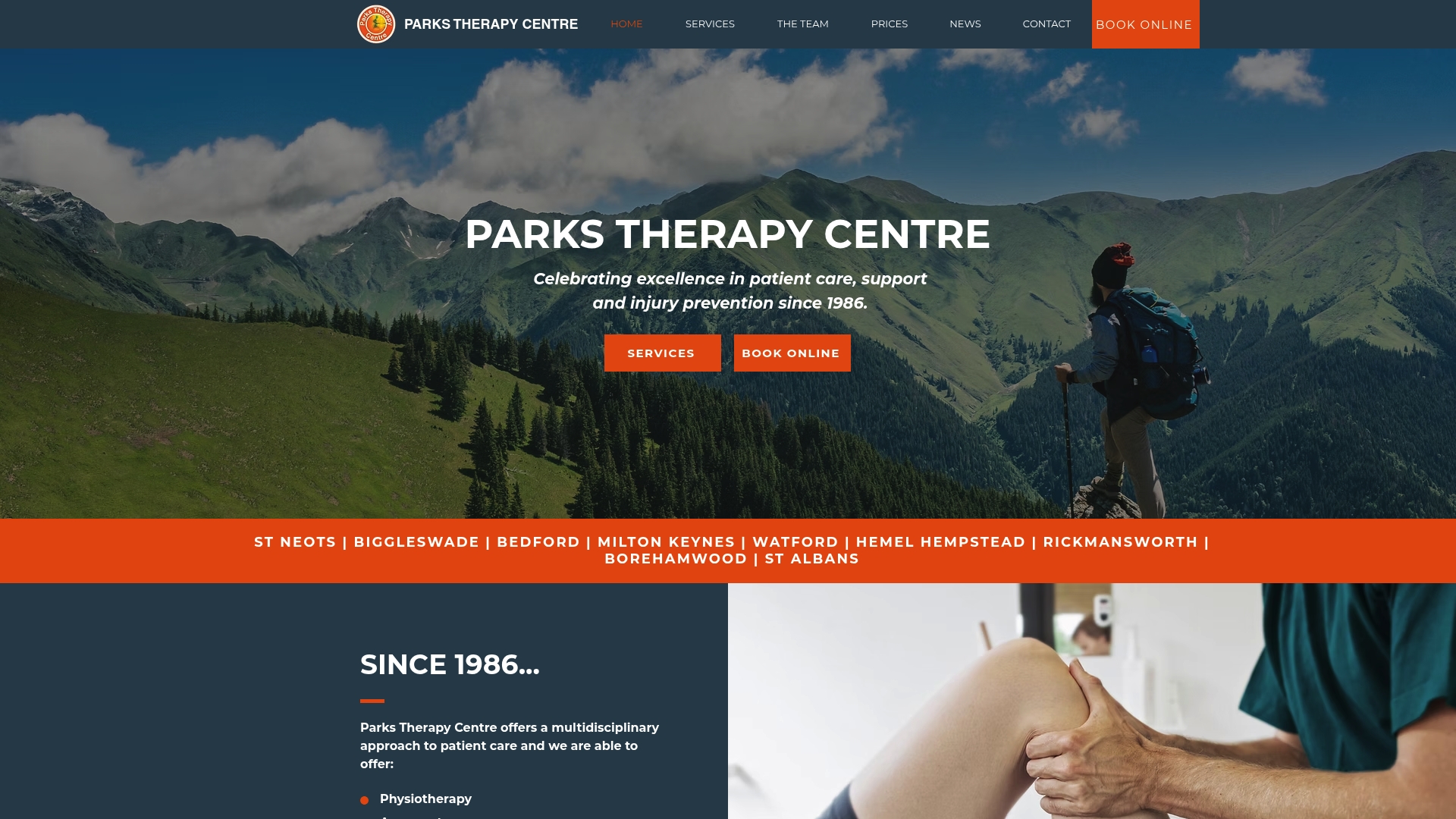
The centre's team works with patients at every stage of recovery, from the earliest post-operative days through to return-to-sport or full daily function. Programmes are built around your specific surgery, your current capacity, and your personal goals, not a generic template. Parkstherapycentre accepts most major insurance providers and offers appointments across its Bedfordshire and Buckinghamshire locations, with online booking available for convenience.
If you are ready to begin a structured, professionally guided knee recovery programme, book your initial assessment with Parkstherapycentre today and take the first step toward confident, supported recovery.
Key takeaways
Progressive, consistent exercise beginning within 24 hours of surgery is the single most effective approach to knee rehabilitation, with form and gradual load increase outperforming early high-intensity training at every stage.
| Point | Details |
|---|---|
| Start within 24 hours | Ankle pumps, quad sets, and heel slides should begin in hospital to reduce swelling and prevent stiffness. |
| Prioritise form over intensity | Correct technique and gradual repetition increases produce better long-term outcomes than pushing through high loads early. |
| Manage pain actively | Exercise discomfort should stay mild to moderate; sharp or worsening pain requires professional review. |
| Progress through phases | Move from bed-based mobility to standing strength to functional balance exercises as recovery advances, not before. |
| Parkstherapycentre | Offers individually tailored post-surgical knee rehabilitation programmes, aligned with NHS and AAOS guidelines, across Bedfordshire and Buckinghamshire. |