
TL;DR:
- Prenatal acupuncture is a safe, drug-free therapy that alleviates nausea, back pain, and anxiety during pregnancy. It also helps prepare the body for labor by shortening active stages and promoting cervical ripening. Only highly trained practitioners should perform it to ensure safety and effectiveness.
Acupuncture in pregnancy is defined as the application of fine needles to specific body points to relieve common prenatal symptoms and support overall well-being. Known formally as prenatal acupuncture, it draws on Traditional Chinese Medicine principles adapted for the physiological changes of pregnancy. The benefits of acupuncture in pregnancy span nausea relief, pain management, emotional support, and labour preparation. Clinical trials, Cochrane reviews, and meta-analyses all confirm its safety and efficacy when delivered by a trained practitioner. For pregnant women seeking natural remedies for pregnancy discomfort, it offers a drug-free path that works alongside conventional maternity care.
1. How does acupuncture relieve morning sickness?
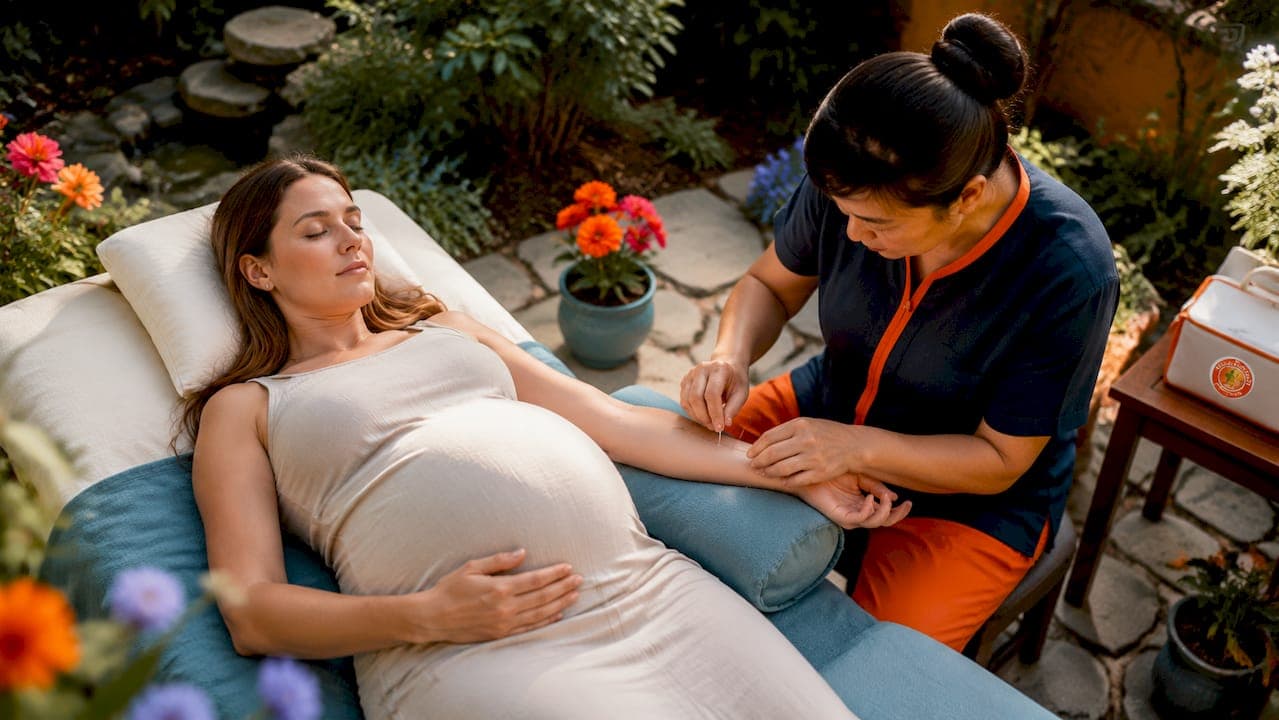
Nausea and vomiting affect the majority of pregnant women, particularly in the first trimester. The PC6 point, located on the inner wrist, is the most researched acupuncture point for nausea relief. Stimulating it triggers the release of serotonin and regulates gastric motility, which directly reduces the urge to retch.
A randomised controlled trial of 593 women under 14 weeks gestation found that traditional acupuncture significantly reduced nausea and dry retching within two weeks of treatment. That speed of response matters because the first trimester is precisely when medication options are most restricted. Acupuncture fills that gap without exposing the developing foetus to pharmacological agents.
Treatment for morning sickness typically follows this pattern:
- PC6 stimulation: Needles placed at the inner wrist, two finger-widths above the wrist crease
- ST36 support: A secondary point on the lower leg that supports digestive function
- Weekly sessions: Sessions lasting 30–45 minutes are standard across clinical protocols
- Short course: Most women notice improvement within two to four sessions
Pro Tip: Book your first session before week 10 if nausea is severe. The earlier treatment begins, the more time the body has to respond before symptoms peak.
2. What benefits does acupuncture offer for back and pelvic pain?
Low back pain and pelvic girdle pain are among the most common physical complaints during pregnancy. The growing uterus shifts the body's centre of gravity, placing strain on the lumbar spine, sacroiliac joints, and pubic symphysis. Conventional options such as paracetamol provide limited relief and carry their own considerations in pregnancy.

A 2023 meta-analysis and a 2012 Cochrane review both confirm that acupuncture outperforms conventional treatments for pregnancy-related low back and pelvic girdle pain. One trial involving 386 women found that acupuncture combined with stabilising exercises produced superior outcomes compared to exercises alone. Acupuncture for musculoskeletal pain works by improving local circulation, reducing muscle tension, and dampening inflammatory signalling.
Practitioners focus on distal limb points rather than the abdomen, keeping treatment safe throughout all trimesters. Common target areas include the lower legs, feet, and hands, which correspond to lumbar and pelvic regions in Traditional Chinese Medicine mapping.
| Condition | Acupuncture approach | Evidence level |
|---|---|---|
| Low back pain | Distal points, BL40, GB34 | Cochrane review confirmed |
| Pelvic girdle pain | SP6, GB30, distal limb points | Meta-analysis confirmed |
| Sacroiliac dysfunction | Combined with stabilising exercises | RCT with 386 women |
| General musculoskeletal tension | Full-body assessment, individualised points | Clinical consensus |
3. How acupuncture supports emotional well-being and anxiety
Pregnancy-related anxiety and low mood are common and frequently go untreated in the first trimester because antidepressants and anxiolytics carry foetal risk. Acupuncture offers a drug-free alternative that addresses the neurological roots of anxiety rather than simply masking symptoms.
Acupuncture modulates neurotransmitters and reduces cortisol, the primary stress hormone, through its effects on the hypothalamic-pituitary-adrenal axis. Lower cortisol levels translate directly into reduced feelings of tension and improved mood stability. Intervention studies and systematic reviews support these emotional benefits, making acupuncture a credible adjunct to conventional maternity mental health support.
The nervous system benefits extend further. Acupuncture improves sleep quality and reduces fatigue in pregnancy, particularly during the second trimester when hormonal fluctuations can disrupt rest. Better sleep reinforces emotional resilience, creating a positive cycle that supports both mother and baby.
Key emotional benefits reported in clinical literature include:
- Reduced generalised anxiety and worry
- Improved sleep onset and duration
- Lower perceived stress scores
- Stabilised mood across the week between sessions
- Greater sense of physical comfort and bodily awareness
Pro Tip: Combine acupuncture with simple breathing exercises in the 24 hours after each session. The nervous system remains in a more receptive state post-treatment, making relaxation techniques more effective during that window.
4. In what ways does acupuncture prepare the body for labour?
Pre-birth acupuncture is a specific protocol designed to prepare the cervix, pelvis, and uterus for labour. It differs from general prenatal acupuncture in its timing and point selection. Sessions begin at 36 weeks and continue weekly until birth.
Weekly acupuncture from 36 to 40 weeks shortens active and second-stage labour by approximately 1.5 hours on average. That reduction is clinically meaningful. A shorter active labour reduces maternal exhaustion and lowers the likelihood of requiring intervention. Long-term practitioners observe that pre-birth protocols may also reduce reliance on epidurals and caesarean sections, though individual outcomes vary.
The mechanism involves cervical ripening through improved local blood flow and the relaxation of pelvic ligaments and musculature. Specific points stimulate the release of prostaglandins, which soften the cervix naturally. For a detailed look at how these protocols influence labour progression, Parkstherapycentre's guide on the role of acupuncture in childbirth covers the clinical evidence in depth.
Each pre-birth session lasts 30–45 minutes and typically includes a brief assessment of foetal position, maternal energy levels, and any new symptoms. This individualised approach means the practitioner adjusts points each week rather than applying a fixed formula.
5. What safety considerations should pregnant women know?
Acupuncture during pregnancy is safe when delivered by a practitioner with specialist prenatal training. The key word is specialist. General acupuncture training does not automatically equip a practitioner to work safely with pregnant patients.
Fewer than 10 points out of over 360 are contraindicated in pregnancy. These forbidden points, including LI4 on the hand and BL60 on the ankle, can stimulate uterine contractions if needled incorrectly. A trained prenatal acupuncturist knows these points and avoids them as a matter of course. Abdominal needling is also avoided, particularly in the first and second trimesters, with practitioners focusing instead on distal limb points.
Safety checklist for choosing a prenatal acupuncturist:
- Verified qualifications: Look for membership of the British Acupuncture Council (BAcC) or equivalent professional body
- Prenatal specialism: Ask specifically about experience treating pregnant patients
- GP or midwife communication: A good practitioner welcomes dialogue with your maternity team
- Clear contraindication knowledge: They should be able to explain which points they avoid and why
- Comfortable treatment position: Reputable practitioners use side-lying or semi-reclined positions from the second trimester onward
"Effectiveness and safety in prenatal acupuncture depend on the practitioner's specialised understanding of physiological changes during pregnancy, not simply on rigid point protocols. A practitioner who adapts treatment to each trimester and each individual is far safer than one applying a standard formula."
Acupuncture works best as an adjunct to conventional maternity care, not a replacement. Always inform your midwife or obstetrician that you are receiving acupuncture. Coordinated care produces better outcomes than parallel, unconnected treatments. If you are preparing for your first session, Parkstherapycentre's guide on your first acupuncture session explains what to expect and how to communicate effectively with your practitioner.
Key takeaways
Prenatal acupuncture is a clinically supported, drug-free therapy that relieves nausea, back pain, and anxiety while preparing the body for a shorter, less intervention-heavy labour.
| Point | Details |
|---|---|
| Morning sickness relief | PC6 stimulation reduces nausea within two weeks, with no pharmacological risk to the foetus. |
| Back and pelvic pain | Meta-analyses confirm acupuncture outperforms conventional treatments for lumbar and pelvic girdle pain. |
| Emotional well-being | Acupuncture lowers cortisol and modulates neurotransmitters, reducing anxiety and improving sleep. |
| Labour preparation | Weekly sessions from 36 weeks shorten active labour by approximately 1.5 hours on average. |
| Safety depends on training | Fewer than 10 points are contraindicated; a specialist practitioner avoids them as standard practice. |
What I have observed after years of prenatal acupuncture practice
The patients who benefit most from acupuncture during pregnancy are not always those with the most severe symptoms. They are the ones who arrive with realistic expectations and a willingness to treat acupuncture as part of a wider care plan rather than a standalone cure. That mindset shift changes everything.
What surprises many pregnant women is how quickly the emotional benefits appear. Most expect relief from nausea or back pain. What they do not anticipate is sleeping better after the second session, or feeling noticeably less anxious between appointments. The nervous system response is real, and it is often the benefit that keeps patients coming back.
The safety question comes up in every initial consultation, and rightly so. My honest view is that the risk of acupuncture in pregnancy is not in the needles. It is in choosing a practitioner without the right training. The contraindicated points are few and well-documented. A qualified prenatal acupuncturist avoids them without a second thought. The risk lies in assuming that any acupuncturist is automatically equipped for prenatal work.
Acupuncture does not replace your midwife, your scans, or your birth plan. What it does is address the gaps that conventional care does not always fill: the nausea that no one prescribes for in the first trimester, the pelvic pain that physiotherapy alone does not fully resolve, the anxiety that goes undiscussed at routine appointments. That is where it earns its place.
— Ivan
Prenatal acupuncture at Parkstherapycentre
Parkstherapycentre has supported pregnant women across Bedfordshire and Buckinghamshire since 1986, offering specialist acupuncture for pregnancy delivered by qualified practitioners with experience in prenatal protocols. Treatments are tailored to each trimester, from first-trimester nausea management through to pre-birth preparation from 36 weeks.

Every session is conducted with full awareness of contraindicated points, safe positioning, and coordination with your existing maternity care team. Parkstherapycentre also offers physiotherapy for pregnancy alongside acupuncture, giving you access to a genuinely integrated approach to prenatal well-being. Book online or contact the team directly to discuss which treatment is right for your stage of pregnancy.
FAQ
Is acupuncture safe during pregnancy?
Acupuncture is safe in pregnancy when delivered by a practitioner with specialist prenatal training. Fewer than 10 acupuncture points are contraindicated, and a qualified practitioner avoids them as standard practice.
When should I start acupuncture during pregnancy?
Acupuncture can begin in the first trimester for nausea relief and continues throughout pregnancy. Pre-birth protocols typically start at 36 weeks to prepare the cervix and pelvis for labour.
How many sessions does prenatal acupuncture require?
Most clinical protocols recommend weekly sessions, each lasting 30–45 minutes. The number of sessions depends on the symptom being treated, with nausea often improving within two to four appointments.
Can acupuncture reduce the need for pain relief in labour?
Clinical trials show that weekly pre-birth acupuncture from 36 weeks shortens active labour and may reduce reliance on epidurals and caesarean sections, though individual outcomes vary.
Does acupuncture help with pregnancy anxiety?
Acupuncture reduces cortisol and modulates neurotransmitters, producing measurable reductions in anxiety and improvements in sleep quality, particularly from the second trimester onward.