
TL;DR:
- Post-surgery rehabilitation is a structured process involving physiotherapy, pain management, and progressive exercises to restore function efficiently. Beginning physiotherapy within 24–48 hours reduces complications and shortens recovery time, with phase-specific protocols guiding safe progression. Prehabilitation prior to surgery enhances strength and outcomes, emphasizing proactive preparation and early mobilization for optimal recovery.
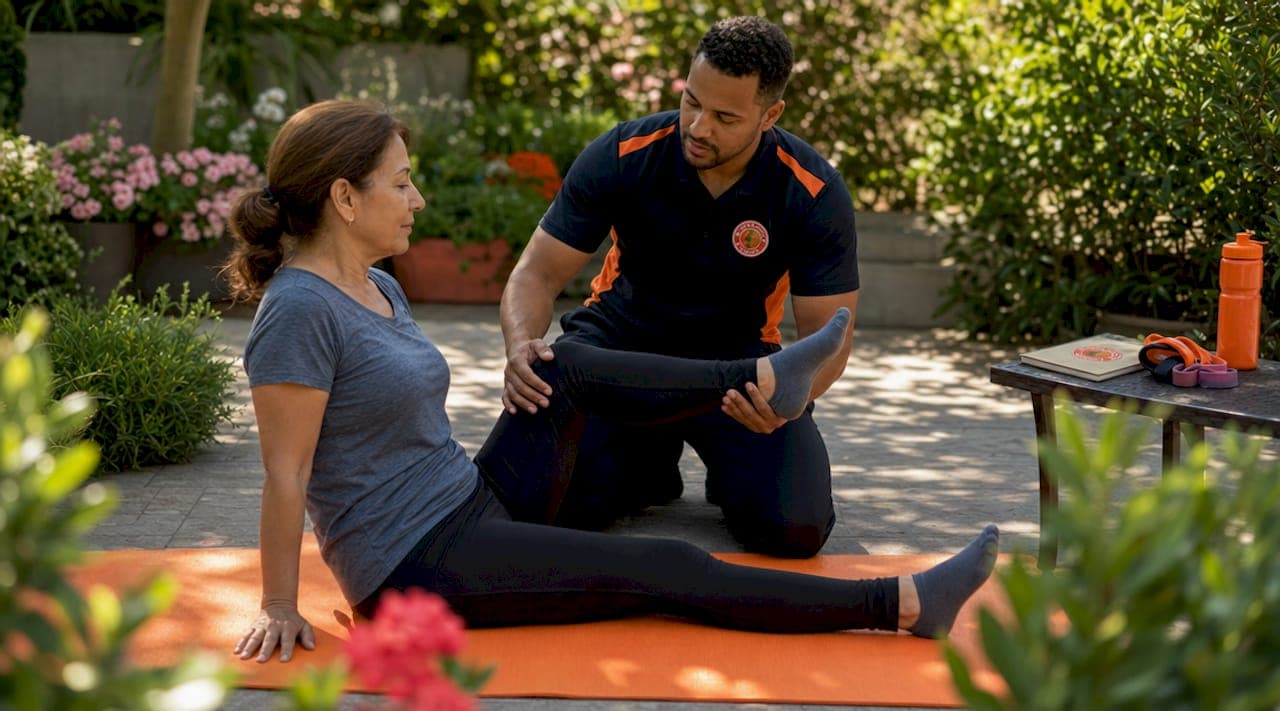
Post-surgery rehabilitation is the structured process of regaining strength, mobility, and function following a surgical procedure. Clinicians refer to this formally as postoperative rehabilitation, a discipline that combines physiotherapy, pain management, and progressive exercise to restore the body to its pre-surgery capacity or beyond. Structured rehabilitation reduces recovery time by approximately 40% compared to unguided recovery, which means the difference between returning to normal life in three months versus five. This post surgery rehabilitation guide covers every phase, from the first 24 hours after your operation through to returning to sport or work, with procedure-specific timelines, prehabilitation strategies, and the warning signs you must never ignore.
What are the key phases of post-surgery rehabilitation?
Rehabilitation follows four biological phases that align with how tissue heals at a cellular level. Understanding these phases stops you from pushing too hard too soon or, equally damaging, resting too long.
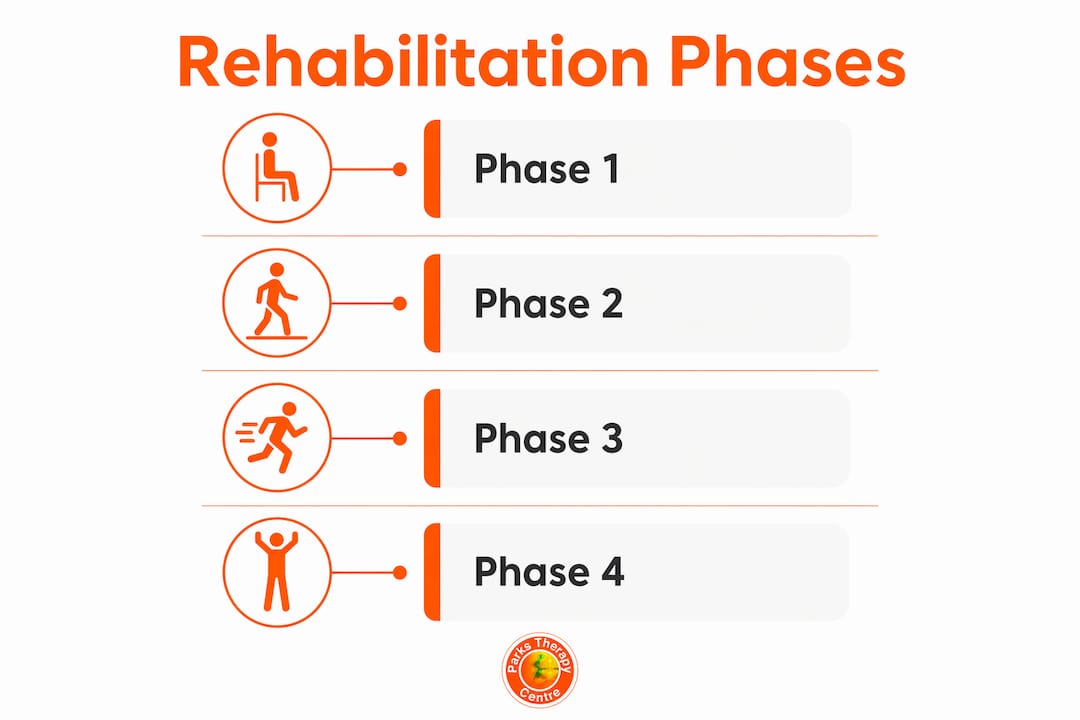
| Phase | Timeline | Primary goals | Typical activities |
|---|---|---|---|
| Acute / Protection | Days 1–14 | Control pain and swelling | Rest, ice, elevation, gentle range-of-motion |
| Early motion | Weeks 2–6 | Restore joint movement | Assisted stretching, light walking, hydrotherapy |
| Strengthening | Weeks 6–12 | Rebuild muscle and stability | Resistance training, balance work, progressive loading |
| Return to activity | Months 3–6+ | Restore full function | Sport-specific drills, functional movement patterns |
Phase 1: acute protection (days 1–14)
The body's immediate priority after surgery is inflammation control. Pain, swelling, and limited movement are normal biological responses, not signs that something has gone wrong. Your physiotherapist will guide you through gentle range-of-motion exercises to prevent joint stiffness while protecting the surgical repair. Early mobilisation within 24 hours reduces hospital stay by 1–2 days, which confirms that rest does not mean complete inactivity.
Phase 2: early motion (weeks 2–6)
Once the initial wound has stabilised, the focus shifts to recovering joint movement without stressing the healing tissue. Hydrotherapy is particularly effective here because water reduces the load on joints while allowing a full range of movement. Walking distances increase gradually, and you begin to rebuild the neuromuscular connections that surgery temporarily disrupts.
Phase 3: strengthening (weeks 6–12)
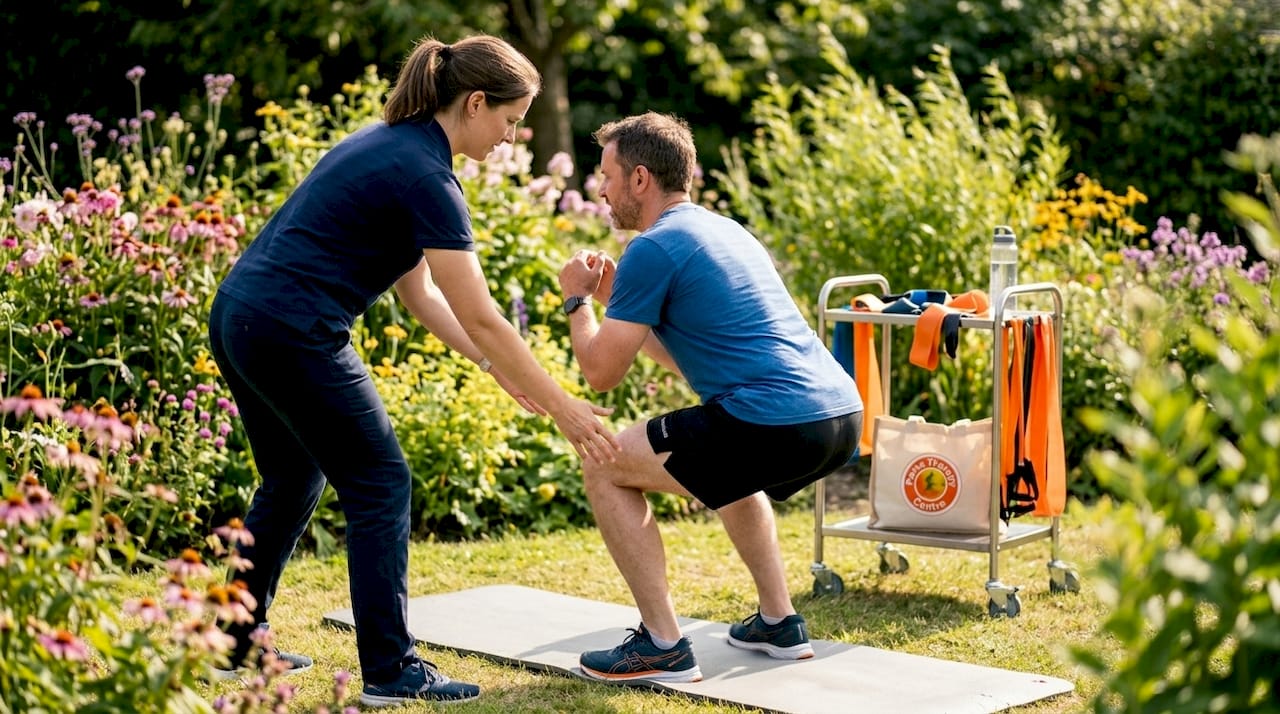
Muscle atrophy sets in faster than most patients expect. Research shows measurable strength loss occurs within the first week of immobility, which is why resistance training begins as soon as tissue integrity allows. Exercises progress from bodyweight movements to resistance bands and then to weighted exercises, always guided by pain response and clinical assessment.
Phase 4: return to activity (months 3–6+)
This phase is where patients most commonly make mistakes. Feeling well does not equal being fully healed. Return-to-sport or return-to-work clearance depends on objective benchmarks such as limb symmetry indices, where the operated limb must reach at least 90% of the strength of the unaffected side before full activity resumes.
- Warning signs that require urgent attention in any phase:
- Fever above 38.3°C in the first 48 hours
- Uncontrolled pain that does not respond to prescribed medication
- Increasing redness, warmth, or discharge at the incision site
- Sudden swelling in the calf (potential deep vein thrombosis)
Pro Tip: Keep a daily recovery log noting pain scores, swelling levels, and exercise completion. This gives your physiotherapist objective data to adjust your programme and gives you visible proof of progress, which is a powerful motivator during the harder weeks.
How do rehabilitation requirements vary by surgical procedure?
Total knee and hip replacements require 12–20 physiotherapy sessions, while ACL reconstruction demands 30–40 sessions spread across 9–12 months, and rotator cuff repair sits in between at 20–30 sessions over six months. These figures matter because they set realistic expectations and help you plan around work, childcare, and finances before your operation date.
| Procedure | Session count | Recovery timeline | Key milestone |
|---|---|---|---|
| Total knee replacement | 12–20 sessions | 3–6 months | Walking unaided at 6 weeks |
| Total hip replacement | 12–20 sessions | 3–6 months | Full weight-bearing at 6 weeks |
| ACL reconstruction | 30–40 sessions | 9–12 months | 90% limb symmetry index |
| Rotator cuff repair | 20–30 sessions | 6 months | Full overhead reach at 4 months |
For a detailed breakdown of surgery-specific exercises and milestones, the type of procedure dictates not just duration but intensity and sequencing of exercises.
ACL reconstruction: the long game
ACL reconstruction is the most demanding common surgical rehabilitation. The graft used to replace the ligament goes through a process called ligamentisation, where it temporarily weakens before strengthening, which peaks between three and six months post-surgery. This is the window when re-injury risk is highest, and why return-to-sport decisions must be based on testing rather than time alone.
Joint replacement: consistency over intensity
Total knee and hip replacement rehabilitation rewards consistency more than intensity. Patients who attend every session and complete their home exercises recover significantly faster than those who attend sessions but skip home work. The step-by-step physiotherapy guide from Parkstherapycentre outlines how progressive loading works across these procedures in practical terms.
How does prehabilitation improve your post-surgery outcomes?
Prehabilitation is defined as 4–6 weeks of targeted physical preparation completed before elective surgery. Prehab improves strength by 20–30% and shortens hospital stays, which means you enter surgery with a physiological reserve that directly accelerates your postoperative healing cascades. Most patients focus entirely on the operation itself and neglect the weeks before it. That is a missed opportunity.
Effective prehabilitation includes:
- Strength training targeting the muscles around the surgical site (quadriceps before knee surgery, rotator cuff muscles before shoulder surgery)
- Aerobic conditioning through walking, cycling, or swimming to improve cardiovascular fitness and lung capacity
- Smoking cessation at least four weeks before surgery, as smoking reduces tissue oxygenation and significantly increases infection risk
- Nutritional preparation by increasing protein intake to support tissue repair from day one post-surgery
- Sleep optimisation to maximise the body's natural repair processes in the weeks leading up to the procedure
Prehabilitation combined with structured post-op rehab produces the fastest and most complete functional recoveries observed in clinical practice. The two are not separate strategies. They are two halves of the same plan.
Pro Tip: Mental preparation is as important as physical preparation. Techniques such as guided visualisation, mindfulness, and breathing exercises reduce pre-surgical anxiety, which lowers cortisol levels and creates a better hormonal environment for healing. Ask your GP or physiotherapist about referral to a clinical psychologist if anxiety is significant.
What practical steps should you follow during recovery?
The first 48 hours after surgery set the trajectory for the weeks that follow. Starting physiotherapy within 24–48 hours post-operation is the single most impactful decision you can make in the acute phase.
Pain management: take medication on schedule
Fixed-schedule pain medication prevents compensatory movement patterns that cause chronic problems and delay healing. Taking pain relief only when pain becomes severe means you are always playing catch-up, and severe pain triggers stress hormones that actively slow tissue repair. Take medication at the prescribed intervals, even if you feel comfortable, for the first 72 hours.
Early movement: the 24-hour rule
Early light movement within 24 hours reduces DVT risk by 50% and postoperative pneumonia by 30%. This does not mean a gym session. It means ankle pumps in bed, sitting upright, and short supervised walks to the bathroom. These micro-movements maintain circulation, prevent blood pooling, and keep the lungs clear of fluid.
Home environment: prepare before you leave hospital
Home preparation boosts recovery satisfaction and reduces setbacks significantly. Before your operation date, make the following modifications:
- Remove trip hazards such as loose rugs and trailing cables from all walkways
- Install grab rails in the bathroom and beside the toilet
- Prepare a ground-floor sleeping area if stairs are a barrier
- Stock two weeks of easy-to-prepare, protein-rich meals
- Arrange transport to and from physiotherapy appointments for the first four weeks
- Place frequently used items at waist height to avoid bending or reaching
Know when to call for help. Contact your surgical team immediately if you experience a fever above 38.3°C, uncontrollable pain, signs of wound infection such as increasing redness or discharge, or sudden calf swelling. Early recognition of complications reduces readmission rates and prevents minor issues from becoming serious ones.
For home exercises that support mobility between clinic sessions, Parkstherapycentre provides a structured resource covering the most effective movements for each recovery phase.
Key takeaways
Structured rehabilitation combined with prehabilitation produces the fastest, safest recovery from surgery, with adherence to phase-specific protocols being the single most important factor in achieving full functional restoration.
| Point | Details |
|---|---|
| Start rehabilitation early | Beginning physiotherapy within 24–48 hours post-surgery cuts DVT risk and speeds recovery. |
| Follow phase-specific protocols | Each of the four rehabilitation phases has distinct goals; skipping ahead increases re-injury risk. |
| Prehab before surgery | Four to six weeks of targeted exercise before surgery improves post-op strength by 20–30%. |
| Match sessions to your procedure | ACL reconstruction requires 30–40 sessions; joint replacements need 12–20 for full recovery. |
| Recognise complication warning signs | Fever above 38.3°C, uncontrolled pain, or calf swelling require immediate medical attention. |
What I have learned from watching patients recover well and poorly
After years of observing rehabilitation outcomes across a wide range of surgical procedures, the pattern that stands out most clearly is this: the patients who recover fastest are rarely the fittest or the youngest. They are the most consistent.
The conventional wisdom that "more effort equals faster recovery" leads patients astray more often than any other misconception I encounter. Patients who push through pain signals in the strengthening phase regularly set themselves back by two to four weeks. The body communicates through pain for a reason, and overriding that signal without clinical guidance is not determination. It is a mistake.
What genuinely separates good outcomes from poor ones is the combination of prehabilitation and strict adherence to phase-appropriate exercise. Patients who arrive at surgery already strong, with a clear plan in place, consistently outperform those who are fitter but unprepared. The physiological reserve built through prehab is not a luxury. It is the foundation the body draws on during the most demanding weeks of recovery.
The other underestimated factor is communication. Patients who contact their physiotherapist at the first sign of a problem, rather than waiting to see if it resolves, avoid the majority of serious setbacks. Proactive dialogue with your clinical team is not a sign of weakness or over-caution. It is the behaviour of someone who understands how recovery actually works.
If you take one thing from this guide, let it be this: your rehabilitation plan is not a suggestion. It is the clinical protocol your surgeon and physiotherapist have designed specifically for your procedure and your body. Follow it precisely, ask questions when something feels wrong, and trust the process even when progress feels slow.
— Ivan
How Parkstherapycentre supports your recovery after surgery
Parkstherapycentre has been delivering specialist physiotherapy across Bedfordshire and Buckinghamshire since 1986, with a team qualified to manage postoperative rehabilitation for joint replacements, ACL reconstruction, rotator cuff repair, and spinal surgery.
The centre offers tailored rehabilitation protocols built around your specific procedure and surgery date, home visit physiotherapy for patients with limited mobility in the early acute phase, and transparent pricing with insurance cover accepted from major providers. Whether you are preparing for an elective procedure and want to start prehabilitation, or you are already in recovery and need a structured plan, book your physiotherapy assessment with Parkstherapycentre to get a programme designed around your timeline and goals.
FAQ
What is post-surgery rehabilitation?
Post-surgery rehabilitation is the structured clinical process of restoring strength, mobility, and function after a surgical procedure. It combines physiotherapy, pain management, and progressive exercise across four defined phases spanning days to months depending on the procedure.
How soon should physiotherapy start after surgery?
Physiotherapy should begin within 24–48 hours of surgery when clinically safe to do so. Early mobilisation at this stage reduces DVT risk by 50% and shortens hospital stay by 1–2 days.
How many physiotherapy sessions will I need?
Session requirements vary by procedure. Total knee and hip replacements typically require 12–20 sessions, rotator cuff repair 20–30 sessions, and ACL reconstruction 30–40 sessions spread across 9–12 months.
What is prehabilitation and does it really help?
Prehabilitation is 4–6 weeks of targeted exercise completed before elective surgery. It improves post-operative strength by 20–30% and reduces hospital stay, making it one of the highest-return investments in your recovery.
When should I contact my surgeon during rehabilitation?
Contact your surgical team immediately if you develop a fever above 38.3°C, experience uncontrolled pain, notice increasing redness or discharge at the wound site, or develop sudden swelling in the calf, as these are signs of complications requiring urgent assessment.