

TL;DR:
- Rehabilitation exercises are clinician-prescribed activities designed to reduce pain, restore function, and prevent re-injury after musculoskeletal damage or surgery. These tailored programs focus on neurological, behavioral, and physical adaptations, with high adherence and psychological support being crucial for effective recovery. Evidence shows that therapeutic exercises, especially aquatic therapy and motor control training, provide significant pain relief and functional improvement across various conditions.
Rehabilitation exercises are structured therapeutic activities designed to reduce pain, restore function, and prevent re-injury after surgery or musculoskeletal damage. The term used in clinical settings is therapeutic exercise, and it covers a far wider spectrum than most people realise. From strength training and Pilates to aquatic therapy and motor control work, these programmes are built around your specific condition, not a generic fitness goal. Understanding why rehab exercises matter is the first step toward making a genuinely informed choice about your recovery.
Why choose rehabilitation exercises over general workouts?
Therapeutic exercise and a standard gym session are not the same thing. A general workout is designed to improve fitness. A rehabilitation programme is designed to fix a specific problem, and that distinction changes everything about how it is structured.
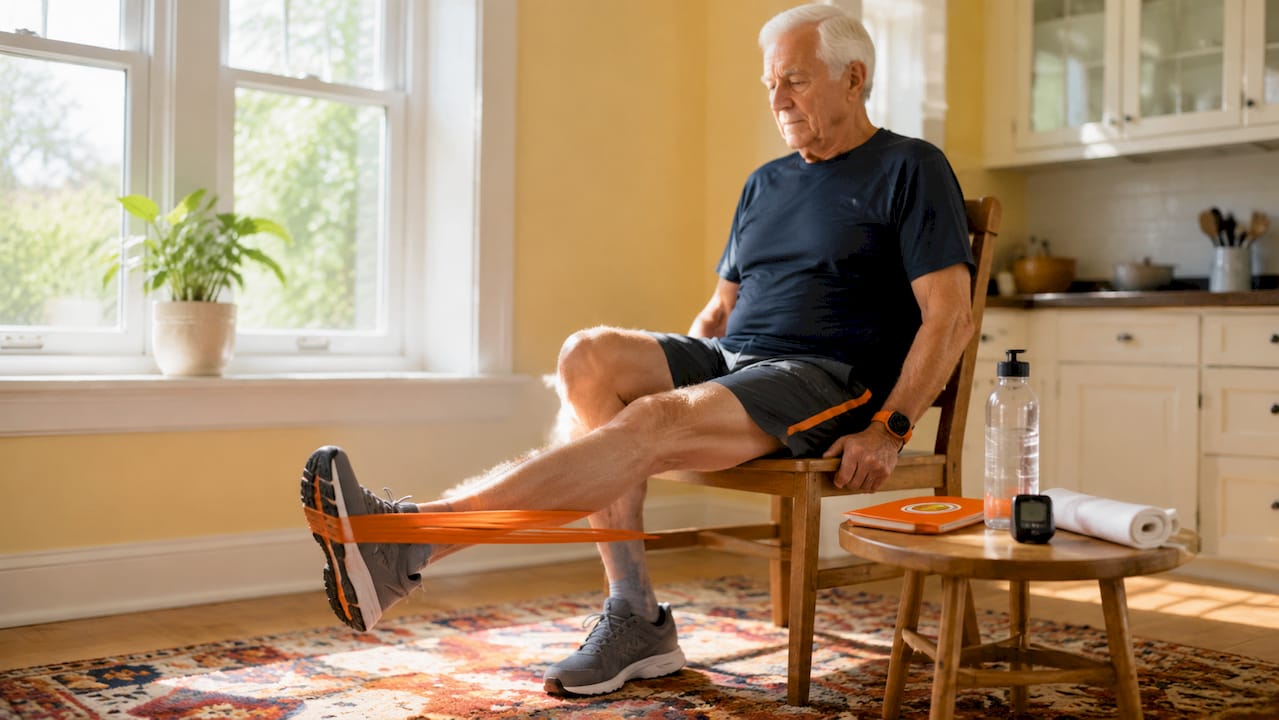
Clinician-directed programmes account for your diagnosis, your stage of recovery, and your age. The VA/DoD 2022 guideline endorses multiple exercise modalities as core interventions for both acute and chronic low back pain, including aerobic exercise, Pilates, motor control training, and tai chi. Each modality serves a different purpose and suits a different patient profile.
The main types of rehabilitation exercise include:
- Strength training: Rebuilds muscle support around injured joints
- Aerobic exercise: Improves cardiovascular conditioning and reduces systemic inflammation
- Aquatic therapy: Reduces load on joints while maintaining movement quality
- Motor control exercises: Retrain neuromuscular patterns disrupted by injury
- Pilates: Builds deep core stability and postural awareness
- Tai chi: Improves balance, coordination, and proprioception
Self-directed exercise, by contrast, lacks the clinical oversight that catches poor movement patterns before they cause further damage. Personalised, clinician-guided programmes consistently outperform generic exercise for managing musculoskeletal conditions. The difference is not effort. It is precision.
Pro Tip: If you are recovering from surgery, ask your physiotherapist to explain the rationale behind each exercise in your programme. Understanding the "why" behind each movement significantly improves adherence.
What does the research say about rehab exercise benefits?
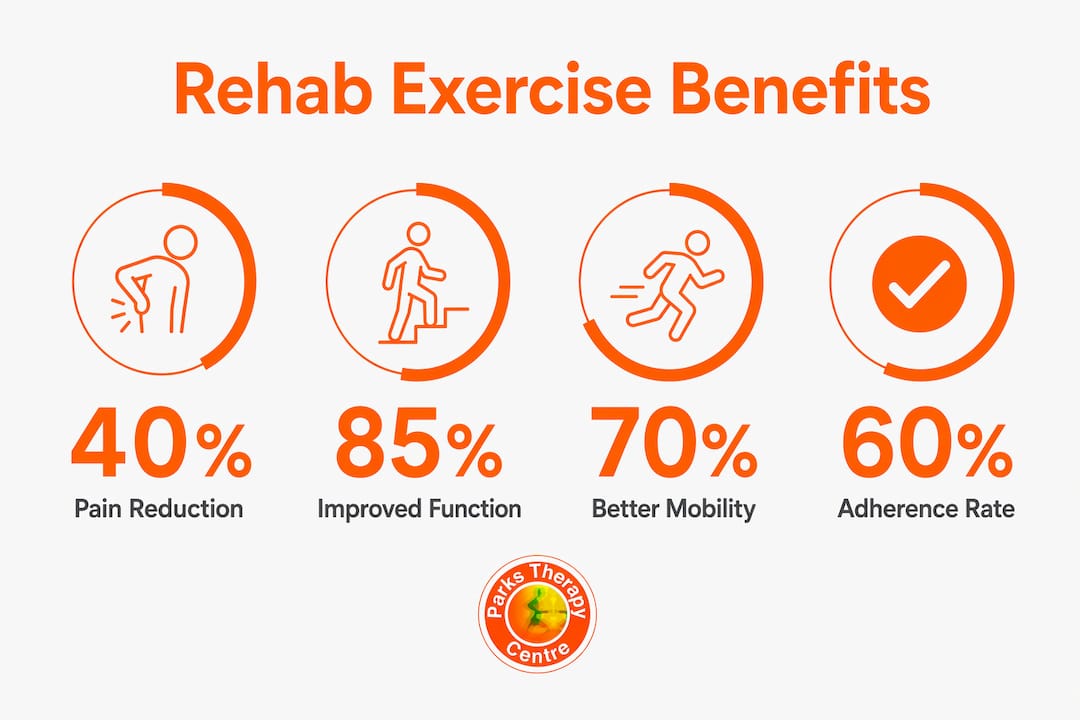
The evidence base for therapeutic exercise is substantial and growing. A 2026 umbrella review published in Frontiers in Pain Research examined 116 systematic reviews and found that 69 included reviews showed improved pain outcomes following therapeutic exercise for knee osteoarthritis. That is not a marginal finding. It represents a consistent signal across an enormous body of literature.
Aquatic rehabilitation has attracted particular attention. A 2026 meta-analysis of 29 trials involving 1,984 participants found that aquatic rehab produced an SMD of 0.55 for symptoms and 0.50 for physical function compared to controls. These are clinically meaningful effect sizes. They mean patients in water-based programmes experienced noticeably better outcomes than those who received no structured intervention.
"Exercise prescription quality, including dose, intensity, progression, and adherence monitoring, may be more clinically relevant than the specific exercise protocol used." — Frontiers in Physiology, 2026
The table below summarises key findings from recent research:
| Condition | Intervention | Key Outcome |
|---|---|---|
| Knee osteoarthritis | Therapeutic exercise (multiple types) | 69 of 116 reviews showed improved pain |
| Knee joint dysfunction | Aquatic rehabilitation (8+ weeks) | SMD 0.55 for symptoms, 0.50 for function |
| Low back pain | ACSM guideline-based exercise | High adherence reduces VAS and ODI scores significantly |
| Post-lumbar fusion | ICBT combined with core training | Reduced movement fear, improved adherence |
One finding stands out as genuinely counter-intuitive. A 2026 meta-analysis of 12 knee osteoarthritis studies found that strength gains explain only about 2% of improvements in pain from rehabilitation exercise. That figure should reframe how you think about the importance of rehab exercises. The benefit is not primarily about getting stronger. It is about changing how your nervous system processes movement and pain.
How do adherence and psychology shape rehabilitation outcomes?
Knowing the right exercises is only half the equation. Doing them consistently, at the right dose, is where most recovery programmes succeed or fail.
The American College of Sports Medicine (ACSM) publishes guidelines on exercise dose for musculoskeletal conditions. Research shows that high adherence of 75% or more to ACSM guideline-based prescriptions leads to significant reductions in Visual Analogue Scale pain scores, Oswestry Disability Index scores, and Roland-Morris Disability Questionnaire scores. Adherence is not a soft variable. It is a clinical outcome driver.
Psychological factors play a larger role than most patients expect. Kinesiophobia, the fear of movement after injury, is one of the most common barriers to recovery. A 2026 randomised controlled trial published in BMC Musculoskeletal Disorders tested internet-based cognitive behavioural therapy (ICBT) combined with core muscle training in lumbar fusion patients. The results showed that ICBT with graded exposure produced significant pain reductions and better adherence than the control group. Addressing the fear of movement is as important as addressing the movement itself.
Key factors that determine rehabilitation programme effectiveness:
- Exercise dose: Frequency, intensity, and duration must match ACSM guidelines for your condition
- Progression: Exercises must become progressively more demanding as you recover
- Adherence monitoring: Your clinician should track whether you are completing sessions as prescribed
- Graded exposure: Gradually reintroducing feared movements reduces kinesiophobia and builds confidence
- Behavioural support: Combining exercise with psychological strategies improves long-term outcomes
Pro Tip: Keep a simple exercise diary during your rehabilitation programme. Recording what you completed, how it felt, and any pain scores gives your physiotherapist the data needed to adjust your programme at each appointment.
For patients recovering from surgery, post-surgical recovery exercises that incorporate graded exposure have shown measurable improvements in both physical and psychological outcomes.
Which exercises work best for knee OA and low back pain?
These two conditions account for a significant proportion of rehabilitation referrals in the UK. The evidence for each points in slightly different directions, which is why condition-specific programming matters.
For knee osteoarthritis, aquatic rehabilitation is particularly well-suited to patients who cannot tolerate the load of land-based exercise. The 2026 meta-analysis found that aquatic rehab is especially effective for patients under 60, with the strongest gains in balance and proprioception rather than flexibility or mobility. Programmes need to run for at least 8 weeks to produce significant results. Shorter interventions show weaker effects. For knee injury prevention and management, combining aquatic and land-based work after the initial phase tends to produce the best long-term outcomes.
For low back pain, the VA/DoD 2022 guidelines recommend a broader menu of options. Motor control exercises target the deep stabilising muscles of the spine. Pilates builds the same capacity through a more structured movement framework. The benefits of Pilates for injury recovery are well-documented, particularly for chronic low back pain where core stability is compromised.
| Feature | Aquatic Rehabilitation | Land-Based Rehabilitation |
|---|---|---|
| Joint load | Significantly reduced | Full or partial load |
| Best suited for | Low load tolerance, under 60s with knee OA | General musculoskeletal conditions |
| Primary gains | Balance, proprioception, neuromuscular control | Strength, functional movement, endurance |
| Minimum duration | 8 weeks for significant effect | Varies by condition and protocol |
| Psychological benefit | High (reduced fear of movement in water) | High (when combined with graded exposure) |
For patients managing both conditions, physiotherapy home exercises that extend the clinic-based programme into daily life are a practical way to maintain dose and progression between appointments.
Key takeaways
Rehabilitation exercises work because they target pain, function, and movement fear simultaneously, not just muscle strength.
| Point | Details |
|---|---|
| Rehab differs from general exercise | Clinician-directed programmes are tailored to your diagnosis, stage, and age for better outcomes. |
| Evidence base is strong | A 2026 umbrella review of 116 systematic reviews confirmed consistent pain improvements from therapeutic exercise. |
| Strength is not the main mechanism | Strength gains explain only about 2% of pain relief, meaning neurological and behavioural changes drive most benefit. |
| Adherence determines results | Patients meeting 75% or more of ACSM-prescribed exercise doses show significantly better pain and function scores. |
| Psychology matters as much as physiology | Combining ICBT with core training reduces kinesiophobia and improves long-term adherence post-surgery. |
Rehabilitation exercises: what 20 years of patient outcomes taught me
Most patients arrive expecting rehabilitation to be a straightforward physical process. Do the exercises, build the strength, recover. What surprises them, and what the 2026 research now confirms, is that the physical component is almost secondary to the behavioural one.
I have seen patients with objectively strong quadriceps who still cannot walk down stairs without pain. And I have seen patients with modest strength gains who return to full sport within three months. The difference, almost every time, is how they relate to movement. Fear of re-injury is the single biggest barrier I encounter in clinical practice. It is more disabling than the injury itself in a significant proportion of cases.
The integration of graded exposure and cognitive behavioural strategies into rehabilitation programmes is not a trend. It is a clinical necessity. Programmes that address only the physical side of recovery leave patients vulnerable to relapse, particularly in the 6–12 month window after surgery when supervised sessions have ended.
My advice to anyone choosing rehab for recovery is this: find a clinician who asks about your confidence in movement, not just your pain score. The two are related, but they are not the same thing. A programme that monitors both will outperform one that tracks only physical metrics. Musculoskeletal therapy that integrates these approaches is the standard you should expect, not a premium add-on.
— Ivan
Start your rehabilitation programme with Parkstherapycentre
Parkstherapycentre has been delivering evidence-based physiotherapy and rehabilitation across Bedfordshire and Buckinghamshire since 1986. Their team designs personalised rehabilitation programmes that draw on the latest clinical research, including aquatic therapy, Pilates, motor control training, and post-surgical recovery protocols.
Whether you are recovering from a knee replacement, managing chronic low back pain, or returning to sport after a soft tissue injury, Parkstherapycentre offers expert physiotherapy services tailored to your condition and goals. The centre accepts most major insurance providers and offers online booking across all locations. Book your initial assessment today and get a rehabilitation programme built around the evidence, not guesswork.
FAQ
What are rehabilitation exercises?
Rehabilitation exercises are clinician-prescribed therapeutic activities designed to reduce pain, restore function, and prevent re-injury. They differ from general fitness exercise by being tailored to a specific diagnosis, recovery stage, and individual patient profile.
How long does a rehabilitation programme take to work?
Results depend on the condition and adherence. Aquatic rehabilitation for knee osteoarthritis requires at least 8 weeks to produce significant gains in balance and physical function. Low back pain programmes show significant improvement when patients meet 75% or more of their prescribed exercise dose.
Do rehabilitation exercises only work by building strength?
No. A 2026 meta-analysis found that strength explains only 2% of pain relief in knee osteoarthritis rehabilitation. Most benefit comes from neurological adaptation, graded exposure to movement, and behavioural changes rather than muscle strength alone.
Can psychological support improve rehabilitation outcomes?
Yes. A 2026 RCT showed that internet-based cognitive behavioural therapy combined with core muscle training reduced kinesiophobia and improved adherence in post-lumbar fusion patients compared to exercise alone.
Is aquatic therapy better than land-based rehabilitation?
Neither is universally superior. Aquatic rehabilitation is better suited to patients with low load tolerance, particularly those under 60 with knee osteoarthritis, while land-based programmes offer greater functional transfer to daily activities and sport. Most patients benefit from both at different stages of recovery.