
TL;DR:
- Choosing the right physiotherapy aids requires professional assessment focused on safety, comfort, and healing stage.
- Mobility aids like crutches, walking frames, and canes should match injury severity and recovery phase.
- Personalized physiotherapy plans and early expert guidance improve recovery outcomes and aid proper equipment use.
Choosing the right physiotherapy aid after an accident can be the difference between a swift, steady recovery and a prolonged struggle that risks becoming a long-term problem. The market is full of options, from basic crutches to resistance bands and adaptive bathroom equipment, and each tool serves a specific purpose at a specific stage of healing. Without the right guidance, it is easy to pick something unsuitable, either too challenging too soon or too passive to drive meaningful progress. This article walks you through the most practical and effective physiotherapy aids available, so you can make confident, informed choices as you recover.
Table of Contents
- How to choose the right physiotherapy aids
- Mobility aids: Crutches, walking frames, and canes
- Exercise bands and therapy balls for strength and flexibility
- Adaptive equipment for daily living
- Comparing physiotherapy aids: Which is right for your injury?
- Our perspective: The importance of personalisation and early action
- Take the next step with expert physiotherapy support
- Frequently asked questions
Key Takeaways
| Point | Details |
|---|---|
| Assessment is essential | Choosing aids after an accident should always begin with professional assessment. |
| Aids support recovery | Mobility tools and exercise equipment help restore strength, movement, and independence. |
| Adapt aids as you progress | Your needs for aids change throughout rehabilitation, so review their use regularly. |
| Early intervention matters | Using the right aids early reduces risk of complications and speeds your recovery. |
How to choose the right physiotherapy aids
Before you buy anything or borrow equipment from a friend, the single most important step is to be assessed by a qualified physiotherapist. Recovery is not linear, and what works brilliantly in week two may actually hold you back by week six. A proper assessment gives you a baseline, identifies the nature and severity of your injury, and maps out a progression that keeps you safe.
When evaluating any aid, consider three core factors:
- Safety: Does the aid reduce your risk of falling, overloading damaged tissue, or compensating in ways that create new problems?
- Comfort: Will you actually use it consistently? An uncomfortable aid often ends up in the corner of the room rather than supporting your recovery.
- Stage of healing: Aids should match where you are right now, not where you hope to be in a month.
There is also a timing argument that is hard to ignore. Early physiotherapy intervention is well established as a way to prevent acute injuries from developing into chronic pain conditions. Debates exist in clinical practice, particularly around post-ACL surgery weight-bearing: some clinicians advocate early loading to stimulate healing, whilst others urge caution to protect the graft in the early weeks. The takeaway is not that one approach is always right, but that your choices must be personalised through proper assessment rather than guesswork.
Pro Tip: Ask your physiotherapist to review your aids at every appointment, not just at the beginning. What supports you in week one may limit you in week four.
Investing time in personalised physiotherapy plans before selecting any equipment ensures your aids align with your actual needs. Equally, preparing for physiotherapy before your first session can help you get the most from that initial assessment.
Mobility aids: Crutches, walking frames, and canes
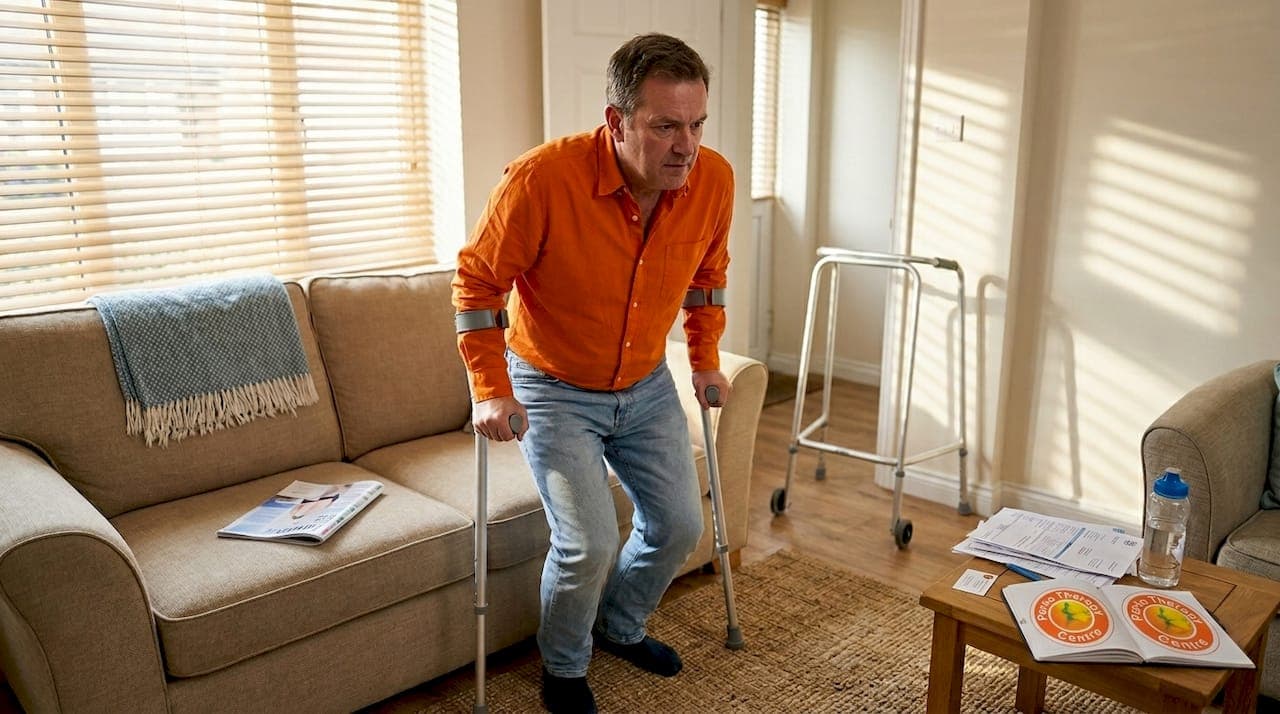
When your ability to walk or bear weight is compromised, mobility aids become your primary tool for safe movement. The three most common options are crutches, walking frames, and canes, and each suits a different type of situation.
Crutches are designed for injuries where you need to offload one or both legs entirely. They transfer weight through your arms and upper body, allowing you to move without putting pressure on a fracture or post-surgical site. Axillary crutches fit under the armpits, whilst forearm crutches, sometimes called elbow crutches, are lighter and preferred for longer-term use because they do not compress the armpit nerves.
Walking frames, also known as Zimmer frames, provide four points of contact with the ground, giving maximum stability. They are particularly useful when muscle weakness affects balance, or when an injury causes enough instability that crutches feel unsafe. Wheeled versions allow a smoother, more natural gait for those who can manage slightly more movement.
Canes are the lightest option and are ideal for minor support, confidence building, or as a transition aid towards full independence. A single-point cane suits those who need a mild offload or proprioceptive feedback (the sense of where your body is in space). Quad canes, which have four small feet, provide more stability than a single-point version.
| Aid | Best for | Weight-bearing level | Typical use stage |
|---|---|---|---|
| Axillary crutches | Lower limb fractures, post-surgery | Non to partial weight-bearing | Early to mid recovery |
| Forearm crutches | Longer-term mobility needs | Partial to full weight-bearing | Mid to late recovery |
| Walking frame | Balance issues, significant weakness | Minimal weight-bearing | Early recovery |
| Wheeled walking frame | Smoother gait, moderate instability | Partial weight-bearing | Mid recovery |
| Single-point cane | Minor instability, confidence | Near-full weight-bearing | Late recovery |
| Quad cane | Moderate instability | Partial to near-full | Mid to late recovery |
Key points to bear in mind when using mobility aids:
- Always have the height adjusted correctly. An aid set too low or too high changes your gait and puts stress through joints that should not be bearing load.
- Wear appropriate footwear. Slippers and socks on smooth flooring alongside crutches is a significant slip risk.
- Early intervention is vital even when using mobility aids, as passive rest without guided movement delays tissue healing.
Pro Tip: If you are unsure whether to use one crutch or two, always start with two and reduce under guidance. Using one crutch incorrectly can cause hip and back strain within days.
For practical day-to-day guidance, the essential physiotherapy tips for beginners are a reliable starting point, particularly if you are navigating your first injury. If your situation involves spinal recovery, reading about recovery after back surgery will help you understand when and how mobility aids play a role there too.
Exercise bands and therapy balls for strength and flexibility
Once you are past the most acute phase of your injury, rebuilding strength and flexibility becomes the central focus. Two of the most versatile and cost-effective tools for this are elastic exercise bands (resistance bands) and therapy balls.
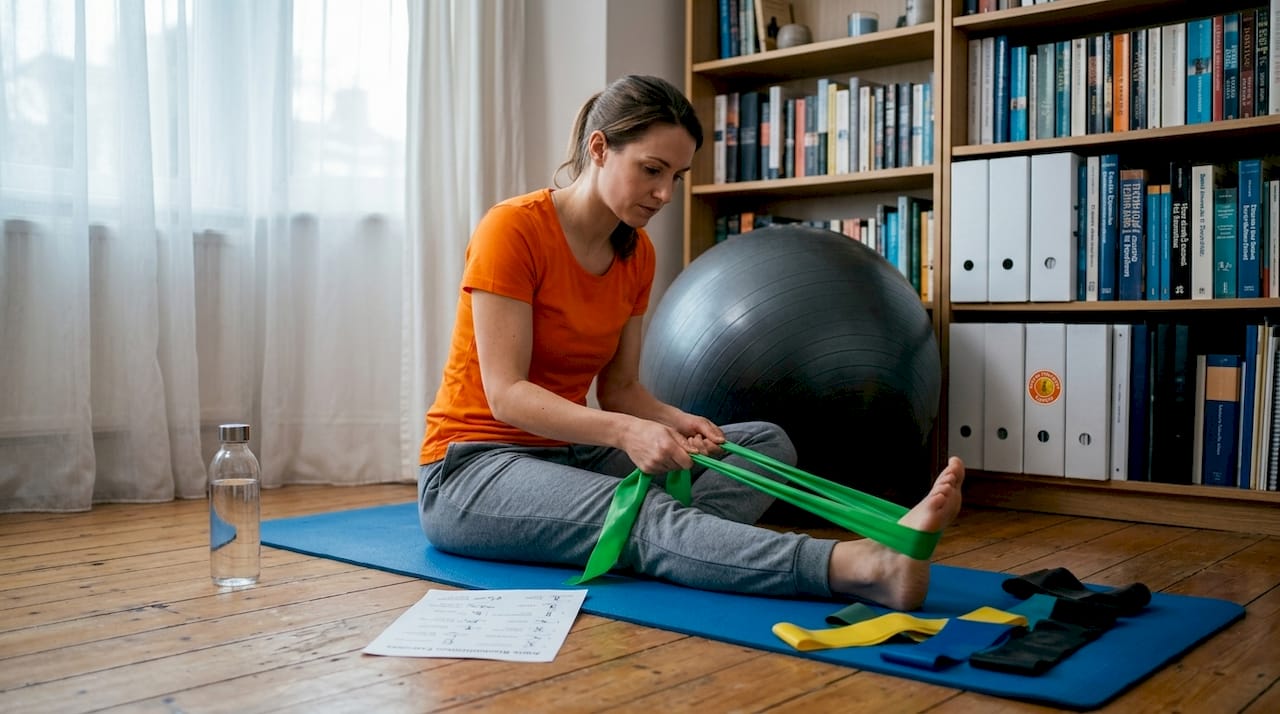
Resistance bands come in graduated resistance levels, typically colour-coded from light to heavy. This adjustability makes them ideal for rehabilitation, where you start gently and progressively increase the load as your muscles recover. A light band suits early rotator cuff rehabilitation or gentle knee strengthening, whilst a heavier band challenges the later stages of recovery where you need to rebuild functional strength for daily tasks.
Some key benefits of resistance bands in rehabilitation:
- They provide variable resistance throughout a movement, meaning the muscle works differently at different joint angles. This mirrors real-life demands better than some machine-based exercises.
- They are portable and can be used at home between clinical sessions, which keeps recovery momentum going.
- They reduce the risk of overloading a healing joint compared to free weights because the load is distributed across the movement arc.
Therapy balls, also known as Swiss balls or exercise balls, work differently. Rather than providing resistance, they create an unstable surface that forces your core muscles and stabilisers to engage constantly. This makes them particularly useful for core-focused rehabilitation and gentle lumbar mobilisation. They also support seated stretching for those who cannot yet get down to the floor comfortably.
Did you know? Early physiotherapy-guided exercise during recovery is associated with significantly reduced rates of long-term disability compared to rest-only approaches, yet many accident recovery patients wait weeks before beginning any active rehabilitation.
To get the most from these tools safely, build your home physiotherapy exercises routine around movements prescribed by your physiotherapist rather than generic exercise videos online. Your injury has specific patterns of weakness and tightness, and random exercises may reinforce those imbalances rather than correct them.
Pro Tip: Store your resistance band somewhere visible, like draped over a chair or hanging by the kettle. Out of sight genuinely means out of mind during recovery, and consistency is what drives progress.
Adaptive equipment for daily living
Physiotherapy aids are not limited to the exercises and movement tools your physiotherapist prescribes. For many people recovering from accidents in Bedfordshire and Buckinghamshire, the real daily challenge is carrying out basic tasks at home, such as bathing, dressing, and using the toilet, whilst protecting a healing injury.
Adaptive equipment fills this gap. These aids are designed to reduce strain, minimise awkward movements, and keep you independent during the weeks or months when your mobility is restricted.
| Equipment | Purpose | Who benefits most |
|---|---|---|
| Shower stool | Safe seated washing | Lower limb injuries, balance issues |
| Grab rails | Stability when entering/exiting bath or shower | General post-injury use |
| Raised toilet seat | Reduces knee and hip flexion demand | Hip or knee injuries |
| Long-handled reacher | Picking up objects without bending | Back, hip, or lower limb injuries |
| Sock aid | Dressing lower limbs without bending | Back, hip, or knee injuries |
| Perching stool | Leaning support for kitchen tasks | Back injuries, fatigue-related conditions |
Key considerations for adaptive equipment:
- A shower stool combined with a handheld shower head dramatically reduces the risk of a fall whilst washing, which is one of the most common causes of secondary injury during recovery.
- Grab rails should be professionally fitted to ensure they bear weight safely. A poorly secured rail can fail at exactly the moment it is most needed.
- Reachers and sock aids are inexpensive but remarkably effective at preserving independence and reducing the temptation to bend or stretch beyond safe limits.
"The combination of the right adaptive equipment and guided physiotherapy is what allows patients to maintain their dignity, independence, and confidence during recovery. Removing that independence, even temporarily, has a measurable psychological impact on recovery outcomes."
For further reading on staying active and safe during recovery, the injury prevention guide offers practical steps. Understanding injury risk reduction is particularly relevant if you are managing a recovery at home without daily professional supervision.
Comparing physiotherapy aids: Which is right for your injury?
Selecting the right aid becomes clearer when you map it against your specific injury type. The table below summarises the most common accident-related scenarios and the aids most frequently recommended.
| Injury type | Primary aids | Supportive aids | Key consideration |
|---|---|---|---|
| Leg fracture | Crutches or walking frame | Raised toilet seat, reacher | Weight-bearing restrictions are strict; follow clinical guidance |
| Knee injury (ligament) | Crutches, resistance bands | Therapy ball (seated), ice packs | Loading decisions are complex; seek personalised assessment |
| Shoulder or arm injury | Sling, resistance bands | Sock aid, adaptive kitchen tools | Avoid compensatory movements with unaffected arm |
| Lower back pain | Perching stool, therapy ball | Reacher, grab rails | Core stability work is central; avoid prolonged sitting |
| Hip injury or replacement | Walking frame or crutches | Raised toilet seat, shower stool | Hip precautions must be adhered to in all daily tasks |
When reviewing which aids to use, follow this process:
- Start with a physiotherapy assessment to clarify your weight-bearing status and movement restrictions.
- Identify which daily tasks are currently risky or painful, and match adaptive aids to those specific challenges.
- Select exercise aids (bands, balls) that match your current strength level rather than your aspirational fitness level.
- Review your aids at every physiotherapy appointment and be willing to step up or step back as your recovery evolves.
- Do not hold onto aids longer than needed. Using a walking frame when a cane would suffice can reduce the muscle activation you need for full recovery.
For a structured overview of what each phase of recovery typically involves, the step by step recovery guide is an excellent reference to read alongside your treatment plan.
Our perspective: The importance of personalisation and early action
After nearly four decades working with patients across Bedfordshire and Buckinghamshire, one pattern stands out clearly: the patients who recover best are not those with the most aids or the most expensive equipment. They are those who receive early, expert-guided selection of the right tools for their specific situation, and who have those choices reviewed and adjusted regularly throughout their recovery.
Off-the-shelf solutions have a place, but they only serve you well when they are matched carefully to your body, your injury, and your daily environment. We see it regularly in practice: a patient arrives having bought a walking frame because a neighbour recommended it, yet their injury would be better served by a single crutch and a graded exercise programme. The frame, whilst well-intentioned, is actually reducing the muscle activation they need to progress.
The research on early intervention reinforces what experienced clinicians have observed for years. Acting promptly, and acting smartly, reduces the window in which an acute injury can transition into chronic pain. That window is shorter than most people realise.
The honest truth is that a physiotherapy aid is only as good as the plan behind it. Equipment without a clinical framework is just hardware. Our strongest recommendation, which we give every patient, is to invest in physiotherapy plan personalisation first, then build your toolkit from there. The aids will make far more sense, and do far more good, when they sit within a structured, professionally guided recovery pathway.
Take the next step with expert physiotherapy support
Recovering from an accident takes more than good equipment. It takes the right equipment, chosen at the right time, and supported by experienced clinical guidance. At Parks Therapy Centre, our physiotherapists have been helping patients across Bedfordshire and Buckinghamshire rebuild their strength, mobility, and confidence since 1986.
We offer personalised assessments that take your injury, your home environment, and your lifestyle into account, ensuring the aids you use are the ones that will genuinely move your recovery forward. Whether you are in the early days following an accident or further along and feeling stuck, our team can review your current approach and identify what needs to change. Book your assessment online today at parkstherapycentre.co.uk and let us help you get back to doing what matters most.
Frequently asked questions
Which physiotherapy aid should I use after a leg fracture?
Crutches or a walking frame are commonly used after a leg fracture, but your physiotherapist will assess weight-bearing restrictions and recommend the safest and most appropriate option for your specific injury.
How soon after an accident should physiotherapy aids be used?
Appropriate aids should be introduced as early as possible, since early intervention is strongly linked to faster recovery and a reduced risk of developing long-term chronic pain.
Are there physiotherapy aids that can be used at home?
Yes, many aids including resistance bands, therapy balls, and adaptive daily living equipment are specifically designed for safe and effective home use alongside your clinical treatment sessions.
How do I know if I am using physiotherapy aids correctly?
Always have your technique checked by a qualified physiotherapist, as incorrect use of aids can slow your recovery or create secondary injuries in the joints and muscles bearing compensatory load.
What is the safest way to transition between different physiotherapy aids?
Transitions between aids, such as moving from crutches to a cane, should be assessed and monitored by your physiotherapist to ensure the change matches your current strength and healing stage rather than simply how you feel on a given day.