
TL;DR:
- Soft tissue injuries involve damage to muscles, tendons, ligaments, or connective tissues without bone involvement. Proper understanding and guided rehabilitation improve recovery, emphasizing early movement over prolonged rest.
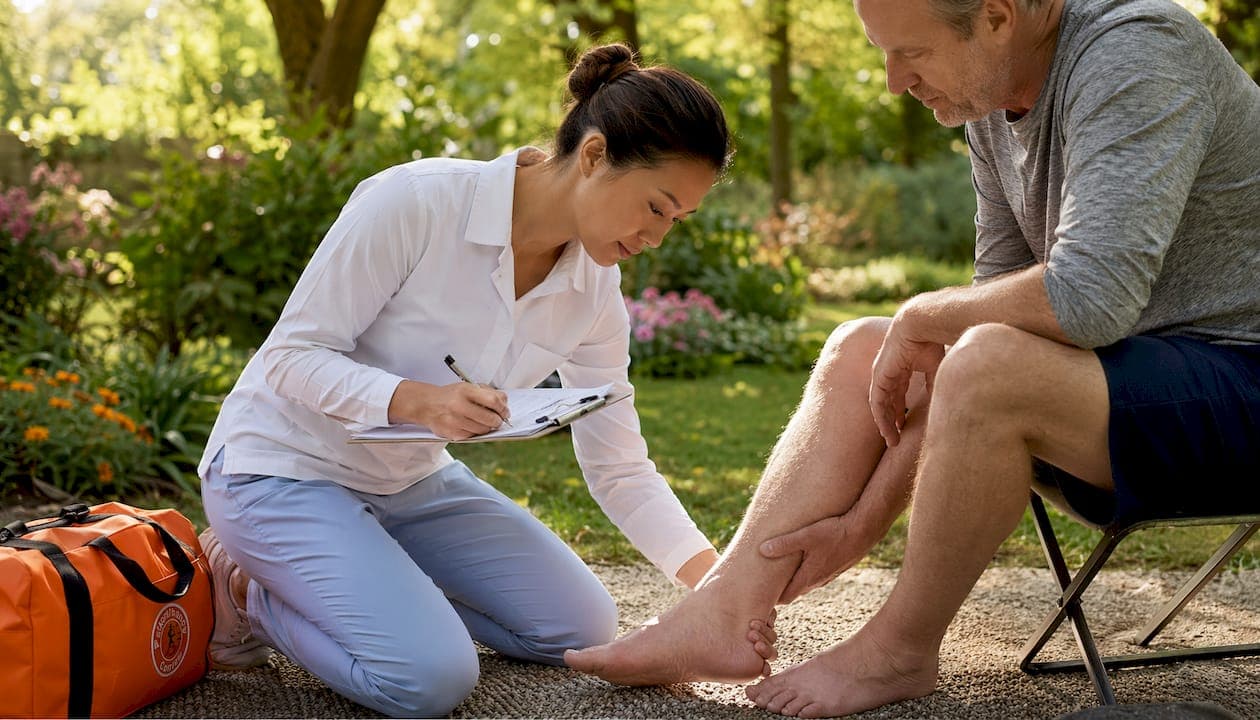
Soft tissue injuries are damage to muscles, tendons, ligaments, and connective tissues without any involvement of bone. They are among the most common musculoskeletal complaints seen in UK physiotherapy clinics, affecting people of all ages and activity levels. Understanding soft tissue injuries properly, including how they occur, what they feel like, and how to treat them, gives you a much stronger foundation for recovery. The main types are:
- Sprains: damage to ligaments, the bands connecting bones at a joint
- Strains: injury to muscles or tendons
- Contusions: bruising caused by blunt force trauma
- Tendonitis: inflammation of a tendon from repetitive stress
- Bursitis: inflammation of the fluid-filled sacs cushioning joints
Injuries are classified by severity into three grades: Grade 1 involves mild stretching or microscopic tearing with few fibres affected; Grade 2 is a moderate partial tear affecting joint or muscle function; Grade 3 is a complete rupture, which often requires surgical repair. Symptoms across all grades typically include pain, swelling, bruising, and reduced movement.
What are the different types of soft tissue injuries?
Sprains, strains, and contusions are the most frequently encountered acute soft tissue injuries, while tendonitis and bursitis develop gradually through overuse.
Sprains
A sprain is a stretch or tear of a ligament. Ligaments are the strong connective bands that stabilise joints, so when a joint is forced beyond its normal range of motion, the ligament takes the strain. Ankle and knee sprains are particularly common, often from twisting movements during sport or everyday activity.
Symptoms of a sprain:
- Pain at the joint, often immediate
- Swelling and bruising around the affected area
- Reduced range of motion
- A feeling of instability in the joint (more pronounced in Grade 2 and 3 injuries)
Pro Tip: If you feel a "pop" at the moment of injury and the joint feels unstable, seek a clinical assessment promptly. This can indicate a Grade 3 sprain requiring specialist management.
Strains
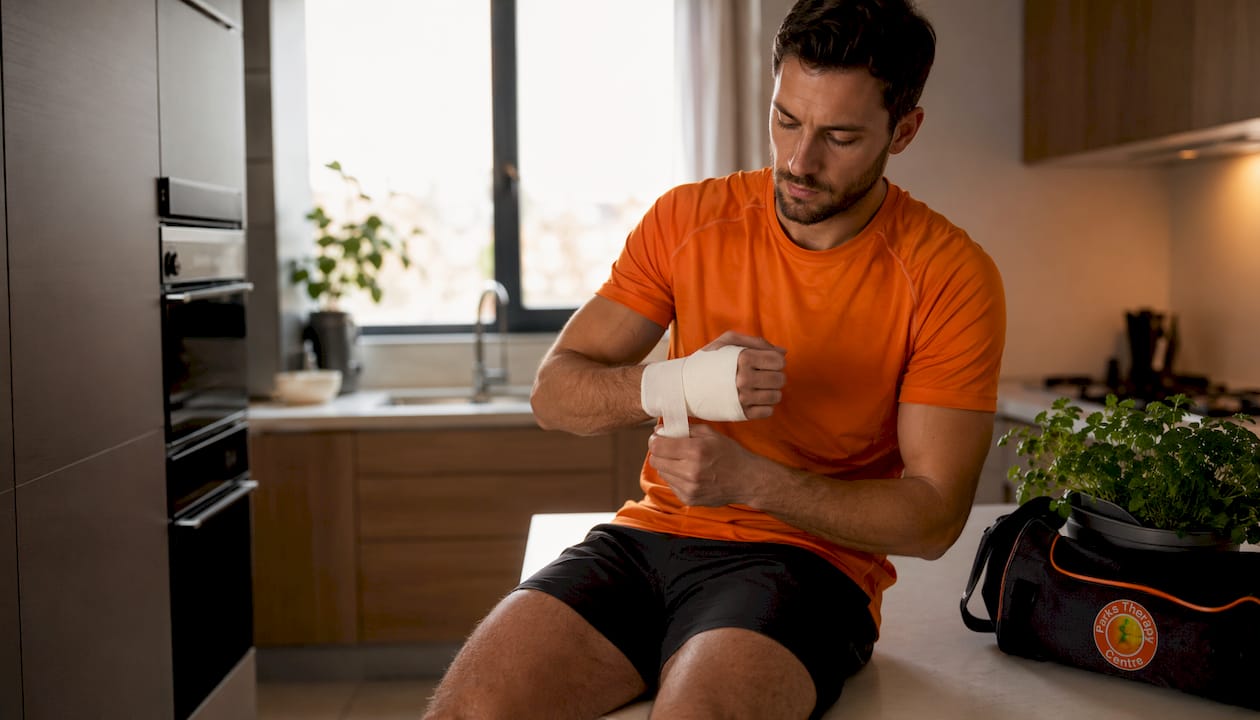
A strain affects a muscle or tendon. Strains often occur in the hamstrings, lower back, and neck, typically from sudden forceful movements or prolonged overexertion. Like sprains, they follow the same three-grade classification.
Symptoms of a strain:
- Localised pain and tenderness in the muscle
- Muscle spasm or cramping
- Swelling and possible bruising
- Weakness in the affected area
Contusions
A contusion is a bruise produced when blunt force crushes underlying muscle fibres and connective tissue without breaking the skin. Blood pools around the injury, causing the characteristic discolouration. Most contusions are mild and resolve well with appropriate care.
Tendonitis
Tendonitis is inflammation or irritation of a tendon, caused by repeated small stresses rather than a single event. Common sites include the elbow (tennis elbow, golfer's elbow), shoulder, knee (jumper's knee), and Achilles tendon.
Symptoms of tendonitis:
- Aching pain that worsens with activity
- Localised swelling around the tendon
- Stiffness, particularly in the morning
Bursitis
Bursae are small, fluid-filled sacs positioned between bones and soft tissues to reduce friction. Bursitis occurs when these sacs become inflamed, usually from repetitive stress or direct trauma. It frequently affects the shoulder, elbow, hip, and knee, and often appears alongside tendonitis.
What causes soft tissue injuries and who is at risk?
Soft tissue injuries fall into two broad categories: acute trauma and overuse. Acute injuries result from a sudden event, such as a fall, collision, or awkward twist. Overuse injuries develop gradually when tissues are subjected to repetitive stress without adequate recovery time.
Common causes:
- Falls, direct impacts, or sudden twisting movements
- Repetitive motions in sport, work, or daily tasks
- Sudden increases in training intensity or duration
- Poor technique during physical activity
- Poorly designed workstations or equipment
Risk factors that increase susceptibility:
- Inadequate warm-up before exercise
- Poor physical conditioning or muscle weakness
- Returning to activity too quickly after a previous injury
- Age-related changes in tissue elasticity and circulation
- Medical conditions such as diabetes, which can affect tissue repair
Occupational risks are also worth noting. Tasks involving repetitive lifting, prolonged static postures, or vibrating tools place sustained stress on tendons and muscles. Weekend warriors, those who are largely sedentary during the week but very active at weekends, face a particular risk because their tissues have limited time to adapt.
How do you recognise the signs of a soft tissue injury?
Pain and swelling are the most consistent signs across all types of soft tissue injuries. Swelling reflects the body's inflammatory response, directing blood and healing resources to the damaged area. Bruising may appear immediately or develop over the following 24–48 hours as blood tracks through the tissue.
Common symptoms to look for:
- Pain at rest or on movement, ranging from mild aching to sharp discomfort
- Swelling and warmth around the injured area
- Bruising or discolouration, which changes colour over days to weeks as blood is reabsorbed
- Limited range of motion in the affected joint or muscle
- Weakness or difficulty bearing weight
Symptom severity varies considerably by injury grade. A Grade 1 strain may feel like mild soreness with little functional loss, while a Grade 3 rupture can cause immediate, severe pain and complete loss of function. Bruise colour changes over time are a normal part of healing, not a sign of worsening.
Seek urgent medical assessment if you notice:
- Severe pain that does not settle with rest
- Significant swelling developing rapidly
- Numbness, tingling, or loss of sensation
- Inability to bear weight or move the limb at all
- Symptoms that worsen rather than improve after 48–72 hours
Diagnosis is primarily clinical; a clinician will examine the injury and ask about the mechanism. X-rays are used mainly to exclude fractures. MRI scanning is reserved for cases where the extent of soft tissue damage is unclear or where a severe injury is suspected.
How to treat soft tissue injuries: PEACE, LOVE, and recovery guidance
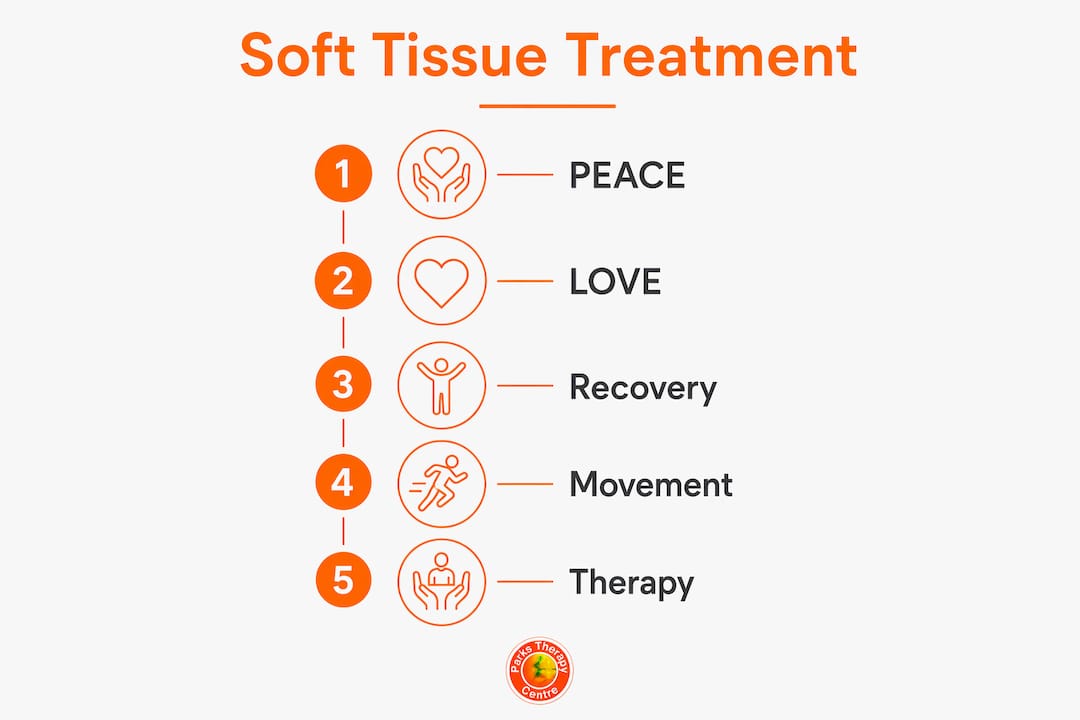
Modern evidence-based treatment has moved well beyond simple rest. The PEACE and LOVE protocol, published in the British Journal of Sports Medicine, now guides clinical management of soft tissue injuries in two phases.
PEACE (immediate care, first few days):
- P Protection: limit movement to avoid aggravating the injury
- E Elevation: raise the injured limb to reduce swelling
- A Avoid anti-inflammatories: early inflammation is part of healing; suppressing it may delay tissue repair
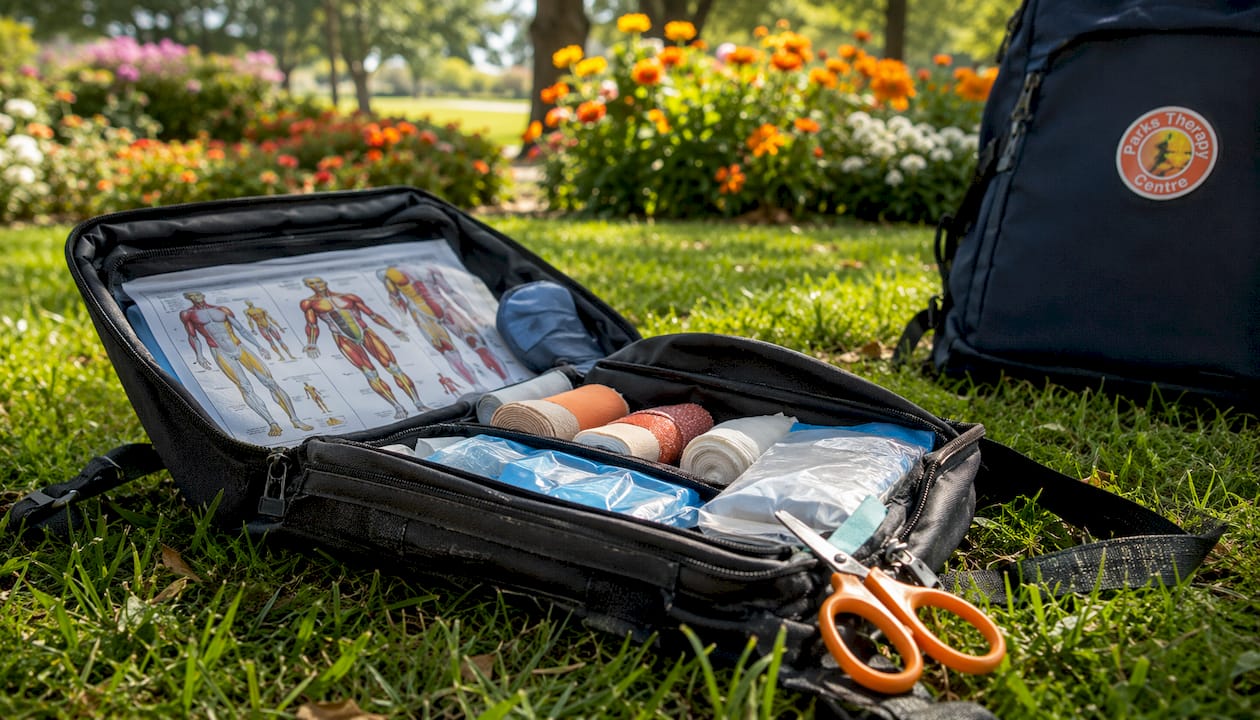
- C Compression: apply a bandage to limit swelling
- E Education: understand your injury and what to expect from recovery
LOVE (active recovery phase):
- L Load: gradually reintroduce movement and loading within acceptable pain limits
- O Optimism: a positive, realistic outlook supports better outcomes
- V Vascularisation: aerobic exercise such as walking or cycling improves blood flow and supports healing
- E Exercise: targeted rehabilitation exercises restore strength and function
The older RICE protocol (rest, ice, compression, elevation) is still widely known, but current guidance cautions against prolonged rest and excessive ice application, both of which can interfere with the body's natural repair processes. Anti-inflammatory medications may reduce pain in the short term but can impair long-term tissue repair if used routinely in the early phase.
NHS guidance is clear: prolonged rest delays recovery. Gentle movement within acceptable pain limits should begin as soon as possible after injury. If pain persists beyond two weeks, a medical opinion is advisable.
Pain should guide activity, not stop it entirely. Patients who misinterpret pain as a signal to remain completely inactive risk prolonging their disability through fear-avoidance behaviour. Pacing, gradually increasing activity in manageable steps, is a well-established rehabilitation approach. For further guidance on building activity back up safely, Parkstherapycentre has a practical resource on post-injury training.
Pro Tip: Avoid the fear-avoidance cycle. Gentle, graded movement within your pain tolerance does not damage healing tissue. Staying completely still for days on end is more likely to set back your recovery than careful, progressive activity.
For patients managing persistent pain, exploring pain therapy options alongside physiotherapy can provide additional support during rehabilitation.
How long does recovery take, and when should you see a professional?
Recovery time varies considerably depending on injury type, grade, and individual factors. Age, blood circulation, and conditions such as diabetes all influence how quickly tissues heal.
Typical healing timeframes:
- Grade 1 injuries: 1–3 weeks with appropriate care
- Grade 2 injuries: 3–8 weeks, often requiring physiotherapy
- Grade 3 injuries: several months; surgical repair may be needed
Overuse injuries such as tendonitis and bursitis can take longer if the aggravating activity continues. Returning to sport or heavy work too soon risks re-injury or progression to a chronic condition.
Excessive immobilisation causes joint stiffness and muscle wasting, particularly in older adults. Early physiotherapy-guided movement is the most effective way to prevent these complications and restore full function. Controlled mechanical loading through rehabilitation exercises stimulates tissue repair and remodelling at a biological level, a process known as mechanotransduction.
See a healthcare professional if:
- Pain or swelling has not improved after 48–72 hours
- You are unable to bear weight or use the affected limb
- Symptoms worsen despite following initial care guidance
- You suspect a complete tear or fracture
- Pain persists beyond two weeks without clear improvement
For severe or persistent soft tissue injuries, imaging such as MRI may be recommended to assess the extent of damage. Corticosteroid injections are occasionally considered for bursitis or tendonitis that has not responded to conservative treatment, though timing and risks require careful clinical judgement.
Parkstherapycentre has supported patients across Bedfordshire and Buckinghamshire with physiotherapy and sports injury treatment since 1986. If you are managing a soft tissue injury and want expert, personalised guidance, the team at Parkstherapycentre is ready to help you recover with confidence.

Book your assessment with Parkstherapycentre today and take the first step towards a full, supported recovery.
Key takeaways
Soft tissue injuries recover best with early, guided movement and a structured rehabilitation plan rather than prolonged rest.
| Point | Details |
|---|---|
| Three severity grades | Grade 1 is mild stretching; Grade 2 is a partial tear; Grade 3 is a complete rupture often needing surgery. |
| PEACE and LOVE protocol | Current clinical guidance replaces prolonged rest with graded loading, education, and aerobic activity. |
| Pain as a guide | Activity within acceptable pain limits aids tissue repair and prevents fear-avoidance behaviour. |
| Seek help after two weeks | Persistent pain beyond two weeks without improvement warrants a professional medical opinion. |
| Early movement prevents complications | Excessive immobilisation causes stiffness and muscle wasting, especially in older adults. |