

TL;DR:
- Musculoskeletal injuries encompass damage to bones, muscles, tendons, ligaments, cartilage, and connective tissues resulting from trauma, overuse, or degeneration. In 2026, the definition has expanded to include physical, mental, and social well-being as core components of musculoskeletal health, influencing classification and management practices. Effective assessment combines mechanism documentation, clinical surveys, imaging, and psychosocial screening to optimize treatment pathways and recovery outcomes.
Musculoskeletal injuries are defined as damage to any component of the locomotor system, including bones, muscles, tendons, ligaments, cartilage, and connective tissues, arising from trauma, overuse, or degenerative processes. The term "MSK" describes an anatomical system, not a diagnosis, and proper injury definition requires distinguishing mechanical, inflammatory, or overuse causes before any treatment pathway begins. Defining musculoskeletal injuries in 2026 demands more than anatomical precision. The World Health Organisation and emerging frameworks now incorporate physical, mental, and social well-being into the concept of musculoskeletal health, replacing the narrower work-related disorder model with a holistic paradigm that acknowledges fatigue, fitness, and psychosocial context as clinical variables. For health professionals and researchers, this expanded definition changes how injuries are classified, assessed, and managed across every care setting.
What are the main types and classifications of musculoskeletal injuries in 2026?

Understanding the types of musculoskeletal injuries requires separating them into two broad structural categories: soft tissue injuries and bony injuries. Soft tissue injuries include strains (muscle or tendon damage), sprains (ligament damage), contusions, and overuse conditions such as tendinopathy. Bony injuries encompass fractures and dislocations, each carrying distinct management implications depending on severity, location, and associated neurovascular compromise.
Classification frameworks provide the clinical language that guides surgical decision-making. The Gustilo-Anderson and Tscherne systems remain the reference standards for grading soft tissue injury severity around fractures, with Gustilo-Anderson covering open fractures across Types I to III and Tscherne grading closed injuries from Grade 0 to Grade 3 based on skin integrity, contamination, and energy transfer. These systems directly inform surgical indications, timing, and infection risk stratification.
| Classification system | Injury type | Key criteria | Management impact |
|---|---|---|---|
| Gustilo-Anderson | Open fractures (Types I to III) | Wound size, contamination, bone exposure | Guides debridement urgency and fixation method |
| Tscherne | Closed fractures (Grades 0 to 3) | Skin integrity, soft tissue damage, energy | Determines timing of definitive fixation |
| RICE protocol staging | Soft tissue injuries | Severity and tissue involvement | Directs initial conservative management |
| Overuse injury grading | Tendinopathy, stress fractures | Load history, imaging findings | Informs activity modification and load progression |
Evolving approaches in 2026 integrate injury mechanism with anatomical location and severity grading, moving beyond purely descriptive classification. A tibial shaft fracture caused by high-energy road trauma carries a fundamentally different prognosis than the same fracture pattern from a low-energy twist, even when the radiographic appearance is identical. Mechanism matters as much as morphology.
Pro Tip: When documenting a musculoskeletal injury, record the mechanism of injury alongside the classification grade. This combination gives the treating team far more prognostic information than imaging alone.
- Strains and sprains account for the majority of acute soft tissue presentations in primary and emergency care.
- Overuse injuries, including stress fractures and tendinopathies, are the dominant presentation in athletic and occupational populations.
- Dislocations carry a high risk of associated neurovascular injury and require immediate assessment of circulation, motor function, and sensation.
- Complex fractures with significant soft tissue compromise require orthoplastic collaboration from the outset, not as a secondary referral.
How is musculoskeletal trauma assessed and diagnosed effectively in 2026?
Effective assessment of musculoskeletal trauma begins before the patient reaches a clinical setting. Mechanism of injury is the single most predictive factor for identifying hidden injuries, and emergency responders who document MOI accurately give receiving clinicians a significant diagnostic advantage. A pedestrian struck at speed carries a different injury probability profile than a cyclist who fell at low velocity, even if the presenting complaint is identical.
The structured assessment follows a primary and secondary survey model. The primary survey addresses life-threatening compromise first. The secondary survey then focuses on the musculoskeletal system, examining for deformity, bruising, swelling, tenderness, and crepitus, followed by neurovascular checks that assess circulation, motor function, and sensation distal to the injury.
- Document the mechanism of injury in precise terms: speed, direction of force, point of impact, and any protective equipment worn.
- Perform a primary survey to exclude haemodynamic instability, airway compromise, and tension pneumothorax before focusing on limb injuries.
- Inspect for deformity, open wounds, bruising, and swelling across all four limbs and the axial skeleton.
- Palpate systematically for tenderness, crepitus, and abnormal movement, noting any step deformities along bony surfaces.
- Complete neurovascular checks distal to every suspected injury: capillary refill, pulse quality, grip strength, and two-point discrimination.
- Obtain targeted imaging based on clinical findings, using plain radiography as the first-line modality and CT or MRI for complex or occult injuries.
Early immobilisation and pain control are standard pre-hospital priorities, preventing secondary soft tissue damage and reducing the physiological stress response. Splinting before transport is not optional in suspected long bone fractures. It is a clinical requirement.
Pro Tip: In complex polytrauma, do not allow a visually dramatic injury to distract from systematic assessment. Missed posterior shoulder dislocations and Lisfranc injuries are among the most frequently overlooked musculoskeletal injuries in busy trauma settings.
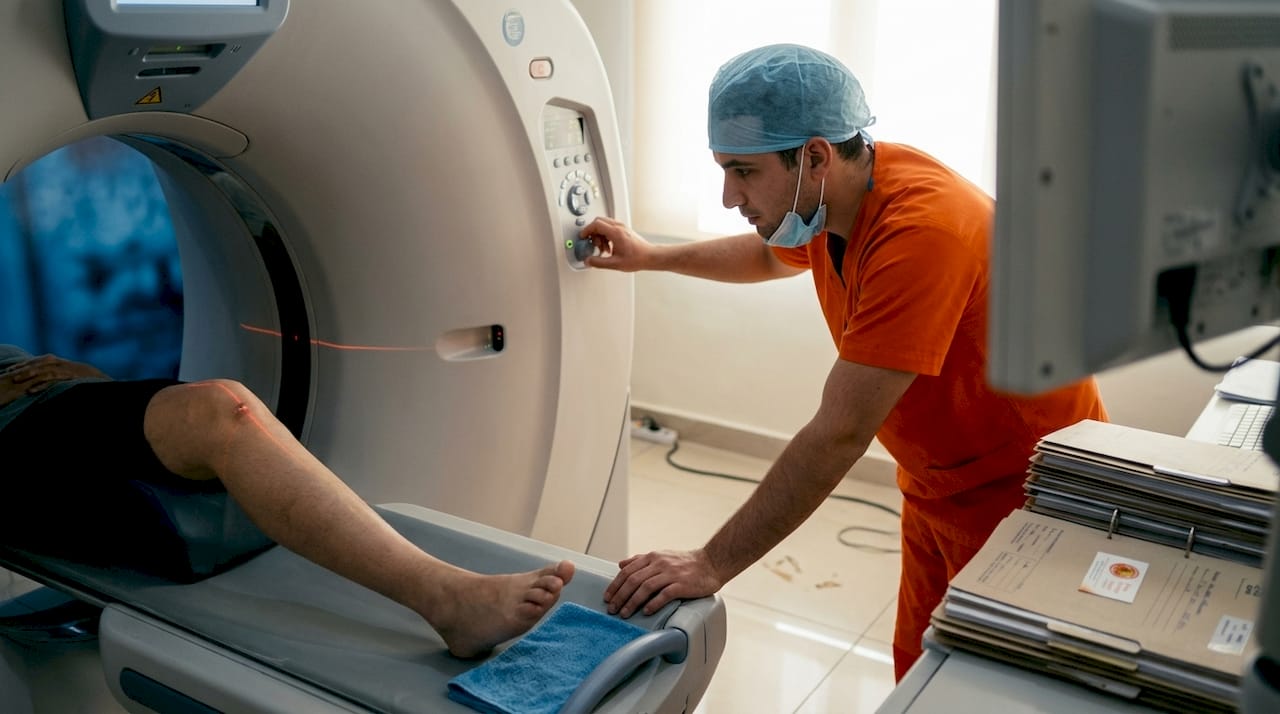
Advances in imaging are refining diagnostic accuracy. CT arthrography, weight-bearing CT, and ultrasound-guided assessment are now standard in specialist centres. AI in orthopaedic trauma planning shows theoretical promise but remains largely proof-of-concept, limited by a lack of prospective clinical validation and insufficient explainability for routine use. Clinical judgement remains the irreplaceable foundation.
What are the latest treatment principles for musculoskeletal injuries?
Initial management of soft tissue musculoskeletal injuries follows the RICE protocol for 48 to 72 hours post-injury, with healing times ranging from one to six weeks depending on tissue type and injury severity. This means that a Grade I ankle sprain managed correctly in the first three days heals in a fundamentally different timeframe than a Grade III ligament rupture requiring surgical reconstruction. The protocol provides a framework, not a fixed outcome.
For complex fractures, the orthoplastic approach integrates orthopaedic and plastic surgery expertise from the point of injury assessment, rather than treating soft tissue reconstruction as an afterthought. Infection rates in complex fracture management range from 2.4% to 20%, with minimally invasive plate osteosynthesis achieving excellent functional outcomes in 65% of cases. These figures reflect the direct clinical cost of suboptimal soft tissue handling.
- Definitive surgical fixation should be delayed until soft tissue oedema resolves. The wrinkle sign confirms that skin has regained sufficient pliability for safe internal fixation, reducing wound breakdown and infection risk.
- External fixation bridges the gap between initial stabilisation and definitive repair, maintaining length and alignment while protecting compromised soft tissue.
- 3D printing is now used in specialist centres for pre-operative planning of complex periarticular fractures, improving implant fit and reducing operative time.
- Minimally invasive techniques reduce soft tissue stripping and periosteal devascularisation, preserving the biological environment for bone healing.
- Rehabilitation begins on the day of surgery or admission, not at discharge. Early active movement within protected ranges prevents joint stiffness, muscle atrophy, and venous thromboembolism.
Multidisciplinary rehabilitation in 2026 addresses physical recovery alongside psychosocial function. A patient who regains full range of motion but remains unable to return to work due to pain catastrophising has not achieved a successful outcome. Physiotherapy standards in 2026 now formally incorporate psychological readiness as an outcome measure alongside functional capacity.
Pro Tip: Do not discharge a patient from rehabilitation based on imaging findings alone. Functional testing, psychological readiness, and patient-reported outcome measures together define a complete recovery.
How do psychosocial factors shape recovery from musculoskeletal trauma?
Post-traumatic stress symptoms following musculoskeletal trauma persist for up to six months in a significant proportion of patients, with traffic-related injuries carrying the highest risk. This is not a peripheral concern. PTSS directly impairs rehabilitation engagement, increases analgesic use, and predicts long-term disability independent of injury severity.
The predictors of poor psychosocial recovery are now well characterised. Psychosocial factors including social support, coping style, and anxiety predict long-term disability and PTSS progression at a level equivalent to physiological injury severity. A patient with a minor tibial fracture and high baseline anxiety may have a worse functional outcome at twelve months than a patient with a complex femoral fracture and strong social support.
"Integrating psychological screening in the trauma care pathway supports earlier intervention for PTSS, leading to measurably better recovery outcomes." — PTSS Predictors Following Musculoskeletal Trauma, 2026
The clinical implications are direct:
- Psychological screening should occur at the first clinical contact, not as a referral triggered by visible distress.
- Validated tools such as the Impact of Event Scale and the Hospital Anxiety and Depression Scale provide objective baseline measures.
- Social support mapping at assessment identifies patients who lack the home environment necessary for safe self-management during recovery.
- Coping style assessment distinguishes catastrophisers from active copers, allowing rehabilitation programmes to be calibrated accordingly.
- The ergonomics and injury prevention relationship extends into psychosocial territory: workplaces that fail to accommodate recovering workers amplify psychological distress and delay return to function.
The shift from treating musculoskeletal injuries as isolated physical events towards managing them as whole-person health episodes is the defining clinical development of 2026. Professionals who do not screen for psychosocial risk are working with an incomplete clinical picture.
Key takeaways
Musculoskeletal injury management in 2026 requires integrating anatomical classification, mechanism-based assessment, timely surgical decision-making, and psychosocial screening into a single, cohesive care pathway.
| Point | Details |
|---|---|
| Definition has expanded | MSK injuries now encompass physical, mental, and social well-being, not anatomy alone. |
| Classification guides management | Gustilo-Anderson and Tscherne systems directly determine surgical timing and infection risk. |
| MOI is the diagnostic foundation | Mechanism of injury predicts hidden injuries more reliably than presenting symptoms. |
| Soft tissue status dictates surgery | The wrinkle sign confirms readiness for definitive fixation, reducing complication rates. |
| Psychosocial risk equals physical risk | Anxiety, social support, and coping style predict long-term disability as strongly as injury severity. |
Why the definition of MSK injury is the most underrated clinical decision
The question of how we define a musculoskeletal injury sounds academic until you realise that the definition determines the treatment pathway. I have seen patients discharged after technically successful fracture fixation who were functionally disabled at one year because nobody screened for PTSS at admission. The injury was classified correctly. The patient was not assessed completely.
The shift towards holistic musculoskeletal health frameworks is not a philosophical exercise. It is a practical correction to decades of anatomically focused care that consistently underestimated the role of psychological and social variables. The Gustilo-Anderson system tells you about the wound. It tells you nothing about whether the patient will engage with rehabilitation, return to work, or develop chronic pain.
What I find genuinely encouraging in 2026 is the growing acceptance that classification systems and psychosocial screening are complementary tools, not competing priorities. The challenge is implementation. Most trauma units still lack embedded psychological support, and AI diagnostic tools remain too immature for routine clinical reliance. The gap between what the evidence supports and what happens in practice remains wide.
The professionals who will define best practice in this field over the next decade are those who treat the classification as the starting point, not the endpoint.
— Ivan
How Parkstherapycentre supports musculoskeletal health and recovery
Parkstherapycentre has been delivering specialist musculoskeletal care across Bedfordshire and Buckinghamshire since 1986, combining physiotherapy, sports injury treatment, podiatry, and acupuncture under one multidisciplinary roof.
Whether you are managing an acute soft tissue injury, recovering from complex fracture surgery, or seeking to understand a chronic musculoskeletal condition, Parkstherapycentre offers professional assessment, evidence-based treatment, and structured rehabilitation aligned with the standards discussed in this article. The team accepts most major insurance providers and offers online booking across multiple locations. Explore musculoskeletal therapy and recovery or visit Parkstherapycentre directly to book an assessment with a qualified clinician.
FAQ
What is the clinical definition of a musculoskeletal injury in 2026?
A musculoskeletal injury is defined as damage to any structure within the locomotor system, including bones, muscles, tendons, ligaments, and cartilage, arising from trauma, overuse, or degenerative change. Current frameworks extend this definition to include physical, mental, and social well-being as integral components of musculoskeletal health.
What is the difference between a strain and a sprain?
A strain involves damage to a muscle or tendon, whilst a sprain refers specifically to ligament damage. Both are classified as soft tissue injuries and are managed initially with the RICE protocol for 48 to 72 hours post-injury.
How long do post-traumatic stress symptoms last after musculoskeletal trauma?
PTSS following musculoskeletal trauma frequently persists for up to six months, particularly in patients injured in traffic-related incidents. Psychosocial predictors such as anxiety and limited social support are as clinically significant as injury severity in determining long-term outcomes.
When is it safe to perform definitive surgical fixation after a complex fracture?
Definitive internal fixation is appropriate once soft tissue oedema has resolved, confirmed clinically by the wrinkle sign. Operating through swollen tissue significantly increases infection risk, making staged management with initial external fixation the preferred approach in high-energy fractures.
What role does AI currently play in musculoskeletal trauma diagnosis?
AI technologies show promise in orthopaedic trauma planning but remain largely proof-of-concept in 2026, limited by insufficient prospective validation and a lack of clinical explainability. Supplementary clinical judgement remains mandatory when AI tools are used in trauma assessment.