
TL;DR:
- Physiotherapy after ankle surgery is essential for restoring mobility, strength, and stability, addressing issues that surgery alone cannot fix. Combining neuromuscular, strength, and joint mobilisation training yields the most effective rehabilitation, guided by a structured 12-week program that progresses from protection to full function. Such targeted physiotherapy reduces pain, rebuilds proprioception, and minimizes re-injury risk, ensuring successful recovery.
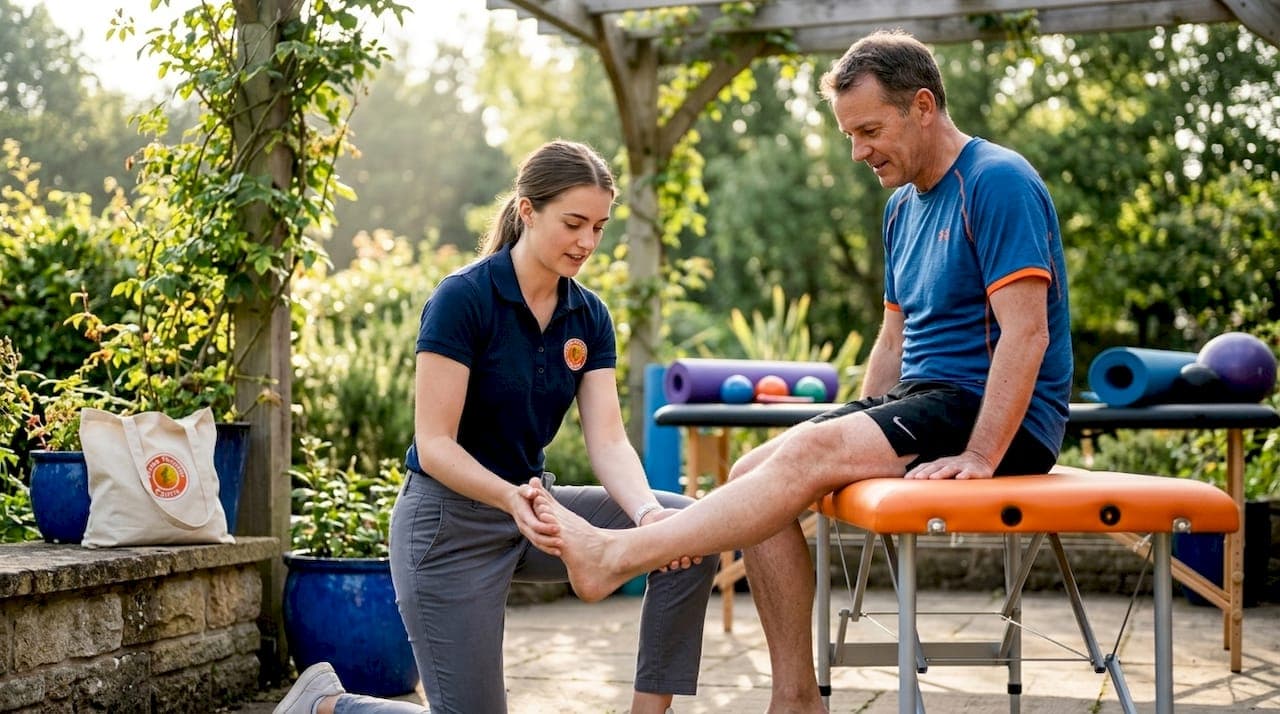
Physiotherapy after ankle surgery is the primary mechanism by which patients regain mobility, strength, and stability following surgical repair. Surgery corrects the structural problem. Physiotherapy restores the functional one. Without structured rehabilitation, even a technically successful operation can leave you with a stiff, weak ankle that struggles to cope with the demands of daily life. The role of physiotherapy after ankle surgery extends beyond simple exercise prescription. It re-engages neuromuscular pathways that become dormant during immobilisation, rebuilds periarticular muscle strength, and progressively restores the proprioceptive awareness your ankle needs to keep you upright and moving safely.
What are the primary goals of physiotherapy following ankle surgery?
Physiotherapy after ankle surgery targets four interconnected problems that surgery alone cannot solve: joint stiffness, muscle weakness, impaired balance, and residual pain. Each of these compounds the others if left unaddressed.
The main therapeutic goals are:
- Restoring range of motion (ROM). Joint stiffness sets in rapidly after immobilisation. Gentle mobilisation and progressive movement exercises prevent adhesion formation and maintain cartilage health.
- Building periarticular muscle strength. The muscles surrounding the ankle, particularly the peroneals, tibialis anterior, and calf complex, atrophy quickly after surgery. Rebuilding their strength is what gives the joint its dynamic support.
- Restoring proprioception and balance. Proprioception is the body's ability to sense joint position without looking. Surgery and immobilisation disrupt the sensory nerve endings responsible for this. Balance and neuromuscular training demonstrably improve proprioception and reduce fear of movement in patients with ankle instability.
- Managing pain and inflammation. Physiotherapy facilitates tissue healing, reduces swelling, and promotes circulation, all of which contribute to effective post-operative pain management.
Pro Tip: Start ankle alphabet exercises (tracing letters in the air with your toes) as soon as your surgeon permits. They mobilise the joint in multiple planes without placing load through the repair.
Addressing these goals in sequence, rather than all at once, is what separates a structured physiotherapy programme from unsupervised home exercise. Your physiotherapist will monitor your progress at each stage and adjust loading accordingly.
Which physiotherapy techniques are most effective after ankle surgery?
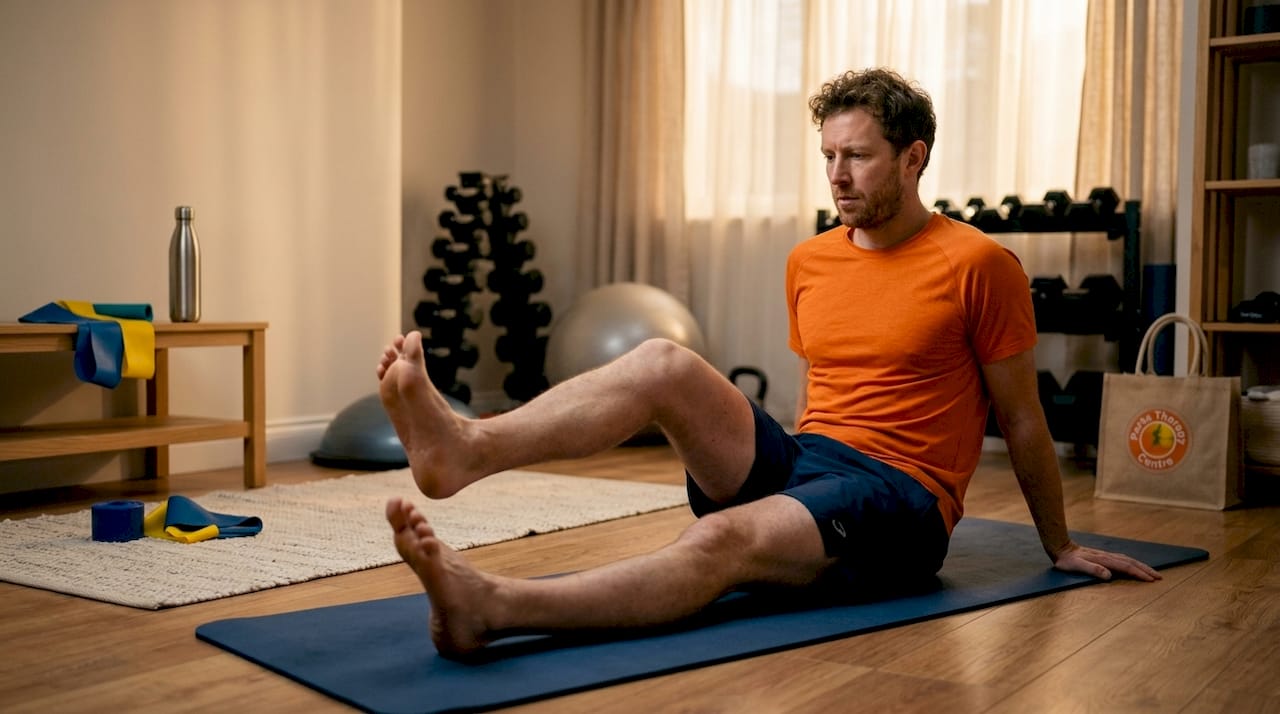
The evidence base for ankle rehabilitation has grown considerably in recent years. Three main modalities stand out: neuromuscular training, strength training, and joint mobilisation. Each targets a different aspect of recovery, and the research is clear on which combination works best.
Neuromuscular training
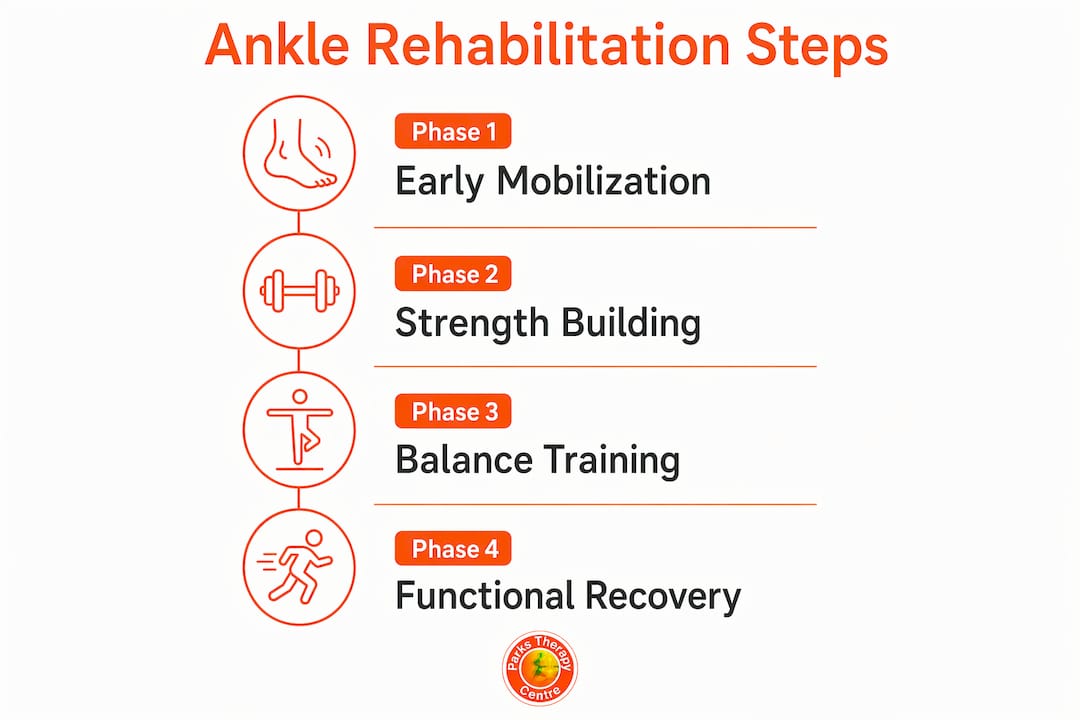
Neuromuscular training focuses on re-educating the motor control system. It includes balance board work, single-leg stance progressions, and perturbation training. A 2025 systematic review found that neuromuscular training alone improves function in approximately 45.9% of clinical cases in ankle rehabilitation. That is a meaningful effect from a single modality, but it is not the ceiling.
Combined neuromuscular and strength training
The most compelling finding in recent research concerns combined protocols. A 2025 network meta-analysis found that combined neuromuscular and strength training ranks at 99.9% probability for optimal efficacy in restoring ankle inversion muscle function. That figure reflects the SUCRA (Surface Under the Cumulative Ranking) probability, meaning this combination outperforms every other single modality tested. The practical implication is that your rehabilitation programme should integrate both balance work and progressive resistance training, not treat them as alternatives.
Joint mobilisation
Joint mobilisation involves a physiotherapist applying controlled, graded forces to the ankle joint to restore movement. A meta-analysis confirms that joint mobilisation significantly improves ankle range of motion and function. Notably, it does not significantly reduce pain on its own. This means mobilisation is best used alongside other interventions rather than as a standalone pain management strategy.
| Technique | Primary benefit | Evidence strength |
|---|---|---|
| Neuromuscular training | Balance, motor control, proprioception | Strong (45.9% function improvement) |
| Strength training | Muscle activation, joint stability | Strong |
| Combined NST | Inversion muscle function restoration | Highest (99.9% SUCRA ranking) |
| Joint mobilisation | Range of motion, joint function | Moderate (no significant pain effect) |
Pro Tip: Ask your physiotherapist to include single-leg balance progressions on an unstable surface from week four onwards. The instability forces your nervous system to recruit stabilising muscles it would otherwise ignore on flat ground.
How does physiotherapy reduce pain and improve daily function?
Pain after ankle surgery has two sources: tissue damage from the operation itself, and secondary stiffness and muscle guarding that develops during recovery. Physiotherapy addresses both.
Rehabilitation interventions promote blood flow and tissue repair, directly reducing post-operative swelling and the associated pain. Gentle movement prevents the formation of fibrous adhesions that would otherwise restrict the joint and create chronic discomfort. Circulation improvements accelerate the clearance of inflammatory mediators from the surgical site.
The functional benefits extend well beyond pain relief:
- Safer movement patterns. Restored proprioception means your ankle sends accurate signals to your brain about its position. This reduces the risk of missteps and re-injury during everyday activities.
- Confidence in weight-bearing. Patients who complete structured physiotherapy report significantly greater confidence when walking on uneven ground compared to those who rely on rest alone.
- Return to work and sport. Functional rehabilitation, which includes task-specific training such as stair climbing, lateral movements, and eventually running, is what bridges the gap between surgical recovery and real-world demands.
- Reduced fear of movement. Kinesiophobia, the fear of movement due to anticipated pain, is a recognised barrier to recovery. Physiotherapy that progressively challenges the ankle within safe limits reduces this fear systematically.
The role of physiotherapy in ankle pain management is therefore both direct (reducing swelling and stiffness) and indirect (restoring confidence and movement quality). Surgery stabilises the structure. Physiotherapy makes it usable again. As the evidence on functional recovery after surgery confirms, restored movement patterns and muscle control depend entirely on the quality of post-operative rehabilitation.
What does a typical rehabilitation timeline look like?
Recovery stages after ankle surgery follow a broadly consistent progression, though the exact timeline varies depending on the type of surgery, your age, and your baseline fitness. A standard 12-week physiotherapy plan after open reduction internal fixation (ORIF) of an ankle fracture illustrates the typical phases well.
- Weeks 1 to 3: Protection and pain control. The priority is managing swelling and protecting the repair. Early non-weight-bearing exercises are started as soon as possible to prevent stiffness. Ankle pumps, toe curls, and gentle range of motion movements are standard at this stage.
- Weeks 4 to 6: Progressive weight-bearing. As healing progresses, partial weight-bearing is introduced under physiotherapist supervision. Resistance band exercises for the peroneals and calf begin. Pool walking or hydrotherapy may be used to reduce load while maintaining movement.
- Weeks 7 to 9: Strengthening and balance. Full or near-full weight-bearing is established. Closed-chain exercises such as calf raises, mini squats, and step-ups are introduced. Balance board training begins in earnest at this stage.
- Weeks 10 to 12: Functional and neuromuscular training. The focus shifts to task-specific activities. Lateral shuffles, stair negotiation, and sport-specific drills are introduced for active patients. Proprioceptive challenges are increased progressively.
- Beyond 12 weeks: Return to full activity. Clearance for return to sport or physically demanding work depends on achieving specific strength and balance benchmarks, not simply the passage of time.
Progression through these stages must be individualised. Pushing too fast risks re-injury. Moving too slowly allows deconditioning to set in. Your physiotherapist's role is to calibrate that progression based on your response at each milestone. For guidance on preventing future ankle problems once you return to sport, the ankle ligament injury prevention advice from Parkstherapycentre is worth reviewing alongside your rehabilitation plan.
Key takeaways
Physiotherapy after ankle surgery is the defining factor in functional recovery, with combined neuromuscular and strength training representing the most evidence-supported approach available.
| Point | Details |
|---|---|
| Surgery alone is not enough | Physiotherapy restores the neuromuscular function that surgery cannot address. |
| Combined training is most effective | Neuromuscular and strength training together rank at 99.9% efficacy for ankle muscle restoration. |
| Proprioception is critical | Balance training reduces fear of movement and prevents re-injury after ankle surgery. |
| Rehabilitation follows clear phases | A structured 12-week programme progresses from protection through to full functional retraining. |
| Pain management is multifaceted | Physiotherapy reduces swelling and stiffness directly while also restoring movement confidence. |
What I have learned from watching patients rebuild their ankles
The most common mistake I see is patients treating surgery as the finish line. They come out of theatre relieved, rest for the prescribed period, and then expect the ankle to simply work again. It does not. Surgery repairs the structure. The nervous system still needs to relearn how to use it.
What the research on neuromuscular pathway reactivation confirms is something experienced clinicians have observed for years. Immobilisation does not just weaken muscles. It effectively silences the sensory feedback loops that tell your brain where your ankle is in space. Rebuilding those pathways takes deliberate, progressive challenge. You cannot rest your way back to proprioception.
The patients who recover best are not necessarily the fittest or the youngest. They are the ones who show up consistently, do the unglamorous work of calf raises and balance board progressions, and trust the process even when progress feels slow. Motivation correlates directly with outcome in ankle rehabilitation, and the patients who understand why each exercise matters tend to adhere far better than those who are simply handed a sheet of exercises without context.
My honest advice: ask your physiotherapist to explain the purpose of every exercise they give you. Understanding that a single-leg balance drill is re-mapping your nervous system, not just strengthening your ankle, changes how seriously you take it. The same principle applies across lower limb recovery, as anyone who has worked through Achilles rehabilitation will recognise.
— Ivan
Start your ankle recovery with expert support
Recovering from ankle surgery requires more than time. It requires a structured, evidence-based rehabilitation programme delivered by qualified physiotherapists who understand the neuromuscular demands of post-surgical recovery. At Parkstherapycentre, established in 1986 and operating across Bedfordshire and Buckinghamshire, the clinical team designs personalised rehabilitation plans that progress safely from early protection through to full functional return. Whether you have had an ORIF, ligament reconstruction, or arthroscopic procedure, the team at Parkstherapycentre combines the latest evidence-based protocols with hands-on care to give your ankle the best possible chance of a complete recovery. Book your initial assessment online today.
FAQ
How soon does physiotherapy start after ankle surgery?
Early non-weight-bearing exercises typically begin within the first few days post-surgery, subject to your surgeon's guidance. Starting early prevents stiffness and supports tissue healing without compromising the repair.
What exercises help strengthen the ankle after surgery?
Calf raises, resistance band peroneal exercises, and single-leg balance progressions are the core strengthening tools used in ankle rehabilitation. Combined neuromuscular and strength training produces the best outcomes according to current research.
Does physiotherapy actually reduce pain after ankle surgery?
Physiotherapy reduces pain by promoting circulation, reducing swelling, and restoring normal movement patterns. Joint mobilisation improves function significantly, though it works best as part of a combined programme rather than as a standalone pain treatment.
How long does ankle rehabilitation take?
A standard post-surgical rehabilitation programme runs for approximately 12 weeks, progressing from protection and gentle movement through to full functional and neuromuscular training. Return to sport or demanding physical work depends on meeting specific strength and balance benchmarks.
Why is balance training included in ankle physiotherapy?
Balance training restores proprioception, the joint's ability to sense its own position, which is disrupted by both surgery and immobilisation. Improved proprioception directly reduces the risk of re-injury and restores confidence in everyday movement.