
TL;DR:
- Rest alone is ineffective; structured physiotherapy with progressive loading aids Achilles recovery.
- Key protocols include isometric holds, eccentric heel drops, and heavy slow resistance training.
- Tailored, evidence-based rehab plans optimize healing, reduce re-injury, and restore function.
Most people assume that resting an Achilles injury will eventually do the trick. It won't. Rest alone leads to deconditioning, lingering weakness, and a stubborn cycle of flare-ups that can drag on for years. Physiotherapy is the primary non-surgical treatment for both Achilles tendinopathy and ruptures, built around progressive loading, pain management, and restoring function. Whether you're dealing with a partial tear, chronic tendinopathy, or recovering after surgery, a structured physiotherapy plan is the difference between getting back to full strength and spending another six months on the sidelines. This article walks you through the evidence, the protocols, and what personalised rehab actually looks like.
Table of Contents
- Understanding Achilles injuries and why physiotherapy matters
- Core physiotherapy interventions for Achilles recovery
- Tailoring rehabilitation for individual needs
- Navigating pain, setbacks, and the long-term: what to expect
- Why a bespoke, evidence-based approach is the future for Achilles recovery
- Start your Achilles recovery with Bedfordshire's physiotherapy specialists
- Frequently asked questions
Key Takeaways
| Point | Details |
|---|---|
| Structured physiotherapy works best | Progressive loading exercises guided by a specialist achieve the greatest odds of full Achilles recovery. |
| Protocols must be personalised | There’s no one-size-fits-all—effective programmes adapt to your pain, goals, and response. |
| Expect a long-term commitment | True recovery takes months and thrives on consistency more than intensity. |
| Education prevents relapse | Learning correct technique and self-management strategies lowers re-injury rates. |
Understanding Achilles injuries and why physiotherapy matters
The Achilles tendon is the thickest and strongest tendon in the body, yet it's remarkably vulnerable. Most injuries fall into three broad categories. Tendinopathy is the most common, involving a breakdown of the tendon's internal structure from overuse or poor load management. It doesn't always mean inflammation; often, it's a failed healing response that turns the tendon's neat collagen fibres into disorganised tissue. Partial tears involve a structural disruption without complete separation, while a full rupture means the tendon has snapped entirely, usually requiring either surgical repair or intensive conservative management.
Common causes include:
- A sudden spike in training load or mileage
- Worn-out or poorly fitted footwear
- Running or training on hard surfaces without adequate preparation
- Tight calf muscles and limited ankle flexibility
- Returning to sport too quickly after a previous injury
- Age-related changes in tendon quality, particularly in those over 35
So why does physiotherapy outperform passive rest? Because tendons heal by being loaded, not by being left alone. When a tendon is deprived of mechanical stimulation, it weakens further. Physiotherapy counteracts this by applying controlled stress to the tendon in a way that stimulates healthy tissue remodelling. Physiotherapy is the primary non-surgical treatment precisely because it provides this structured, progressive stimulus that rest cannot.
Research consistently shows that structured loading programmes result in significantly better outcomes than rest, with up to 70% of patients returning to full activity through progressive exercise alone.
Understanding your injury type is the first step toward choosing the right approach. Reading up on Achilles injury prevention tips can also help you identify the habits and movement patterns that may have contributed to your injury in the first place.
Core physiotherapy interventions for Achilles recovery
Once you understand why physiotherapy works, the next question is: what does it actually involve? The evidence points to three cornerstone protocols, each suited to different stages of recovery.
- Isometric holds are used earliest in rehab. You load the tendon without any movement, holding a contraction for around 45 seconds per set. This has a well-documented pain-calming effect and allows you to begin stimulating the tendon safely when dynamic loading would be too aggressive.
- Eccentric heel drops (the Alfredson protocol) involve lowering your heel slowly over the edge of a step. The Alfredson protocol uses eccentric heel drops performed 3 sets of 15 repetitions, twice daily, for 12 weeks. Both a straight-knee and a bent-knee version are used to target different parts of the calf and tendon.
- Heavy slow resistance training comes later in rehab. Working at 70 to 90% of your one-repetition maximum, you perform slow, controlled calf raises with significant load. This type of loading is highly effective for rebuilding tendon stiffness and strength once initial pain has settled.
| Protocol | Stage | Load | Sets and reps | Key benefit |
|---|---|---|---|---|
| Isometric holds | Early | Moderate | 3 to 5 sets, 45 seconds | Pain relief, safe stimulus |
| Eccentric heel drops | Mid | Bodyweight to added load | 3 sets of 15, twice daily | Tendon remodelling |
| Heavy slow resistance | Late | 70 to 90% 1RM | 3 to 4 sets of 6 to 8 | Strength and stiffness |
For those wanting to understand more about how these fit within the broader landscape of treatment options, exploring the types of physiotherapy approaches available can be genuinely useful. Equally, knowing which home exercises for recovery you should be doing between clinic appointments helps you make consistent progress.
Pro Tip: Progress load only when you can complete all sets and reps with pain rated no higher than 3 out of 10 during exercise and returning to baseline within 24 hours. Chasing faster progress by pushing through sharp pain tends to set people back by weeks, not days.
Tailoring rehabilitation for individual needs
While the top protocols are well supported by research, it's worth being honest: no single protocol is superior for everyone. Outcomes depend on how well the plan is tailored to the individual's pain tolerance, biomechanics, previous injury history, and personal goals.
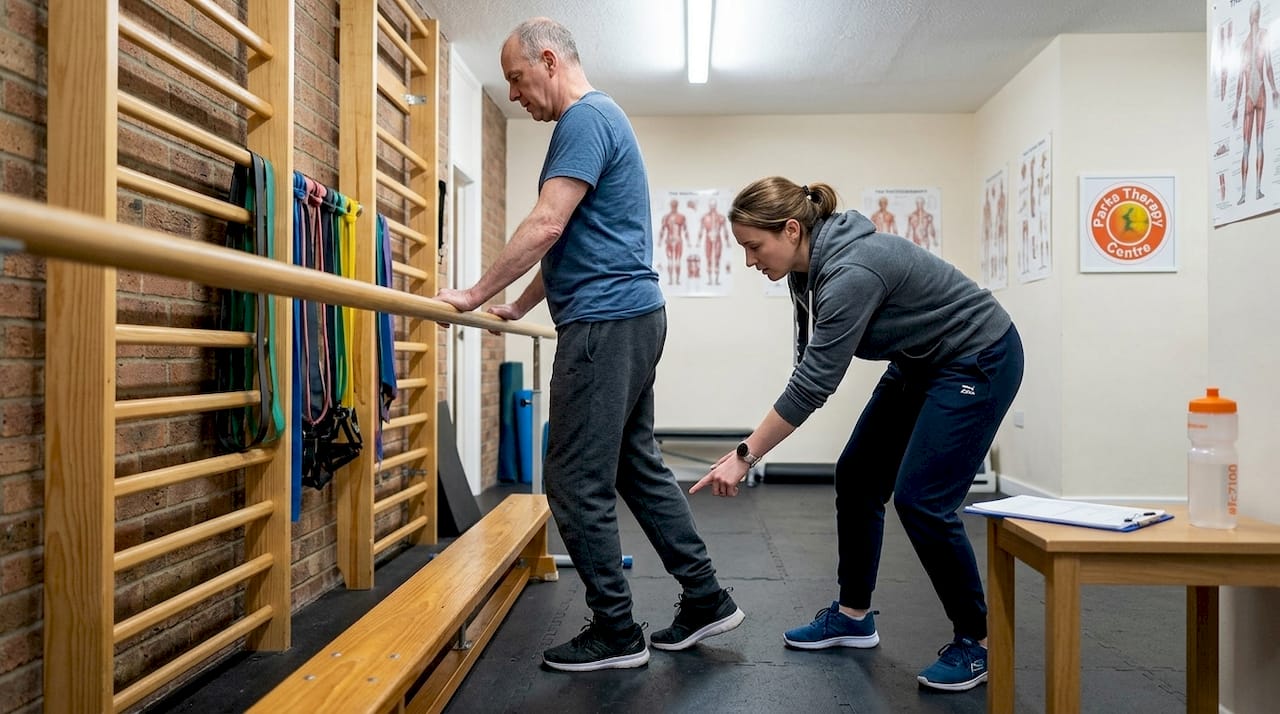
A runner returning to competitive sport has very different needs from a teacher on their feet all day or an older adult looking to walk without discomfort. These differences shape everything from the loading parameters to the session frequency.
| Recovery stage | Load level | Rep range | Frequency | Focus |
|---|---|---|---|---|
| Acute (weeks 1 to 3) | Low to moderate | Higher reps (15+) | Daily | Pain control, tendon stimulus |
| Sub-acute (weeks 4 to 8) | Moderate | Moderate reps (8 to 15) | 4 to 5 times per week | Rebuilding strength |
| Functional (weeks 9 to 16+) | High | Lower reps (6 to 8) | 3 times per week | Sport-specific loading |
A bespoke plan will typically include far more than exercise alone. Here's what a well-rounded, individualised programme might cover:
- Structured loading exercises matched to your current pain level and capacity
- Manual therapy to address calf tightness, ankle stiffness, or compensatory patterns elsewhere
- Education about tendon biology, how to read your symptoms, and how to self-manage flare-ups
- Footwear and orthotics assessment, particularly if pronation or poor foot mechanics are contributing
- A graduated return-to-activity plan with clear milestones
- Home strategies, including warm-up routines, activity modification, and load monitoring
Learning about evidence-based physiotherapy helps you understand why your physiotherapist makes certain decisions. If you're just starting out with rehab, physiotherapy tips for beginners can help you build confidence in the process from the outset.
Navigating pain, setbacks, and the long-term: what to expect
No recovery is perfectly linear. The sooner you accept this, the better you'll manage the inevitable bumps along the way.
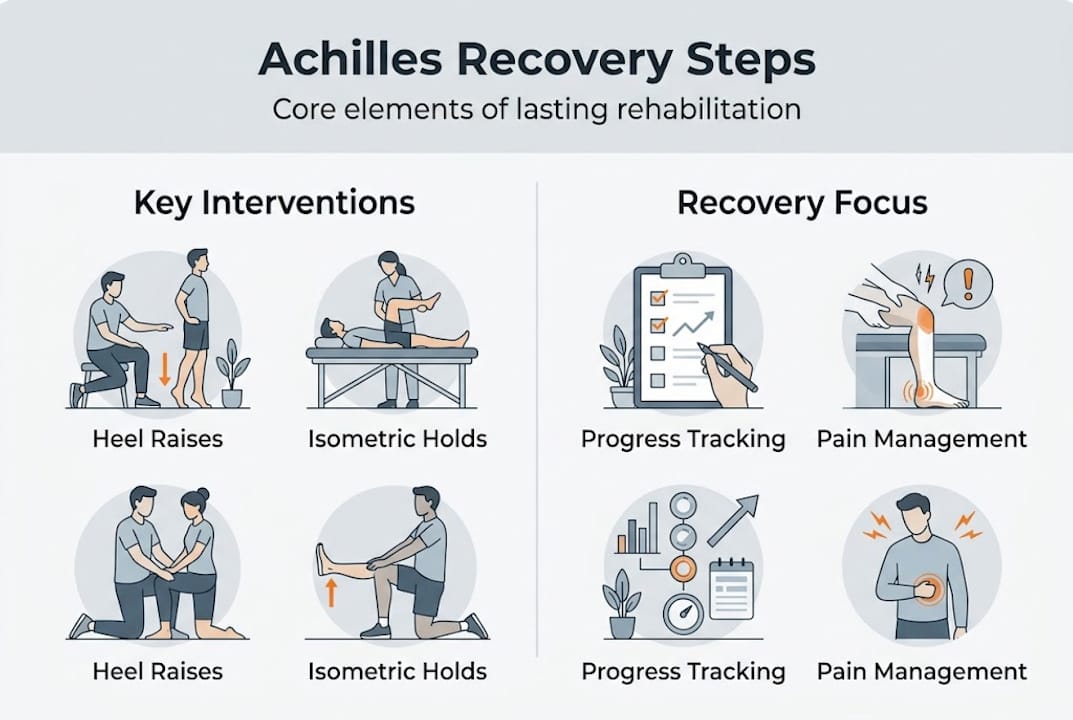
Pain is not always the enemy. During Achilles rehab, a certain level of discomfort during loading is normal and expected. What matters is how your symptoms behave afterwards. Isometric holds provide pain management through a neurological pain-calming effect, giving you a reliable tool when symptoms spike.
Here's what a typical 3 to 6 month recovery pathway looks like:
- Weeks 1 to 3: Pain management, isometric loading, activity modification, and education
- Weeks 4 to 8: Introduction of eccentric and isotonic exercises, gradual increase in volume
- Weeks 9 to 12: Heavy slow resistance training, light sport-specific work if applicable
- Months 4 to 6: Return to full activity, sport-specific loading, maintenance programme established
Setbacks are common. A long walk, a sudden burst of activity, or even a stressful week can trigger a flare-up. The key is not to panic and not to rest completely. Reduce load temporarily, return to isometrics if needed, and continue your plan at a slightly reduced level. Understanding pain relief with physiotherapy gives you the knowledge to interpret your symptoms rather than fear them.
For a structured overview of the full recovery process, a step-by-step rehab guide can serve as a useful companion alongside your clinical sessions.
Pro Tip: Consistency beats intensity every time with Achilles rehab. Three sessions per week done reliably over four months will outperform sporadic heavy sessions every time. The tendon adapts to repeated, reliable mechanical input, not heroic one-off efforts.
Why a bespoke, evidence-based approach is the future for Achilles recovery
After working with hundreds of patients dealing with Achilles injuries, one thing becomes clear very quickly: the people who recover best are not those who follow the most aggressive protocol. They're the ones whose plan evolves with them.
Clinical experience consistently shows that mixing protocols, layering in manual therapy, and pairing exercise with genuine education produces results that exercise alone rarely matches. A patient who understands why they're doing something is far more likely to do it correctly, stay consistent, and avoid the overload mistakes that cause setbacks.
There's also the psychological dimension. Recovery from a chronic or serious Achilles injury affects confidence, mood, and identity, particularly for active individuals. Treating the whole person, including their goals and mindset, matters enormously. Reviewing recovery and prevention insights can help you stay focused on the long game. Protocols should evolve as the patient progresses. A plan that works in week two should look quite different by week ten. That adaptability is what prevents re-injury and produces lasting benefits well beyond the Achilles itself.
Start your Achilles recovery with Bedfordshire's physiotherapy specialists
If you're ready to move beyond guesswork and put a science-backed, individualised rehabilitation plan into action, the team at Parks Therapy Centre is here to help. We've been supporting patients across Bedfordshire and Buckinghamshire since 1986, bringing together physiotherapy, podiatry, sports injury expertise, and more under one roof.
Our specialists will assess your injury, build a programme around your specific goals and recovery stage, and guide you through every step. Whether you're dealing with long-term tendinopathy or recovering after surgery, Achilles rehab in Bedfordshire starts with a thorough consultation and a plan that grows with your progress. Book your appointment today and take the first real step towards a full, lasting recovery.
Frequently asked questions
How long does physiotherapy take for Achilles injuries?
Most people need 3 to 6 months of structured physiotherapy to restore function and prevent re-injury. Research supports 70% return to activity with consistent eccentric exercise programmes.
Is rest or exercise better for Achilles recovery?
Active rehab with progressive loading exercises restores tendon function far more effectively than rest alone, which leads to further weakening of the tendon over time.
What are the Alfredson protocol exercises?
The Alfredson protocol uses eccentric heel drops performed as 3 sets of 15 repetitions, twice daily for 12 weeks, targeting both straight and bent-knee positions.
Can physiotherapy help prevent Achilles injury recurrence?
Yes. A tailored programme that addresses strength, flexibility, and biomechanics significantly lowers re-injury risk. Manual therapy and education are key components in keeping the tendon resilient long term.
Is physiotherapy suitable after Achilles surgery?
Absolutely. Post-surgical physiotherapy is essential. It restores function post-surgery by guiding safe, progressive loading as the tendon heals and helping patients return to full activity with confidence.