

Prenatal massage can safely relieve sciatica in pregnancy for most women, provided you have clearance from your GP or midwife and the therapist holds a recognised prenatal qualification. The key conditions are straightforward: avoid flat supine positioning after around 20 weeks, steer clear of deep abdominal work, and ensure your therapist screens for DVT risk before any lower-limb work. If you are unsure whether massage is appropriate for your situation, contact your maternity team first.
Immediate steps if sciatic nerve pain is affecting your daily life: speak to your midwife or GP to rule out complications, try the tennis-ball-against-a-wall technique described below for short-term relief, and book a prenatal-trained therapist or chartered physiotherapist if pain limits your normal activities.
- Get GP or midwife clearance before starting any new treatment.
- Try safe self-care (tennis ball against a wall, pregnancy pillow support) while awaiting your appointment.
- Book a prenatal-trained massage therapist or chartered physiotherapist for hands-on assessment.
- Seek urgent care if you develop new bladder or bowel changes, progressive leg weakness, or signs of DVT.
Table of Contents
- What is sciatica in pregnancy?
- How do you know if it is sciatica and not another pregnancy pain?
- Why does pregnancy cause or worsen sciatica?
- Is massage safe in pregnancy, and what do therapists avoid?
- What happens in a prenatal massage or physiotherapy session for sciatica?
- Safe self-care and home techniques you can try today
- Physiotherapy exercises and nerve glides for pregnancy sciatica
- How to sleep and what supports help overnight
- Red flags: when to get urgent medical advice
- How long does pregnancy sciatica usually last?
- How Parkstherapycentre treats pregnancy sciatica
- Key takeaways
- A physiotherapist's perspective on treating pregnancy sciatica
- Parkstherapycentre: book a pregnancy sciatica assessment
- Trusted UK and clinical sources
What is sciatica in pregnancy?
Sciatica is irritation of the sciatic nerve, producing pain, tingling, or numbness that travels from the lower back or buttock down one leg. The nerve originates from lumbar and sacral nerve roots (L4 to S3), and anything that compresses or inflames those roots or the nerve itself can trigger symptoms.
In pregnancy, the most common pattern is not a disc prolapse but piriformis-type irritation. The piriformis muscle, which sits deep in the gluteal region, can tighten or go into spasm and press directly on the sciatic nerve as it passes nearby. Pelvic alignment shifts, postural changes, and increased load on the gluteal muscles all make this more likely as pregnancy progresses.
How do you know if it is sciatica and not another pregnancy pain?
Common signs of sciatic nerve pain in pregnancy include:
- Sharp or shooting pain running from the buttock down the back of one leg.
- Pins and needles or numbness in the thigh, calf, or foot.
- Pain that worsens when standing for long periods, coughing, or sneezing.
- Symptoms that are predominantly one-sided (unilateral).
- Buttock pain that feels deep and aching rather than surface-level.
Sciatica is often confused with pelvic girdle pain (PGP). The distinction matters because the two conditions respond to different treatments. Sciatica radiates down the leg; PGP tends to be localised to the front or back of the pelvis and is frequently bilateral. If you have numbness or weakness in the leg alongside pain, nerve involvement is more likely and a formal physiotherapy assessment is advisable rather than self-treatment alone.
Why does pregnancy cause or worsen sciatica?
Several mechanical and hormonal changes in pregnancy converge to increase sciatic nerve irritation. The pelvis widens, lumbar lordosis increases, and the body's centre of gravity shifts forward, altering gait and placing greater demand on the piriformis and gluteal muscles. When those muscles tighten or go into spasm, they can compress the sciatic nerve directly.
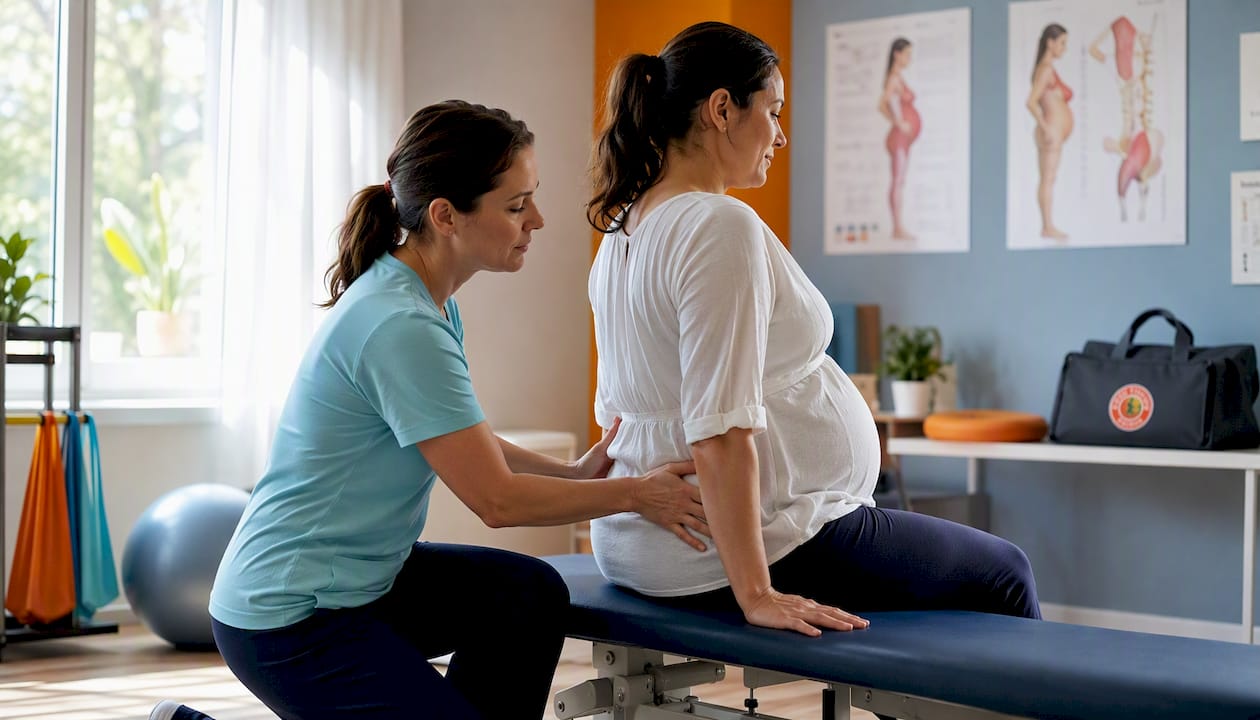
The hormone relaxin, which loosens ligaments to prepare the pelvis for birth, also reduces spinal stability. That instability means the surrounding muscles work harder to compensate, increasing the risk of spasm. Fluid retention can add mild nerve compression in the lower limbs, and prolonged sitting without adequate lumbar support is one of the most consistent day-to-day triggers.
Pro Tip: Change position every 30–40 minutes when sitting, use a lumbar roll or rolled towel behind the lower back, and avoid crossing your legs, which rotates the pelvis and can aggravate piriformis tension.
Is massage safe in pregnancy, and what do therapists avoid?
Prenatal massage is a safe and effective way to reduce stress and pregnancy discomforts when performed correctly, with therapists adapting pressure and positioning throughout. That said, specific safety rules apply, and not every massage therapist is trained to follow them.
Who needs medical clearance first:
- Anyone with a high-risk pregnancy, preeclampsia, placenta praevia, or unexplained bleeding.
- Women with a history of DVT or current signs of clot (calf swelling, warmth, tenderness).
- Anyone with a bleeding disorder or on anticoagulant medication.
- Women whose obstetrician or midwife has advised restricted activity.
If in doubt, consult your GP or obstetrician before booking. Some clinics require written OB clearance for prenatal massage.
Positioning: after approximately 20 weeks, flat supine positioning is avoided due to inferior vena cava compression. Side-lying with pillows and bolsters, or a semi-upright position, is standard practice.
Areas and techniques therapists avoid:
-
Deep abdominal work at any stage.
-
Acupressure points SP6, BL67, LI4, and GB21, which are routinely avoided due to historical associations with uterine stimulation.
-
Aggressive deep-tissue pressure on the lower limbs without prior DVT screening.
-
Hot-stone treatments and sauna-based therapies, which risk maternal overheating.
-
Unvetted essential oils. Many aromatherapy oils are contraindicated in pregnancy; for guidance on pregnancy-safe oils, check with a qualified practitioner before use.
Credential check: in the UK, ask your therapist whether they hold a recognised prenatal massage qualification and whether they carry professional indemnity insurance. Chartered physiotherapists are registered with the Health and Care Professions Council (HCPC); massage therapists may be registered with the Complementary and Natural Healthcare Council (CNHC) or a professional body such as the Federation of Holistic Therapists (FHT).
What happens in a prenatal massage or physiotherapy session for sciatica?
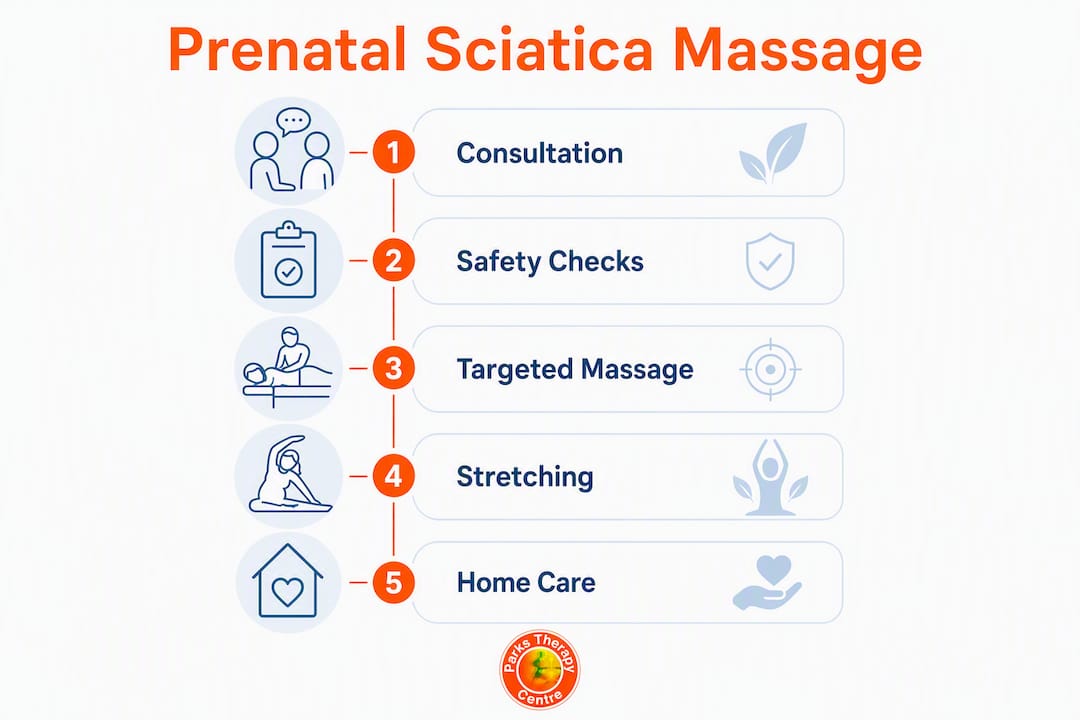
A well-structured appointment follows a clear sequence. Understanding it helps you know what to expect and what questions to ask.
| Stage | What happens | Trimester notes |
|---|---|---|
| Health screening | Review of OB/GP clearance, DVT risk, medications, and symptom history | All trimesters |
| Positioning and bolstering | Side-lying with pillows under the bump, between knees, and supporting the back | Standard from ~20 weeks; bolsters used earlier if needed |
| Consent and pressure check | Agreement on areas to avoid, pressure preference, and escalation plan | All trimesters |
| Targeted gluteal/piriformis work | Broad-contact myofascial release, gluteal compression, Swedish effleurage | Light-to-moderate pressure throughout |
| Exercise plan | Stretches, nerve glides, and home programme to sustain gains between sessions | Tailored to trimester and fitness level |
The therapeutic goal is to reduce muscle spasm, improve tissue mobility, and activate the parasympathetic nervous system to lower pain perception. Broad-contact myofascial techniques and gentle gluteal compression are preferred over forceful deep-tissue work, which can increase irritation rather than reduce it.
Pro Tip: Before booking, ask the therapist: "Do you have a prenatal massage qualification?", "How do you screen for DVT?", and "What is your escalation pathway if I have a reaction or my symptoms worsen?" A confident, clear answer to all three is a good sign.
Safe self-care and home techniques you can try today
Between clinic appointments, several low-risk techniques can reduce sciatic nerve pain in pregnancy. Always stop any technique immediately if it increases numbness, causes sharp shooting pain, or produces any new weakness.
Tennis-ball technique:
- Early pregnancy: lie on your side or sit on the floor, place a tennis ball under the affected buttock, and apply gentle body weight to find a tender point. Hold for 20–30 seconds, then shift slightly and repeat.
- Later pregnancy (second and third trimester): stand facing a wall, place the tennis ball between the wall and your gluteal region, and lean gently into it. This controls pressure more safely than floor-based work and avoids lying flat.
Other useful equipment:
- A pregnancy pillow or standard pillow placed between the knees when side-lying reduces pelvic rotation and takes tension off the piriformis.
- A lumbar roll or rolled towel placed in the small of the back when sitting supports the natural lumbar curve and reduces nerve irritation.
- A heat pack applied to the gluteal region for 10–15 minutes can ease muscle spasm. Use a covered pack, not direct heat, and avoid prolonged application. Cold packs can also reduce acute inflammation; some women find alternating the two helpful.
- When choosing any topical product for self-massage, check that it is formulated for pregnancy, as many standard massage oils contain ingredients that are not recommended during pregnancy.
Physiotherapy exercises and nerve glides for pregnancy sciatica
Physiotherapy is a core component of pregnancy sciatica treatment, addressing the mechanical causes rather than masking symptoms. The exercises below are commonly recommended; always check with a chartered physiotherapist before starting if your symptoms are severe or you have any obstetric complications.
| Exercise | Target | Sets/Reps | Frequency |
|---|---|---|---|
| Piriformis stretch (seated or side-lying) | Piriformis muscle | 3 × 30-second hold | Daily |
| Glute bridge | Gluteal muscles, pelvic stability | 3 × 10 reps | Daily |
| Pelvic tilt (standing or four-point kneeling) | Lumbar spine, core | 3 × 10 reps | Daily |
| Cat–cow | Lumbar mobility | 10 slow cycles | Daily |
| Gentle sciatic nerve glide (seated, foot pump) | Sciatic nerve mobility | 10 reps | Once or twice daily |
Stop immediately and seek assessment if you experience:
- Increasing weakness in the leg during or after exercise.
- Severe or spreading numbness that does not settle within a few minutes of rest.
- Pain that worsens progressively rather than easing after the first few repetitions.
If pain is limiting your daily activities, a chartered physiotherapist can provide a formal assessment, adapt exercises to your trimester, and combine manual therapy with a structured home programme for better outcomes.
How to sleep and what supports help overnight
Sleep position has a direct effect on sciatic nerve irritation. The preferred position in pregnancy is side-lying, ideally on the left side to optimise circulation, with a pillow placed between the knees. This reduces pelvic rotation and takes pressure off the piriformis and lower lumbar spine.
Practical overnight tips:
- Place a pregnancy pillow or standard pillow between the knees and ankles to keep the hips level.
- A second pillow supporting the bump from underneath reduces the pull on the lower back.
- A firm mattress topper can help if your mattress allows excessive pelvic sinking, which increases lumbar strain.
- Apply a heat pack to the gluteal region for 10 minutes before bed to relax the piriformis before you settle.
- On waking, perform a few gentle pelvic tilts and a slow cat–cow before getting up to reduce morning stiffness.
Avoid sleeping on your back after around 20 weeks. If you wake on your back, simply roll to your side; there is no need for alarm, but repositioning promptly is advisable.

Red flags: when to get urgent medical advice
Most pregnancy sciatica is mechanical and responds to conservative care. Some symptoms, however, require prompt medical attention.
Contact your midwife, GP, or NHS 111 without delay if you notice:
- New difficulty controlling your bladder or bowels (this may indicate cauda equina involvement and requires emergency assessment).
- Progressive weakness in one or both legs that is getting worse rather than staying the same.
- Severe, unrelenting pain that is not eased by rest, position change, or simple analgesia.
- Calf swelling, warmth, redness, or tenderness on one side (possible DVT).
- Bilateral leg symptoms or symptoms that have changed character suddenly.
For a clinic appointment, bring a brief symptom diary noting when pain started, what makes it better or worse, and any OB clearance letter or current medication list. This helps the clinician triage your case quickly and safely.
How long does pregnancy sciatica usually last?
For most women, piriformis-type sciatica improves significantly in the weeks to months after delivery, once the mechanical load on the pelvis reduces and relaxin levels normalise. Symptoms often ease gradually during the third trimester as the baby's position shifts, though this is not universal.
With a combined approach of prenatal massage and physiotherapy for sciatica, many women notice a reduction in back and sciatic pain by around 55–70% after 6 sessions. Persistent severe neurological signs, such as ongoing leg weakness or numbness after delivery, warrant further investigation rather than continued conservative management alone. Setting a review point with your clinician after a few weeks of conservative care is a sensible benchmark; if symptoms are not improving, escalation to further assessment is appropriate.
How Parkstherapycentre treats pregnancy sciatica
Parkstherapycentre has been providing multidisciplinary care since 1986, with clinics across Bedfordshire and Buckinghamshire. The team includes chartered physiotherapists registered with the HCPC and prenatal-trained massage therapists, all working within a clear clinical pathway for pregnancy-related musculoskeletal pain.
What the care pathway typically includes:
- Pre-appointment screening covering obstetric history, DVT risk, current medications, and OB/GP clearance status.
- A full assessment of posture, pelvic alignment, and symptom pattern to distinguish piriformis-type sciatica from other pregnancy pain.
- Side-lying and bolstered positioning throughout any hands-on treatment.
- Targeted myofascial release, gluteal compression, and gentle manual therapy techniques appropriate to trimester.
- A structured home exercise programme covering piriformis stretches, glute bridges, and nerve glides.
- Review at 4–6 sessions with onward referral to the GP, obstetrician, or specialist if symptoms are not responding.
The clinic accepts private pay and many health insurance plans, and can work alongside GP or midwife referral. Documented benefits of this approach include measurable reductions in back pain (55–70%) and sciatica symptoms (~55%) at 6 sessions, with review and onward referral if symptoms are not responding.
For women interested in adjunct therapies, acupuncture in pregnancy is also available at the centre, subject to individual clinical assessment.
Key takeaways
Prenatal massage combined with physiotherapy and home exercise is the most effective non-invasive approach to pregnancy sciatica, provided OB/GP clearance is obtained and a prenatal-trained therapist delivers care.
| Point | Details |
|---|---|
| Get clearance first | Consult your GP or midwife before starting massage or physiotherapy, especially with a high-risk pregnancy. |
| Positioning is critical | After 20 weeks, flat supine is avoided; side-lying with bolsters is the safe standard for all hands-on treatment. |
| Combine massage with exercise | Massage reduces spasm; exercises for pelvic alignment and core stability address the mechanical cause and reduce recurrence. |
| Know the red flags | New bladder or bowel changes, progressive leg weakness, or DVT signs require urgent medical assessment, not self-care. |
| Parkstherapycentre care pathway | Chartered physiotherapists and prenatal-trained therapists at Parkstherapycentre provide assessment, manual therapy, and a structured exercise plan, with review at 4–6 sessions. |
A physiotherapist's perspective on treating pregnancy sciatica
The most common mistake I see is women waiting too long before seeking help, assuming the pain is simply part of pregnancy and will resolve on its own. Sometimes it does. Often, a few targeted sessions and a clear home programme make a substantial difference within two to three weeks, and that matters enormously when you are trying to sleep, work, and function day to day.
What also tends to be underestimated is how much positioning and daily habits contribute. The treatment session is one hour; the other 23 hours are where the gains are either reinforced or undone. Sitting without lumbar support, sleeping without a pillow between the knees, or continuing to sit for long stretches without moving all maintain the muscle tension that the session just reduced. The exercise plan is not optional.
One more point worth making clearly: OB clearance is not bureaucratic caution. It is the step that allows a therapist to work confidently and safely, knowing that the clinical picture has been reviewed. Skipping it does not make the treatment more accessible; it makes it less safe. Any reputable prenatal therapist will ask for it, and that is exactly the right approach.
Parkstherapycentre: book a pregnancy sciatica assessment
Sciatica in pregnancy responds well to hands-on care when it is delivered by the right team. Parkstherapycentre offers chartered physiotherapy, prenatal-trained massage, and structured exercise prescription across its Bedfordshire and Buckinghamshire clinics, all within a care pathway designed specifically for pregnancy-related musculoskeletal pain.
At your first appointment, the team completes a full clinical screening, confirms OB/GP clearance, and builds a treatment plan tailored to your trimester and symptom pattern. Sessions use side-lying protocols and bolstering throughout, with clear escalation to your GP or obstetrician if needed. The clinic accepts private pay and most major health insurance plans.
To book an assessment or find out which clinic location suits you, visit Parkstherapycentre and use the online booking system, or call the clinic directly to discuss your situation before your first visit.
Trusted UK and clinical sources
- NHS Pelvic Health Physiotherapy Antenatal Advice: NHS-produced guidance on pelvic and lumbar pain in pregnancy, including exercise handouts and safety advice.
- MedlinePlus: Sciatica: Clear clinical overview of sciatica causes, symptoms, and treatment options from the US National Library of Medicine.
- Cochrane Review: Exercise for low back pain in pregnancy: Systematic review of exercise interventions for pregnancy-related back pain; useful for understanding the evidence base.
- Parkstherapycentre: types of physiotherapy for pregnancy: Clinic resource explaining integrated physiotherapy and massage approaches for pregnancy pain, including booking information.
- Parkstherapycentre: manual therapy in pregnancy: Detailed guide to manual therapy protocols, safety considerations, and contraindications for prenatal care.
This article provides general information and is not a substitute for professional medical or physiotherapy advice. Always confirm the current guidance with your midwife, GP, or a qualified clinician for your individual situation.