
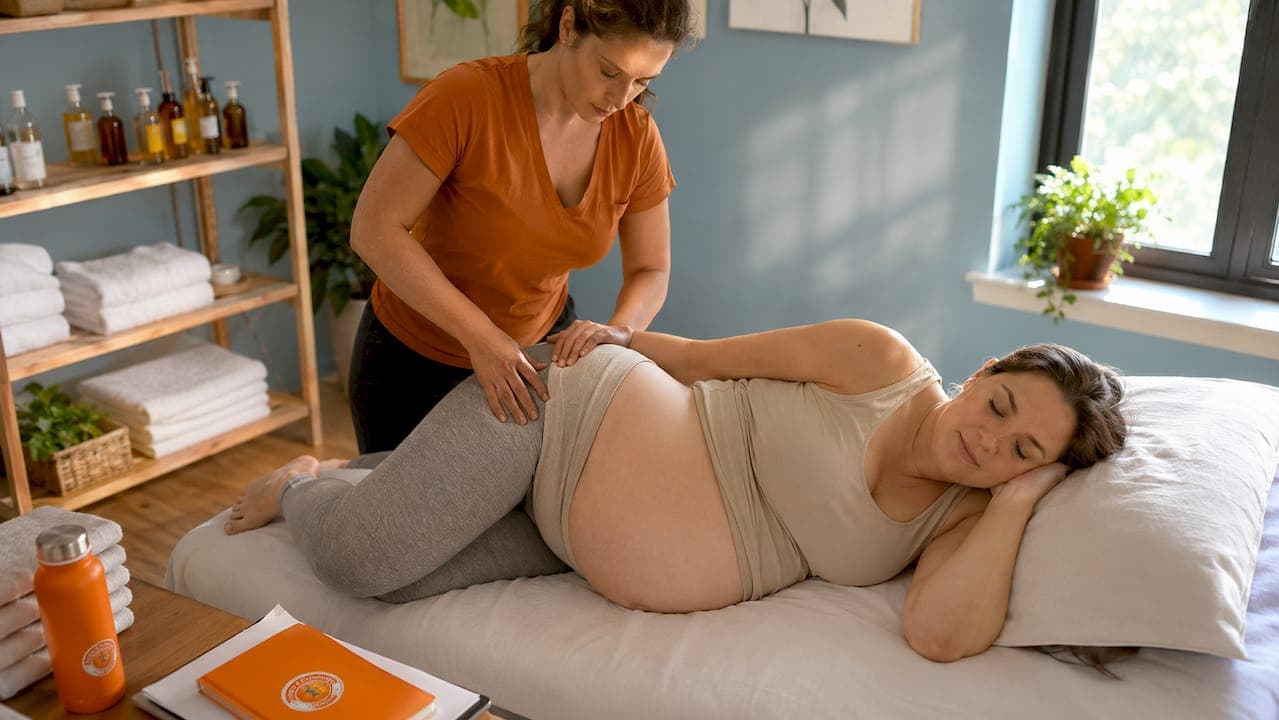
TL;DR:
- Manual therapy alleviates pregnancy-related pain by reducing muscle tension and improving joint alignment. It also supports hormonal balance, stress reduction, and pelvic preparation for labor. Depending on the trimester, targeted interventions can provide lasting benefits with proper practitioner training and screening protocols.
Manual therapy in pregnancy is defined as hands-on clinical treatment applied by a trained physiotherapist or therapist to reduce musculoskeletal pain, improve mobility, and support the body's adaptations throughout gestation. Low back pain affects 50–70% of pregnant women, making it one of the most common and disabling complaints of pregnancy. UK NICE guidelines recommend physiotherapy assessment and manual therapy as first-line treatment for pregnancy-related pelvic girdle and lumbar pain. Beyond pain relief, the role of manual therapy in pregnancy extends to hormonal regulation, stress reduction, and physical preparation for labour. Parkstherapycentre has supported pregnant women with evidence-based manual therapy since 1986, combining clinical expertise with a patient-centred approach across its Bedfordshire and Buckinghamshire locations.
Which manual therapy techniques are safe and effective during pregnancy?
Manual therapy is an umbrella term for several hands-on techniques. In pregnancy, practitioners adapt these methods to account for postural changes, ligament laxity caused by the hormone relaxin, and the safety of the developing baby.
Techniques commonly used in pregnancy
The following approaches are well-established for prenatal use:
- Soft tissue mobilisation: Gentle pressure applied to muscles and connective tissue to release tension and improve circulation. Particularly effective for the lower back, hips, and shoulders.
- Myofascial release: Sustained, low-load stretching of the fascia to reduce tightness and restore movement. Therapists use this to address the thoracic and lumbar regions without placing pressure on the abdomen.
- Gentle joint mobilisation: Low-grade oscillatory movements at the sacroiliac joint or lumbar spine to reduce stiffness and pain. High-velocity thrust manipulations are not used in pregnancy.
- Prenatal massage with rotational effleurage: Long, sweeping strokes adapted for the pregnant body. Rotational effleurage during labour produces high clinical effect sizes (Cohen's d 0.77 to 2.44) for pain relief from 3–10 cm dilation. That makes it one of the most evidence-supported non-pharmacological techniques available.
Positioning and session safety
Pregnant women are positioned in lateral decubitus (lying on their side) from the second trimester onward to avoid compressing the inferior vena cava. Prenatal massage sessions should last 45–60 minutes, and practitioners must screen for deep vein thrombosis at every appointment. That screening requirement is non-negotiable because pregnancy increases clotting risk significantly.
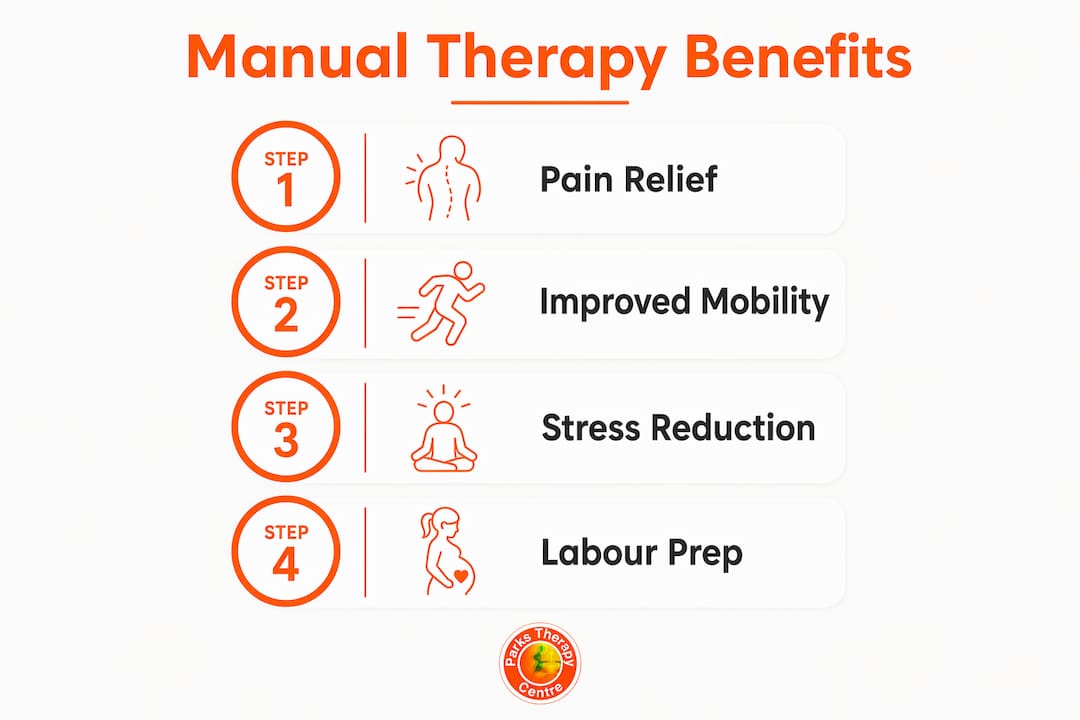
Certain acupressure points are strictly avoided. Points SP6, BL67, LI4, and GB21 are contraindicated due to their potential to stimulate uterine contractions. Any practitioner working with pregnant women must know these contraindications before beginning treatment.
Pro Tip: Ask your therapist directly whether they have specific training in obstetric physiotherapy or prenatal massage. A general qualification alone is not sufficient for safe pregnancy manual therapy.
How does manual therapy alleviate pregnancy-related pain and improve physical function?
Manual therapy reduces pain through several overlapping mechanisms: it decreases muscle tension, improves joint alignment, stimulates mechanoreceptors that inhibit pain signals, and promotes local circulation. These effects are particularly relevant in pregnancy because the body undergoes rapid biomechanical changes that the musculoskeletal system must constantly adapt to.
Targeting pelvic girdle pain and lower back pain
Pelvic girdle pain is the most common musculoskeletal complaint in pregnancy, affecting the sacroiliac joints, pubic symphysis, and surrounding muscles. Manual therapy combined with exercise reduces pain intensity by 30–50% in pregnancy-related pelvic girdle pain. That level of reduction is clinically meaningful and often avoids the need for medication entirely.
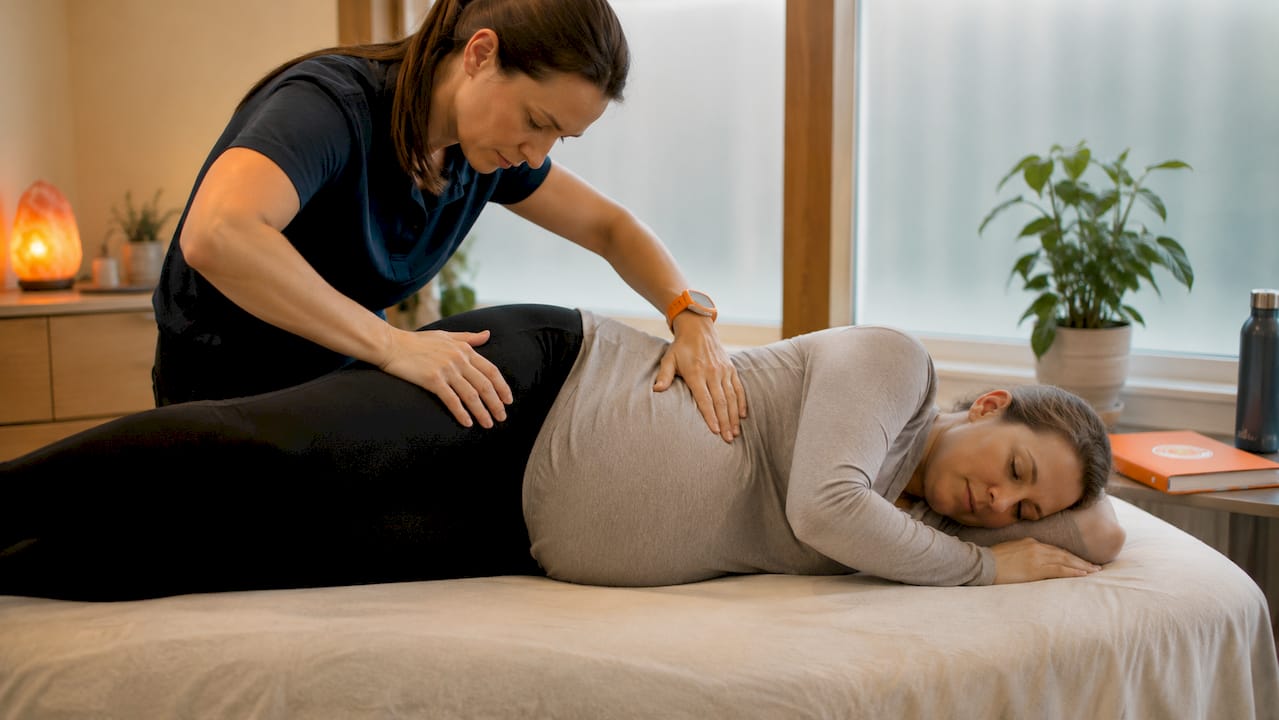
Manual therapy improves pelvic floor flexibility and corrects postural misalignments caused by the shifting centre of gravity and increased lumbar lordosis of pregnancy. Correcting these misalignments reduces strain on the lumbar discs, hip flexors, and gluteal muscles, all of which are commonly overloaded during gestation.
Posture, biomechanics, and functional recovery
As the uterus grows, the pelvis tilts anteriorly and the thoracic spine compensates by increasing its kyphosis. This chain of adaptations creates tension patterns that manual therapy directly addresses. Physiotherapist-led prenatal treatment integrates postural assessment and adjustments at every session, making it more targeted than general massage alone.
The table below summarises the difference in outcomes between manual therapy alone and a combined approach:
| Approach | Primary benefit | Limitation |
|---|---|---|
| Manual therapy alone | Immediate pain and tension relief | Effects may not persist without exercise |
| Exercise alone | Builds strength and endurance | Does not address acute joint restriction |
| Manual therapy plus exercise | 30–50% pain reduction, sustained improvement | Requires access to a qualified practitioner |
The combined approach consistently outperforms either intervention in isolation. Parkstherapycentre delivers both components within a single treatment plan, which is why outcomes for pregnant patients tend to be more durable.
What are the wider wellness benefits of prenatal manual therapy?
Manual therapy does more than relieve physical pain. Its effects on the nervous and endocrine systems make it a genuinely broad wellness intervention for pregnant women.
Hormonal regulation and stress relief
Prenatal manual therapy lowers cortisol while increasing serotonin and dopamine, helping to manage prenatal stress, anxiety, and sleep disturbances. Lower cortisol is significant because elevated cortisol in pregnancy is associated with preterm birth and low birth weight. Raising serotonin and dopamine improves mood stability and reduces the risk of prenatal depression, which affects a meaningful proportion of pregnant women.
Improved sleep is a direct consequence of reduced muscle tension and lower cortisol. Many pregnant women report that manual therapy sessions produce the deepest sleep they experience during the third trimester.
Labour preparation and pelvic conditioning
Manual therapy is foundational in obstetric care for preparing the body for childbirth by managing musculoskeletal changes and enhancing pelvic function. Releasing tension in the hip rotators, iliopsoas, and pelvic floor muscles creates more space and flexibility for the baby's descent during labour. This is not a passive benefit. It is a targeted clinical outcome that skilled practitioners work toward from the second trimester onward.
"A drug-free method to regulate hormones and reduce prenatal stress, anxiety, and sleep disturbances, prenatal manual therapy addresses the full spectrum of physical and emotional demands placed on the pregnant body."
Improved circulation from manual therapy also reduces peripheral oedema, a common and uncomfortable feature of late pregnancy. Many pregnant women find that regular sessions significantly reduce swelling in the ankles and feet.
Pro Tip: Pair your manual therapy sessions with pregnancy preparation resources to build a broader prenatal wellness plan. Combining physical treatment with informed preparation gives you the best foundation for labour and recovery.
When should you seek manual therapy during pregnancy?
Manual therapy is appropriate at any stage of pregnancy, but the timing and focus of treatment shift across the trimesters.
Trimester-by-trimester guidance
- First trimester (weeks 1–12): Manual therapy is generally safe but sessions focus on gentle soft tissue work and postural advice. Nausea and fatigue may limit tolerance, so shorter sessions are common. Avoid deep abdominal work entirely.
- Second trimester (weeks 13–26): This is the most productive window for manual therapy. The risk of miscarriage has passed, the bump is not yet large enough to restrict positioning, and musculoskeletal complaints are beginning to peak. Pelvic girdle pain and lower back pain typically emerge during this period.
- Third trimester (weeks 27–40): Treatment continues with modified positioning and a stronger focus on labour preparation. Myofascial release of the hip rotators and pelvic floor becomes a priority. DVT screening at every session is critical during this stage.
Signs that indicate you need treatment
Seek manual therapy promptly if you experience any of the following:
- Persistent lower back or pelvic pain that limits walking, standing, or sleeping
- Muscle tension in the neck, shoulders, or upper back from postural changes
- Pubic symphysis pain or a waddling gait
- Stress, anxiety, or sleep disruption that is not resolving with rest
- Swelling or heaviness in the legs (after ruling out DVT with your midwife)
Choosing a qualified practitioner
Not every physiotherapist or massage therapist has the training required for safe prenatal care. Physiotherapist-led prenatal treatment applies ongoing postural evaluation and clinical reasoning that general practitioners cannot replicate. When selecting a provider, check for postgraduate training in obstetric physiotherapy, experience with prenatal patients, and a clear screening protocol for contraindications.
Pro Tip: Always inform your midwife or obstetrician before starting manual therapy. Share your full medical history with your therapist, including any history of placenta praevia, pre-eclampsia, or preterm labour risk, as these may require modified or deferred treatment.
Parkstherapycentre's team holds professional qualifications in physiotherapy and related disciplines, with experience in evidence-based pregnancy physiotherapy across multiple treatment modalities.
Key takeaways
Manual therapy combined with exercise is the most effective, evidence-backed approach for reducing pregnancy-related pain and supporting maternal wellbeing throughout all three trimesters.
| Point | Details |
|---|---|
| Pain reduction is significant | Manual therapy plus exercise cuts pregnancy-related pain intensity by 30–50%. |
| Safety protocols are non-negotiable | DVT screening at every session and avoidance of contraindicated acupressure points protect both mother and baby. |
| Benefits extend beyond pain relief | Lowered cortisol, raised serotonin, and improved sleep make manual therapy a full wellness intervention. |
| Timing matters across trimesters | The second trimester is the most productive window; third-trimester sessions focus on labour preparation. |
| Practitioner qualifications are critical | Choose a therapist with specific obstetric physiotherapy training, not just a general qualification. |
Why I think manual therapy deserves a central place in prenatal care
Working with pregnant women over many years, I have seen manual therapy shift from a "nice to have" to a genuinely expected part of good prenatal care. What strikes me most is how often women arrive in the second trimester having been told to simply "rest and wait" for pelvic pain to resolve. It rarely does. The body is under enormous mechanical and hormonal load, and passive waiting allows compensatory patterns to set in that become harder to address later.
The evidence now supports what clinicians have observed for decades. NICE guidelines have formalised manual therapy as a first-line intervention, not an afterthought. The hormonal benefits, particularly the cortisol reduction, are often the finding that surprises women most. They come in for back pain and leave reporting better sleep and lower anxiety. That is not a placebo effect. It reflects the genuine systemic reach of skilled hands-on treatment.
Interdisciplinary collaboration is where outcomes improve most. When a physiotherapist, midwife, and obstetrician communicate clearly, the pregnant woman receives care that is coordinated rather than fragmented. Manual therapy fits naturally into that model because its effects complement, rather than compete with, medical management. My advice to any pregnant woman reading this: do not wait until the pain is severe. Early intervention produces faster, more complete results.
— Ivan
Parkstherapycentre's prenatal manual therapy services
Parkstherapycentre has delivered specialist physiotherapy and manual therapy to pregnant women since 1986, across its clinics in Bedfordshire and Buckinghamshire.
The team includes qualified physiotherapists with experience in obstetric care, offering tailored sessions that address pelvic girdle pain, lower back pain, postural correction, and labour preparation. Every treatment plan is built around your stage of pregnancy, your symptoms, and your wider prenatal care. Sessions follow current clinical safety protocols, including DVT screening and trimester-appropriate positioning. To book a consultation or find out more about prenatal physiotherapy at Parkstherapycentre, contact the team directly through the website. Insurance cover is accepted at all locations.
FAQ
Is manual therapy safe throughout all three trimesters?
Manual therapy is safe throughout pregnancy when delivered by a qualified practitioner following current protocols. Techniques and positioning are adapted at each trimester, with DVT screening required at every session.
What conditions does manual therapy treat during pregnancy?
Manual therapy treats pelvic girdle pain, lower back pain, postural tension, pubic symphysis pain, and muscle tightness. It also supports stress reduction and sleep improvement through its hormonal effects.
How quickly does manual therapy relieve pregnancy-related pain?
Many pregnant women report noticeable pain relief after one to three sessions. Combined manual therapy and exercise produces 30–50% pain reduction, with sustained improvement over a course of treatment.
Can manual therapy help prepare my body for labour?
Manual therapy improves pelvic floor flexibility and releases tension in the hip rotators and iliopsoas, creating better conditions for the baby's descent. Rotational effleurage during labour also provides clinically significant pain relief during active dilation.
What should I tell my therapist before a prenatal manual therapy session?
Share your full obstetric history, including any risk of preterm labour, placenta praevia, pre-eclampsia, or blood clotting disorders. Your therapist should also know your current gestational week and any symptoms your midwife is monitoring. See manual therapy guidance for a full overview of what to expect from your first session.