
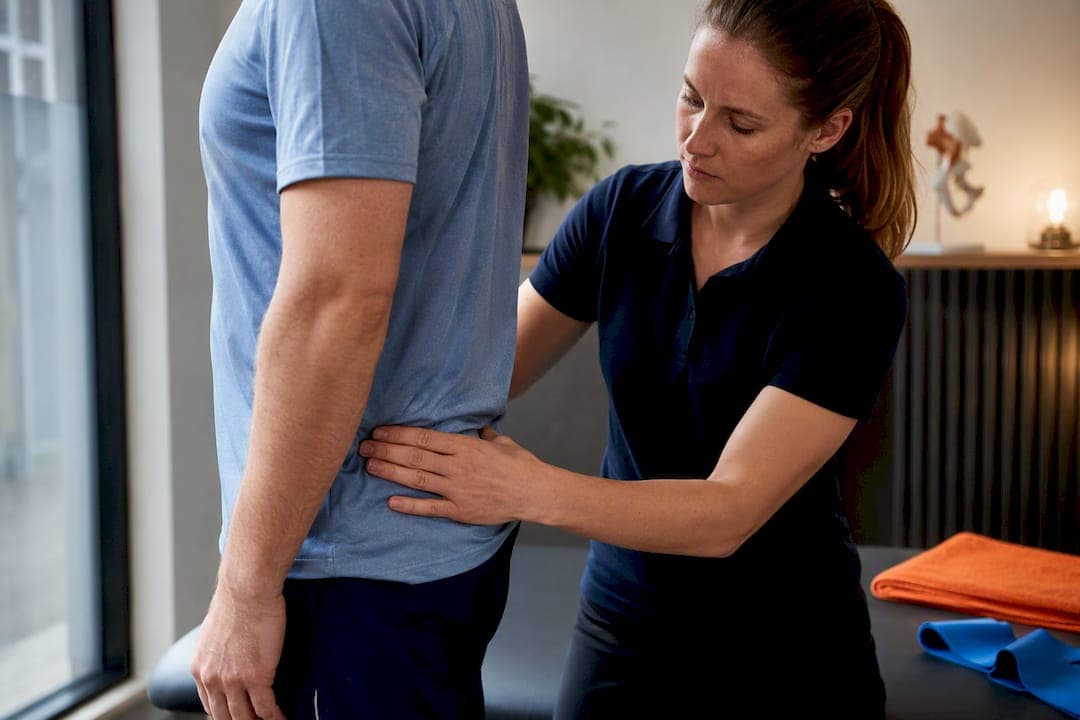
Most people with hip bursitis improve with self-care and physiotherapy, and surgery is rarely needed. The usual path runs in three steps: calm the inflammation at home, rebuild strength and movement through structured physiotherapy, then escalate to injections or advanced therapies only if pain persists. Surgery is reserved for cases that fail to improve after a prolonged period of comprehensive conservative treatment.
TL;DR:
- Most cases improve with targeted self-care and physiotherapy, with injections or advanced therapies reserved for persistent pain after several months.
- Early management should focus on relative rest, cold therapy initially, and gentle movement, with full recovery often taking several weeks to months.
- Physiotherapy aims to strengthen weak gluteal muscles and loosen tight IT bands, usually over a course of a few weeks to three months, supervised by a professional.
- Corticosteroid injections can provide quick pain relief but should be limited to two or three to avoid tissue damage, serving mainly as a bridge to therapy.
- Surgery is rarely necessary and is considered only after prolonged unsuccessful conservative treatment or if imaging shows tendon damage.
Table of Contents
- Immediate self-care for hip bursitis treatment at home
- How does physiotherapy help with hip bursitis?
- What medications and injections are used for hip bursitis?
- When are PRP and shockwave therapy considered for hip bursitis?
- Is surgery ever needed for hip bursitis?
- When should you see a GP about hip pain?
- How can you prevent hip bursitis from coming back?
- How Parkstherapycentre supports hip bursitis recovery
- A clinician's note on sticking with the plan
- Ready to start treatment for hip bursitis?
- Sources
Immediate self-care for hip bursitis treatment at home
The first two weeks matter more than most patients realise. Getting the basics right, rather than pushing through pain or resting completely, sets the tone for how quickly you recover.
Relative rest is the goal, not total immobility. Avoid the specific movements that spike your pain (lying directly on the affected hip, climbing stairs repeatedly, prolonged standing) but keep gentle, low-impact movement going. Walking short distances or cycling on a flat setting keeps the joint mobile without aggravating the bursa.
Ice remains the most effective early tool for bursa inflammation and swelling. Apply it for short sessions at a time with a thin cloth between the pack and your skin to protect against cold burns. After the first 48 to 72 hours, once the acute swelling has settled, switching to heat can ease residual stiffness and improve blood flow to the area.
A few small adjustments make daily life more manageable during a flare:
- Use a cane in the opposite hand to offload the sore hip when walking
- Sleep on your unaffected side with a pillow between your knees
- Break up sitting or standing every 20 to 30 minutes rather than staying static
- Avoid high step heights, deep squats, or crossing your legs
Pro Tip: Set your expectations early. Most people notice some easing of pain within days of consistent self-care, but meaningful improvement in function typically takes a few weeks. Full recovery, according to Mayo Clinic, can take several weeks to months, so don't judge progress day by day.
How does physiotherapy help with hip bursitis?
Hip bursitis physical therapy works by correcting the mechanical problem behind the inflammation, not just masking the pain. Most cases involve weak gluteus medius and minimus muscles alongside a tight iliotibial (IT) band, which together increase friction and compression over the bursa every time you walk or climb stairs. Strengthening those muscles and loosening the IT band takes pressure off the irritated tissue.
A typical programme progresses through three phases:
- Activation — gentle isometric exercises to wake up the gluteal muscles without provoking pain
- Strengthening — hip abduction work, glute bridges, and controlled side-lying leg lifts to build load tolerance
- Functional loading — step-ups, single-leg balance work, and sport- or work-specific movement patterns, introduced gradually as pain allows
Stretching the IT band and hip flexors runs alongside this strengthening work throughout. Our guide to IT band physiotherapy covers the specific stretches and progressions in more depth.
Supervised physiotherapy tends to outperform solo home exercise programmes because a therapist can spot compensation patterns you won't notice yourself, and adjust loading before it causes a setback. Expect a course of treatment lasting anywhere from a few weeks to around three months, depending on how long symptoms have been present.
Before your first appointment, bring a note of when the pain started, what movements trigger it, and any imaging or medication history. Worth asking your therapist: which specific exercises target your weak points, and what a realistic week-by-week progression looks like for your case. Our complete guide to physiotherapy for hip pain has more detail on what a typical treatment plan involves.
What medications and injections are used for hip bursitis?
Short-term use of over-the-counter NSAIDs such as ibuprofen can reduce pain and swelling while you start physiotherapy. But this is not a long-term solution.
- Never take ibuprofen or similar NSAIDs continuously for more than 10 days without checking with a GP or pharmacist
- Avoid NSAIDs if you take blood thinners, have a history of stomach ulcers, or have kidney problems
- Paracetamol can be a safer alternative for longer-term pain control if NSAIDs aren't suitable
For pain that doesn't settle with rest and medication, a corticosteroid injection directly into the bursa often provides fast, meaningful relief. Ultrasound-guided injections improve accuracy and tend to produce more reliable results than a blind injection. The trade-off is that repeated steroid injections carry a risk of tissue weakening over time, which is why most clinics cap the total at two or three injections. Think of an injection as a bridge, not a cure. It buys you a pain-free window to actually do the strengthening work that fixes the underlying problem, rather than a standalone fix.
When are PRP and shockwave therapy considered for hip bursitis?
If physiotherapy and injections have not resolved the pain, advanced options such as platelet-rich plasma (PRP) injections and extracorporeal shockwave therapy (ESWT) may be considered.
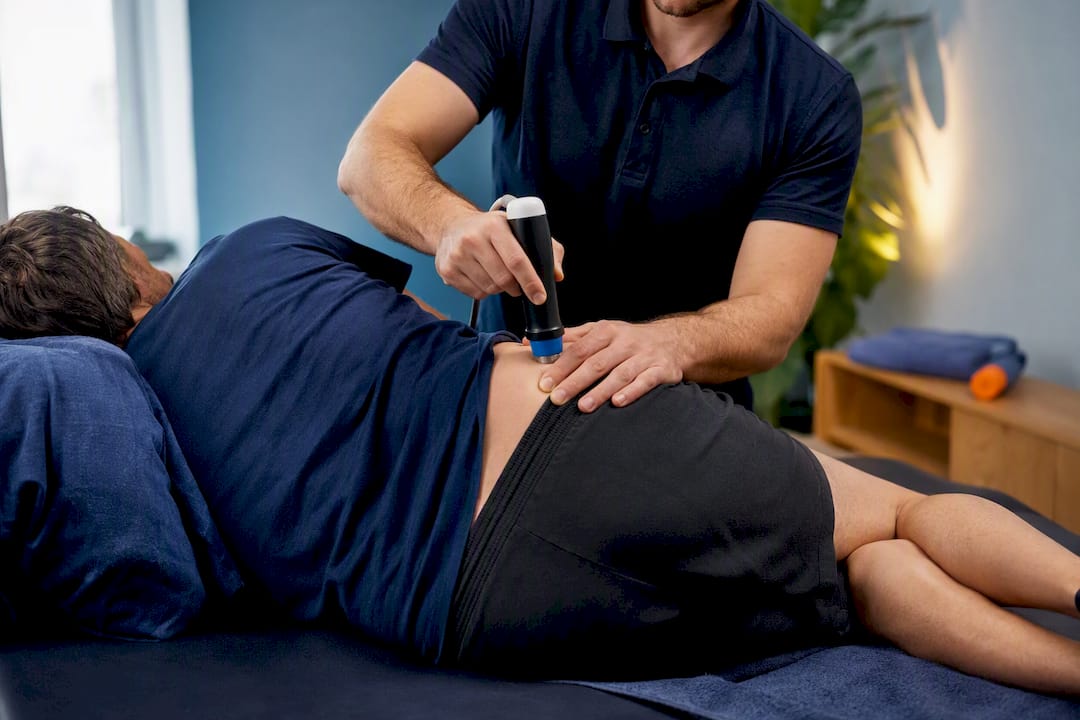
The evidence base for these two treatments is not equal. ESWT has trial evidence supporting its use for greater trochanteric pain syndrome, particularly when combined with an ongoing exercise programme, and some studies have found it outperforms steroid injections or home exercise alone. PRP, by contrast, remains investigational for lateral hip pain. It may help some patients, but the research supporting it as a routine treatment is thinner.
Practical points worth knowing:
- ESWT is typically delivered over three to five sessions, spaced roughly a week apart
- Mild discomfort during and after treatment is common but usually settles within a day or two
- As a private treatment, costs vary by clinic and by how many sessions you need
Our page on shockwave therapy for sports injuries explains how the technology works and what conditions it treats.
Is surgery ever needed for hip bursitis?
Surgery is uncommon and is only considered after six to twelve months of comprehensive conservative treatment has failed, or where imaging shows clear tendon damage alongside the bursitis.
- Bursectomy — removal of the inflamed bursa, done as an open procedure or arthroscopically
- IT band release — lengthens the tight band to reduce friction over the hip
- Abductor tendon repair — addresses tears in the gluteus medius or minimus tendon where present
Most of these procedures are day cases, meaning you go home the same day. Expect a short period of restricted weight-bearing followed by a structured, supervised rehab programme. Outcomes are generally good, though it's worth discussing realistic expectations and risks (infection, incomplete relief, prolonged recovery) with your surgeon beforehand.
When should you see a GP about hip pain?
Diagnosis of hip bursitis is largely clinical. Your GP or physiotherapist will assess your movement, press over the point of maximum tenderness, and rule out other causes of lateral hip pain. Ultrasound or MRI imaging is sometimes used, either to rule out a tendon tear or to plan surgery if conservative treatment has failed.
Seek urgent medical attention if you notice fever, spreading redness or warmth over the joint, or a sudden, severe loss of function. These can signal septic bursitis, which needs prompt treatment.
See a GP if:
- There's no improvement after two to three weeks of self-care
- Pain keeps recurring despite treatment
- You can't manage basic daily tasks like walking or climbing stairs
How can you prevent hip bursitis from coming back?
Recurrence is common if the underlying mechanical issues aren't addressed. Long-term management means keeping the gluteal muscles strong and the IT band flexible well after symptoms settle, not just during a flare.
- Continue a maintenance strengthening routine two to three times a week
- Manage body weight where relevant, since extra load increases friction over the bursa
- Check running or walking gait, and replace worn footwear that alters your stride
- Return to sport or heavy activity gradually, increasing intensity by small increments rather than jumping back in
Pro Tip: If you notice the familiar ache returning after a long walk or a new exercise routine, treat it as an early warning rather than something to push through. A quick check-in with a physiotherapist at that stage is far easier than treating a full flare later. Our hip flexor strain recovery guide covers staged return-to-activity planning in more detail, and pregnant patients dealing with overlapping pelvic girdle pain may find additional relevant guidance there too.
How Parkstherapycentre supports hip bursitis recovery
A multidisciplinary team can assess the gluteal and IT band dysfunction that typically underlies hip bursitis, then build a supervised physiotherapy plan around it. Some clinics also offer shockwave therapy as a structured, clinic-based option for patients who haven't responded fully to standard rehab. Bring details of when your pain started and any previous treatment to your first appointment, so your therapist can tailor the plan from day one.
A clinician's note on sticking with the plan
Consistency with your exercise programme, more than any single treatment, tends to determine how well you recover. Injections have their place, but they work best as a short window that lets you tolerate the physiotherapy doing the real repair work.
— Ivan
Ready to start treatment for hip bursitis?
Seeking professional physiotherapy treatment is a practical next step if home care hasn't fully settled your symptoms, or if you want a proper diagnosis before things get worse. Rather than guessing at exercises from a leaflet, you get a hands-on assessment and a physiotherapy plan built around your specific weakness pattern, with access to additional therapies if standard rehab isn't sufficient. Clinics may accept private insurance and operate in multiple locations, facilitating appointment scheduling.
Book a physiotherapy assessment to get a clear diagnosis and a treatment plan built around your hip, not a generic one.
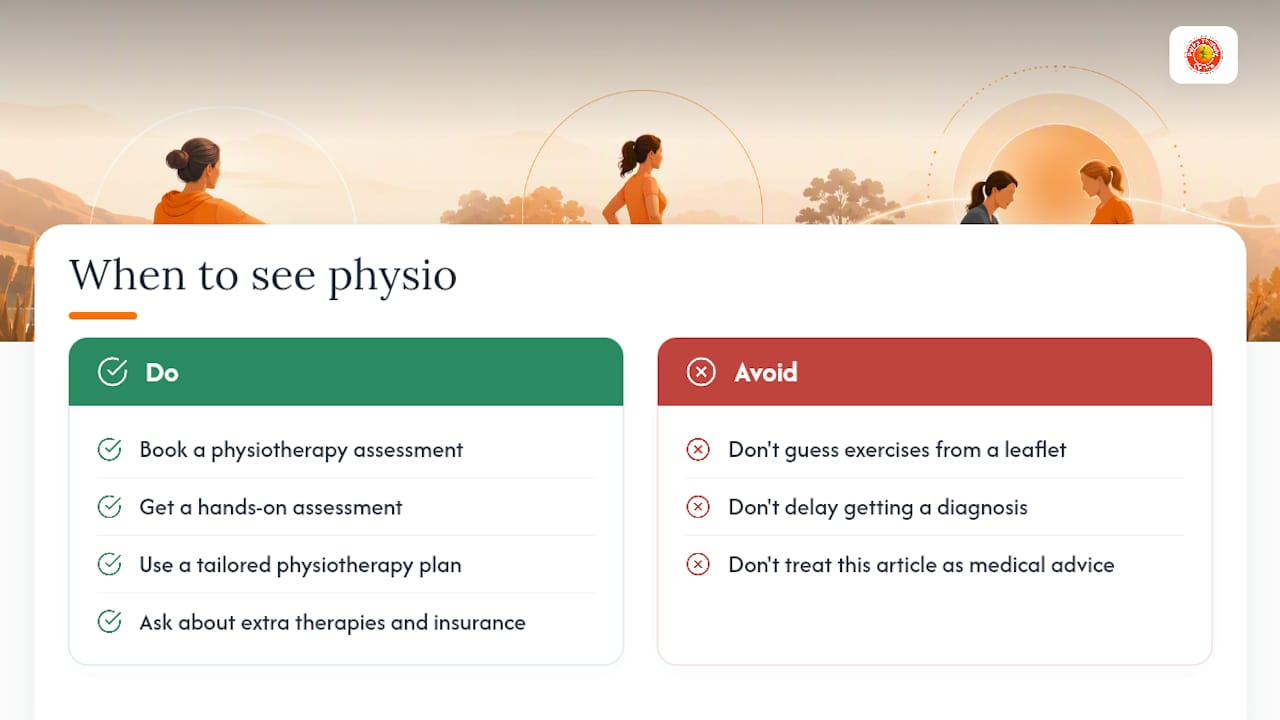
This article is general information, not a substitute for advice from a qualified doctor. Consult a qualified healthcare professional about your own circumstances before acting on anything here.
Sources
- Bursitis
- Greater trochanteric pain syndrome (StatPearls/NCBI Bookshelf)
- Bursitis - Diagnosis and treatment (Mayo Clinic)