
Around 20–30% of adults have low arches, yet most experience no symptoms at all. If you do have pain, the evidence is clear: targeted flat feet exercises reduce discomfort and improve function in symptomatic flexible flat feet. They will not alter the bony structure of a rigid flat foot, but for the majority of adults with aching arches, a structured programme works well. The three most useful things to start today are:
- Learn the short-foot (arch doming) exercise — the single most evidence-backed intrinsic foot drill.
- Begin posterior tibial and calf loading — these muscles are the primary dynamic support for your arch.
- Book a clinical assessment if you have sudden arch collapse, inability to bear weight, or pain that is worsening rather than stable.
A network meta-analysis published in Scientific Reports confirms that combined programmes pairing intrinsic foot training with posterior tibial and hip/glute work produce the largest improvements in foot posture and function. Six weeks is the minimum meaningful intervention period, and eight weeks gives you a solid foundation.
Pro Tip: If you are unsure whether your flat feet are flexible or rigid, try this: stand on tiptoe. If an arch appears, your feet are flexible and exercises are very likely to help. If no arch forms, seek a clinical assessment before starting a loading programme.
Key takeaways
Exercises for symptomatic flexible flat feet work best when they combine intrinsic foot training, posterior tibial loading, and gluteal strengthening over a minimum of six weeks.
| Point | Details |
|---|---|
| Start with short-foot daily | Practise arch doming 3 × 10 every day; correct technique matters more than volume. |
| Add posterior tibial loading | Single-leg calf raises are the most direct way to strengthen the arch's primary dynamic support. |
| Follow the 8-week plan | Progress from learning to loading to single-leg work; increase demand only when form is clean. |
| Seek care for red flags | Sudden one-sided arch collapse, persistent swelling, or no improvement after eight weeks needs clinical assessment. |
| Parkstherapycentre | Offers physiotherapy, podiatry, and supervised exercise programmes for flat feet across Bedfordshire and Buckinghamshire. |
Table of Contents
- The best flat feet exercises: step-by-step instructions
- What the research says about exercises for flat feet
- Your 8-week programme for fallen arches
- How shoes, insoles and barefoot walking fit with your plan
- When to see a GP, podiatrist or physiotherapist
- Common mistakes and how to keep your technique safe
- How clinicians build and monitor exercise programmes
- The case for combining foot work with whole-body strengthening
- Parkstherapycentre: hands-on support for flat feet rehabilitation
- Sources
The best flat feet exercises: step-by-step instructions
The exercises below form the core of any evidence-based programme for fallen arches. Work through them in the order listed; the first three are intrinsic foot drills done daily, and the remaining exercises are loaded two to three times per week.
1. Short-foot (arch doming)
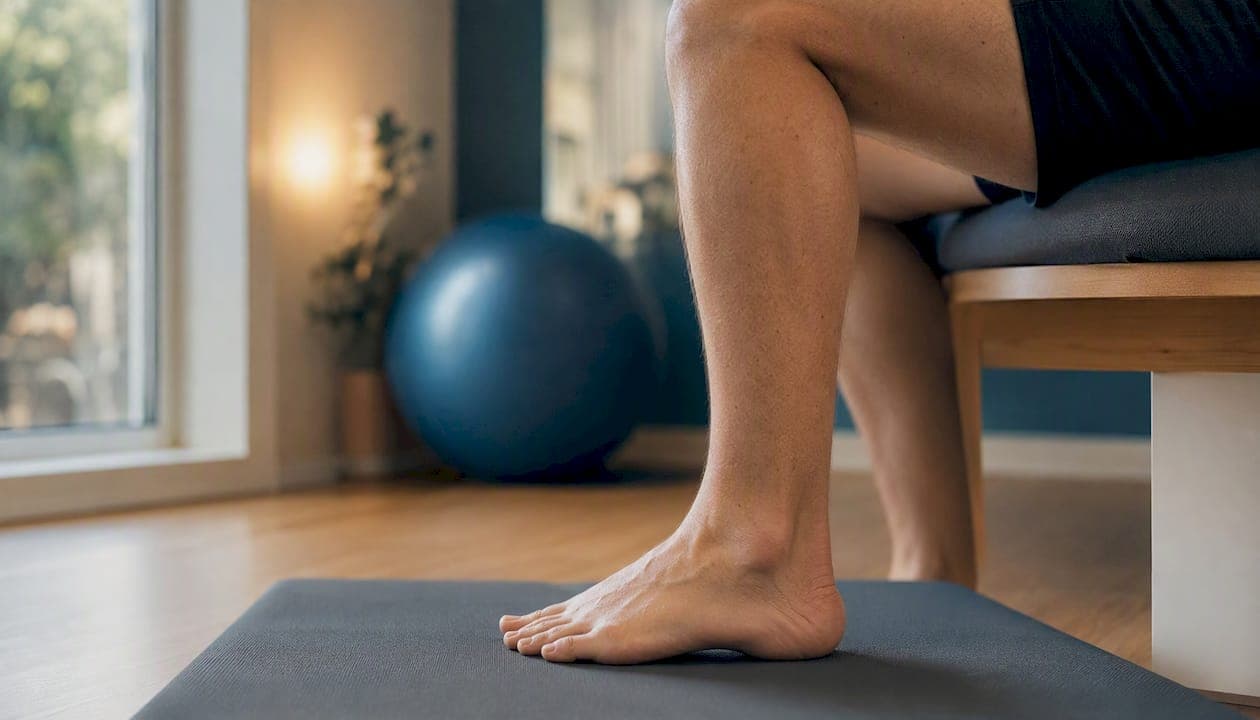
Sit with your foot flat on the floor. Without curling your toes, draw the ball of your foot towards your heel, creating a dome shape in the arch. Hold for five seconds, then release fully. The toes must stay long throughout. Patients commonly misperform this by gripping with the toes; if that happens, place a finger under your toes as a tactile reminder to keep them still.
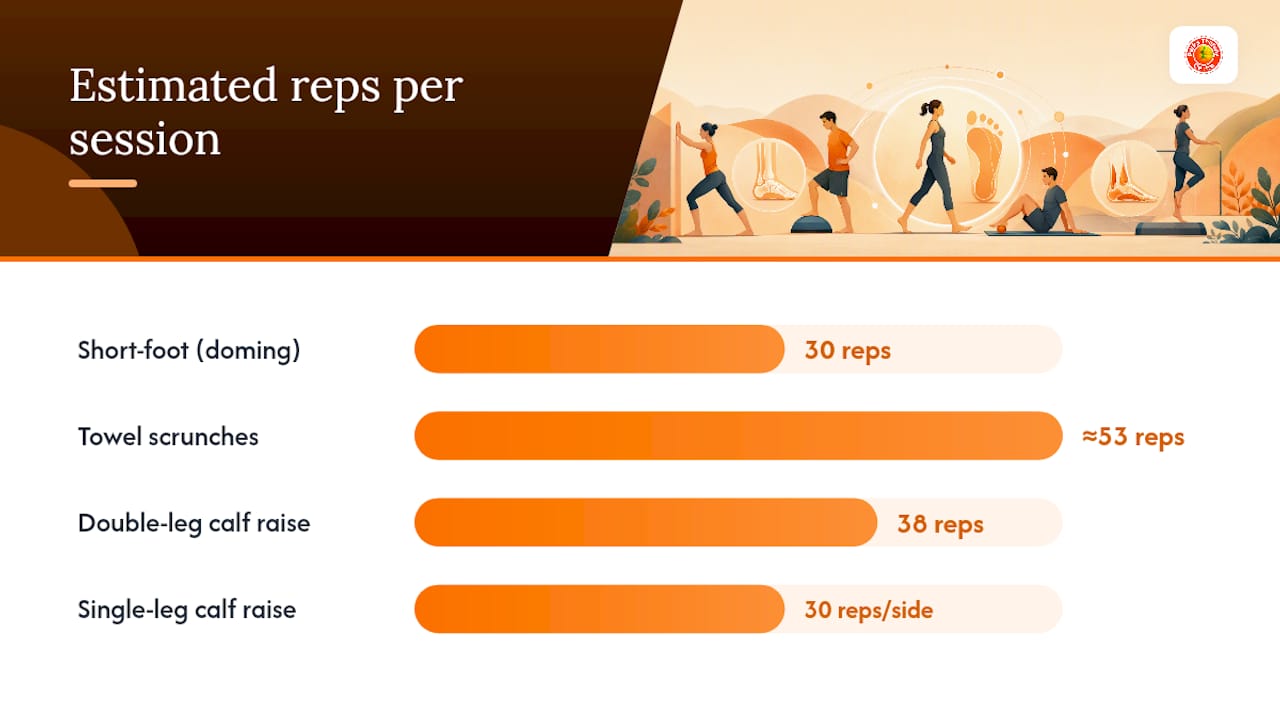
Sets/reps: 3 sets of 10 repetitions, daily.
2. Towel scrunches and marble pickups
Place a small towel flat on the floor. Using only your toes, scrunch it towards you, then spread it back out. Alternatively, pick up marbles or small objects and drop them into a cup. Both drills target the flexor digitorum brevis and lumbricals, the small muscles that support the medial arch.
Sets/reps: 3 sets of 15–20 scrunches or 10 marble pickups, daily.
3. Toe yoga (toe spreading and isolation)
Sitting or standing, lift only your big toe while keeping the lesser toes on the floor, then reverse — press the big toe down and lift the lesser toes. This trains independent toe control and activates the intrinsic muscles that stabilise the first ray. It feels awkward at first; that is normal.
Sets/reps: 2 sets of 10 each direction, daily.
4. Double-leg calf raises
Stand with feet hip-width apart. Rise slowly onto the balls of your feet over two seconds, hold for one second at the top, then lower over three seconds. The slow lowering phase (eccentric) is where the posterior tibialis and soleus work hardest. Progress to single-leg once you can complete three sets of 15 with full control.
Sets/reps: 3 sets of 10–15, two to three times per week.
5. Single-leg calf raises
Stand near a wall for balance. Raise onto the ball of one foot, hold briefly, then lower slowly. This is the primary loaded exercise for posterior tibial strengthening and is the most direct way to build active arch support. If this causes sharp pain in the inner ankle, reduce range and seek assessment for posterior tibial tendon dysfunction.
Sets/reps: 3 sets of 8–12 per side, two to three times per week.
6. Heel and toe walking
Walk on your heels for 20 metres, then walk on the balls of your feet for 20 metres. Heel walking activates the tibialis anterior; toe walking loads the calf and intrinsic muscles under body weight. Both improve dynamic arch control during gait.
Sets/reps: 2–3 lengths of 20 metres each, two to three times per week.
7. Side-step with resistance band (glute activation)
Place a light resistance band around your ankles. Stand with slight knee bend and step sideways 15 steps in each direction, keeping your feet parallel and your knees tracking over your second toe. Gluteus medius weakness contributes to over-pronation; this drill addresses the proximal end of the kinetic chain.
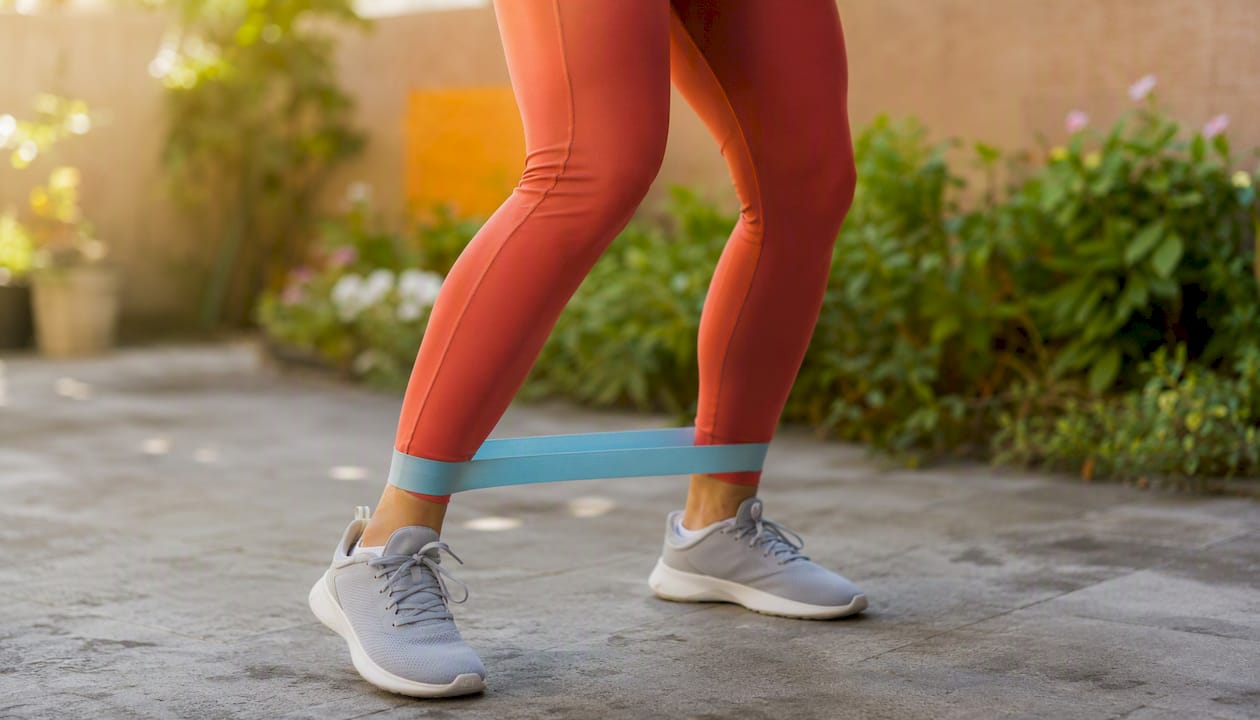
Sets/reps: 3 sets of 15 steps each direction, two to three times per week.
Pro Tip: Film yourself doing the short-foot exercise from the front. If your arch does not visibly lift and your toes curl, you are using the wrong muscles. A mirror or a brief session with a physiotherapist resolves this far faster than repeated self-correction.
Exercise summary
| Exercise | Primary muscles | Frequency | Sets × Reps |
|---|---|---|---|
| Short-foot (doming) | Intrinsic foot muscles | Daily | 3 × 10 (5s hold) |
| Towel scrunches | Flexor digitorum brevis, lumbricals | Daily | 3 × 15–20 |
| Toe yoga | Intrinsic foot, first-ray stabilisers | Daily | 2 × 10 each direction |
| Double-leg calf raise | Gastrocnemius, soleus, tibialis posterior | 2–3×/week | 3 × 10–15 |
| Single-leg calf raise | Tibialis posterior, soleus | 2–3×/week | 3 × 8–12 per side |
| Heel and toe walking | Tibialis anterior, intrinsic foot, calf | 2–3×/week | 2–3 × 20 metres |
| Side-step with band | Gluteus medius, hip abductors | 2–3×/week | 3 × 15 steps each side |
What the research says about exercises for flat feet
The clinical evidence for strengthening flat feet is consistent and growing. A network meta-analysis in Scientific Reports reviewed randomised controlled trials in adults with flexible flatfoot and found that combined programmes — intrinsic foot training paired with posterior tibial and hip/glute work — produced the largest improvements in foot posture index and functional outcomes. Six weeks was the minimum effective intervention period across most trials.
An assessor-blinded RCT of 60 middle-aged women with flexible flatfoot found that short-foot exercises performed three times per week for six weeks significantly improved both foot posture and balance, with no adverse events in either group. Systematic review evidence reinforces the value of a multi-level approach, showing that adding gluteal and lower-limb neuromuscular work to foot-only programmes yields larger gains than foot work alone.
There is one important limit to set clearly: exercises do not change the bony structure of a rigid flat foot. If your flat feet are structural and rigid, strengthening still reduces pain and improves load management, but the arch shape will not alter. For flexible flat feet, the arch can actively improve with consistent training.
Key clinical expectations:
- Noticeable symptom improvement typically appears within four to six weeks of consistent training.
- Clinicians measure progress using the Foot Posture Index (FPI-6), navicular drop, single-leg balance time, and patient-reported pain scores.
- Early worsening (mild muscle soreness in the first two weeks) is normal. Sharp or joint-level pain is not.
- If there is no improvement after eight weeks of consistent effort, a clinical reassessment is warranted.
Your 8-week programme for fallen arches
This plan suits adults with symptomatic flexible flat feet who have no acute injury or red-flag symptoms. Progress only when your form is clean and symptoms are stable or improving.
| Phase | Weeks | Focus | Key exercises |
|---|---|---|---|
| Learning | 1–2 | Technique and daily habit | Short-foot, toe yoga, towel scrunches |
| Loading | 3–4 | Add loaded work | Double-leg calf raises, heel/toe walking |
| Progression | 5–6 | Increase demand | Single-leg calf raises, side-step with band |
| Durability | 7–8 | Maintain and test | Full programme, add brief barefoot walking |
How to progress through the plan:
- Weeks 1–2: Practise the three daily intrinsic drills every day. Prioritise technique over volume. If short-foot feels impossible, use a mirror or ask a clinician for one guided session.
- Weeks 3–4: Add double-leg calf raises and heel/toe walking on two to three non-consecutive days. Keep the daily intrinsic work going.
- Weeks 5–6: Replace double-leg calf raises with single-leg calf raises when you can complete three sets of 15 with full control. Add the side-step band drill.
- Weeks 7–8: Run the full programme. Introduce short barefoot walks (five to ten minutes on a flat surface) as a cool-down. Assess your pain, balance, and standing tolerance against week one.
Modifications for marked pain: Reduce loading frequency to twice per week. Swap high-impact activity for cycling or swimming while building strength. Use a supportive insole temporarily to reduce pain during the early weeks, then gradually reduce reliance on it as strength improves.
How shoes, insoles and barefoot walking fit with your plan
Footwear and orthotics are not alternatives to exercise; they work alongside it. During the first four to six weeks, a supportive shoe or a prefabricated insole can reduce pain enough to allow you to train consistently. Think of it as scaffolding: useful while the structure is being built, then progressively removed.
Practical footwear guidance:
- Choose shoes with a firm heel counter, moderate arch support, and a wide toe box during the first phase of the programme.
- Avoid completely flat, unsupportive footwear (thin flip-flops, worn-out trainers) until your intrinsic strength has improved.
- Prefabricated insoles are a reasonable starting point; custom orthotics are worth considering if symptoms persist beyond eight weeks or if your foot posture is significantly pronated.
- Barefoot walking can strengthen intrinsic foot muscles when reintroduced gradually, but starting with long distances too soon causes overuse pain.
Pro Tip: After week four, alternate one supported walk with one short barefoot walk on a flat, clean surface. Start with five minutes barefoot and add two to three minutes per week. Never go from fully supported to fully barefoot in a single step.
When to see a GP, podiatrist or physiotherapist
Self-managed flat feet exercises are appropriate for most adults with stable, symptomatic flexible flat feet. Seek clinical assessment promptly if any of the following apply:
- Sudden new arch collapse on one side, particularly in adults over 40 — this can indicate posterior tibial tendon dysfunction, which needs early intervention.
- Inability to weight-bear or severe pain after activity.
- Progressive single-sided change in arch height or foot shape over weeks or months.
- Persistent swelling around the inner ankle or along the tendon line.
- Numbness, tingling or colour change in the foot or toes.
- No improvement after eight weeks of consistent, correctly performed exercises.
NHS guidance advises that most flat feet do not need urgent treatment, but recommends seeing a clinician for new or worsening pain, functional limitation, or a sudden change in arch appearance.
Who to contact:
- GP: First point of contact for new symptoms, referral to podiatry or physiotherapy, and imaging if needed.
- Podiatrist: Assessment of foot posture, custom orthoses, local soft-tissue treatment, and footwear advice.
- Physiotherapist: Progressive exercise prescription, kinetic-chain assessment, gait analysis, and supervised rehabilitation. Physiotherapy for foot pain addresses both the foot and the contributing factors higher up the leg.
Bring a note of how long you have had symptoms, any prior foot or ankle injuries, your current footwear, and what activities aggravate or relieve the pain. This information significantly speeds up a clinical assessment.
Common mistakes and how to keep your technique safe
Poor technique is the most common reason flat feet exercises fail to produce results. These are the errors seen most often, and how to correct them.
- Curling the toes during short-foot. The toes must stay long. If they curl, you are recruiting the long toe flexors instead of the intrinsic arch muscles. Place a finger lightly under your toes as a reminder, or use a mirror.
- Using momentum in calf raises. Bouncing through the movement removes the eccentric load that makes calf raises effective. Count two seconds up, one second hold, three seconds down.
- Forcing barefoot activity too quickly. Intrinsic muscles fatigue rapidly when unaccustomed to load. Five to ten minutes of barefoot walking is a training stimulus; an hour is an overuse risk.
- Skipping the proximal work. Foot-only programmes produce smaller gains. The glute and calf exercises are not optional extras.
Pain management rules:
- Mild muscle soreness 24–48 hours after exercise is expected and acceptable.
- Sharp pain during an exercise is a stop signal. Do not push through it.
- Joint-level pain, swelling, or pain that worsens over consecutive sessions warrants rest and assessment.
- For an acute flare, use rest, ice (wrapped in a cloth, 15–20 minutes), gentle compression, and elevation before resuming the programme.
Pro Tip: Test your short-foot activation with a single-leg balance. Stand on one foot for 10–20 seconds while gently doming the arch. If you can hold this without your arch collapsing or your toes gripping, your intrinsic muscles are beginning to work functionally.
How clinicians build and monitor exercise programmes
A clinical assessment for flat feet goes beyond looking at the arch. Clinicians typically measure the Foot Posture Index (FPI-6), navicular drop (the height difference between sitting and standing), single-leg balance time, and calf and tibialis posterior strength. Gait analysis and footwear review are standard components. This baseline allows progress to be tracked objectively rather than relying on subjective impression alone.
Progress is monitored at six to eight weeks using the same measures. Clinicians look for reductions in navicular drop, improved single-leg balance time, and patient-reported improvements in pain and standing tolerance. When progress is slower than expected, they may add biofeedback to improve short-foot activation, adjust orthotic prescription, or refer for imaging to rule out structural pathology.
Supervised programmes consistently produce better outcomes than unsupervised ones, particularly for short-foot exercise, where correct technique is difficult to self-verify. Adherence is also higher when a clinician is involved, which matters because six to eight weeks of consistent effort is what the evidence requires. For people returning to sport, a supervised programme that addresses ankle conditioning and kinetic-chain loading alongside arch strengthening produces the most durable results.
The case for combining foot work with whole-body strengthening
Most people who start a flat feet exercise programme focus entirely on the foot and are surprised when progress is slower than expected. The arch does not work in isolation. The posterior tibialis, which is the primary dynamic support for the medial arch, originates in the deep posterior compartment of the lower leg. The gluteus medius controls the alignment of the entire lower limb during single-leg stance. When either is weak, the arch compensates under load regardless of how well the intrinsic muscles are trained.
The network meta-analysis evidence makes this concrete: programmes that pair intrinsic foot work with posterior tibial loading and gluteal strengthening outperform foot-only approaches on every measured outcome. Clinicians who see the best results treat the foot as one component of a system, not as a standalone problem. That shift in perspective, from "fixing the arch" to "loading the whole chain," is what separates a programme that works from one that stalls after a few weeks.
Parkstherapycentre: hands-on support for flat feet rehabilitation
For adults who want a faster start, more confidence in their technique, or a programme tailored to their specific foot posture, Parkstherapycentre offers physiotherapy assessment, podiatry appointments, supervised exercise sessions, and gait and footwear review across its clinics in Bedfordshire and Buckinghamshire. The team can assess whether your flat feet are flexible or rigid, measure your foot posture index at baseline, and build a programme that matches your current strength and activity level rather than a generic template.
Bespoke orthotic referrals are available for patients where passive support is clinically indicated alongside strengthening work. Appointments are available to private-pay patients and those covered by health insurance. To book an initial assessment or ask about the most relevant service for your symptoms, visit Parkstherapycentre and use the online booking system. An experienced clinician will confirm what you need at the first appointment.
Sources
The following sources informed this article. Where a trial or review is cited, the sample size and duration are noted to help you judge the strength of the evidence.
- Comparing the efficacy of exercise therapy on adult flexible flatfoot individuals through a network meta-analysis of randomized controlled trials | Scientific Reports
- Flat feet — Cleveland Clinic
- Flat feet — NHS
- Systematic review / clinical evidence summary — PMC
This article provides general information and is not a substitute for professional medical advice. If you have new, worsening, or unexplained foot symptoms, consult a GP, podiatrist, or physiotherapist before starting a new exercise programme.