
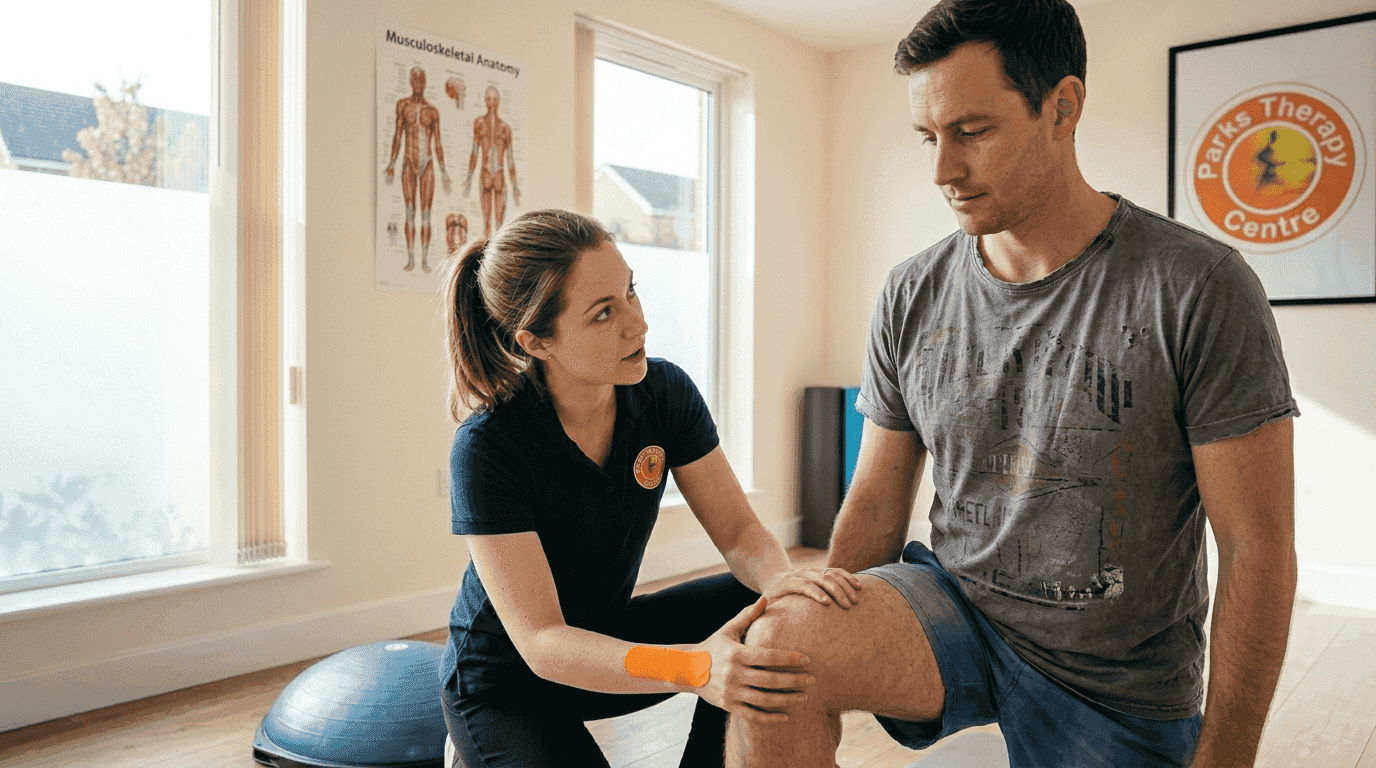
Generic physiotherapy approaches often fail to address the unique biomechanical and lifestyle factors that influence recovery outcomes. Athletes recovering from injuries need treatment protocols aligned with their sport-specific demands, while pregnant women require therapy addressing pregnancy-related discomfort and preparing for childbirth. This guide teaches you how to develop personalised physiotherapy plans that improve healing speed, restore function, and prevent reinjury for these distinct patient groups in Bedfordshire and Buckinghamshire.
Table of Contents
- Understanding The Need For Personalised Physiotherapy Plans
- Preparing To Create A Personalised Physiotherapy Plan
- Executing The Physiotherapy Plan Tailored For Athletes And Pregnant Women
- Verifying Effectiveness And Adapting Personalised Physiotherapy Plans
- About Parks Therapy Centre Personalised Physiotherapy Services
- Frequently Asked Questions
Key takeaways
| Point | Details |
|---|---|
| Personalised plans improve outcomes | Tailored protocols address individual biomechanics and recovery goals more effectively than generic approaches |
| Assessment drives customisation | Clinical movement analysis and patient history inform precise treatment decisions |
| Athletes need sport-specific plans | Recovery protocols must target injury type and performance requirements |
| Pregnant women require specialised care | Therapy addressing pelvic pain and postpartum recovery delivers better maternal outcomes |
| Regular monitoring ensures progress | Iterative adjustments based on feedback prevent reinjury and optimise healing |
Understanding the need for personalised physiotherapy plans
Every patient presents unique biomechanical patterns, injury histories, and recovery goals that demand individualised treatment approaches. Generic protocols may lead to suboptimal recovery outcomes because they ignore critical differences in how bodies respond to injury and rehabilitation. A footballer recovering from an ACL tear requires different therapeutic exercises than a runner managing Achilles tendinopathy, yet one-size-fits-all programmes often apply identical protocols.
Athletes face particularly high stakes when rehabilitation falls short. Returning to sport prematurely or with incomplete strength restoration increases reinjury risk dramatically. Your physiotherapy plan must account for sport-specific movement patterns, competitive timelines, and performance benchmarks that generic approaches cannot address. A tennis player needs shoulder stability exercises mimicking serve mechanics, whilst a cyclist requires hip mobility work replicating pedalling biomechanics.
Pregnant women experience rapid physiological changes that standard protocols rarely accommodate properly. Pelvic girdle pain, diastasis recti, and postural adaptations demand therapy addressing hormonal influences on ligament laxity and load-bearing capacity. Treatment must evolve throughout trimesters and transition seamlessly into postpartum recovery phases.
Key factors demanding personalisation include:
- Individual biomechanical variations affecting load distribution and movement efficiency
- Injury severity and tissue healing timelines unique to each case
- Lifestyle demands including occupation, sport, and daily activity levels
- Previous injury history influencing compensatory movement patterns
- Patient goals ranging from pain relief to competitive performance restoration
Pro Tip: Educating patients about their specific biomechanical factors builds engagement and improves adherence to home exercise programmes, accelerating recovery outcomes.
Implementing sports injury prevention strategies alongside personalised rehabilitation reduces long-term reinjury risk. Understanding why generic plans fail creates the foundation for building truly effective individualised protocols.
Preparing to create a personalised physiotherapy plan
Thorough assessment forms the cornerstone of effective personalised physiotherapy. Before designing any treatment protocol, you must gather comprehensive data about patient biomechanics, injury mechanisms, and functional limitations. Clinical movement analysis provides objective measurements that reveal compensatory patterns and movement deficits invisible to standard observation.
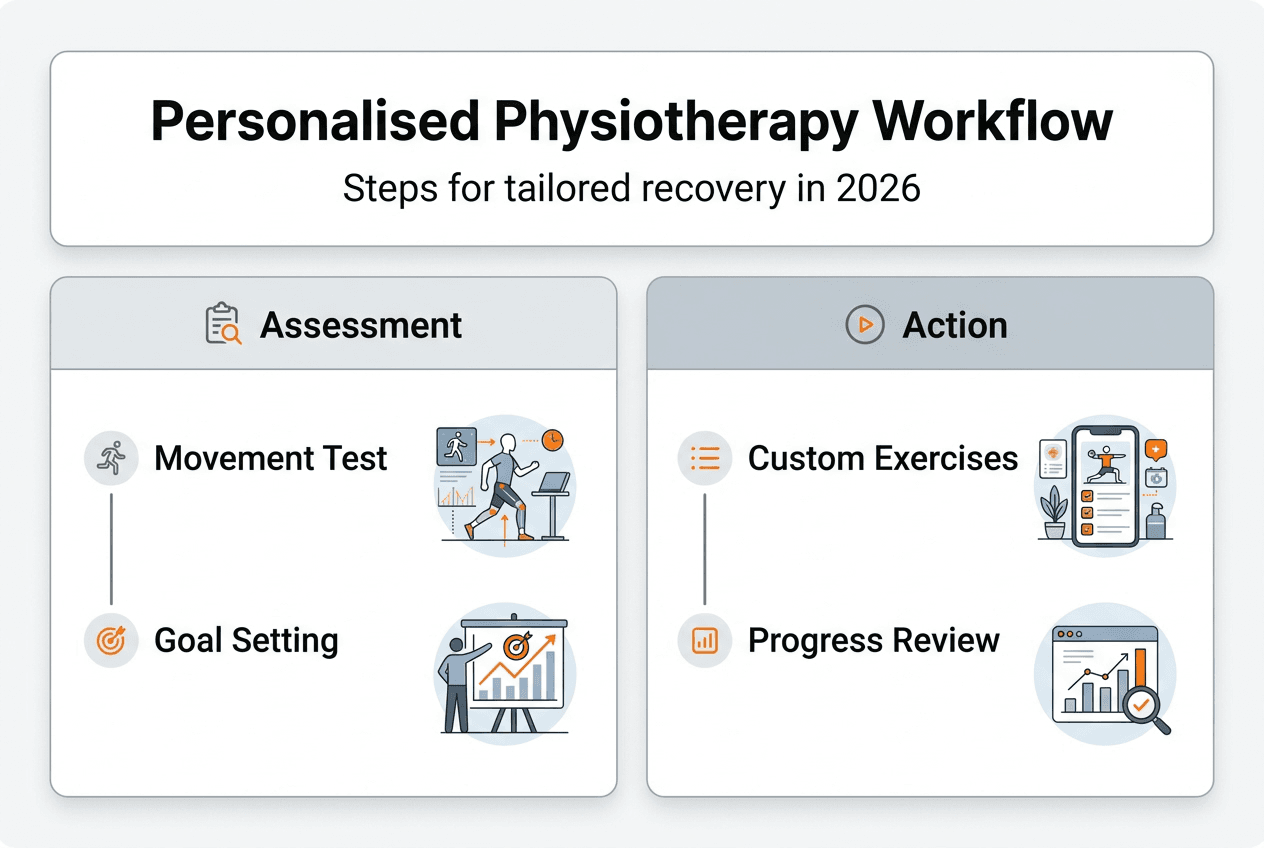
Integrating clinical movement analysis with clinical decision support delivers diagnostic accuracy improvements that translate directly into better therapeutic outcomes. Video gait analysis, range of motion measurements, and strength testing create baseline data for tracking progress throughout rehabilitation. This systematic approach prevents the guesswork that undermines generic protocols.
Patient history gathering must extend beyond current symptoms to capture relevant factors:
- Previous injuries and their treatment outcomes
- Occupation and daily movement demands
- Sport participation level and competitive goals
- Training volume and intensity patterns
- Pain characteristics including location, timing, and aggravating factors
Goal identification requires collaborative discussion establishing realistic timelines and measurable milestones. An athlete aiming to return to competition needs different benchmarks than someone seeking pain-free daily activities. Document specific, measurable objectives like "achieve full knee extension" or "complete 30-minute walks pain-free" rather than vague aims.
| Assessment Tool | Purpose | Outcome |
|---|---|---|
| Clinical movement analysis | Identify biomechanical deficits and compensatory patterns | Objective baseline data for treatment planning |
| Range of motion testing | Measure joint mobility limitations | Specific mobility targets for therapy |
| Strength assessment | Quantify muscle weakness and imbalances | Targeted strengthening exercise prescription |
| Functional testing | Evaluate sport or activity-specific performance | Return-to-activity readiness criteria |
| Pain mapping | Document symptom location and triggers | Treatment focus areas and progress markers |
Pro Tip: Utilising bio-mechanical assessments early in the planning process reveals underlying movement dysfunctions that often contribute to injury development and recurrence.
Interactive diagnostic tools enhance decision-making by integrating multiple data sources into coherent treatment pathways. Digital dashboards displaying movement analysis alongside patient-reported outcomes help identify patterns that inform protocol adjustments. Proper preparation ensures your personalised plan addresses root causes rather than merely treating symptoms.
Executing the physiotherapy plan tailored for athletes and pregnant women
Creating effective personalised plans requires systematic progression through assessment findings to therapeutic interventions. Each treatment component must align with individual patient characteristics and recovery objectives identified during preparation.
-
Select exercises addressing specific deficits revealed by clinical movement analysis. Athletes recovering from hamstring strains need eccentric strengthening protocols mimicking sprint mechanics, whilst pregnant women with pelvic girdle pain benefit from stability exercises targeting deep core muscles. Exercise difficulty must match current capacity whilst providing appropriate progressive overload.
-
Incorporate manual therapy techniques when tissue restrictions limit movement quality. Soft tissue mobilisation, joint manipulation, and myofascial release complement exercise therapy by addressing mechanical barriers to optimal function. Manual interventions prove particularly valuable for athletes requiring rapid mobility restoration.
-
Educate patients about posture, body mechanics, and symptom management strategies supporting recovery between sessions. Teaching pregnant women optimal lifting techniques and sleep positions reduces daily strain on vulnerable structures. Athletes learn movement modification strategies preventing symptom aggravation during gradual return to sport.
Customised rehabilitation protocols are crucial for athletes achieving optimal performance restoration after injury. Sport-specific training integration ensures rehabilitation exercises translate into competitive movement patterns. Plyometric drills, agility work, and sport-simulation activities bridge the gap between clinical recovery and performance readiness.
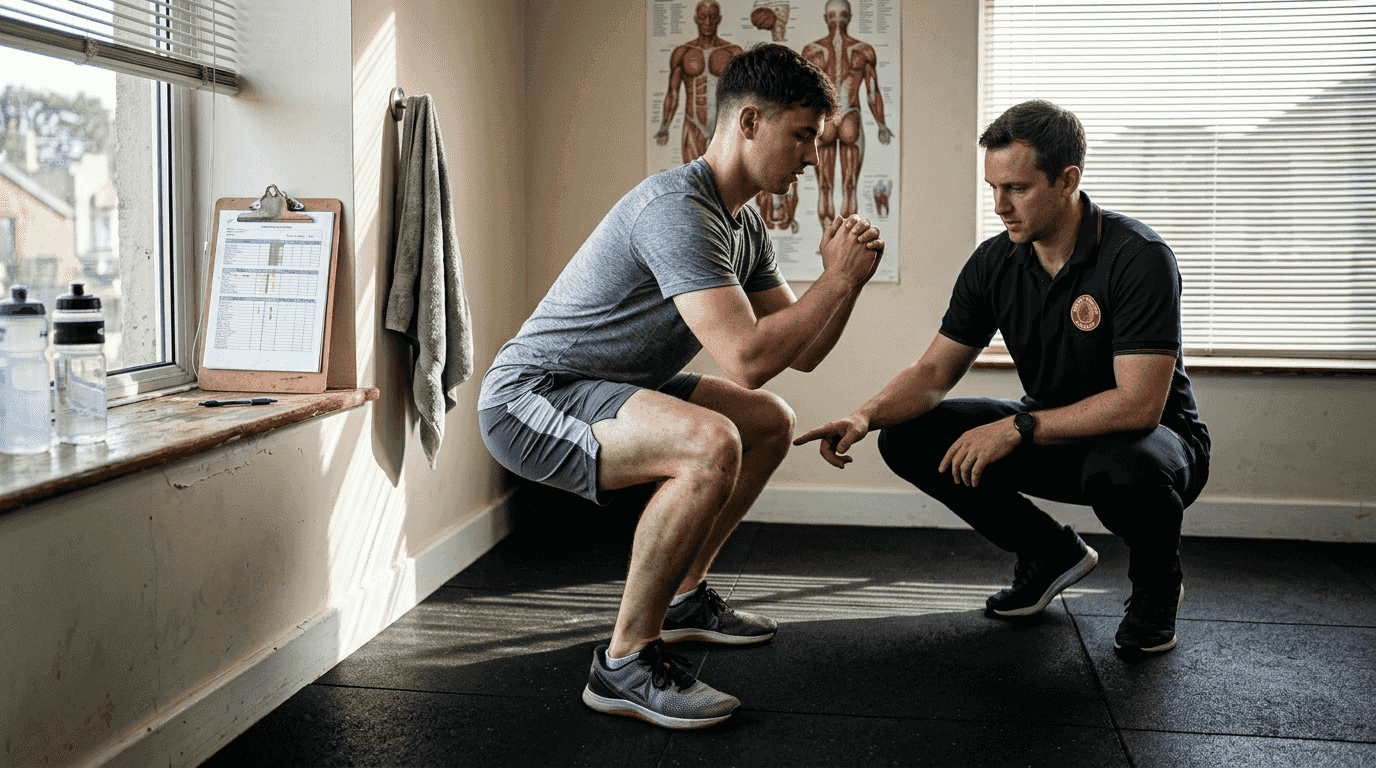
Personalised physiotherapy reduces pelvic girdle pain and urinary incontinence in pregnant and postpartum women. Treatment protocols must adapt to trimester-specific considerations and postpartum recovery phases. First trimester plans emphasise maintaining fitness and addressing early postural changes, whilst third trimester protocols focus on birth preparation and pain management.
| Patient Group | Primary Focus | Key Interventions | Timeline Considerations |
|---|---|---|---|
| Athletes | Performance restoration and reinjury prevention | Sport-specific exercises, plyometrics, graduated return protocols | Competition schedules and seasonal demands |
| Pregnant women | Pain relief and functional maintenance | Pelvic floor training, postural exercises, mobility work | Trimester progression and postpartum transition |
Pro Tip: Implementing sports injury prevention strategies for pregnant women maintains fitness safely throughout pregnancy whilst reducing injury risk during active pursuits.
Monitoring patient response guides protocol adjustments ensuring continuous progress. Weekly reassessment of pain levels, functional capacity, and exercise tolerance informs necessary modifications. Athletes may require intensity increases as strength improves, whilst pregnant women need exercise adaptations as pregnancy progresses. Maintaining detailed records of interventions and outcomes creates clear progression documentation supporting iterative refinement.
Verifying effectiveness and adapting personalised physiotherapy plans
Systematic monitoring transforms static treatment protocols into dynamic recovery programmes responding to patient progress. Regular reassessment prevents two common failures: continuing ineffective interventions too long and progressing patients prematurely before adequate healing occurs.
Objective measurement provides the foundation for evidence-based adjustments. Track quantifiable metrics including:
- Pain scores using validated scales at consistent intervals
- Range of motion measurements comparing affected and unaffected sides
- Strength testing results showing percentage improvements
- Functional performance on sport-specific or daily activity tasks
- Patient-reported outcome measures capturing quality of life changes
Comparing current data against baseline assessments reveals whether treatment produces expected improvements. Plateaus in progress signal the need for protocol modifications, whilst rapid improvements may allow accelerated advancement through rehabilitation phases.
An interactive physiotherapy dashboard with clinical decision support enables physiotherapists to integrate multiple data streams into coherent treatment decisions. Digital tools displaying movement analysis trends alongside symptom reports help identify subtle patterns indicating necessary adjustments. Technology supports rather than replaces clinical reasoning, providing additional information informing expert judgement.
Common pitfalls undermining personalised plans include:
- Ignoring individual variability by applying rigid protocol timelines regardless of patient response
- Poor adherence to home exercise programmes due to insufficient education or unrealistic expectations
- Inadequate communication leaving patients uncertain about progress or next steps
- Premature return to sport or demanding activities before strength restoration
- Failing to address psychosocial factors influencing recovery motivation and outcomes
Patient feedback provides crucial qualitative data complementing objective measurements. Regular discussions about symptom changes, exercise difficulty, and confidence levels reveal factors quantitative testing misses. Athletes may report improved movement quality before strength tests show significant gains. Pregnant women might notice functional improvements in daily tasks despite unchanged pain scores.
"Successful rehabilitation requires continuous dialogue between physiotherapist and patient, with treatment plans evolving based on both objective data and subjective experience. Rigid adherence to predetermined protocols ignores the dynamic nature of tissue healing and functional restoration."
Adaptation strategies must balance progression with safety. Increasing exercise difficulty too rapidly risks symptom flare-ups and setbacks, whilst excessive caution delays recovery unnecessarily. Clinical experience combined with patient feedback guides appropriate advancement timing.
Pro Tip: Learning to manage sports injury patients effectively requires developing skills in both clinical assessment and therapeutic communication that build patient engagement throughout recovery.
Maintaining motivation proves especially challenging during lengthy rehabilitation periods. Setting short-term milestones creates achievable targets maintaining engagement when full recovery remains distant. Celebrating incremental progress reinforces adherence to treatment protocols. Athletes benefit from gradual sport reintegration providing psychological confidence alongside physical preparation. Pregnant women appreciate functional improvements enabling comfortable daily activities despite ongoing pregnancy challenges.
Long-term success demands transitioning patients from supervised therapy to independent maintenance programmes. Education about injury prevention strategies, ongoing strength training, and movement quality awareness reduces reinjury risk after discharge. Athletes need clear return-to-sport criteria and graduated training progression guidelines. Pregnant women require postpartum exercise protocols supporting recovery whilst accommodating new motherhood demands.
About Parks Therapy Centre personalised physiotherapy services
Parks Therapy Centre delivers expert personalised physiotherapy plans tailored to athletes recovering from sports injuries and pregnant women managing pregnancy-related discomfort across Bedfordshire and Buckinghamshire. Since 1986, our multidisciplinary team has combined advanced diagnostic capabilities with individualised treatment approaches achieving optimal patient outcomes.
Our comprehensive assessment process utilises bio-mechanical assessments identifying movement dysfunctions underlying injury development and recurrence. Clinical movement analysis technology provides objective data informing precise treatment decisions matched to your unique biomechanical profile and recovery goals. Athletes benefit from sport-specific rehabilitation protocols, whilst pregnant women receive trimester-appropriate therapy addressing pelvic pain, postural changes, and postpartum recovery needs.
Access diagnostic imaging referrals when necessary for accurate diagnosis supporting treatment planning. Convenient online booking makes scheduling appointments straightforward, with multiple locations ensuring accessible care throughout your rehabilitation journey.
Frequently asked questions
How do personalised physiotherapy plans benefit athletes and pregnant women?
Personalised plans target individual biomechanical patterns and injury characteristics, improving recovery speed and functional outcomes compared to generic protocols. Athletes receive sport-specific rehabilitation addressing competitive demands, whilst pregnant women get relief from pregnancy-related pain through trimester-appropriate interventions. Tailored approaches reduce reinjury risk by addressing underlying movement dysfunctions rather than merely treating symptoms.
What role does clinical movement analysis play in creating these plans?
Clinical movement analysis provides objective biomechanical data revealing compensatory patterns and movement deficits invisible to standard observation. This detailed assessment informs precise exercise selection and progression decisions matched to individual patient needs. Integration with clinical decision support tools enhances diagnostic accuracy and enables better monitoring of treatment effectiveness throughout rehabilitation.
How often should personalised physiotherapy plans be reviewed and updated?
Regular reviews every two to three weeks allow timely adjustments based on progress and patient feedback. Frequent reassessment prevents continuing ineffective interventions whilst ensuring appropriate progression as healing advances. Athletes may require more frequent modifications during intensive rehabilitation phases, whilst pregnant women need adjustments accommodating trimester progression and postpartum transition. Systematic monitoring prevents both premature advancement and unnecessary delays in recovery.
Can personalised physiotherapy plans prevent future injuries?
Yes, addressing underlying biomechanical dysfunctions and movement quality deficits reduces long-term injury risk significantly. Education about proper body mechanics, sport-specific training modifications, and ongoing strength maintenance creates sustainable injury prevention strategies. Athletes learn movement patterns reducing tissue stress, whilst pregnant women develop postural awareness and core stability supporting comfortable pregnancy and postpartum recovery. Personalised plans identify individual risk factors enabling targeted prevention interventions generic approaches miss.