

TL;DR:
- A structured, phase-based ankle injury rehabilitation program guides recovery and prevents chronic issues by progressing through specific functional stages. Recovery timelines depend on injury severity, with exercises tailored for each phase to rebuild strength and stability safely. Objective tests, not just time, determine readiness to return to sport and reduce reinjury risk.
An ankle injury rehabilitation checklist is a structured, phase-based programme that guides you from the moment of injury through to safe return to full activity. Without a clear plan, 10–30% of patients still report residual pain one year after a sprain. That figure is not inevitable. The standard clinical framework moves through four defined phases: acute protection, range of motion restoration, strengthening, and proprioception with functional return. Following this sequence, rather than guessing based on how the ankle feels on any given day, is what separates a full recovery from a chronic problem.
1. What are the key phases of an ankle injury rehabilitation checklist?
Clinical recovery progresses through four phases: mobilisation, strengthening, proprioception, and plyometrics or sport-specific drills. Each phase rebuilds a different layer of function, both mechanical and neurological. Skipping ahead based on calendar time rather than functional readiness is the primary cause of reinjury.

| Phase | Goal | Typical timeline | Example exercises |
|---|---|---|---|
| Acute | Reduce swelling, protect tissue | Days 1–3 | RICE, gentle ankle pumps |
| Subacute | Restore range of motion | Week 1–3 | Ankle circles, alphabet tracing |
| Strengthening | Rebuild muscle strength | Week 2–6 | Calf raises, resistance band work |
| Proprioception and functional return | Restore balance and sport readiness | Week 4–12+ | Single-leg balance, Y-Balance Test drills |
Recovery timelines depend heavily on injury grade. Grade I sprains resolve in 1–2 weeks, Grade II in 3–6 weeks, and Grade III in 6–12 weeks. These are starting points, not finish lines. You advance to the next phase when you meet functional criteria, not simply because the weeks have passed.
2. Which exercises belong on your ankle rehabilitation exercises list?
Exercise-based rehabilitation reduces ankle reinjury risk by 40% compared to rest alone. The exercises below are organised by phase so you know exactly what to do and when.
Phase 1: Acute (days 1–3)
- Ankle pumps: flex and point the foot slowly, 10–15 repetitions every hour
- Gentle toe curls to maintain circulation
- Seated heel raises with minimal weight-bearing
Phase 2: Subacute (week 1–3)
- Ankle circles: rotate the foot clockwise and anticlockwise, 10 repetitions each direction
- Alphabet tracing: use your big toe to trace each letter of the alphabet in the air
- Early range-of-motion exercises accelerate recovery and reduce time away from work or sport compared to prolonged immobilisation
Phase 3: Strengthening (week 2–6)
- Resistance band eversion and inversion: loop a band around the foot and push outward or inward against resistance, 3 sets of 15
- Calf raises: progress from double-leg to single-leg as strength improves
- Heel dips off a step to load the Achilles and calf complex eccentrically
Phase 4: Proprioception and functional return (week 4–12+)
- Single-leg balance: start with eyes open on a firm surface, progress to eyes closed
- Wobble board or balance disc work
- Dynamic stability drills: lateral hops, figure-of-eight jogging, cutting movements
Pro Tip: Never progress to the next exercise category until you can complete the current one with full control and no pain. Technique matters more than repetition count.
3. How to measure progress and know when to advance phases
Using calendar time alone to decide when to move forward is the leading cause of recurrent ankle sprains. Clinicians use objective functional tests to confirm readiness. These tools remove guesswork and give you a clear target.
The Weight-Bearing Lunge Test measures dorsiflexion range. A result greater than 10cm, or a dorsiflexion angle above 35°, indicates adequate ankle mobility for return to sport. The Limb Symmetry Index (LSI) compares the strength or performance of your injured leg to your uninjured leg. An LSI of 90% or above is the accepted threshold before returning to high-impact activity.
The Y-Balance Test assesses dynamic stability by measuring how far you can reach in three directions while standing on one leg. It identifies asymmetries that predict future injury. Single-leg balance time is a simpler daily check: you should be able to balance on the injured leg for 30–60 seconds with eyes closed before returning to sport.
| Assessment tool | Target metric | Phase it gates |
|---|---|---|
| Weight-Bearing Lunge Test | Dorsiflexion >10cm or >35° | Phase 3 to Phase 4 |
| Limb Symmetry Index | ≥90% strength symmetry | Phase 4 entry |
| Single-leg balance | 30–60 seconds, eyes closed | Return to sport |
| Y-Balance Test | Symmetrical reach distance | Return to high-impact activity |
For a detailed breakdown of how to assess sports injuries at each stage, Parkstherapycentre has published a practical guide covering functional readiness criteria.
Pro Tip: Book a single physiotherapy session specifically to run these tests. A clinician can spot compensatory movement patterns that self-assessment misses entirely.
4. Self-care strategies that support your ankle injury recovery guide
Recovery is not only about exercises. The decisions you make between sessions, including how you manage pain, load the joint, and protect it during daily activity, determine how quickly and completely you heal.
Acute phase self-care
- Apply the RICE protocol for the first 24–72 hours: Rest, Ice, Compression, Elevation
- Transition to the POLICE or PEACE & LOVE framework after 72 hours, which prioritises optimal loading over prolonged rest
- Avoid anti-inflammatory medication in the first 48 hours if possible, as inflammation is part of the healing signal
Bracing and taping
- Functional bracing or taping for 4–6 weeks after a sprain outperforms prolonged casting for preventing recurrent injury
- Use a lace-up brace or rigid stirrup brace during sport and high-risk activities throughout rehabilitation
- Taping provides proprioceptive feedback as well as mechanical support, which aids nervous system re-education
Long-term prevention
- Continue proprioceptive training even after full recovery. Proprioception training re-educates the nervous system for stability and is the most critical component for preventing recurrent sprains
- Avoid returning to sport on uneven surfaces until dynamic stability tests confirm readiness
- Address footwear: worn-out soles reduce proprioceptive input and increase sprain risk
Psychological confidence in your ankle matters as much as physical strength. Many patients clear all functional tests but still guard their movement unconsciously. Graduated exposure to sport-specific movements, starting at low intensity, rebuilds trust in the joint. For practical guidance on preventing ankle ligament injuries, Parkstherapycentre has published sport-specific advice worth reading alongside your recovery plan.
5. Ankle surgery rehabilitation guide: what changes after an operation?
Surgical rehabilitation follows the same four-phase framework but with stricter timelines and weight-bearing restrictions in the early weeks. The acute phase after surgery typically extends to 6 weeks, during which protected weight-bearing in a boot replaces the standard RICE approach. Range of motion work begins under physiotherapy supervision, not independently.
Strengthening begins only once the surgical repair has sufficient tensile strength, usually confirmed by the operating surgeon at a follow-up appointment. Proprioception training is delayed compared to non-surgical rehab because the nerve endings in the repaired ligament need time to regenerate. The role of physiotherapy after ankle surgery is more intensive than after a sprain, with supervised sessions required to monitor tissue response and guide loading decisions.
Return to sport after surgery typically takes 4–6 months for ligament reconstruction, compared to 6–12 weeks for a Grade III sprain managed conservatively. The functional criteria remain identical: LSI ≥90%, WBLT >10cm, and passing the Y-Balance Test. The timeline is longer, but the benchmarks do not change.
Key takeaways
A structured, phase-based ankle rehabilitation programme is the single most effective way to achieve full recovery and prevent recurrent injury.
| Point | Details |
|---|---|
| Phase progression matters | Advance based on functional criteria, not calendar time, to avoid reinjury. |
| Proprioception is non-negotiable | Balance and stability training re-educates the nervous system and prevents chronic instability. |
| RICE has a 72-hour limit | Transition to optimal loading early to prevent stiffness and muscle atrophy. |
| Functional bracing works | Wear a lace-up or stirrup brace for 4–6 weeks post-sprain during high-risk activity. |
| Surgery extends timelines | Post-surgical rehab follows the same phases but with longer acute and subacute periods under clinical supervision. |
What I have learned from watching patients rush their ankle recovery
The most common mistake I see is patients treating pain reduction as the finish line. The ankle stops hurting, they return to sport, and six weeks later they are back in the clinic with the same injury on the same side. The problem is not bad luck. It is that pain disappears well before the ligament regains full tensile strength and before the nervous system has relearnt how to stabilise the joint under load.
The proprioception component is the one most patients skip. It feels too easy. Standing on one leg does not feel like rehabilitation. But the research is unambiguous: inadequate rehabilitation is the single greatest risk factor for a future ankle injury. The nervous system needs deliberate, progressive challenge to rebuild the automatic stabilising responses that protect the joint during unpredictable movements.
My advice is to treat the functional tests as your clearance criteria, not as optional extras. If you cannot balance on the injured leg for 30 seconds with eyes closed, you are not ready to run. If your calf raise strength is less than 90% of the other side, you are not ready to cut or jump. These are not arbitrary numbers. They reflect the minimum mechanical and neurological capacity the ankle needs to cope with sport. Following a step-by-step ankle sprain rehabilitation guide that maps exercises to these criteria is the most reliable way to get back to full activity without a setback.
Setbacks happen regardless. When they do, the correct response is to drop back one phase, not to rest completely. Maintain what you have built, address the specific weakness that caused the setback, and progress again. Patience at this point is not passive. It is the most active thing you can do for your recovery.
— Ivan
Parkstherapycentre: professional support for your ankle recovery
Recovering from an ankle injury is straightforward when you have the right structure behind you. Parkstherapycentre has been providing physiotherapy and sports injury treatment across Bedfordshire and Buckinghamshire since 1986, with a team qualified to assess injury severity and build a personalised rehabilitation programme from day one.
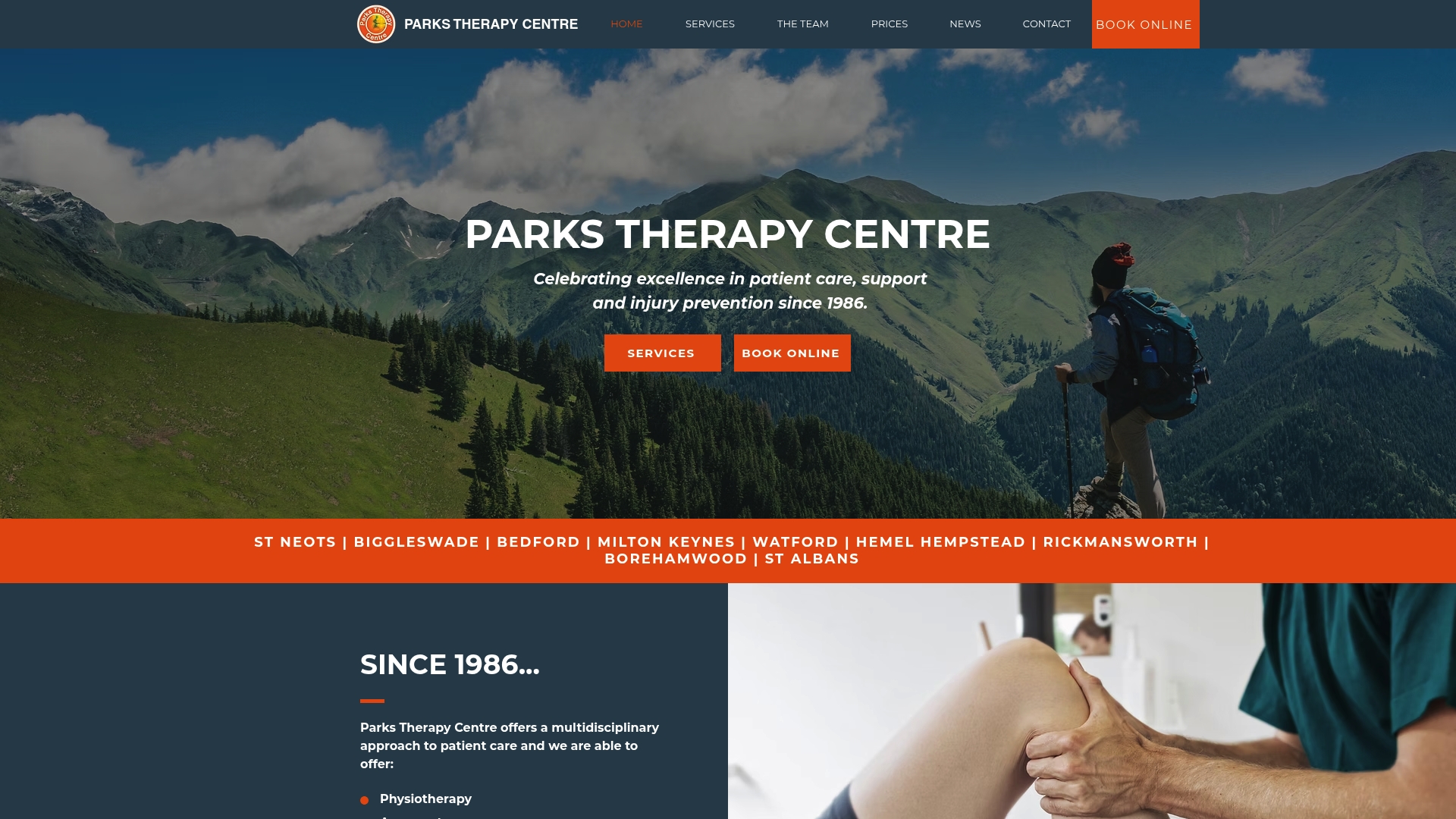
Whether you are managing a Grade I sprain at home or navigating post-surgical rehabilitation, a supervised assessment ensures you are progressing on the right criteria rather than guessing. Parkstherapycentre accepts most major insurance providers and offers online booking for appointments at multiple locations. Visit Parkstherapycentre to book an assessment and get a rehabilitation plan built around your specific injury, timeline, and goals.
FAQ
How long does ankle rehabilitation take?
Grade I sprains typically resolve in 1–2 weeks, Grade II in 3–6 weeks, and Grade III in 6–12 weeks. Post-surgical rehabilitation takes 4–6 months for ligament reconstruction.
What is the most important exercise in ankle rehabilitation?
Proprioception training, such as single-leg balance and wobble board work, is the most critical component. It re-educates the nervous system and is the primary defence against recurrent sprains.
When should I stop using the RICE protocol?
RICE applies strictly for the first 24–72 hours after injury. After that, transition to optimal loading with controlled weight-bearing to prevent stiffness and muscle atrophy.
What functional tests confirm I am ready to return to sport?
Clinicians use the Weight-Bearing Lunge Test (dorsiflexion >10cm), Limb Symmetry Index (≥90%), and single-leg balance (30–60 seconds with eyes closed) as return-to-sport benchmarks.
Does ankle rehabilitation differ after surgery?
Yes. Post-surgical rehabilitation follows the same four phases but with an extended acute phase of up to 6 weeks, protected weight-bearing in a boot, and delayed proprioception training to allow nerve regeneration in the repaired ligament.