

TL;DR:
- Podiatry is essential for diagnosing and correcting mechanical causes of sports injuries that physiotherapy alone cannot address. It helps reduce tissue load, prevent re-injury, and improve rehabilitation outcomes through biomechanical assessment and orthotic intervention. Integrating podiatry with physiotherapy offers a comprehensive approach to injury prevention and lasting recovery.
Podiatry for sports injuries is the specialised practice of diagnosing, treating, and preventing foot and lower limb conditions by correcting the biomechanical faults that cause and sustain injury. Sports podiatrists work from the ground up, assessing gait, load distribution, and foot mechanics to address problems that physiotherapy alone often cannot fully resolve. If you keep returning to the same injury despite completing a rehabilitation programme, the answer frequently lies in how your foot strikes the ground, how load travels up your leg, and whether your footwear supports or undermines your recovery. Understanding why use podiatry for sports injuries means understanding that the foot is the foundation of every movement you make.
Why use podiatry for sports injuries: healing and re-injury risk
Sports podiatrists diagnose lower-limb mechanics contributing to injury by identifying the abnormal foot patterns that overload tissues during training and rehabilitation. This is the core distinction between podiatric care and other treatments. A physiotherapist restores strength and mobility; a podiatrist corrects the ground-level forces that determine whether that strength is applied safely or destructively.
The most direct benefit is tissue load management. When your foot pronates excessively or your gait creates uneven pressure across the forefoot, tendons, ligaments, and bones absorb forces they were not designed to handle repeatedly. Foot orthoses reduce forefoot plantar pressures and cumulative loading, providing measurable pain relief and supporting tissue healing. That reduction in peak pressure is not cosmetic. It gives damaged tissue the recovery window it needs.
Common sports injuries that respond well to podiatric care include:
- Plantar fasciitis: Abnormal arch loading is the primary driver; orthotic correction and gait retraining address the root cause rather than just the painful site.
- Achilles tendinopathy: Excessive pronation increases rotational stress on the Achilles; podiatry corrects this mechanical contributor.
- Shin splints (medial tibial stress syndrome): Foot strike pattern and shoe choice directly influence tibial loading; both fall within podiatric scope.
- Stress fractures of the metatarsals: Forefoot pressure redistribution through orthotics reduces the repetitive loading that causes these fractures.
- Ankle sprains: Recurrent sprains often involve underlying instability patterns that biomechanical screening can identify.
Pro Tip: If you have completed a full physiotherapy course and your injury keeps returning, book a biomechanical assessment before starting another round of the same exercises. The missing variable is almost always mechanical, not muscular.
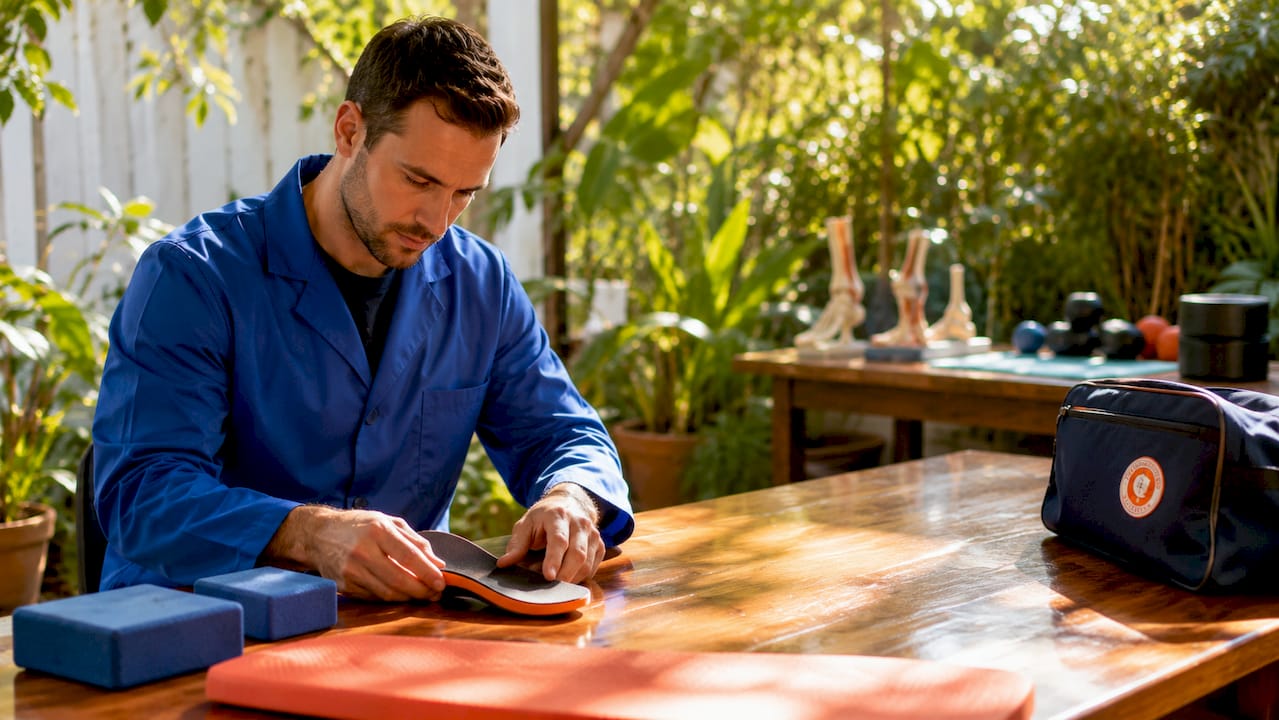
Podiatry also integrates directly with physiotherapy to optimise rehabilitation outcomes. Addressing foot mechanics and footwear enables physiotherapy exercises to be more effective long term, because the tissue loading during those exercises is controlled and appropriate. Without this layer, strengthening work can reinforce faulty movement patterns rather than correct them.
What do sport-specific injury prevention programmes include?
The most effective injury prevention programmes are multicomponent. They combine strength training, neuromuscular conditioning, plyometrics, balance work, and gait retraining into a structured weekly schedule. Podiatry contributes the biomechanical screening and correction layer that makes the other components work as intended.
The evidence for this approach is clear. A 2026 systematic review found that multicomponent prevention programmes reduced sports injuries in adolescent athletes by 35%, including ankle and overuse injuries, with sessions under 20 minutes proving most effective. A 35% reduction in injury incidence is a significant clinical outcome. It means fewer missed training sessions, fewer surgeries, and faster returns to full performance.
A well-structured prevention programme that includes podiatric input typically follows this sequence:
- Biomechanical screening: A podiatrist assesses foot posture, gait patterns, and dynamic loading to identify individual risk factors before injury occurs.
- Footwear and orthotic prescription: Based on screening findings, footwear recommendations and custom or prefabricated orthoses are introduced to correct identified mechanics.
- Strength and neuromuscular training: Exercises targeting foot intrinsic muscles, calf complex, and hip stabilisers are prescribed to support corrected movement patterns.
- Gait retraining: Specific cues and drills address foot strike, cadence, and shock absorption to reduce tissue overload during sport.
- Progressive load management: Training volume and intensity are increased gradually, with podiatric monitoring to catch emerging mechanical problems early.
A 2025 track-and-field meta-analysis reported that exercise-based prevention programmes produced 7.63 fewer injuries per 1,000 hours of activity. That figure translates directly into training time protected and performance sustained. Adherence is the critical variable. A 2026 meta-analysis confirmed that each 10% increase in adherence to functional stability training correlates with approximately a 10% reduction in injury risk. Programmes delivered at least twice weekly produce the strongest results.
The importance of podiatry for athletes within these programmes is that it identifies and corrects the biomechanical risk factors that strength training alone cannot address. You can build strong glutes and calves, but if your foot collapses inward with every stride, the forces reaching your knee and hip remain problematic.
Podiatry vs. physiotherapy: where does each excel?
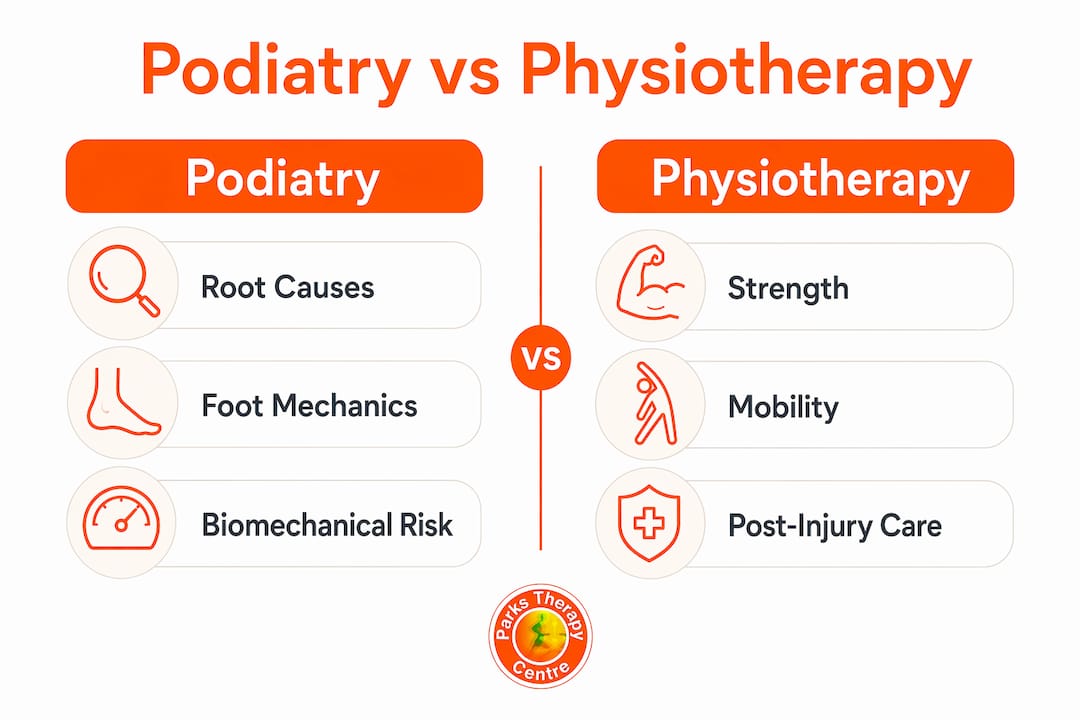
Both disciplines are valuable. Neither replaces the other. The distinction lies in what each targets.
| Treatment | Primary Focus | Key Tools | Best For |
|---|---|---|---|
| Physiotherapy | Strength, mobility, and soft tissue healing | Exercise prescription, manual therapy, electrotherapy | Restoring function after acute injury |
| Podiatry | Gait, load distribution, and foot mechanics | Orthotics, biomechanical assessment, footwear guidance | Correcting mechanical causes of recurring injury |
| Combined approach | Full kinetic chain from foot to hip | Both tool sets working in sequence | Complex or persistent sports injuries |
Physiotherapy addresses what has been damaged. Podiatry addresses why it was damaged in the first place. Treating only the painful site without altering foot strike and shock absorption patterns risks recurring injury. This is the cycle that many athletes know well: recover, return to sport, re-injure, repeat.
Podiatry breaks that cycle by targeting the kinetic chain contributors that sit below the painful site. A runner with chronic knee pain may have a perfectly healthy knee structurally. The problem is often excessive tibial rotation driven by foot pronation, which podiatric intervention corrects directly.
Pro Tip: When booking appointments, ask your physiotherapist and podiatrist to share assessment notes with each other. Integrated care produces faster results than two separate treatment tracks running in parallel.
The interdisciplinary approach combining physiotherapy and podiatry is increasingly recognised as the standard of care for persistent sports injuries. Neither profession works in isolation when outcomes matter most.
How to access and use podiatric care effectively
Getting the most from podiatric care requires more than a single appointment. The process works best when it follows a structured pathway.
A thorough initial assessment covers gait analysis on a treadmill or walkway, static and dynamic foot posture evaluation, footwear inspection, and a review of your training load and injury history. This gives the podiatrist a complete picture of your mechanical profile rather than just the symptomatic area.
Key considerations when engaging podiatric services include:
- Timing: Seek podiatric assessment early in a new injury rather than after multiple failed treatment attempts. Earlier intervention shortens recovery time.
- Orthotic use: Orthoses should be prescribed as part of an integrated plan including assessment, device fitting, and guided progressive activity. Off-the-shelf insoles are not a substitute for prescribed orthotic devices.
- Footwear review: Bring your training shoes to the appointment. Worn tread patterns reveal gait habits that no questionnaire captures.
- Coordination with your coach: Share podiatric findings with your coach or trainer so that training modifications align with your biomechanical correction plan.
- Follow-up: Biomechanics change as strength and conditioning improve. Schedule reassessment every three to six months during active rehabilitation.
The sports injury prevention tips that produce lasting results always include a mechanical component. Strength and conditioning work is most effective when the foot mechanics underpinning every movement are sound. Podiatry provides that foundation.
Maintaining gains after discharge requires ongoing attention to footwear, training load, and any returning symptoms. A podiatrist can provide a self-monitoring checklist so you recognise early warning signs before they become full injuries.
Key takeaways
Podiatry is the most direct route to resolving the mechanical causes of recurring sports injuries, making it indispensable alongside physiotherapy for any athlete seeking lasting recovery.
| Point | Details |
|---|---|
| Podiatry targets root causes | It corrects foot mechanics and gait faults that physiotherapy alone cannot fully address. |
| Orthotics reduce tissue load | Prescribed foot orthoses measurably reduce forefoot pressure, supporting healing and preventing recurrence. |
| Prevention programmes cut injury by 35% | Multicomponent programmes including podiatric input reduced sports injuries by 35% in a 2026 systematic review. |
| Adherence multiplies results | Each 10% increase in training adherence reduces injury risk by approximately 10%; twice-weekly sessions are optimal. |
| Integrated care outperforms solo treatment | Combining podiatry and physiotherapy addresses both the damaged tissue and the mechanical cause simultaneously. |
The case for putting foot mechanics first
After working across sports injury rehabilitation for many years, the pattern I see most consistently is this: athletes who skip podiatric assessment spend far longer in rehabilitation than those who include it from the start. The reason is straightforward. Most sports injuries are not random events. They are the predictable result of mechanical stress applied repeatedly to a structure that cannot absorb it indefinitely.
What frustrates me is how often podiatry is treated as an optional add-on rather than a core component of rehabilitation. I have seen runners complete twelve weeks of physiotherapy for Achilles tendinopathy, return to training, and re-injure within a month. When a biomechanical assessment is finally conducted, the excessive pronation driving the problem is obvious. It was always there. Nobody looked.
The importance of injury prevention for athletes in 2026 is now well-documented, and the evidence consistently points toward multicomponent programmes that include foot and ankle screening. Yet clinical practice has not fully caught up. Many rehabilitation pathways still treat podiatry as a referral of last resort rather than an early-stage priority.
My advice to any active person dealing with a recurring lower limb injury is direct: get your gait assessed before you do anything else. The answer to why your injury keeps returning is almost certainly in how you move, not in how hard you train.
— Ivan
Get expert podiatric care at Parkstherapycentre
Parkstherapycentre has delivered multidisciplinary sports injury care across Bedfordshire and Buckinghamshire since 1986. The team includes qualified podiatrists and physiotherapists who work together to assess your foot mechanics, prescribe appropriate orthotic devices, and build a rehabilitation plan that addresses both the injury and its cause.

Whether you are managing a persistent overuse injury or want to reduce your risk before the next training season, a podiatry assessment at Parkstherapycentre gives you a clear picture of your biomechanical profile and a structured plan to act on it. The centre accepts most insurance providers and offers online booking across multiple locations. Book your consultation today and give your recovery the mechanical foundation it needs.
FAQ
What does a sports podiatrist actually treat?
A sports podiatrist diagnoses and treats foot and lower limb conditions caused by abnormal mechanics, including plantar fasciitis, Achilles tendinopathy, shin splints, metatarsal stress fractures, and recurrent ankle sprains. Treatment focuses on correcting gait, prescribing orthotics, and advising on footwear and load management.
How does podiatry differ from physiotherapy for sports injuries?
Physiotherapy restores strength and mobility after injury; podiatry corrects the foot mechanics and gait patterns that caused the injury. The two disciplines work best in combination, with podiatry addressing ground-level forces and physiotherapy rebuilding the muscular support around them.
When should i see a podiatrist for a sports injury?
See a podiatrist early in a new injury or immediately if a previous injury keeps recurring despite physiotherapy. Earlier biomechanical assessment shortens recovery time and reduces the risk of the same injury returning.
Do i need custom orthotics or will off-the-shelf insoles work?
Custom orthotics are prescribed based on individual gait analysis and foot posture assessment. Off-the-shelf insoles provide general cushioning but do not correct specific mechanical faults. For persistent or complex injuries, prescribed orthoses produce significantly better outcomes.
How many sessions of podiatric care will i need?
The number of sessions depends on injury complexity and how quickly your mechanics respond to correction. Most athletes benefit from an initial assessment, a follow-up to review orthotic fit and gait changes, and a reassessment every three to six months during active rehabilitation.