

TL;DR:
- All UK physiotherapists must be registered with the HCPC before practicing legally. Patients should verify registration and postgraduate qualifications to ensure expert care, especially for complex conditions. NHS pathways are free but may involve long waits, while private clinics offer faster, specialist treatment options.
Every practising physiotherapist in the UK must be registered with the Health and Care Professions Council (HCPC) — this is a legal requirement, not a professional courtesy. You can access physiotherapy through the NHS (via GP referral, self-referral, or a first-contact physiotherapist at your GP practice) or by booking directly with a private clinic. The Chartered Society of Physiotherapy (CSP) maintains a searchable directory of chartered physiotherapists filtered by postcode and specialism, making it one of the quickest ways to locate a qualified clinician near you.
Three steps to take right now:
- Check the HCPC register before booking anyone — search by name or registration number at hcpc-uk.org.
- Use the CSP "Find a physio" tool or book directly with a clinic such as Parkstherapycentre, which offers online booking and accepts private medical insurance.
- Ask about postgraduate specialisms if your condition is complex, recurring, or niche — a general degree alone does not make a clinician expert in pelvic health, sports medicine, or neurological rehabilitation.
Pro Tip: For persistent or complex musculoskeletal problems, prioritise clinicians who hold a postgraduate certificate, PgDip, or MSc in a relevant specialism and have several years of focused clinical experience in that area.
Table of Contents
- What conditions do UK physiotherapists treat?
- How do you access physiotherapy in the UK?
- What happens during a physiotherapy appointment?
- How are UK physiotherapists regulated and qualified?
- What does physiotherapy cost, and how long will you wait?
- How do you choose the right physiotherapist?
- Why specialist qualifications and multidisciplinary clinics matter
- Key takeaways
- A practitioner's perspective on assessment and care
- Parkstherapycentre: book specialist physiotherapy today
- Useful UK resources for finding and verifying physiotherapists
What conditions do UK physiotherapists treat?
Physiotherapy covers a broader range of conditions than most people realise. Back and neck pain are the most common presenting problems, but the profession also addresses sports injuries, post-operative rehabilitation, neurological conditions (such as stroke recovery or multiple sclerosis), respiratory conditions, and women's health including pelvic floor dysfunction. Understanding which specialism fits your problem helps you book the right clinician from the start.
Common conditions and the patient groups who benefit most:
- Sports injuries — (tendon, ligament, and muscle problems) — athletes and active individuals requiring orthopaedic or sports-focused care.
The link between condition and specialism matters. Tendon problems in a runner call for a clinician with sports or orthopaedic postgraduate training. Pelvic pain or incontinence after childbirth requires a physiotherapist with specific pelvic health accreditation. Matching specialism to condition is one of the most reliable ways to improve outcomes for musculoskeletal disorders.

How do you access physiotherapy in the UK?
There are several routes to care, and the right one depends on your urgency, budget, and the nature of your condition.
NHS routes
- GP referral — the traditional route. Your GP assesses you and refers you to an NHS physiotherapy service. Waiting times vary significantly by area and condition.
- First-contact physiotherapists in GP practices — NHS England has rolled out first-contact physiotherapists in many GP surgeries, allowing adults with musculoskeletal problems to be assessed by a physiotherapist at the practice without a GP appointment. Not all areas have this service yet, so confirm with your surgery.
Private routes
- Direct booking with a private clinic — no referral needed. You can book online, often with same-week or next-day availability. Clinics such as Parkstherapycentre offer online booking across multiple locations.
- Workplace or private medical insurance — many employers include physiotherapy in health benefit packages. Private medical insurers (such as Bupa, AXA Health, and Vitality) typically cover a set number of sessions per year, subject to pre-authorisation.
- Self-pay — you pay per session or for a course of treatment. This gives full flexibility over clinician choice, timing, and specialism.
For most people with an acute musculoskeletal problem, private self-referral is the fastest route to assessment. NHS pathways remain the right choice for those who cannot afford private fees or whose condition fits NHS priority criteria.
What happens during a physiotherapy appointment?
Your first appointment follows a consistent structure regardless of whether you are seen on the NHS or privately. The clinician begins with a subjective history: asking about your symptoms, when they started, what aggravates or relieves them, your occupation, activity levels, and relevant medical history. This is followed by a physical assessment — observing your posture, testing range of movement, assessing muscle strength, and performing specific clinical tests relevant to your condition.
From that assessment, the physiotherapist agrees a treatment plan with you, including a home exercise programme. Most patients leave their first appointment with exercises to begin immediately.
Common treatment types used by UK physiotherapy clinics:
- Exercise prescription — the cornerstone of most physiotherapy; tailored to your condition and progressed over time.
- Manual therapy — joint mobilisation and manipulation to restore movement and reduce pain.
- Soft-tissue techniques — massage, myofascial release, and trigger-point therapy.
- Taping and bracing — kinesiology tape or rigid strapping to support injured structures.
- Electrotherapy — ultrasound, TENS, or shockwave therapy for pain management and tissue healing.
- Hydrotherapy — water-based rehabilitation, particularly useful for post-operative patients or those with severe joint pain.
- Diagnostic ultrasound — used in some clinics to assess soft-tissue injuries in real time.
- Education and self-management — helping you understand your condition and manage it independently long-term.
Many clinics integrate Pilates into rehabilitation pathways, either as one-to-one clinical Pilates or structured group classes. This active rehabilitation approach supports recovery beyond the treatment table and is particularly effective for spinal conditions, post-operative rehab, and long-term pain management. Parkstherapycentre, for example, offers Pilates classes across Biggleswade, St Neots, Bedford, and Milton Keynes as part of its integrated rehabilitation offer.
Pro Tip: Ask your physiotherapist at the first appointment whether the clinic has an on-site gym or Pilates studio — active rehabilitation facilities significantly extend what a clinic can offer beyond hands-on treatment.
How are UK physiotherapists regulated and qualified?
HCPC registration is mandatory for all practising physiotherapists in the UK. Without it, a person cannot legally call themselves a physiotherapist or practise in the profession. The HCPC register is publicly searchable, and verifying a clinician takes under a minute.
Follow these steps before booking:
- Ask for the clinician's HCPC registration number — any legitimate physiotherapist will provide it without hesitation.
- Search the HCPC register at hcpc-uk.org — confirm the name, registration status, and that the registration is current.
- Check for CSP membership — the Chartered Society of Physiotherapy is the principal professional body. MCSP after a clinician's name indicates full CSP membership, which requires ongoing continuing professional development.
- Look for postgraduate qualifications — an undergraduate physiotherapy degree is intentionally broad. Clinicians develop genuine expertise in niche areas through postgraduate certificates, PgDip programmes, or MSc degrees. For pelvic health, verify specific postgraduate accreditation; for sports medicine, look for qualifications such as a Diploma of the Faculty of Sport and Exercise Medicine (DFSEM). The Parks Therapy Centre blog on physiotherapy qualifications explains which credentials to look for and what they mean in practice.
- Consider years of focused clinical experience — postgraduate training combined with sustained clinical experience in a specialism is the strongest indicator of expertise for complex conditions.
A clinician who holds HCPC registration, CSP membership, and visible postgraduate specialisms demonstrates both legal standing and a commitment to continuing professional development. That combination is the most reliable trust signal available to patients.
What does physiotherapy cost, and how long will you wait?
The table below compares the main access routes across the dimensions that matter most when deciding how to proceed.
| Access route | Typical waiting time | Cost to patient | Best suited for | How to verify credentials |
|---|---|---|---|---|
| NHS GP referral | Weeks to months (varies by area) | Free at point of use | Routine musculoskeletal conditions, long-term conditions | HCPC register; NHS referral confirms registration |
| NHS self-referral | Weeks (where available) | Free at point of use | Adults with straightforward MSK problems | HCPC register |
| First-contact physiotherapist (GP practice) | Days to weeks | Free at point of use | Acute MSK problems presenting at GP surgery | HCPC register |
| Private clinic (self-pay) | Same week or next day | Session fees apply; varies by clinic and location | Urgent care, specialist conditions, personal choice of clinician | HCPC register, CSP membership, postgraduate qualifications |
| Private medical insurance | Subject to pre-authorisation | Covered up to policy limits | Patients with employer or personal health insurance | HCPC register; insurer confirms approved clinics |
NHS physiotherapy is free at the point of use, but waiting times can be substantial depending on your area and the nature of your condition. Private care offers faster access and greater choice of clinician and specialism, with session fees that vary by location, clinic, and clinician experience.
If you are using private medical insurance, always confirm three things before booking: whether the clinic is on your insurer's approved list, whether pre-authorisation is required, and how many sessions your policy covers per year. Failing to pre-authorise a claim is one of the most common reasons insurers decline to pay.
- Bupa, AXA Health, and Vitality are among the insurers accepted by many private physiotherapy clinics in the UK.
- Excess and co-payment terms vary by policy — check your policy documents before your first appointment.
- Course length for most musculoskeletal conditions ranges from four to eight sessions, though complex or post-operative cases may require more.
Pro Tip: If your insurer requires a GP referral letter before authorising physiotherapy, request it at the same appointment where you discuss your symptoms — it saves a second visit and speeds up your access to care.
How do you choose the right physiotherapist?
Choosing well at the outset saves time, money, and frustration. Use this checklist when comparing clinicians or clinics.
Before you book, verify:
- HCPC registration number (confirmed on the public register).
- CSP membership (MCSP designation).
- Postgraduate qualifications relevant to your condition.
- Treatment modalities the clinician uses (not all physiotherapists offer manual therapy, electrotherapy, or diagnostic ultrasound).
- Clinic facilities: on-site gym, Pilates studio, hydrotherapy pool, or diagnostic equipment.
- Insurance acceptance: confirm your insurer is on the clinic's accepted list.
Questions to ask when you first contact a clinic:
- "Is [clinician name] HCPC-registered, and can you provide their registration number?"
- "Does the clinician have postgraduate training in [your condition or specialism]?"
- "What treatment approaches do they use for [your condition]?"
- "Do you accept [your insurer], and do I need pre-authorisation?"
- "How do you measure progress and outcomes during a course of treatment?"
Red flags to watch for:
- No registration information available on request or on the clinic website.
- Pressure to commit to a long package of sessions before assessment.
- Guarantees of a cure or a fixed recovery timeline before the clinician has assessed you.
- No use of outcome measures or patient-reported progress tools.
- Absence of patient reviews or clinic accreditation information.
For sports injuries specifically, a clinician with sports-related postgraduate training and links to strength and conditioning services can speed your return to play more effectively than a generalist.
Pro Tip: Ask whether the clinic uses validated outcome measures such as the Oswestry Disability Index or VISA-A questionnaire. Clinics that track outcomes systematically tend to deliver more consistent results.
Why specialist qualifications and multidisciplinary clinics matter
Undergraduate physiotherapy training is deliberately broad. It has to be — the profession spans neurology, respiratory care, orthopaedics, sports medicine, and women's health. What this means in practice is that a newly qualified physiotherapist is competent across general areas but has not yet developed deep expertise in any single specialism. That expertise comes through postgraduate study and sustained clinical focus.
For complex or recurrent conditions, the clinician's postgraduate training and years of focused experience in that specialism are more predictive of outcome than the clinic's location or price point. A multidisciplinary clinic that integrates on-site gym facilities, diagnostic ultrasound, and Pilates can address the full rehabilitation pathway without the patient needing to coordinate multiple referrals across different providers.
Integrated facilities matter for a practical reason: manual therapy alone addresses symptoms at a point in time, but active rehabilitation — structured exercise, Pilates, or hydrotherapy — builds the capacity that prevents recurrence. Clinics that offer both under one roof can deliver a more coherent, progressive programme. For acute sporting injuries, the combination of sports-specific postgraduate training and access to strength and conditioning support is particularly effective.
The decision between a multidisciplinary clinic and a single-clinician private appointment often comes down to complexity. A straightforward acute ankle sprain may resolve well with a single experienced clinician. A post-operative knee rehabilitation, a recurrent hamstring injury in a competitive athlete, or chronic pelvic pain are better served by a clinic with specialist staff, integrated facilities, and the ability to refer internally between disciplines.
Pro Tip: When researching clinics, check whether they list each clinician's individual postgraduate qualifications on their website — not just a general statement about the team. Transparency at that level is a reliable indicator of clinical standards.
Key takeaways
Verified HCPC registration and relevant postgraduate specialisms are the two non-negotiable checks before booking any physiotherapist in the UK, whether via the NHS or a private clinic.
| Point | Details |
|---|---|
| HCPC registration is mandatory | Always verify a clinician's registration number on the public HCPC register before booking. |
| CSP membership signals ongoing development | MCSP designation indicates CSP membership and a commitment to continuing professional development. |
| NHS and private routes both exist | NHS care is free but may involve waiting; private clinics offer faster access and specialist choice. |
| Postgraduate qualifications matter for complex cases | For pelvic health, sports injuries, or neurological conditions, verify specific postgraduate training. |
| Parkstherapycentre offers multidisciplinary private care | The centre provides HCPC-registered physiotherapy, specialist services, and online booking across Bedfordshire and Buckinghamshire. |
A practitioner's perspective on assessment and care
What separates a good physiotherapy outcome from a mediocre one is rarely the treatment technique alone — it is the quality of the initial assessment and the coherence of the plan that follows. At Parkstherapycentre, the assessment pathway is thorough: clinicians take a detailed subjective history, carry out a structured physical examination, and agree a treatment plan with the patient before any hands-on work begins. That collaborative approach means patients understand what they are working towards and why.
The multidisciplinary structure at Parkstherapycentre also means that when a patient's needs extend beyond physiotherapy — into podiatry, acupuncture, or Pilates — those services are available within the same clinic network, without the patient needing to start again elsewhere; for complementary bone-strengthening support, you might consider OsteoStrong Tysons VA – OsteoStrong. Online booking, acceptance of major private medical insurers, and a transparent record of patient reviews make the practical side of accessing care straightforward. For patients who want reassurance before booking, reading verified patient reviews and checking the team's qualifications on the clinic website takes only a few minutes and provides genuine confidence.
Parkstherapycentre: book specialist physiotherapy today
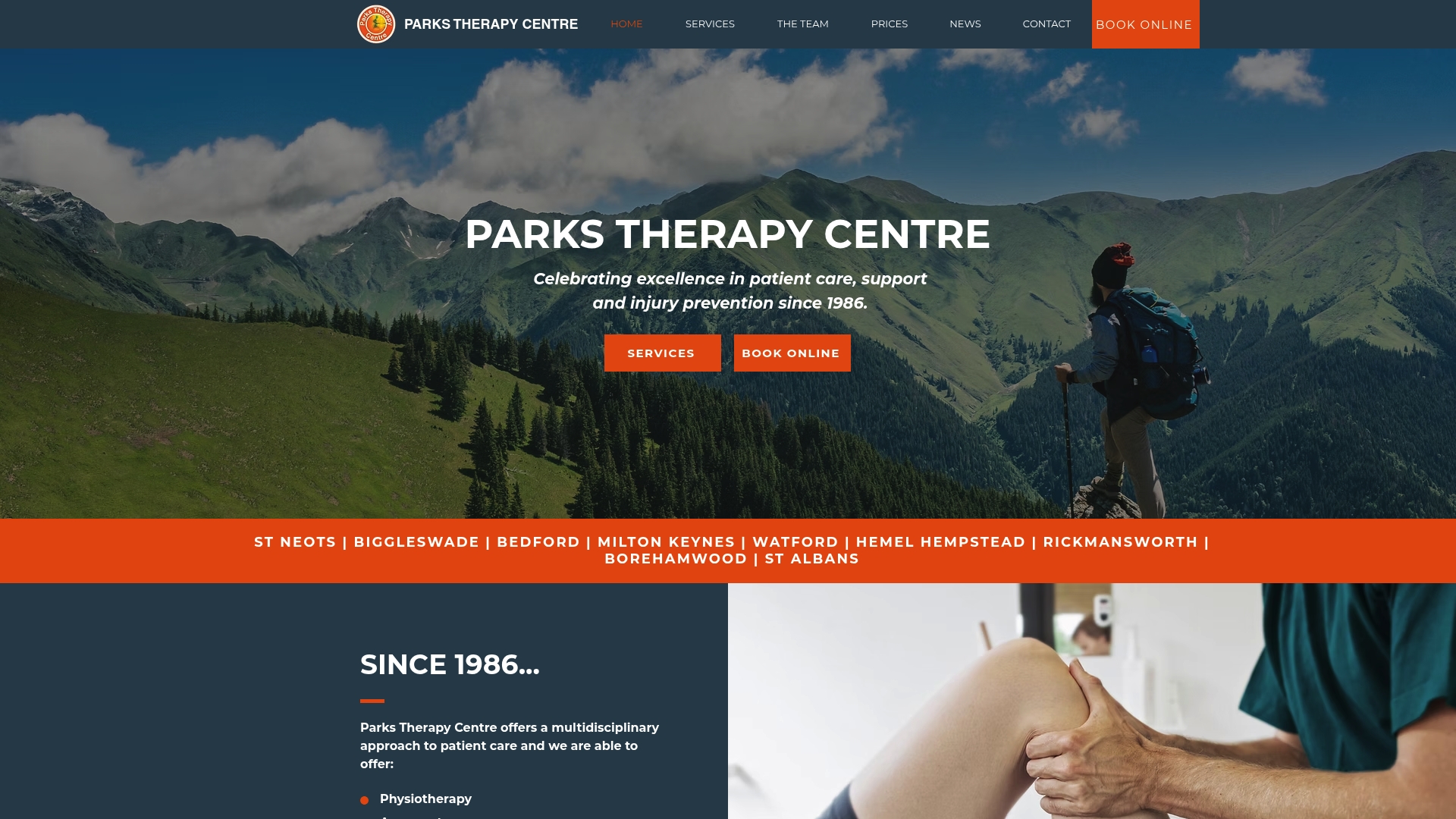
Parkstherapycentre has been delivering physiotherapy and allied health services since 1986, with a multidisciplinary team holding postgraduate specialist qualifications across musculoskeletal physiotherapy, sports injury, pelvic health, podiatry, and acupuncture. Clinics are located across Bedfordshire and Buckinghamshire, with online booking available seven days a week.
The centre accepts a range of private medical insurers — including Bupa and AXA Health — and the team can advise on whether your policy covers the treatment you need. For patients who want to begin care without delay, same-week appointments are typically available. For those still navigating NHS routes, the team can advise on the most appropriate pathway.
Book your appointment online at Parkstherapycentre or call the clinic directly to discuss your condition and confirm which clinician and specialism is right for you.
Useful UK resources for finding and verifying physiotherapists
Use these resources to verify clinicians, find local services, and read further on specific conditions.
- HCPC register — search by name or registration number to confirm a physiotherapist's legal registration status. Use this before booking any clinician.
- Chartered Society of Physiotherapy — the principal professional body for UK physiotherapists. Use the "Find a physio" tool to search by postcode and specialism, and to confirm CSP membership.
- NHS physiotherapy guidance — explains what physiotherapy is, what to expect, and how to access it through the NHS.
- NHS England: first-contact physiotherapists — details on the first-contact physiotherapist programme in GP practices and how to find out whether your surgery participates.
- Parkstherapycentre online booking — book directly with a specialist physiotherapist across clinics in Bedfordshire and Buckinghamshire; insurance accepted.
- Physiotherapy qualifications explained — a practical guide to the postgraduate credentials UK physiotherapists may hold and what they mean for your care.
- Sports injury specialist care — explains when to choose a sports-focused physiotherapist and what specialist training to look for.