
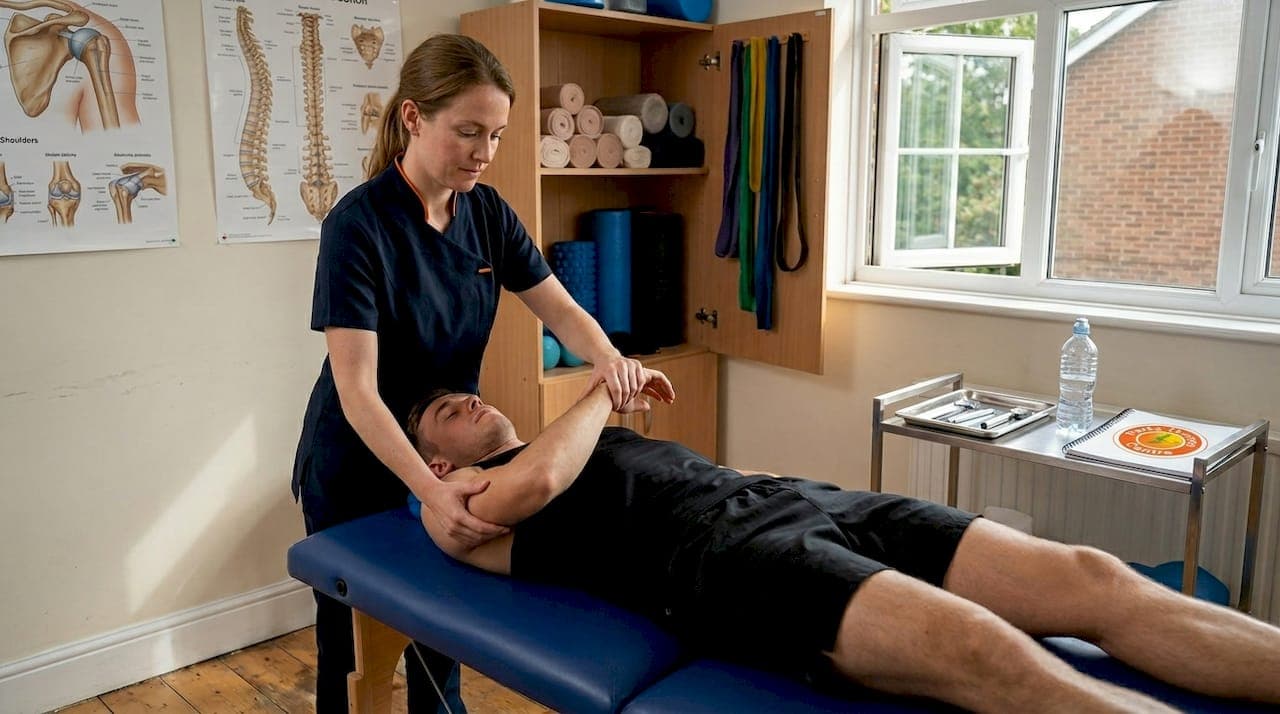
Many people assume that rest, ice, and a bit of time are all it takes to recover from a sports injury. The reality is quite different. Sports therapy leads to significant pain reduction, improved movement, and faster return to sport compared to passive recovery alone. Whether you've twisted an ankle on a Bedfordshire trail or strained a hamstring on a Buckinghamshire pitch, understanding what sports therapy actually involves can be the difference between a full recovery and a recurring problem. This article explains what sports therapy is, how it works, and what results you can realistically expect.
Table of Contents
- What is sports therapy?
- How sports therapy works: Phased rehabilitation and prevention
- Evidence: How effective is sports therapy for recovery?
- Sports therapy vs physiotherapy: What's the difference?
- Psychological considerations and holistic care
- What to expect in a local sports therapy session
- How Parks Therapy Centre can support your recovery
- Frequently asked questions
Key Takeaways
| Point | Details |
|---|---|
| Sports therapy defined | Sports therapy is a targeted, hands-on approach proven to aid recovery and prevent future injuries. |
| Phased recovery process | Structured rehab phases guide you from initial protection to return-to-sport, reducing long-term risk. |
| Evidence-based results | Studies show rapid pain reduction, improved mobility, and low re-injury rates with sports therapy. |
| Mind and body focus | Successful recovery addresses both physical healing and psychological wellbeing for lasting results. |
| Local expert support | Centres in Bedfordshire and Buckinghamshire deliver expert sports therapy for all activity levels. |
What is sports therapy?
Sports therapy is a specialist discipline focused on treating and preventing injuries related to sport and physical activity. It draws on evidence-based techniques to reduce pain, restore movement, and support tissue healing. Unlike a general wellness massage or a quick GP appointment, sports therapy targets the root cause of your injury and builds a structured path back to full function.
The core techniques used by sports therapists include:
- Joint mobilisation: Gentle, controlled movement of a joint to restore its natural range.
- Manipulation: A more direct technique to release stiffness or correct joint position.
- Soft tissue mobilisation: Hands-on work targeting muscles, tendons, and ligaments.
- Myofascial release: Sustained pressure applied to the connective tissue (fascia) surrounding muscles to ease tension and improve movement.
These manual therapy techniques are applied alongside exercise prescription and patient education to deliver lasting results. Outcomes are impressive: research points to up to 86% reduction in pain and 80% improvement in range of movement for patients receiving structured sports therapy. If you want to understand more about the language used in sessions, our sports therapy terms explained guide is a useful starting point.
How sports therapy works: Phased rehabilitation and prevention
Sports therapy does not treat every injury the same way. Professionals use a phased rehabilitation model that guides you from the moment of injury through to full return to sport and long-term prevention. Each phase has specific goals and techniques.
- Acute protection (days 0 to 7): The priority is reducing pain and swelling. Gentle isometric exercises (muscle contractions without joint movement) maintain strength without stressing damaged tissue.
- Early loading (weeks 2 to 3): Controlled movement begins. Eccentric exercises (where the muscle lengthens under load) are introduced to stimulate tissue repair.
- Advanced function (weeks 3 to 6): Neuromuscular control training improves coordination and stability, reducing the risk of re-injury.
- Sport-specific preparation (ongoing): Movements and loads are matched to your sport or activity, ensuring you return safely and confidently.
This phased rehabilitation approach is what separates sports therapy from simply resting and hoping for the best. Prevention is built into every stage, not bolted on at the end.
| Phase | Timeframe | Key techniques |
|---|---|---|
| Acute protection | Days 0 to 7 | Isometrics, rest, pain management |
| Early loading | Weeks 2 to 3 | Eccentric exercises, soft tissue work |
| Advanced function | Weeks 3 to 6 | Neuromuscular training, progressive loading |
| Sport-specific prep | Ongoing | Sport drills, strength and conditioning |
Pro Tip: Ask your therapist which phase you are in at each session. Knowing your stage helps you understand why certain exercises feel easy or challenging, and keeps you motivated.
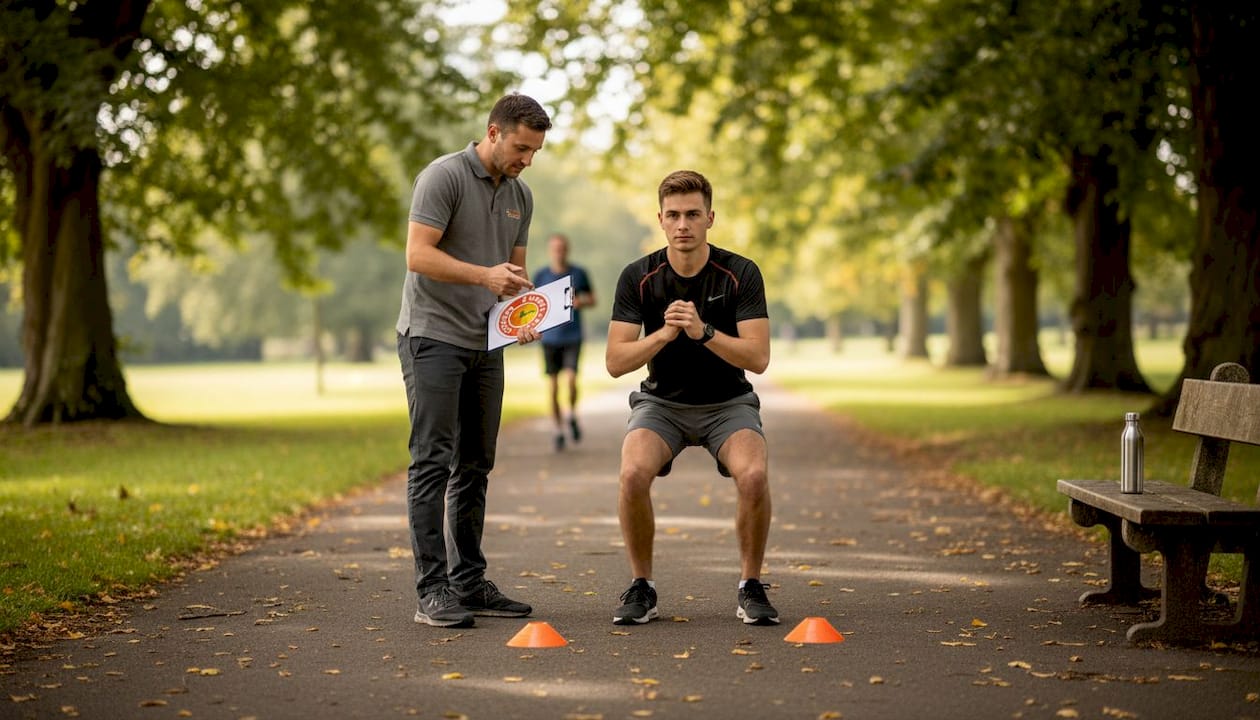
For practical guidance on managing injuries from the outset, see our resource on effective sports injury management, and for a structured approach to staying injury-free, our injury prevention steps guide is worth reading.
Evidence: How effective is sports therapy for recovery?
Understanding the process is helpful, but what about actual results? Here's what the latest research says.
For orthopaedic and musculoskeletal injuries treated with modern sports therapy, outcome data shows the following:
- 86% average pain reduction
- 80% improvement in range of movement
- 74% functional recovery rate
- Only 9% re-injury rate when prevention strategies are applied
These are not marginal gains. They represent a meaningful difference in how quickly and completely people recover.
| Treatment type | Pain reduction | ROM improvement | Functional recovery |
|---|---|---|---|
| Manual therapy | High | High | High |
| Exercise therapy | Moderate to high | High | High |
| Electrotherapy | Moderate | Moderate | Moderate |
| Combined approach | Highest | Highest | Highest |
One particularly interesting finding concerns myofascial release. Myofascial release outperforms stretching and ultrasound for certain trigger point injuries, making it a valuable tool for stubborn soft tissue problems that haven't responded to other treatments.
"Sports therapy delivers faster, more complete recoveries than rest alone, with evidence supporting its use across a wide range of musculoskeletal conditions."
Complementary approaches can also play a role. The role of acupuncture in sports recovery is well documented for pain management, and if you've ever wondered about ice packs, our article on ice use in sports injuries may challenge what you think you know.
Sports therapy vs physiotherapy: What's the difference?
Many in Bedfordshire or Buckinghamshire may wonder: should I see a sports therapist or a physiotherapist? Let's compare.
Both professions treat musculoskeletal problems, but their focus differs. Sports therapy focuses on athletic performance restoration and sport-specific recovery, while physiotherapy covers a broader range of health conditions across all ages and activity levels.
| Feature | Sports therapy | Physiotherapy |
|---|---|---|
| Primary focus | Sport and exercise injuries | General health and function |
| Typical patients | Active individuals, athletes | All ages, varied conditions |
| Core methods | Manual therapy, sport-specific rehab | Exercise, manual therapy, education |
| Prevention emphasis | High | Moderate |
| Return-to-sport planning | Central | Secondary |
Neither is better in absolute terms. It depends on your situation.
- Choose a sports therapist if your goal is returning to a specific sport, you have a recurring injury, or your recovery needs to be performance-focused.
- Choose a physiotherapist if your condition is not sport-related, involves neurological factors, or requires broader medical management.
Pro Tip: If you're unsure, book an initial assessment with a sports therapist first. They will refer you on if your needs fall outside their scope.
For a broader look at treatment options, our guide to physiotherapy technique options explains the range of approaches available locally.
Psychological considerations and holistic care
Physical recovery is only part of the journey. The psychological side is often overlooked, yet it has a direct impact on how well and how quickly you recover.
Psychological factors affect rehab adherence and re-injury risk significantly, yet they are frequently neglected in practice. Stress, low confidence, fear of re-injury, and lack of social support can all slow progress, even when the physical treatment is excellent.
A biopsychosocial (BPS) approach considers the whole person, not just the injured tissue. Strategies that support mental wellbeing during recovery include:
- Goal setting: Short-term milestones keep motivation high and give a sense of progress.
- Education: Understanding your injury reduces fear and builds confidence in movement.
- Social support: Encouragement from coaches, family, or teammates improves adherence.
- Relaxation techniques: Breathing exercises and mindfulness reduce stress hormones that can slow healing.
- Open communication: Telling your therapist how you feel emotionally, not just physically, leads to better-tailored care.
"Full recovery requires both physical and mental readiness. Treating the body without addressing the mind leaves the job half done."
Our sports injury prevention guide touches on how psychological readiness fits into a broader prevention strategy.
What to expect in a local sports therapy session
Having explored the principles and psychological aspects, let's see what a session actually looks like in Bedfordshire or Buckinghamshire.
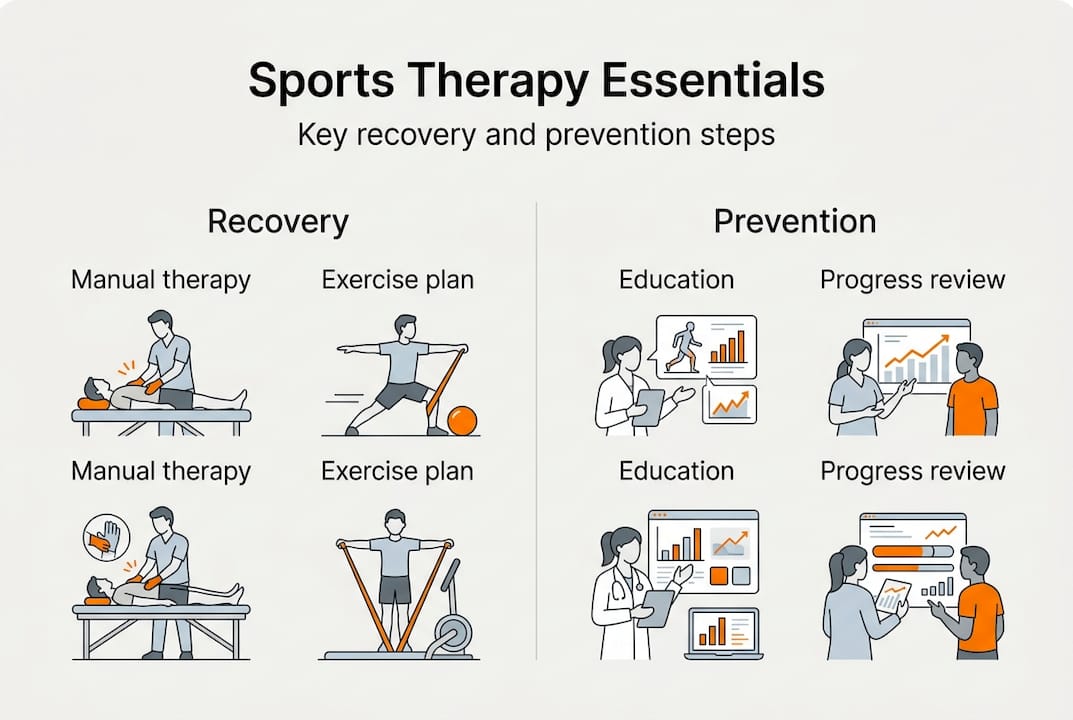
A typical sports therapy session follows a clear structure:
- Assessment: Your therapist reviews your history, tests movement, and identifies the source of your problem. This is not a formality. A thorough assessment shapes everything that follows.
- Manual therapy: Hands-on treatment using joint mobilisation, soft tissue work, or myofascial release, depending on your injury and phase of recovery.
- Progressive exercise: Targeted exercises are prescribed and coached in session, then given as a home programme to maintain progress between appointments.
- Education: You leave each session understanding what happened, why, and what to do next. This knowledge is part of the treatment.
Manual therapy, exercise, and education combined consistently produce better outcomes than any single approach alone. Sessions typically last 45 to 60 minutes, and most people are seen weekly or fortnightly depending on their stage of recovery.
Pro Tip: Wear comfortable, loose-fitting clothing that allows your therapist to access the injured area easily. Bring a list of questions. The more information you share, the more targeted your treatment will be.
For guidance on what happens when you first present with an injury, our article on sports injury assessment steps walks you through the process in detail.
How Parks Therapy Centre can support your recovery
Ready to take action on your recovery? Here's how local support fits into your plan.
At Parks Therapy Centre, we have been providing expert-led sports therapy and physiotherapy across Bedfordshire and Buckinghamshire since 1986. Our approach follows the same phased rehabilitation model described in this article, delivered by qualified professionals who understand the demands of sport and active life.
Whether you are dealing with a fresh injury or a long-standing problem that keeps coming back, we offer individualised assessments and treatment plans built around your goals. If you need a clearer picture of what's happening inside a joint or muscle, our diagnostic imaging referrals service can provide that clarity quickly. To book an assessment or find out more about what we offer, visit Parks Therapy Centre and take the first step towards a full, lasting recovery.
Frequently asked questions
How long does sports therapy take to show results?
Most people notice pain reduction and improved movement within a few weeks. Full recovery timelines vary, but common injuries typically resolve within six weeks of structured treatment.
Can sports therapy help prevent recurring injuries?
Yes. Sports therapy incorporates neuromuscular control and prevention strategies that keep re-injury rates as low as 9% for patients who complete their full rehabilitation programme.
Is sports therapy suitable for non-athletes?
Absolutely. Sports therapy addresses acute and chronic musculoskeletal problems across all activity levels. The scope of manual therapy includes general musculoskeletal conditions, not just sport-specific injuries.
How is sports therapy different from physiotherapy?
Sports therapy puts more emphasis on athletic performance and sport-specific recovery. Physiotherapy covers a wider range of health conditions and is not exclusively focused on return to sport.
Does evidence support combining manual therapy and exercise?
Yes. Studies consistently show the best outcomes when manual treatments are paired with progressive exercises and patient education, outperforming any single approach used in isolation.