
TL;DR:
- Sports injury specialists provide faster, sport-specific diagnosis and tailored rehabilitation.
- They achieve better return-to-sport rates and lower re-injury risks than general practitioners.
- Preventive assessments and programs help active individuals maintain long-term athletic performance.
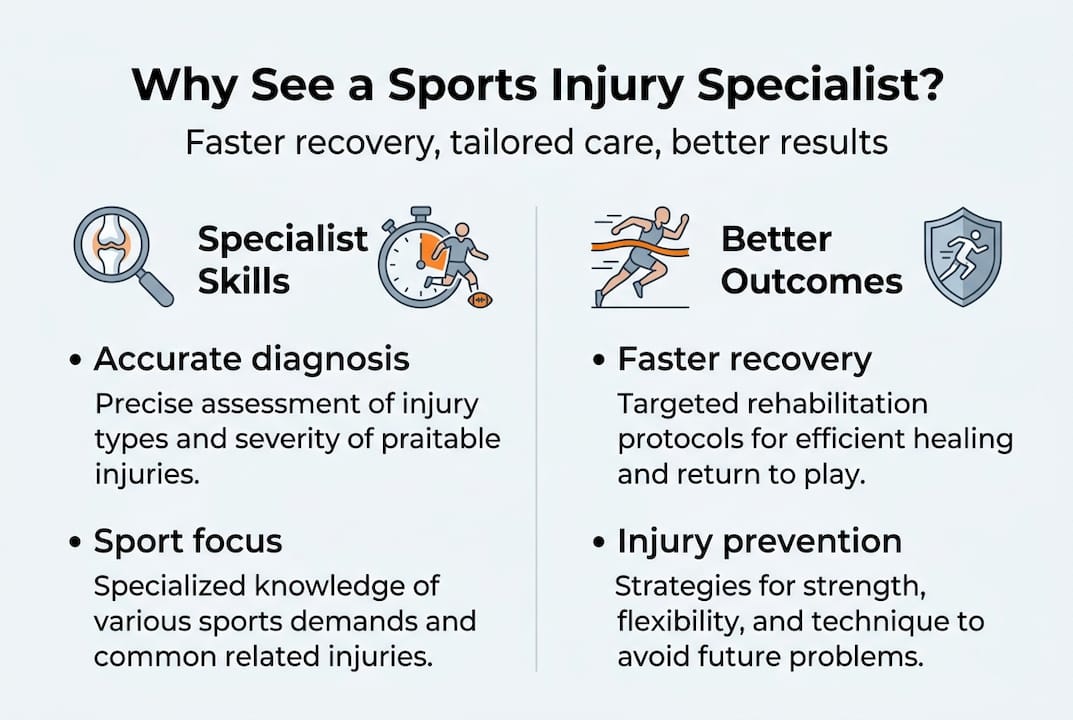
When you pick up a sports injury, the instinct is often to book an appointment with your GP. It makes sense on the surface, but GPs are generalists, and musculoskeletal injuries respond far better to targeted, sport-specific expertise. Specialists achieve faster recovery and better return-to-sport rates than standard medical routes. Whether you're a weekend runner in Bedfordshire or a competitive cyclist in Buckinghamshire, the difference between seeing a generalist and a specialist can mean weeks off sport versus a structured, confident comeback. This guide explains exactly why that gap exists and how you can use it to your advantage.
Table of Contents
- What makes sports injury specialists unique?
- How specialist care speeds up recovery and enhances return to sport
- Preventing re-injury and long-term optimisation
- Specialist clinics versus NHS: What's different?
- Why specialist-led care is essential for athletes and active adults
- Choose specialist support for your recovery
- Frequently asked questions
Key Takeaways
| Point | Details |
|---|---|
| Expert diagnosis | Sports injury specialists accurately identify and treat sport-specific injuries for a faster recovery. |
| Faster rehabilitation | Specialists use evidence-based protocols that improve healing and increase return-to-sport rates. |
| Injury prevention | Biomechanics assessments and prevention programmes help reduce future injury risks. |
| Better outcomes than NHS | Specialist clinics offer more advanced rehab and consistent protocols compared to NHS services. |
What makes sports injury specialists unique?
A sports injury specialist is not simply a physiotherapist with a different job title. Their training centres on understanding how the body moves under athletic load, how specific sports place unique demands on joints and muscles, and how injuries within that context behave differently from everyday aches and pains.
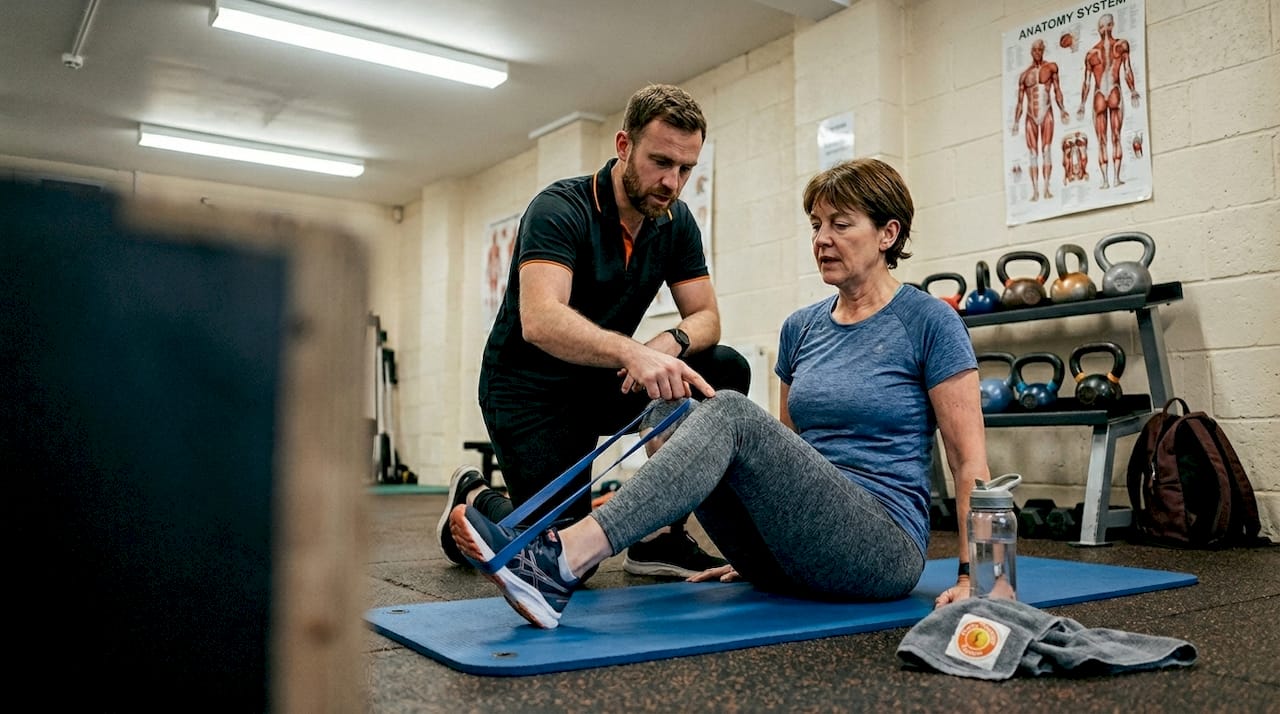
Specialists possess unique knowledge in biomechanics and sport-specific injuries that general practitioners simply do not train for. Biomechanics is the study of how forces act on the body during movement. A specialist can watch you run, throw, or squat and identify subtle compensations that a GP would never spot in a ten-minute consultation.
This matters because most sports injuries are not isolated events. A knee problem in a runner often traces back to hip weakness or ankle instability. A shoulder injury in a swimmer may stem from thoracic mobility restrictions. Without that broader lens, treatment addresses the symptom rather than the cause.
Here is what a specialist assessment typically covers that a GP visit does not:
- Functional movement screening to identify compensatory patterns
- Sport-specific load analysis based on your training demands
- Tissue quality assessment beyond basic range-of-motion tests
- Return-to-sport benchmarking so you know exactly when it is safe to train again
- Injury risk profiling to flag vulnerabilities before they become problems
"The most important question in sports injury care is not 'what is wrong?' but 'why did this happen and how do we stop it happening again?' That is the question specialists are trained to answer."
Effective managing sports injuries at a specialist level means understanding the sport, the athlete, and the injury together as one picture. If you want to understand the language your specialist uses during assessment, a clear sports therapy terms guide can help you follow the conversation and ask better questions.
The result of this depth of assessment is a treatment plan that is genuinely tailored to you, not a generic set of exercises printed from a database.
How specialist care speeds up recovery and enhances return to sport
Knowing that specialists have deeper expertise is useful, but the real question is: does it translate into measurably better outcomes? The evidence says yes, clearly.
Specialists provide faster recovery, better return-to-sport rates, and injury prevention through personalised rehabilitation. This is not simply a marketing claim. Empirical data shows higher return-to-sport rates with standardised protocols, more physiotherapy sessions, and the use of outcome measures by specialists.
Here is a comparison of typical recovery outcomes:
| Recovery factor | General practitioner route | Specialist clinic route |
|---|---|---|
| Time to diagnosis | 1 to 3 weeks | Same week or next day |
| Rehab plan specificity | Generic | Sport and athlete specific |
| Return-to-sport testing | Rarely used | Standard practice |
| Outcome tracking (PROMs) | Uncommon | Routinely applied |
| Re-injury rate | Higher | Significantly lower |
The structured approach a specialist uses follows a clear progression:
- Accurate diagnosis using functional and clinical assessment
- Acute phase management to reduce pain and protect tissue
- Rehabilitation progression matched to healing timelines
- Sport-specific conditioning to rebuild performance capacity
- Return-to-sport testing using objective criteria before full clearance
This five-stage process means nothing is rushed and nothing is skipped. You do not return to sport because the pain has gone. You return because your body has been tested and proven ready.
Pro Tip: Ask your clinic specifically about return-to-sport (RTS) testing and Patient Reported Outcome Measures (PROMs). If they use both, you are in good hands. If they do not, consider whether their approach is truly evidence-based.
For practical guidance on getting the most from your rehabilitation, physiotherapy recovery tips from experienced clinicians can make a real difference to your progress. You can also explore what sports therapy results look like in practice to set realistic expectations before you begin.
The musculoskeletal research supporting specialist-led rehabilitation continues to grow, reinforcing that structured, intensive physiotherapy produces outcomes that general care simply cannot match.
Preventing re-injury and long-term optimisation
Recovery is only half the story. The part most people overlook is what happens after they return to sport. Without proper prevention work, re-injury rates climb sharply, particularly in the first six months back.
Prevent future injuries through biomechanics assessment and tailored prevention programmes. This is where specialist care delivers value that extends well beyond a single injury episode.
A biomechanics assessment looks at how you move during the activities that caused your injury. It identifies the specific patterns, weaknesses, or imbalances that made you vulnerable in the first place. From that analysis, your specialist builds a prevention programme designed around your sport, your body, and your goals.
For active adults in Bedfordshire and Buckinghamshire, the benefits of this approach include:
- Reduced risk of the same injury recurring through targeted strength and mobility work
- Improved movement efficiency, which also enhances performance
- Early identification of micro-injuries before they develop into serious problems
- Greater confidence returning to training because you understand your own risk profile
- Long-term athletic longevity, keeping you active well into later life
Pro Tip: Schedule a preventative check-up with your specialist every three to four months if you train regularly. Micro-injuries caught early are treated in one or two sessions. Left unaddressed, they often require months of rehabilitation.
Understanding sports injury prevention as a proactive strategy rather than a reactive one changes how you approach training entirely. A practical prevention guide for active adults can help you build these habits into your routine. It is also worth knowing the types of sports injuries most common in your sport so you can prioritise the right preventative work.
Specialist clinics versus NHS: What's different?
This is a question we hear regularly, and it deserves a straight answer. The NHS provides essential care, and for acute emergencies it is irreplaceable. But for musculoskeletal and sports injuries, the gap between NHS provision and specialist clinic care is significant.
NHS variability in resources for advanced rehabilitation underscores specialist clinics' value for optimal outcomes. Waiting times, session frequency, and access to outcome measures all vary considerably depending on your local NHS trust.
| Feature | NHS musculoskeletal service | Specialist private clinic |
|---|---|---|
| Waiting time | Weeks to months | Days |
| Sessions per patient | Often limited | As many as clinically needed |
| Sport-specific rehab | Rarely available | Core offering |
| RTS testing | Uncommon | Standard |
| PROMs tracking | Variable | Routine |
| Biomechanics assessment | Limited | Comprehensive |
Key statistic: PROMs and physiotherapy sessions correlate directly with return-to-sport rates. Clinics that use both consistently produce better outcomes than those that do not.
This does not mean the NHS cannot help. It means that if you are an active person with a sports injury and a genuine desire to return to your sport safely and quickly, a specialist clinic gives you the tools, the time, and the expertise to do that properly.
For a clearer picture of what specialist treatment actually involves day to day, sports therapy explained in plain language can help you understand what to expect from your first appointment onwards.
Why specialist-led care is essential for athletes and active adults
Having looked at the evidence, here is our honest perspective after nearly four decades of treating active people across Bedfordshire and Buckinghamshire.
Most people who come to us have already spent weeks managing their injury with rest and painkillers, hoping it will resolve on its own. Some have seen their GP and received advice that was well-intentioned but not sport-specific. By the time they arrive at a specialist clinic, they are frustrated, often deconditioned, and sometimes carrying compensatory injuries they did not have originally.
The uncomfortable truth is that specialists possess unique knowledge in biomechanics and sport-specific injuries that changes outcomes in ways that are genuinely difficult to replicate through general care. Accessing that knowledge early is not a luxury. For anyone who values their active lifestyle, it is the most efficient and cost-effective decision you can make.
Tailored prevention is not something you do once you are elite. It is what keeps ordinary, active people doing the things they love without constant setbacks. Effective injury management from the outset shapes the entire trajectory of your recovery.
Choose specialist support for your recovery
The evidence is clear: specialist care delivers faster recovery, lower re-injury rates, and better long-term outcomes for active people. If you are dealing with a sports injury or a recurring musculoskeletal problem in Bedfordshire or Buckinghamshire, the next step is to get a proper specialist assessment rather than waiting to see whether time alone will fix it.
At The Parks Therapy Centre, we offer diagnostic imaging referrals alongside our full rehabilitation and prevention services, so you get an accurate diagnosis and a structured plan from day one. Our team has been delivering specialist sports injury care since 1986, and we accept most major insurance providers. Book online today and take the first step towards a confident, lasting recovery.
Frequently asked questions
What injuries can a sports injury specialist treat?
A sports injury specialist can diagnose and treat muscle strains, ligament injuries, tendonitis, joint issues, and sport-related overuse injuries. Their focus on sport-specific biomechanics means they address the root cause, not just the symptoms.
How quickly can I expect to recover with specialist care?
Recovery timelines vary by injury, but specialist care often accelerates the process through evidence-based protocols and personalised treatment. Higher return-to-sport rates are consistently recorded when standardised specialist protocols are applied.
Is prevention part of specialist treatment?
Yes. Most specialists assess biomechanics and create prevention programmes to reduce the risk of re-injury and maintain long-term performance. Tailored prevention programmes are a core part of specialist care, not an optional extra.
Are there differences between NHS and specialist clinics?
Specialist clinics offer more resources, advanced rehabilitation, and outcome measures as standard, while NHS musculoskeletal services vary considerably depending on local provision and waiting times.