

TL;DR:
- Clinical evaluation in sports therapy is a systematic, evidence-based process that guides accurate diagnosis and personalized treatment. It involves multiple assessments, including vital signs, musculoskeletal exams, performance testing, and pain evaluation, all informed by clinical reasoning. Ongoing reassessment and effective communication ensure safe return-to-sport decisions and tailored rehabilitation plans.
Clinical evaluation in sports therapy is the structured, evidence-based assessment process that drives accurate diagnosis, personalised treatment, and effective rehabilitation. It is not a single test but a systematic, multi-component process covering vital signs, a general medical examination, a detailed musculoskeletal assessment, and sport-specific fitness testing. Clinical reasoning sits at the heart of every evaluation, guiding therapists toward the most relevant tests rather than a generic checklist. Findings feed directly into personalised treatment planning and injury prevention strategies, making the assessment process as important as the treatment that follows.
- Vital signs and general medical screening establish a safe baseline
- Musculoskeletal examination identifies structural and functional deficits
- Sport-specific fitness testing measures performance capacity
- Pain assessment captures the athlete's full experience, including psychological factors
- Functional reassessment tracks recovery progress over time
How clinical reasoning shapes the assessment process
Clinical reasoning creates a working hypothesis from the athlete's history, then structures the physical examination around that hypothesis rather than running every available test. This targeted approach saves time and reduces unnecessary discomfort.
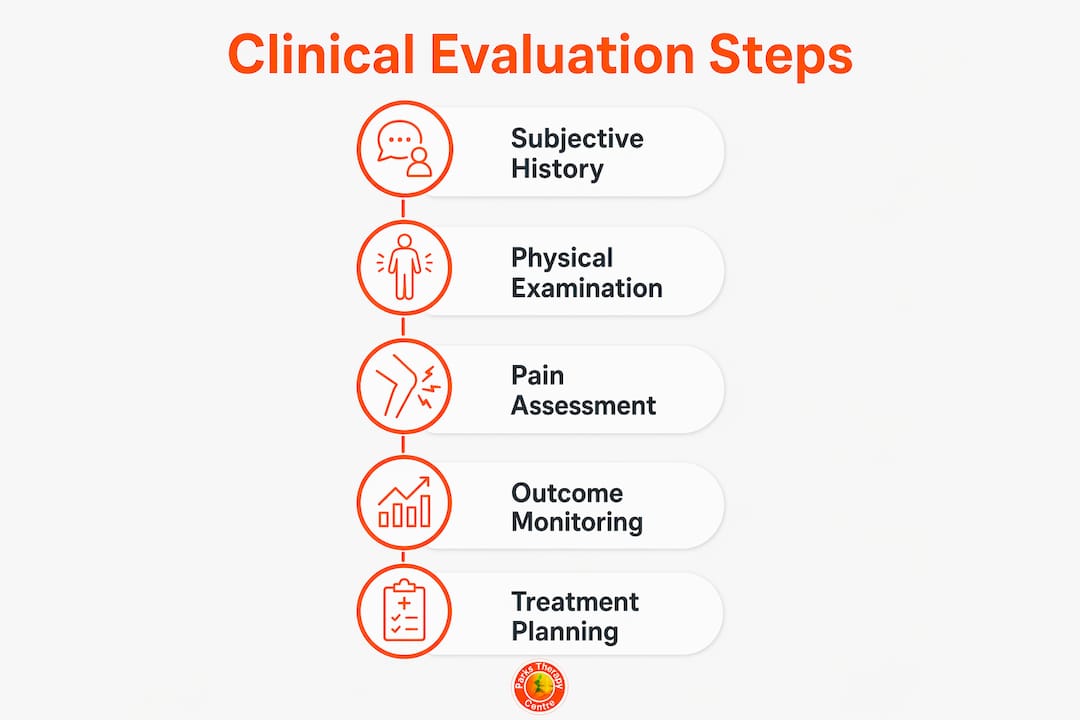
- Subjective history: Gather the mechanism of injury, symptom behaviour, and psychosocial context, including training load, stress, and the athlete's emotional response to their condition.
- Systems review: Screen physiological and anatomical status, cognition, and communication to identify any red flags requiring onward referral.
- Clearing tests: Systematically rule out referred pain sources before focusing on the primary structure, improving diagnostic accuracy.
- Objective examination: Assess range of motion, muscle performance, joint integrity, and sport-specific biomechanics based on the working hypothesis.
- Therapeutic relationship: A trusting, open dialogue encourages athletes to share relevant detail, producing a richer clinical picture and more sustainable rehabilitation outcomes.
Pro Tip: Ask about the athlete's training schedule and competition calendar during the subjective history. Knowing whether a major event is two weeks or six months away shapes every subsequent clinical decision.
When and where should clinical evaluation take place?
Initial assessment timing varies by setting, and each context carries a distinct purpose.
- Pitch-side: Rapid triage to identify injury severity, rule out serious harm, and decide whether the athlete can continue or requires removal from play
- Training room: More thorough examination once immediate risk is managed, establishing the injury mechanism and beginning treatment
- Clinical appointment: Comprehensive assessment with full equipment, detailed documentation, and multidisciplinary input
- Telehealth consultation: Useful for follow-up and monitoring when in-person attendance is not possible
Early evaluation, wherever it occurs, allows therapists to identify the mechanism of injury and begin appropriate management without delay, as detailed in Legamento crociato anteriore: dalla lesione sportiva al recupero completo con le cure moderne. The 2024 consensus guidelines for sports team physicians confirm that early assessment across all three settings improves care and treatment outcomes for athletes.
Why functional testing matters for return-to-sport decisions
Return-to-sport decisions are among the most consequential judgements in sports therapy. Time-based approaches alone are unreliable; criterion-based functional testing reduces reinjury risk by ensuring athletes meet objective performance benchmarks before returning to competition.
- Range of motion assessment: Confirms symmetrical joint mobility before loading the athlete progressively.
- Strength and power testing: Measures limb symmetry indices to identify persistent deficits that increase reinjury risk.
- Postural control and balance: Sport-specific balance tasks reveal neuromuscular readiness that strength tests alone can miss.
- Functional performance tests: Hop tests, agility drills, and sport-specific movement screens provide objective readiness criteria rather than subjective impressions.
- Psychological readiness: Fear-avoidance and kinesiophobia screening completes the picture, as athletes who are physically ready but psychologically unprepared remain at elevated risk.
How pain assessment fits within clinical evaluation
Pain assessment in sports therapy goes well beyond asking an athlete to rate discomfort on a scale. A biopsychosocial framework captures the full picture, covering neurophysiological, biomechanical, affective, cognitive, and socioenvironmental factors.
- Assess neurological signs and symptoms alongside range of motion and sport-specific function
- Explore affective and cognitive factors such as anxiety, catastrophising, and beliefs about pain
- Consider the athlete's training environment, coaching relationships, and competitive pressures
- Use plain, clear language when explaining pain findings to support health literacy and adherence
- Time pain assessments strategically, for example before and after training, to capture meaningful variation
Pro Tip: Pain neuroscience education during the assessment itself, not just at the end, helps athletes make sense of their experience and engage more actively with rehabilitation.
Monitoring outcomes and building personalised treatment plans
Clinical evaluation is not a one-off event. Ongoing reassessment tracks recovery, confirms that treatment is working, and prompts adaptation when progress stalls. Objective measures and functional reassessments provide the evidence base for these decisions.
- Repeat key outcome measures at agreed intervals to quantify progress
- Adjust rehabilitation programmes when reassessment reveals plateaus or new deficits
- Share findings with the athlete's wider support network, including coaches and medical staff, with the athlete's consent
- Document all assessment data clearly to support continuity of care across the multidisciplinary team
- Use biomechanical assessment findings to inform injury prevention work alongside active rehabilitation
Parkstherapycentre's patient-centred approach places the athlete at the centre of this process, with every reassessment informing a treatment plan that reflects their sport, their goals, and their timeline.
How technology and communication strengthen clinical evaluation
Digital tools and clear communication both improve the quality and consistency of clinical evaluations in sports therapy.
- Fitness testing devices and force plates provide objective, reproducible strength and power data
- Digital records support accurate documentation and safe data sharing across multidisciplinary teams
- Telehealth consultations extend access for athletes who cannot attend in person
- Clear, jargon-free communication of findings improves athlete understanding and adherence
- Structured reporting protocols reduce the risk of clinical errors and omissions
Limitations remain. Practical constraints, equipment availability, and variability between assessors can affect consistency. Recognising these challenges is part of delivering a thorough clinical assessment that athletes can trust.
Pro Tip: When sharing evaluation findings with an athlete, summarise three things: what you found, what it means for their recovery timeline, and what they can do today. That structure keeps communication focused and actionable.

Parkstherapycentre: clinical evaluation expertise for UK athletes
Parkstherapycentre has supported athletes across Bedfordshire and Buckinghamshire since 1986, combining multidisciplinary expertise with a genuinely patient-centred approach to sports therapy. Every assessment follows evidence-based clinical evaluation methods, from the initial subjective history through to functional return-to-sport testing, ensuring that treatment plans reflect each athlete's specific condition, sport, and goals.
The team's award-winning reputation and acceptance of major insurance providers make expert sports injury assessment accessible without unnecessary delay. Online booking is available across multiple clinic locations, so you can arrange a comprehensive clinical evaluation at a time that fits your training schedule.
Key takeaways
Thorough clinical evaluation in sports therapy, combining structured assessment, clinical reasoning, and ongoing reassessment, is the foundation of safe, effective, and personalised rehabilitation for athletes.
| Point | Details |
|---|---|
| Multi-component assessment | Effective evaluation covers vital signs, musculoskeletal examination, fitness testing, and pain assessment. |
| Clinical reasoning guides testing | Hypothesis-driven assessment targets the most relevant tests, improving accuracy and efficiency. |
| Criterion-based return-to-sport | Functional benchmarks for strength, movement, and psychological readiness reduce reinjury risk. |
| Pain requires a biopsychosocial lens | Neurophysiological, affective, cognitive, and socioenvironmental factors all form part of a complete pain assessment. |
| Parkstherapycentre | Provides evidence-based clinical evaluation and personalised sports therapy across Bedfordshire and Buckinghamshire since 1986. |