
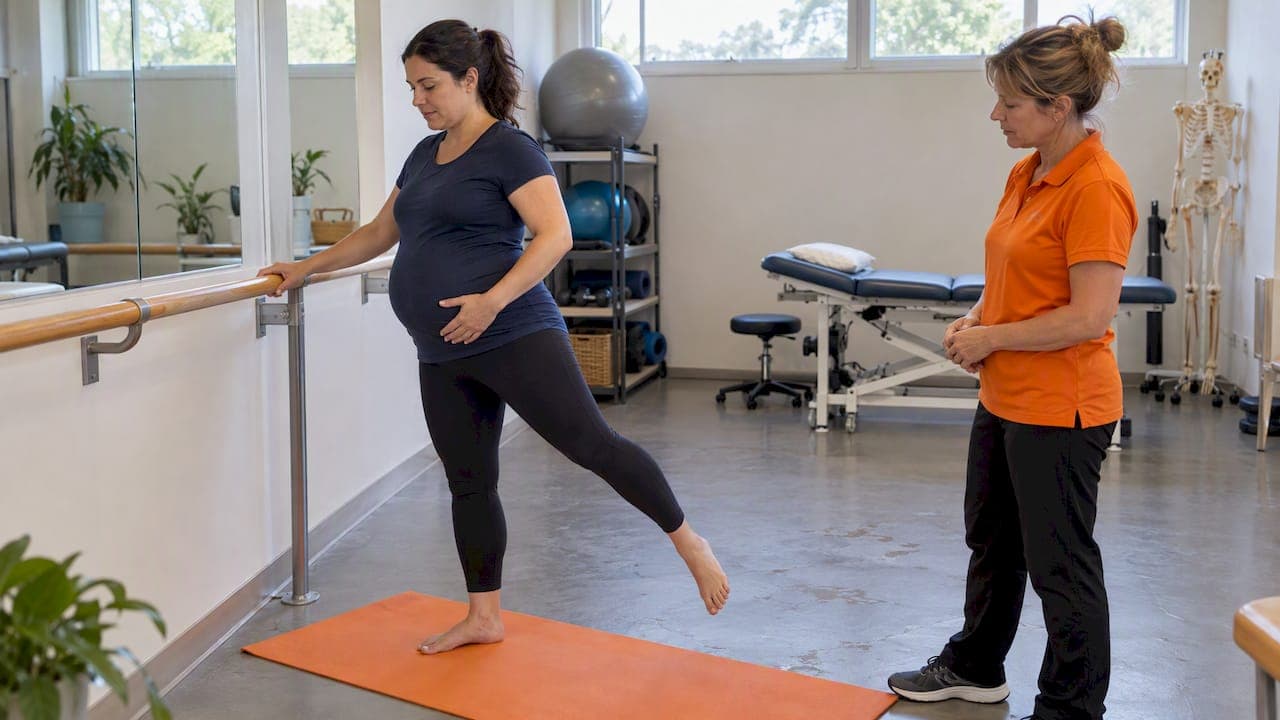
Yes, Pilates is suitable for most pregnancies when the exercises are adapted to each trimester and supervised by someone trained in antenatal care. The main caveat is the presence of certain pregnancy complications, which should be checked with your maternity team before starting. Once cleared, choose a physiotherapist-led or certified prenatal instructor over a general class.
TL;DR:
- Pilates during pregnancy can reduce labor pain and shorten the active phase, but results improve with supervised, trimester-specific programs.
- Avoid Pilates if experiencing complications like placenta praevia, pre-eclampsia, or significant bleeding, and stop exercising if symptoms such as pain or dizziness occur.
- Adapt moves across trimesters: gentle mat work early, side-lying and supported exercises mid-pregnancy, and stability-focused routines in the third trimester.
- Pelvic floor exercises should be gentle and functional, with physiotherapist guidance recommended for persistent issues or significant pain.
- Choose instructors with prenatal training, ensure proper screening, and consider physiotherapy assessments for tailored, safe exercise plans.
Table of Contents
- What the evidence says about pregnancy pilates and its benefits
- Who should avoid pilates and the warning signs to watch for
- Trimester-by-trimester guidance for safe pilates moves
- Pelvic floor and core work that's safe during pregnancy
- How to pick a safe prenatal pilates class or programme
- Physiotherapist-backed adaptations behind safe prenatal pilates
- Why individualised assessment matters more than a generic programme
- Prenatal pilates and assessment at Parks Therapy Centre
- FAQ
- Sources
What the evidence says about pregnancy pilates and its benefits
Evidence on prenatal Pilates is still developing, but the direction is consistent. A randomised trial and related review evidence found that Pilates during pregnancy reduced labour pain intensity and shortened the active phase of labour. One trial of 110 first-time mothers reported shorter active labour (P = .004). Reviews in the same body of evidence also note improvements in newborn one-minute APGAR scores in some studies, though results vary between trials and populations.
Beyond labour, regular adapted Pilates tends to help with:
- Reduced lower back and pelvic girdle discomfort through better alignment and core support.
- Improved posture as the body's centre of gravity shifts forward.
- Better breath control and relaxation, both useful during pregnancy and labour.
Research suggests Pilates during pregnancy can shorten active labour and ease pain, according to the randomised trial and related review evidence, though supervised programmes consistently show the most reliable results.
Who should avoid pilates and the warning signs to watch for
Most pregnancies tolerate adapted Pilates well, but some conditions mean exercise should be avoided or paused until a clinician gives the go-ahead. According to NHS guidance on exercise in pregnancy, absolute contraindications include:
- Ruptured membranes or placenta praevia after the gestation stage your clinician specifies.
- Pre-eclampsia or significant vaginal bleeding.
- Certain cardiac or respiratory diseases, or a multiple pregnancy with additional risk factors.
Stop any session immediately if you notice vaginal bleeding, contractions before term, dizziness, or chest pain, and contact your maternity team.
Within a safe pregnancy, a few simple rules keep intensity in check. Use the talk test: if you cannot hold a normal conversation, ease off. Avoid holding your breath during effort, keep the room cool to prevent overheating, and pause if lying on your back brings on dizziness or breathlessness.
Pro Tip: If a move feels wrong for your body that day, skip it. Pregnancy tolerance changes week to week, even within the same trimester.

Trimester-by-trimester guidance for safe pilates moves
Pilates adapts naturally across pregnancy, but the adjustments matter.
- First trimester: if you already exercise and feel well, continue much as before. Gentle mat work such as pelvic tilts, seated spine stretches, and controlled breathing suits this stage. Avoid sudden jumps in intensity, since fatigue and nausea can appear without warning.
- Second trimester: prolonged time lying flat on your back becomes less comfortable and can reduce blood flow, so shift towards side-lying leg work, supported standing exercises, and modified bridging. Aim for 8 to 12 controlled repetitions per exercise at a steady tempo, resting between sets.
- Third trimester: balance changes as the bump grows, so prioritise stability using a wall, chair, or Pilates ball for support. Sessions can run shorter, with more time spent on birth-preparation breathing, pelvic mobility, and gentle stretching rather than strength work.
A typical class structure across all three stages runs a short warm-up, a main set of 20 to 30 minutes built around trimester-appropriate moves, and a cool-down with breathing and relaxation work. Sports injury prevention guidance for pregnant women notes that ligament laxity from relaxin increases joint injury risk throughout pregnancy, so every stage calls for slow, controlled range of motion rather than deep stretches or ballistic movement.
Pelvic floor and core work that's safe during pregnancy
Pelvic floor cues in pregnancy Pilates focus on gentle, functional engagement rather than maximum effort. A typical cue involves a light inward and upward lift of the pelvic floor, held for a few seconds, paired with a soft draw of the lower abdominals rather than a hard brace. This combination supports the growing uterus without overloading the abdominal wall.
Progression usually moves from short holds in a resting position to integrating the same gentle contraction into standing, walking, and functional movement patterns used later in daily life and labour recovery.
- Persistent urinary leakage beyond what feels like a one-off.
- Symptoms of pelvic organ prolapse, such as heaviness or dragging.
- Significant abdominal separation or pelvic girdle pain that limits daily movement.
Any of these point towards a pelvic health physiotherapist assessment rather than continuing with general class exercises. The RCOG's guidance on pelvic girdle pain notes that pelvic girdle pain affects around 1 in 5 pregnant people, and that paced movement alongside physiotherapy support relieves symptoms more reliably than rest alone.
Pro Tip: Think of pelvic floor work as a gentle lift, not a clench. Over-gripping can be just as unhelpful as under-engaging.
How to pick a safe prenatal pilates class or programme
The instructor's background matters more than the studio's decor. Look for a physiotherapist with antenatal experience or a Pilates instructor who holds specific prenatal training, since general fitness certification does not always cover pregnancy adaptations.
A well-run class or programme should offer:
- A health screening form before your first session.
- Small class sizes that allow the instructor to watch and correct form.
- Clear modifications offered for each trimester, not a single fixed routine.
Before booking, ask these questions:
- Do you screen for pregnancy complications before each block of classes?
- How do you adapt moves as pregnancy progresses?
- What is your process if someone feels unwell mid-session?
Treat a lack of screening, claims of a heated studio, or a one-size-fits-all high-intensity format as reasons to look elsewhere. A broader primer on adapting Pilates for special populations covers similar principles for pregnancy and other conditions.
Physiotherapist-backed adaptations behind safe prenatal pilates
Pairing Pilates with a physiotherapy assessment gives a clearer picture of what your body needs at each stage. A physiotherapist can screen for pelvic girdle pain, assess posture and movement patterns, and prescribe exercises matched to your specific symptoms rather than a generic trimester template.
An in-person assessment is worth considering when:
- Pain limits walking, climbing stairs, or turning in bed.
- Pilates classes feel uncomfortable despite modifications.
- You want a tailored plan rather than general guidance.
The clinic's own resource on physiotherapist-backed pelvic girdle pain exercises sets out trimester-specific progressions, and the guide to sports injury prevention for pregnant women covers safe progression principles that apply equally to Pilates practice.
Why individualised assessment matters more than a generic programme
Every pregnancy carries a different combination of joint laxity, pain history, and fitness background, so a programme that suits one person can aggravate another. Persistent pain or a functional limit on daily movement is worth raising early with a physiotherapist rather than working around it indefinitely.
— Ivan
Prenatal pilates and assessment at Parks Therapy Centre
Physiotherapy assessment and Pilates can be combined in a clinical setting to screen for pain or movement concerns before shaping an exercise plan.
Relevant services can include a physiotherapy assessment for pregnancy-related pain or movement concerns, one-to-one Pilates sessions tailored to trimester and symptoms, and small Pilates group sessions for those who prefer a class setting with close supervision. Each option gives you a physiotherapist's input rather than a generic programme, which matters most when pelvic girdle pain or joint laxity is part of the picture.
- Physiotherapy Assessment, priced and bookable through the prices and booking page.
- Pilates One-to-One sessions, suited to a tailored trimester-specific plan.
- Pilates Group Sessions, a lower-cost option for supervised small-group practice.
Check current fees and availability on the prices and booking page to find the option that fits your stage of pregnancy.
This article is general information, not a substitute for advice from a qualified doctor. Consult a qualified healthcare professional about your own circumstances before acting on anything here.
FAQ
What are some important things to know about pregnancy?
Pregnancy brings changes in joint laxity, posture, and cardiovascular demand that affect how your body responds to exercise. Regular check-ins with your maternity team help catch complications early, and staying informed about warning signs such as bleeding or severe pain keeps you prepared.
Is it safe to use a hot water bottle during pregnancy?
A hot water bottle on sore muscles is generally fine if it is warm rather than very hot and used on the back or limbs rather than directly on the abdomen for long periods. If pain persists despite heat and rest, a physiotherapy assessment can identify the underlying cause.
What are some self-care ideas for pregnancy?
Gentle movement such as adapted Pilates, regular rest, and attention to posture all support comfort as pregnancy progresses. Addressing pelvic girdle pain early with pelvic girdle pain exercises tends to prevent symptoms from worsening.
What happens during the first trimester of pregnancy?
The first trimester involves early hormonal changes, including rising relaxin levels that begin to affect ligament laxity, alongside common symptoms such as fatigue and nausea. Exercise, including Pilates, can usually continue if you feel well, though sudden increases in intensity are best avoided.
Can I return to Pilates after giving birth?
Most people can return to gentle Pilates once cleared by their midwife or GP, typically after the postnatal check, building back up gradually rather than resuming a pre-pregnancy routine immediately. A guide to postpartum strength training outlines a graded approach to rebuilding core and overall strength after birth.
Sources
- Randomised trial and related review evidence on Pilates in pregnancy
- Pelvic girdle pain and pregnancy (RCOG)
- Keeping active during and after pregnancy (NHS Borders leaflet)