
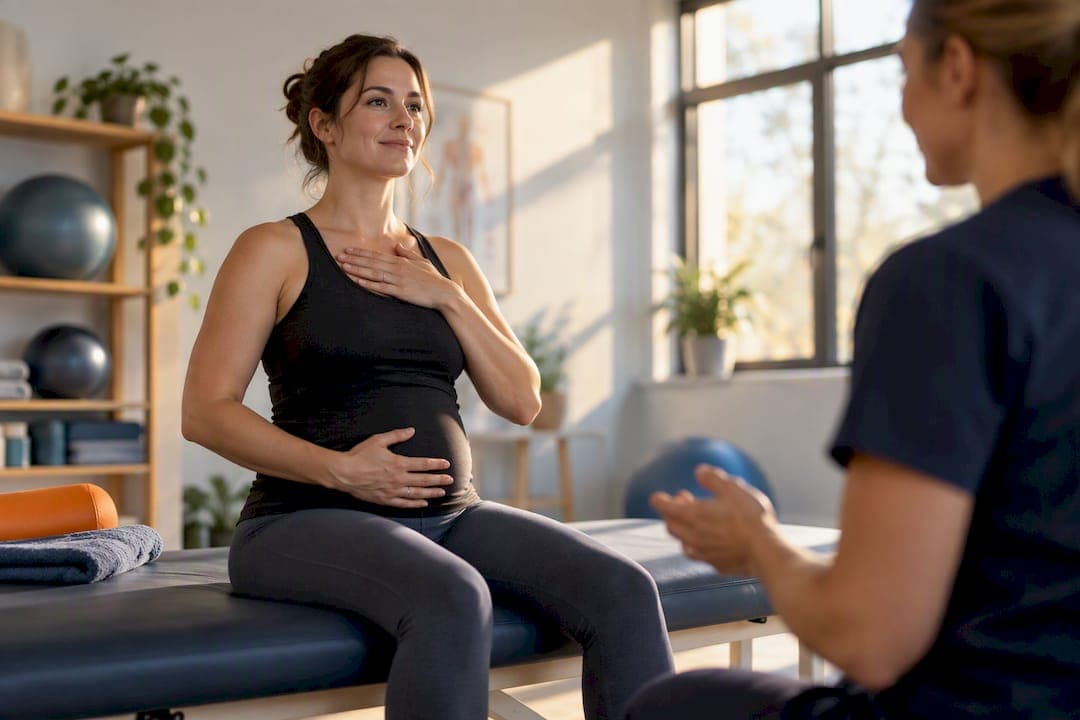
Women with urinary or faecal leakage, pelvic pain, a visible pelvic bulge, persistent back or hip pain, or concerns about abdominal separation should see a postnatal physiotherapist. The routine first step is the GP check at 6 to 8 weeks postpartum, which can trigger referral to specialist pelvic health physiotherapy, though self-referral is often quicker. NICE guidance identifies supervised pelvic floor muscle training as first-line care, ahead of surgery or unsupervised exercise alone.
TL;DR:
- Pelvic physiotherapy should be sought urgently if you experience a visible bulge, worsening leaks, severe pain, or wound issues, rather than waiting for the routine 6 to 8 week check.
- Supervised pelvic floor muscle training typically lasts at least three months, with longer durations needed for prolapse or persistent symptoms, emphasizing the importance of consistency.
- Starting gentle exercises such as pelvic floor activation, breathing coordination, and walking can begin soon after passing urine, well before the GP check.
- A thorough postnatal assessment covers symptom review, pelvic floor and scar evaluation, and functional tests, setting measurable recovery goals tailored to your needs.
- Private clinics offer faster, multidisciplinary care with detailed assessments and imaging options, but NHS routes via GP or self-referral remain valid for symptom management within a full year post-birth.
Table of Contents
- What does a postnatal physiotherapy assessment cover?
- How is pelvic floor and core rehabilitation prescribed?
- What exercises can you safely start early?
- When should you seek specialist help?
- How do you access postnatal physiotherapy?
- The Parks Therapy Centre: what to expect at a visit
- Clinician tips: staying on track with your recovery
- Parkstherapycentre: your next step for postnatal recovery
- Sources
- FAQ
What does a postnatal physiotherapy assessment cover?
A proper assessment starts with conversation, not equipment. Your physiotherapist will ask about your birth (vaginal delivery, instrumental birth, caesarean, tearing or episiotomy), your recovery so far, and what symptoms are bothering you day to day. This history shapes everything that follows.
From there, the session moves into physical assessment. Most postnatal physiotherapy appointments include:
- Symptom inventory covering bladder and bowel habits, pain location and triggers, and functional goals such as returning to running or lifting your baby's car seat without discomfort.
- Pelvic floor assessment, external and often internal, to check muscle strength, endurance, coordination and any tenderness or scarring.
- Abdominal wall and diastasis screening, measuring the gap and tension along the midline to gauge how well your deep core is reconnecting.
- Scar assessment for caesarean or perineal wounds, checking healing, mobility and sensitivity.
- Hip, lower back and posture examination, since pregnancy hormones and altered movement patterns often leave these areas compensating.
- Functional tests, including a cough or bearing-down test to check for leakage or bulging, plus observation of your gait and lifting technique.
These findings translate into measurable targets, not vague advice. A physiotherapist might set a goal such as holding a pelvic floor contraction for eight seconds with ten repetitions, or closing a diastasis gap by a specific margin before clearing you for higher-impact exercise. That specificity is what separates a genuine postnatal recovery plan from generic postpartum exercise leaflets.
How is pelvic floor and core rehabilitation prescribed?
Supervised pelvic floor muscle training is the evidence-backed starting point, and the guidance is more precise than most people expect. NICE recommends supervised programmes running for a minimum of three months for stress or mixed urinary incontinence, with longer courses for symptomatic prolapse. That is not a typo. Genuine pelvic floor rehabilitation is measured in months, not the fortnight most women assume it takes.
A typical phased programme looks like this:
- Days 1 to 10: Gentle pelvic floor activation once you're passing urine comfortably, alongside basic breathing and posture work.
- Weeks 1 to 6: Foundation work, building contraction endurance and reintroducing core coordination during everyday movement.
- Weeks 6 to 12: Progressive strengthening, adding load and endurance work, often supported by follow-up review around the 6 to 8 week GP check.
- 12 weeks onward: Monitored return to impact, meaning running, jumping or heavier gym work only once strength and control targets are met.
When home exercises alone aren't shifting symptoms, physiotherapists often add biofeedback devices, electrical stimulation, or supervised group classes. Group programmes can outperform unsupervised home routines in some studies, largely because supervision catches poor technique early.
The evidence is substantial. A 2025 systematic review and meta-analysis in the British Journal of Sports Medicine, covering 65 studies and over 21,000 women, found that pelvic floor muscle training within the first postpartum year reduced the odds of urinary incontinence by 37% and pelvic organ prolapse by 56%. Improvement isn't usually instant. Most women notice change over weeks of consistent, correctly performed training rather than days.

What exercises can you safely start early?
You don't need to wait for your GP check to begin gentle recovery work, and most NHS guidance encourages starting sooner rather than later.
- Pelvic floor activation. Once you're passing urine normally (usually within the first day or two), begin with short, quick squeezes followed by longer holds of a few seconds each, aiming for several sets spread across the day.
- Breathing and posture coordination. Practise exhaling gently as you engage your pelvic floor and deep abdominals, which trains the two systems to work together rather than fighting each other.
- Gentle abdominal activation. Simple exercises like heel slides or seated marching, done slowly and without bracing or bulging through the midline, support diastasis recovery without overloading it.
- Walking progression. Start with short, flat walks and build duration gradually, using any increase in heaviness or leaking as a signal to ease back rather than push through.
- Scar care. Once a caesarean or perineal wound has fully healed, usually from around two weeks, gentle scar massage can begin to reduce tightness and improve mobility.
Pro Tip: If you feel a dragging, heavy sensation in your pelvis during or after an exercise, stop immediately. That sensation often signals your pelvic floor is being asked to do more than it's currently ready for, not that you need to push through it.
Avoid heavy lifting, high-impact exercise, or holding your breath during effort in these early weeks. Any of these can undo the coordination work you're trying to build.
When should you seek specialist help?
Some symptoms need faster attention than a routine 6 to 8 week check allows. Contact your GP or a pelvic health physiotherapist sooner if you notice any of the following:
- A visible or symptomatic bulge at the vaginal opening, which can indicate pelvic organ prolapse.
- Worsening urinary or faecal leakage, rather than gradual improvement.
- Severe or increasing pelvic, abdominal or back pain.
- A wound that looks infected, is increasingly painful, or isn't healing.
- Difficulty emptying your bladder or bowel fully.
For routine concerns, the standard checkpoint remains the GP assessment at 6 to 8 weeks postpartum, which can include referral to physiotherapy or other specialist services. But red-flag symptoms warrant earlier review, not a wait-and-see approach. The NHS Perinatal Pelvic Health Service specification sets an expectation that specialist support remains accessible for up to 12 months postnatally, so urgent symptoms at four months or nine months still warrant a referral, not resignation. Urgent pathways typically involve clinical triage, sometimes imaging, and referral into a multidisciplinary team when symptoms suggest something beyond routine muscle weakness.
How do you access postnatal physiotherapy?
Most women reach specialist care through one of two routes, and knowing both helps you avoid unnecessary delay.
The NHS route usually starts with your GP check at 6 to 8 weeks, where you can raise any symptoms and request referral to local physiotherapy services or your area's Perinatal Pelvic Health Service, which is designed to remain available for a full year after birth. Many trusts also allow self-referral directly to pelvic health physiotherapy without waiting for a GP appointment, and local trust leaflets often list this option clearly.
Private care suits women who want faster access, a specific specialism, or a multidisciplinary service that combines physiotherapy with other treatment under one roof. When choosing a private clinic, check for:
- Chartered physiotherapist status and pelvic health specialism.
- Acceptance of your health insurance, if applicable.
- Clear scope covering both musculoskeletal and pelvic floor rehabilitation.
- A straightforward assessment-to-treatment pathway rather than a vague "wait and see" plan.
Bring a note of your symptoms, birth details and any current medication to your first appointment. It saves time and helps your physiotherapist build an accurate picture from the outset.
The Parks Therapy Centre: what to expect at a visit
The Parks Therapy Centre has operated as a multidisciplinary clinic since 1986, bringing physiotherapy together with acupuncture, podiatry, Pilates and pregnancy-related classes under one roof, and accepting major health insurance plans alongside private bookings.
A typical visit follows a clear structure:
- An initial physiotherapy assessment covering your history, physical findings and functional goals.
- A personalised rehabilitation plan built from that assessment, with measurable targets rather than generic advice.
- Access to imaging referral if your physiotherapist identifies something requiring further investigation.
- Follow-up treatment sessions to track progress and adjust the plan as your recovery develops.
Patients researching options locally can review the centre's qualifications and service range directly, which matters more in postnatal care than almost any other area of physiotherapy, given how much technique and supervision affect outcomes.
Clinician tips: staying on track with your recovery
The most common mistake isn't laziness. Its poor technique dressed up as diligence. Women often perform hundreds of pelvic floor contractions with the wrong muscles engaged, or progress to running weeks before their tissue is ready, because early days feel fine.
Log symptoms weekly rather than daily. Daily fluctuation is normal and misleading; weekly trends tell you whether the plan is working. Anchor exercises to routine events, such as feeding times, so consistency doesn't depend on willpower.
A concrete self-check: if you cannot feel a clear lift-and-squeeze sensation when contracting, or if the effort seems to come from your buttocks or thighs instead, technique is likely off. That's the moment to request biofeedback or a supervised review rather than persisting alone.
— Ivan
Parkstherapycentre: your next step for postnatal recovery
Private clinics can offer an alternative to a rushed NHS follow-up appointment for postnatal physiotherapy. Rather than a brief check that may or may not reach the pelvic floor detail needed, some provide access to a multidisciplinary team experienced in musculoskeletal and pregnancy-related conditions, with imaging referral and insurance acceptance available as part of their service.

If you're dealing with leakage, pelvic pain, back pain, or diastasis concerns that a six-minute GP slot can't properly address, a full assessment gives you the detail and the plan to match. A physiotherapy assessment costs £76, with follow-up treatment sessions priced separately, so you know the cost before you book. Get in touch to arrange your assessment and start a rehabilitation plan built around your actual findings, not a generic postpartum exercise sheet.
This article is general information, not a substitute for advice from a qualified doctor. Consult a qualified healthcare professional about your own circumstances before acting on anything here.
Sources
- Recommendations | Postnatal care | Guidance | NICE
- Impact of postpartum exercise on pelvic floor disorders and diastasis recti abdominis: a systematic review and meta-analysis | British Journal of Sports Medicine
- Service specification: perinatal pelvic health services | NHS England
FAQ
What is postnatal physiotherapy?
Postnatal physiotherapy is specialist assessment and treatment for the physical effects of pregnancy and birth, covering pelvic floor function, abdominal wall recovery, scar healing, and posture or back pain. It typically involves a detailed assessment followed by a phased exercise and manual therapy plan tailored to your symptoms.
Can I get postnatal physiotherapy through the NHS?
Yes. The routine route is a GP assessment at 6 to 8 weeks postpartum, which can lead to referral for specialist physiotherapy or your local Perinatal Pelvic Health Service. Many NHS trusts also allow self-referral directly to pelvic health physiotherapy without waiting for the GP check.
What is the 5 5 5 rule postpartum?
Definitions of this informal rule vary between sources, and no single version is standard clinical guidance. It's generally used as a rough pacing reminder to slow down activity in the early weeks rather than a prescribed rehabilitation timeline, so it shouldn't replace a proper physiotherapy assessment.
When should you see a physio after birth?
Most women have their first formal check at the 6 to 8 week GP appointment, but you should seek review sooner if you notice a pelvic bulge, worsening leakage, severe pain, or a wound that isn't healing. Specialist pelvic health physiotherapy remains appropriate to access for up to 12 months after birth under NHS service standards.
How long does postnatal pelvic floor rehabilitation take?
Supervised pelvic floor muscle training programmes typically run for a minimum of three months for stress or mixed incontinence, with longer courses for prolapse symptoms. Consistent, correctly performed training over this period, rather than short bursts of effort, produces the most reliable improvement.