
Pilates improves running performance and resilience by strengthening the deep core and improving movement control. A 12-week randomised trial published in PLOS One found that trained runners who followed a structured Pilates programme improved their 5-km times, reduced metabolic cost and showed lower trunk muscle activation compared with controls. The evidence is from a small sample, so treat it as a strong signal rather than a definitive verdict, but the direction is clear and consistent with practitioner experience.
Three things to do now:
- Aim for 1–3 sessions per week. Even one targeted 15–20 minute session weekly can support running injury prevention; two to three sessions accelerate strength and movement quality gains.
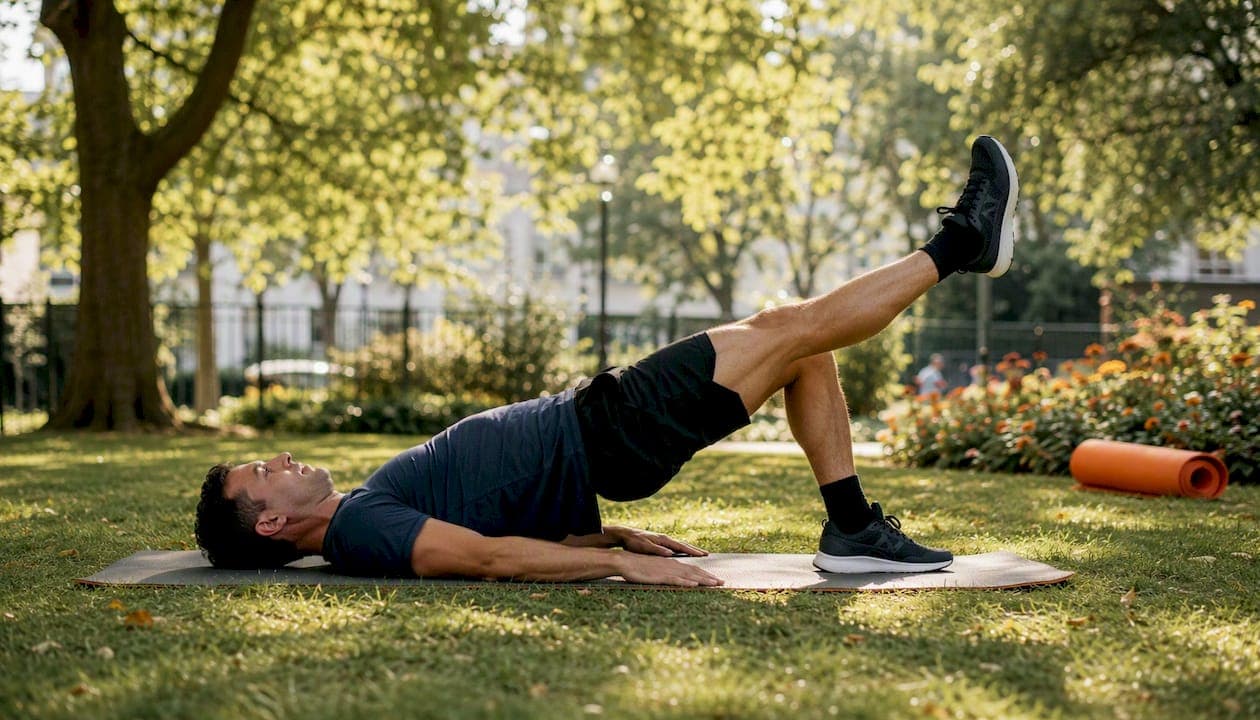
- Learn 6–8 runner-specific exercises with progressions. Dead bug, single-leg bridge, side plank, roll down, thread the needle, cat–cow, heel raises and scooter are the moves that transfer most directly to running mechanics.
- See a clinician if pain persists or worsens. Pilates is a training tool, not a substitute for physiotherapy assessment when symptoms are present. Parkstherapycentre offers clinical Pilates and physiotherapy assessment across Bedfordshire and Buckinghamshire.
Key takeaways
Pilates improves running economy and reduces injury risk when practised consistently at 2–3 sessions per week, with exercises matched to the specific demands of running gait and load management.
| Point | Details |
|---|---|
| Evidence base | A 12-week PLOS One trial showed improved 5-km times, reduced metabolic cost and lower trunk EMG in trained runners following a Pilates programme. |
| Recommended frequency | Aim for 2–3 sessions weekly; even one targeted session per week supports running injury prevention. |
| Key exercises to learn | Dead bug, single-leg bridge, side plank, roll down, thread the needle, scooter and heel raises transfer most directly to running mechanics. |
| Taper and scheduling | Replace high-load Pilates with low-impact sessions in the final 2–3 weeks before a marathon; avoid demanding sessions within 24 hours of key runs. |
| When to seek clinical support | Book a physiotherapy assessment for sharp pain, progressive swelling, numbness or gait changes; Parkstherapycentre offers clinical Pilates and assessment across Bedfordshire and Buckinghamshire. |
Table of Contents
- Why Pilates helps runners: mechanisms and evidence
- How to schedule Pilates around your runs and taper
- The best Pilates exercises for runners: purpose, cues and progressions
- Ready-to-use Pilates routines for runners
- What runners commonly get wrong with Pilates
- How Pilates fits with your strength work and weekly running plan
- A Parkstherapycentre clinical pathway: assessment, supervised Pilates and return to run
- Parkstherapycentre: clinical Pilates and physiotherapy for runners
- Sources
Why Pilates helps runners: mechanisms and evidence
Pilates is not passive stretching. It trains eccentric control and stabilisation of the deep core, pelvic floor and hip stabilisers, which are precisely the structures that prevent postural breakdown in the final kilometres of a long run. Women's Running describes Pilates as a "performance multiplier" for runners because it corrects the repetitive movement patterns that cause larger muscles to over-recruit and fatigue early.
Four mechanisms explain the transfer to running:
Trunk stability. A stable trunk reduces energy leakage through the torso with every stride. When the deep core holds position, the legs can generate force more efficiently.
Hip and glute control. Weak hip abductors and external rotators are among the most common contributors to running-related knee pain, IT band syndrome and hip impingement. Pilates targets these stabilisers through controlled, single-leg loading patterns that mirror the demands of the running gait.
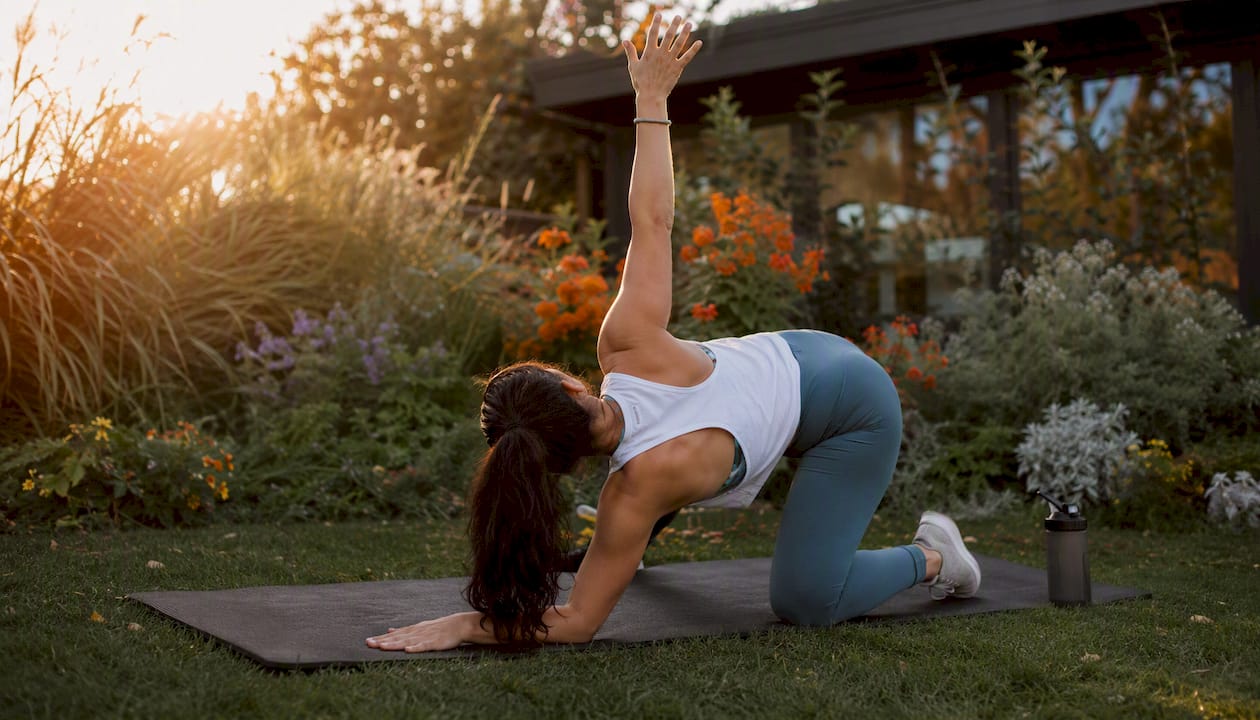
Thoracic mobility. Restricted mid-back rotation forces the lumbar spine and hips to compensate, increasing injury risk over high mileage. Exercises such as thread the needle and book openings restore the rotation that running demands.
Diaphragmatic breathing. Pilates teaches lateral 360-degree breathing, which improves respiratory efficiency and helps runners maintain form under fatigue.
The PLOS One trial that underpins much of the clinical interest in this area enrolled 32 trained runners, split evenly between a Pilates group and a control group, over 12 weeks. The Pilates group showed statistically significant improvements in 5-km performance, VO2max and a reduction in both metabolic cost and trunk electromyographic activity. The sample is small and the participants were already trained runners, so the findings may not apply equally to beginners or those with significant injury history.
| Outcome measured | Direction of change in Pilates group |
|---|---|
| 5-km run time | Improved significantly vs controls |
| Metabolic cost (Cmet) | Reduced |
| Trunk muscle activation (EMG) | Reduced |
| VO2max | Improved |
Statistic to note: The PLOS One trial used a 12-week programme with 32 participants. Results were statistically significant within that cohort, but independent replication in larger samples is still limited.
Practitioner consensus, reflected in GQ's clinical commentary on marathon training, positions Pilates as a complement to running rather than a replacement for mileage or load-based strength work. It targets the small stabilising muscles and body awareness that conventional gym training often misses.
How to schedule Pilates around your runs and taper
Frequency depends on your training phase and goals. A runner building base fitness can start with one 15–20 minute session per week and progress to two or three sessions of up to 45 minutes as the body adapts. Pilates instructors and coaches commonly recommend 2–3 sessions weekly as the frequency at which runners reliably see improvements in strength, posture and injury prevention.
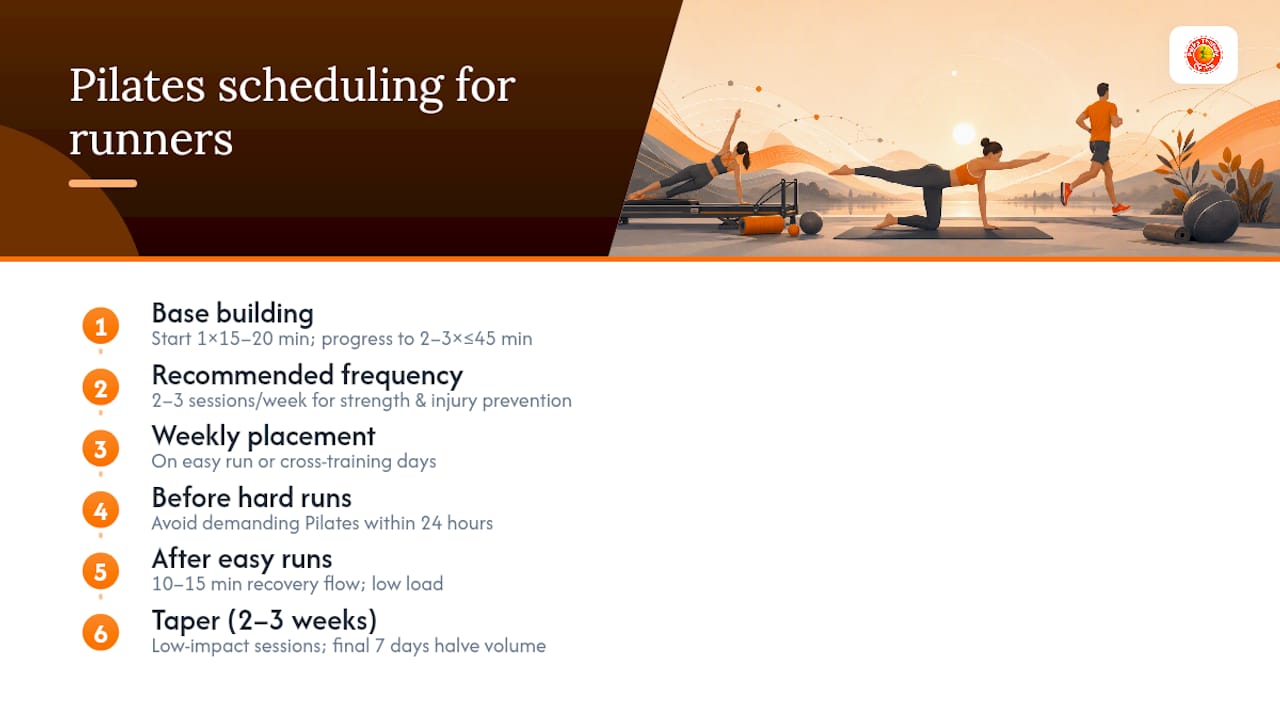
Placement within the week matters. Schedule Pilates on easy running days or cross-training days. Avoid a demanding Pilates class in the 24 hours before a key interval session or long run, as neuromuscular fatigue from Pilates can blunt the quality of hard efforts. After an easy run, a 10–15 minute Pilates recovery flow is well tolerated and supports circulation and mobility without adding meaningful load.
Short, frequent sessions tend to outperform infrequent high-intensity classes for neuromuscular re-education. A 15-minute session three times a week delivers more consistent movement-pattern reinforcement than a single 60-minute class once a fortnight.
Taper phase guidance. In the final 2–3 weeks before a marathon, replace any high-load Pilates work with low-impact, controlled sessions that maintain neuromuscular cues without adding fatigue. Physiotherapists recommend Pilates as a taper tool precisely because it preserves muscle tone and movement patterns without the impact or recovery cost of additional running. In the final seven days before race day, reduce intensity further: keep the breathing cues, the glute activation work and the spinal articulation, but cut volume by roughly half and avoid anything that leaves the muscles feeling worked the following morning.
The best Pilates exercises for runners: purpose, cues and progressions
Classical Pilates formats, including mat, reformer and tower work, are well suited to runners because they emphasise alignment and controlled, functional patterns. When choosing a class or instructor, prioritise those who focus on foot and ankle work, glute-to-core connectivity and pelvic control.
The eight exercises below are the ones that transfer most directly to running mechanics. Each entry includes the running-specific purpose, a beginner option and an intermediate progression.
-
Dead bug. Trains the cross-body timing and trunk stability that mirrors running gait. Beginner: lower one heel to the floor while extending the opposite arm overhead, keeping the lower back neutral. Intermediate: add a resistance band around the feet or hold a lightweight overhead. The most common error is allowing the lumbar spine to arch as the limbs extend — keep the ribcage heavy and the breath steady throughout.
-
Single-leg bridge. Targets glute max and hamstring strength in the hip-extension pattern used at push-off. Beginner: double-leg bridge with a focus on even pressure through both feet. Intermediate: single-leg bridge with the non-working leg extended, or add a slow three-second lowering phase.
-
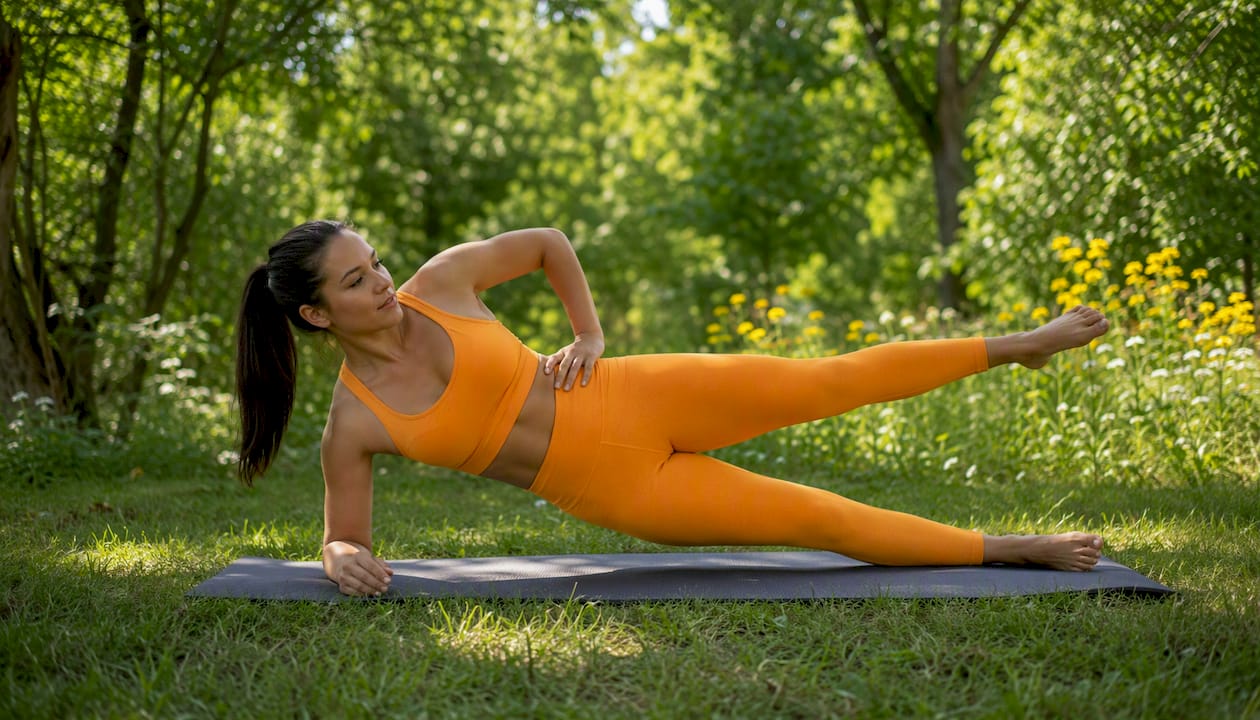
Side plank variations. Builds hip abductor and oblique strength to control lateral pelvic drop during single-leg stance. Beginner: side plank from the knees. Intermediate: full side plank with a hip dip or top-leg lift.
-
Scooter (standing leg pattern). Develops single-leg balance and glute-to-core connectivity in a standing position that closely replicates the running stance phase. Beginner: hold a wall or barre for support. Intermediate: perform without support, adding a small hip hinge on the standing leg.
-
Roll down. Articulates the spine sequentially, releasing thoracic and lumbar tension accumulated during running. Beginner: seated roll-back with bent knees. Intermediate: standing roll down with a slow, controlled return, pausing at each vertebral segment.
-
Thread the needle (book openings). Restores thoracic rotation, which is essential for arm swing and reducing compensatory lumbar movement. Beginner: side-lying with knees bent, rotating the top arm to the floor. Intermediate: increase the range of motion and add a breath hold at end range.
-
Cat–cow. Mobilises the full spinal column and reinforces diaphragmatic breathing rhythm. Beginner: slow, breath-led movement through full range. Intermediate: pause in each position and add a single-arm reach to introduce rotation.
-
Heel raises and walking on the spot. Standing Pilates activations that prime ankle stiffness and pelvic control before a run. Beginner: bilateral heel raises with hands on a wall. Intermediate: single-leg heel raises with eyes closed, or march on the spot with deliberate hip-flexor drive.
Pro Tip: Synchronise your lateral 360-degree breath with each movement phase: inhale to prepare, exhale on the effort or the point of greatest load. This breathing pattern activates the deep core before the limbs move and is the single most transferable Pilates skill for running economy. Pair it with deliberate glute activation at the start of each bridge or scooter repetition to reinforce the glute-to-pelvic-control connection that prevents hip drop mid-stride.
Ready-to-use Pilates routines for runners
Pre-run activation (5–8 minutes)
Stand near a wall for the first two exercises if balance is a limiting factor. The goal is to prime the neuromuscular system, not to fatigue it.
- Bilateral heel raises, 10 repetitions, slow and controlled
- Walking on the spot with deliberate hip-flexor drive, 30 seconds
- Standing roll down and return, 4 repetitions
- Single-leg balance with small hip hinge, 5 repetitions each side
- Standing cat–cow (hands on thighs), 6 breath cycles
Post-run recovery flow (10–15 minutes)
After a run, the priority shifts to spinal articulation, hip opening and diaphragmatic breathing to support circulation and reduce stiffness.
- Supine cat–cow, 6 breath cycles
- Double-leg bridge with slow lowering, 8 repetitions
- Thread the needle, 5 repetitions each side
- Supine single-knee-to-chest hold, 30 seconds each side
- Roll down from seated, 4 repetitions
- Lateral breathing in constructive rest position, 2 minutes
Weekly plan
| Session | Day type | Duration | Focus |
|---|---|---|---|
| Session 1 | Easy run day or rest day | 20–30 min | Core stability: dead bug, single-leg bridge, side plank |
| Session 2 | Cross-training or rest day | 30–45 min | Full mat routine: roll down, scooter, thread the needle, cat–cow |
| Session 3 (optional) | Day after long run | 10–15 min | Recovery flow: spinal articulation, hip opening, breathing |
Place Session 1 at least 48 hours before your key interval session. Session 3 is optional but particularly useful in marathon training blocks where the day after a long run is otherwise passive recovery.
What runners commonly get wrong with Pilates
Pilates is frequently misused by runners in ways that reduce its benefit or create new problems. The mistakes below are the most common.
- Treating Pilates as stretching. Pilates is active stabilisation under load. Approaching it passively, with loose alignment and minimal muscular engagement, removes the neuromuscular benefit entirely.
- Choosing high-intensity classes before hard sessions. A demanding reformer class the evening before a tempo run will compromise the quality of that session. Schedule accordingly.
- Neglecting breathing. Holding the breath during effort is the most common technical error. It disengages the deep core and defeats the purpose of the exercise.
- Using Pilates as a stand-alone fix for strength deficits. Pilates develops movement control and stabiliser endurance. Runners with significant glute or quad weakness also need load-based strength training, typically 1–2 sessions per week.
- Progressing too quickly. Moving to advanced variations before the beginner version is controlled and pain-free increases injury risk, particularly for runners with existing hip or lumbar complaints.
Red flags: when to stop and see a clinician. Modify or stop any exercise and book a physiotherapy assessment if you experience:
- New sharp or shooting pain during or after a session
- Progressive swelling around a joint
- Numbness or tingling in the legs or feet
- Unusual gait changes that persist after the session
- Pain that does not reduce with exercise modification
Modifying for common runner complaints. Runners with IT band syndrome should avoid deep side-lying hip work until symptoms settle and regress to double-leg bridges before single-leg loading. Those with plantar fasciitis should perform heel raises on a flat surface only, avoiding any toe-extension loading until a clinician clears progression. Achilles tendinopathy requires careful management of heel-raise volume and range; seek clinical Pilates guidance before progressing calf-loading exercises.
How Pilates fits with your strength work and weekly running plan
The sequencing rule is straightforward: keep heavy resistance sessions separate from high-mileage days, and use Pilates to improve movement control rather than to build maximal muscle bulk. Pilates and load-based strength training serve different purposes and work best when scheduled to complement each other.
A practical weekly structure for a runner training four to five days per week might look like this: two to three runs (one long, one interval, one easy), one to two targeted strength sessions (squats, deadlifts, single-leg press), and two to three Pilates sessions placed on easy or cross-training days. The Pilates sessions reinforce the movement patterns that strength training loads and that running demands.
Pilates after an easy run is a reliable pairing. The body is warm, movement quality is accessible, and the session adds neuromuscular work without meaningful additional fatigue. Placing Pilates before a strength session is less ideal because pre-fatiguing the stabilisers can reduce the quality of compound lifts.
During race preparation, Pilates becomes a taper tool. As running volume drops in the final two to three weeks, Pilates maintains the neuromuscular readiness built during training. GQ's marathon training guidance reflects practitioner consensus that Pilates supports hip control, core stability and spinal mobility across race distances without the recovery cost of additional mileage. Reduce Pilates intensity in the final week, but do not drop it entirely.
A Parkstherapycentre clinical pathway: assessment, supervised Pilates and return to run
Self-directed Pilates is appropriate for most healthy runners. Supervised clinical Pilates is preferable when a runner has a current injury, a history of recurrent problems, or is returning to running after a significant layoff. A clinician brings movement screening, load management and the ability to modify exercises in real time.
What a clinician will assess at an initial appointment:
- Running history: weekly mileage, recent load increases, race schedule
- Movement screens: single-leg squat, overhead squat, hip mobility assessment
- Mobility deficits: thoracic rotation, hip flexor length, ankle dorsiflexion
- Prior injuries: location, frequency, what has and has not helped
- Current symptoms: pain behaviour, aggravating and easing factors
A typical clinical pathway at Parkstherapycentre:
- Initial physiotherapy assessment (identifying deficits and setting outcome markers)
- Supervised clinical Pilates sessions (1–8 weeks, frequency determined by presentation)
- Progression review: reassess movement screens and running tolerance
- Transition to self-directed maintenance programme with a home exercise plan
- Return-to-run clearance based on objective outcome markers, not symptom absence alone
Rushing this phase is the most common reason for re-injury.
Pro Tip: Insurance acceptance varies by provider and policy. Parkstherapycentre accepts a range of health insurance plans — check with the clinic directly before your first appointment to confirm your cover and avoid unexpected costs.
A note from the clinic
Runners who integrate Pilates consistently and with clinical targeting tend to return to full training faster and with fewer recurrences than those who rely on rest alone. At Parkstherapycentre, the approach combines physiotherapy assessment with tailored Pilates progressions, so the exercises you practise are matched precisely to what your movement screen reveals. Modifications are always available, and no runner is expected to push through discomfort to make progress.
Parkstherapycentre: clinical Pilates and physiotherapy for runners
Runners in Bedfordshire and Buckinghamshire who want professional support alongside their training can access a full range of relevant services at Parkstherapycentre. The clinic has been delivering physiotherapy and specialist therapies since 1986, with a multidisciplinary team that includes physiotherapists, Pilates instructors and sports massage therapists.
Relevant services for runners include physiotherapy assessment, one-to-one and small-group clinical Pilates, sports massage and podiatry. A first appointment typically covers a full movement and running history assessment, identification of specific deficits, and the start of a tailored programme with clear outcome markers. Sports massage for runners and post-marathon recovery support are also available for those managing fatigue or soft-tissue tightness between training blocks.
Parkstherapycentre accepts a range of private health insurance plans. Online booking is available at Parkstherapycentre, where you can also find further information on Pilates for injury recovery and wellness and the clinic's full service listing.
Sources
- Pilates training improves 5-km run performance by changing metabolic cost and muscle activity in trained runners - PMC
- A beginner's guide to Pilates for runners - Women's Running
- Pilates for Runners: How the Workout Can Help You Train for a Marathon | GQ
- It's Official: These Are the Best Pilates Moves for Runners | Marie Claire UK