
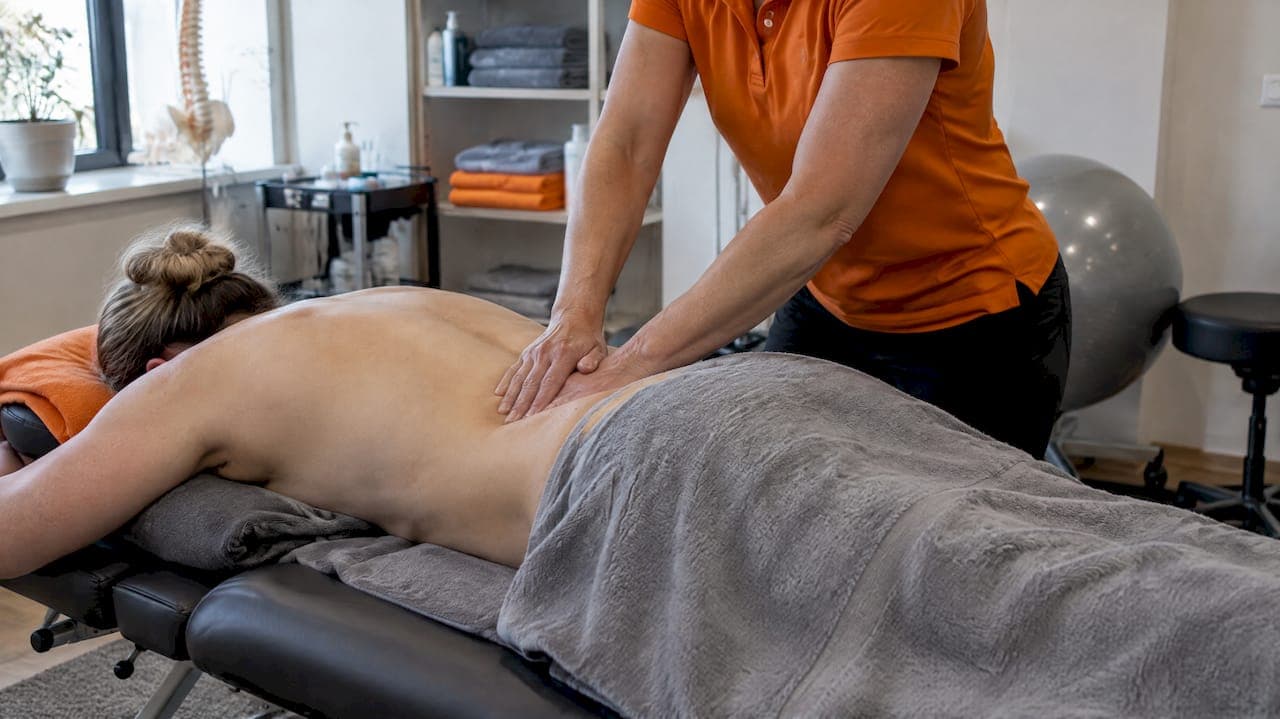
Massage often reduces back pain and improves short-term function, particularly when it forms part of a wider plan that includes exercise. The Cochrane review rates the supporting evidence as low to very low certainty, and NICE guidance recommends manual therapy only alongside an exercise programme. Some back symptoms need medical assessment before any hands-on treatment begins.
TL;DR:
- Massage can provide short-term pain relief and improve function, especially when combined with ongoing activity and exercise programs.
- Deep tissue and trigger-point therapies are more suitable for persistent or localized pain, but severe symptoms should be assessed clinically first.
- Red-flag symptoms such as bladder or bowel changes, weakness, or unexplained weight loss require urgent medical attention before massage treatment.
- Most courses involve around four sessions over two to four weeks, with progress tracked using pain ratings and functional outcomes.
- Massage works best as part of a comprehensive plan that includes active rehabilitation and movement exercises rather than as a standalone solution.
Table of Contents
- Types of massage and when each style may help
- What the evidence shows about benefits and limits
- Safety, contraindications and red flags
- What to expect during and after a session
- How massage fits with physiotherapy and exercise
- How often to try massage and how to judge progress
- Clinic view: assessment and combined care in practice
- Author perspective: a balanced, clinically informed view
- How we can help: book an assessment or treatment
- FAQ
- Sources
Types of massage and when each style may help
Different massage styles target different problems, so matching the technique to the symptom matters more than picking whatever sounds most intensive.
- Swedish massage uses lighter, flowing strokes and suits general tension, stress-related tightness and milder, diffuse discomfort.
- Deep tissue massage applies sustained pressure to deeper muscle layers and tends to suit chronic myofascial tightness or stubborn areas that have not responded to lighter work.
- Sports massage combines deep work with stretching and is often used around training loads, for post-exercise soreness or to prepare muscles before activity.
- Trigger-point therapy focuses on specific tender spots that refer pain elsewhere, useful when pain seems to radiate from one small area.
- Thai massage blends stretching, compression and joint mobilisation, which can suit people who want a more active, movement-based session.
Before booking, check that a therapist holds a recognised qualification, sits on a professional register and works within a defined scope of practice. A clinic that screens for red flags before treatment, as recommended in lumbar spine assessment guidance, is a reasonable marker of good practice.
What the evidence shows about benefits and limits
The Cochrane review of 25 trials involving 3,096 participants found massage outperforms inactive controls for short-term pain and function, though gains against active treatments were inconsistent and the certainty of evidence was rated low to very low. Benefits tend to fade over time unless massage is paired with ongoing activity.
Deep tissue massage has shown short-term improvements in lumbar range of motion and pain intensity in trials of office workers completing a short course, for instance four sessions over two weeks, though longer-term effects remain uncertain.
Soreness after treatment is common and usually settles within a day or two. A PubMed evidence note reports adverse events, mainly increased pain, in roughly 1.5% to 25% of participants across trials, a wide range reflecting differences in technique, pressure and trial design.

Safety, contraindications and red flags
Massage is not appropriate for everyone, and some back symptoms point to something more serious than muscular strain. A proper screening conversation before treatment protects you.
- Seek urgent medical review for new bladder or bowel changes, progressive leg weakness, numbness around the saddle area, unexplained weight loss or fever alongside back pain.
- A history of cancer, recent spinal fracture or unexplained systemic symptoms warrants medical assessment before any manual therapy.
- Anticoagulant medication, active infection near the treatment area or recent fracture are precautions that need discussion with your therapist or GP first.
Red-flag screening exists precisely to catch these less common but serious causes early. A competent therapist documents your history, current symptoms and any red flags before treatment, and gains informed consent for the techniques planned.
Pro Tip: Tell your therapist about any medication, recent injury or new symptom at the start of every session, even if you mentioned it before.
What to expect during and after a session
A typical back pain massage session follows a predictable pattern, which helps you know what is normal and what is not.
- The therapist takes a brief history, asks about your goals and screens for anything that needs onward referral.
- Treatment is applied to the agreed area, with pressure adjusted based on your feedback throughout.
- The session usually ends with short advice on stretches, posture or home exercises to support the work done.
- Mild soreness or tiredness for a day or so afterwards is normal; worsening pain, numbness or new neurological symptoms are not and should prompt a call to your therapist.
Before booking, ask about the therapist's qualifications, what a realistic treatment plan looks like and the clinic's cancellation or refund policy.
How massage fits with physiotherapy and exercise
NICE guidance NG59 recommends considering manual therapy, including massage, mobilisation or spinal manipulation, only as part of a treatment package built around exercise. Massage alone rarely delivers lasting change.
- Hands-on treatment can reduce pain and tension enough to let you move more freely and engage properly with exercise.
- Clinicians typically combine massage with progressive exercise prescription, clear goal setting and referral to other services such as Pilates when appropriate.
- Combined care tends to outperform massage used in isolation, because active rehabilitation builds the strength and control that keeps pain from returning.
Pairing manual therapy with structured movement, such as the approaches in our guide to lower back pain exercises, reflects this evidence-based sequencing rather than relying on massage as a stand-alone fix.
How often to try massage and how to judge progress
Most courses run for a defined period rather than indefinitely, with progress reviewed along the way.
- A common starting course is around four sessions over two to four weeks, after which progress is reassessed.
- Track pain on a simple 0 to 10 scale, alongside sleep quality, movement range and the functional tasks that matter to you.
- If there is no meaningful change after a full course, it is reasonable to change technique, address other factors such as activity levels, or escalate to a fuller clinical assessment.
Maintenance sessions, spaced further apart, suit some people once symptoms have settled and exercise has taken over as the main driver of recovery.
Clinic view: assessment and combined care in practice
A thorough assessment looks beyond the painful area itself. Clinics working from frameworks such as lumbar spine assessment guidance use symptom charting, a numerical pain rating scale and functional limitation mapping, alongside red-flag screening, to build a picture of what is actually going on before any treatment plan is agreed.
Within that structure, massage works as a tool rather than the whole answer: easing symptoms enough that a patient can take part in exercise or Pilates sessions that build lasting strength and control. This sequencing, hands-on relief first, active rehabilitation second, is a recommended approach to back pain assessments, and patients with reduced mobility following a severe episode may also benefit from guidance on walking frames in rehabilitation while they regain confidence to move.

Author perspective: a balanced, clinically informed view
Massage earns its place as a genuine symptom-management tool, not a long-term fix on its own. Choose a properly qualified therapist and insist on a plan that pairs hands-on treatment with real rehabilitation.
— Ivan
How we can help: book an assessment or treatment
We offer a combination of physiotherapy, sports massage, Pilates and acupuncture under one roof, accepting major health insurance plans so hands-on treatment and active rehabilitation can be coordinated within a treatment plan.
- A physiotherapy assessment helps identify whether massage, exercise or a combination suits your back pain best.
- Sports massage sessions can ease tension enough to support progress in Pilates or a home exercise programme.
- Acupuncture is available as an additional option where appropriate.
View current prices and book an appointment to get a plan built around your back pain rather than a single, isolated treatment.
This article is general information, not a substitute for advice from a qualified doctor. Consult a qualified healthcare professional about your own circumstances before acting on anything here.
FAQ
Is it good to get a massage with back pain?
For most people with non-specific back pain, massage is a reasonable option and the Cochrane review found it more effective than inactive controls for short-term pain and function. It works best alongside exercise rather than as a stand-alone treatment, and anyone with red-flag symptoms should seek medical assessment first.
What type of massage is best for severe back pain?
There is no single best style for everyone, since the right choice depends on whether the problem is muscular tightness, a specific trigger point or general tension. Deep tissue and trigger-point techniques are commonly used for more persistent or localised pain, while severe or worsening symptoms warrant clinical assessment before any massage is booked.
What not to do for back pain?
Avoid prolonged bed rest, as staying as active as symptoms allow tends to support recovery better than complete inactivity. Ignoring red-flag symptoms such as new bladder or bowel changes, progressive weakness or unexplained weight loss is also unwise, since these need prompt medical review rather than self-treatment.
How to get rid of unbearable back pain?
Severe or unbearable back pain needs clinical assessment rather than self-management, particularly to rule out serious causes using red-flag screening. Once serious pathology is excluded, a combination of manual therapy and an exercise-based plan, in line with NICE guidance, is the approach most likely to help.
Sources
- Cochrane review: Massage for low-back pain (PMC8734598)
- NICE guidance NG59: Low back pain and sciatica in over 16s — assessment and management
- MSK lumbar spine assessment | Right Decisions
- PubMed: Evidence note on massage trials (PMID 9919867)