
TL;DR:
- Modern injury screening assesses movement, strength, and vulnerabilities to prevent injuries before symptoms appear.
- Combining multiple assessment tools and considering individual sport demands improves injury risk prediction.
- Effective prevention requires personalized training, load management, and timely re-screening based on screening results.
Injury screening has moved well beyond a basic fitness check, yet many athletes and active adults across Bedfordshire and Buckinghamshire still assume that turning up to a training session without pain means they are injury-free. That assumption is quietly dangerous. Modern screening methods now assess how you move, how strong and symmetrical your body is, and where hidden vulnerabilities may lurk before they become full-blown injuries. Yet with a growing market of assessment tools comes real controversy around accuracy, commercialisation, and interpretation. This guide cuts through the noise to give you a clear, evidence-based picture of how injury screening works, what its results actually mean, and how to turn those results into a prevention plan that holds up in real life.
Table of Contents
- What is injury screening? Understanding its role
- Screening tools and tests: Practical methodologies
- Understanding results: Risk prediction, limitations and interpretation
- Prevention strategies after screening: From results to action
- A nuanced perspective on injury screening: Beyond the tests
- Connect with professional injury screening and preventative care
- Frequently asked questions
Key Takeaways
| Point | Details |
|---|---|
| Screening is multifactorial | Reliable injury risk assessment combines movement tests, history and workload analysis rather than relying on one tool. |
| Interpreting results demands nuance | Scores must be contextualised by sex, training demands and clinical history for meaningful prevention. |
| Take action on findings | Personalised prehab plans and regular follow-up are key to cutting injury risk based on screening outcomes. |
| Expert support adds value | Professional guidance ensures accurate testing, interpretation and implementation of prevention strategies. |
What is injury screening? Understanding its role
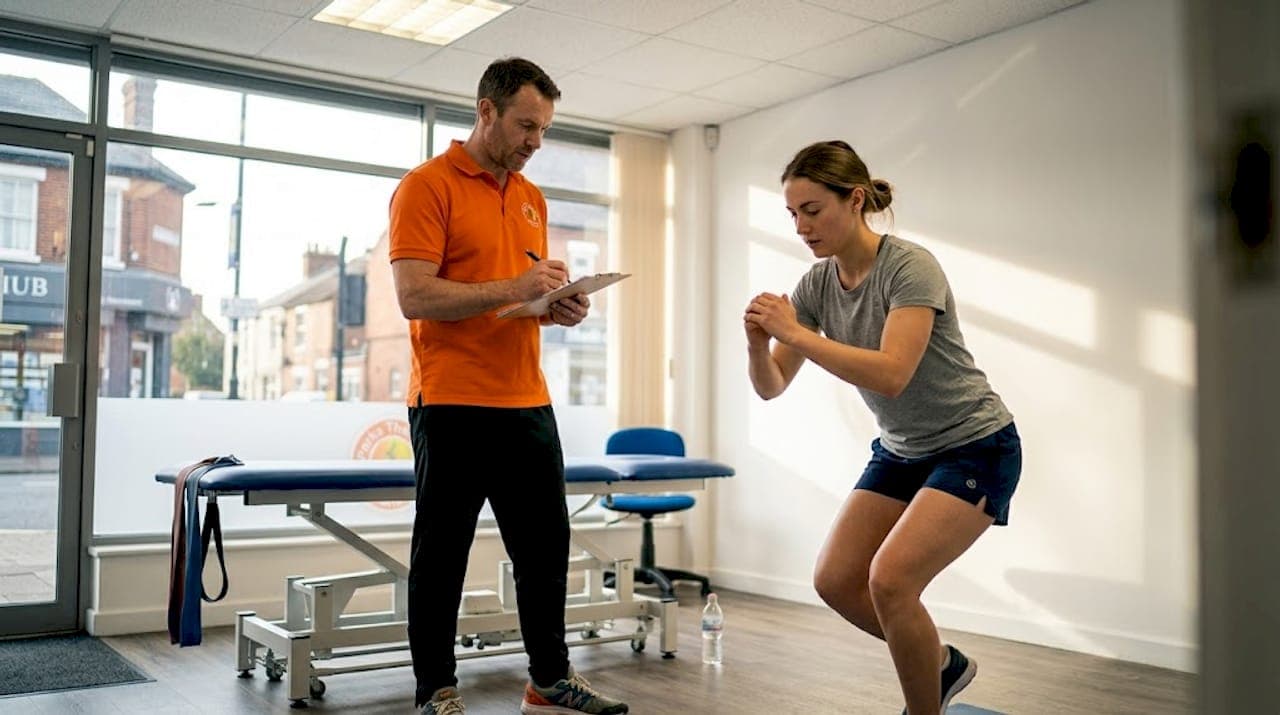
Injury screening is a systematic assessment process. It combines movement tests, strength measurements, flexibility checks, and a thorough review of your injury history to build a detailed picture of your physical risk profile. Unlike a standard medical consultation, screening is largely predictive. Its aim is to identify problems before symptoms appear, not after your knee swells or your shoulder locks up mid-match.
Think of it like an MOT for your body. A car can look perfect on the outside and still have a failing component that will cause a breakdown on the motorway. Screening looks under the bonnet.
The reasons clinicians, sports teams, and workplaces commission screening vary considerably:
- Baseline assessments before a season or a new training programme, to capture where you start
- Risk prediction to flag asymmetries, weaknesses, or movement faults that correlate with future injury
- Post-injury monitoring to determine safe return to play after rehabilitation, particularly relevant after ACL tears, hamstring strains, or ankle sprains
- Targeted intervention so that limited time and resources are directed at the individuals or movement patterns that carry the greatest risk
Methodologies used in thorough screening include the Functional Movement Screen (FMS), which evaluates seven fundamental movement patterns scored on a scale of 0 to 21, alongside Y-Balance Tests, biomechanical assessments, orthopaedic tests, handheld dynamometry for strength testing, range of motion checks, and sport-specific tasks such as the countermovement jump and drop vertical jump.
What separates good screening from a tick-box exercise is context. A single number on a score sheet tells you very little without understanding the demands of your sport, your training load over recent weeks, and your personal injury history. Experienced clinicians who work with managing injury patients regularly emphasise this point: no single tool gives you the full story.
"Multifactorial models that combine movement screens, load monitoring, injury history and sport-specific demands consistently outperform any single screening tool in predicting injury risk."
There are also some genuinely complex edge cases in screening where standard protocols need adjusting, including youth athletes going through growth spurts, pregnant women returning to exercise, and older adults with pre-existing degenerative changes. Screening for these groups requires both the right tools and an experienced eye interpreting the results. For a detailed look at how clinicians approach assessing sports injuries, the underlying principles of systematic assessment apply across all populations.
Screening tools and tests: Practical methodologies
Understanding the purpose of screening is one thing. Knowing which tools actually deliver useful information is another. The landscape of assessment methods is broad, and each tool has genuine strengths alongside real limitations.
The Functional Movement Screen (FMS) is the most widely recognised protocol. It scores seven movement patterns, including the deep squat, hurdle step, and shoulder mobility, each rated 0 to 3, for a maximum total of 21. The beauty of the FMS is its standardisation. Any trained clinician following the protocol produces comparable results, which makes it useful for tracking change over time and comparing groups. Its critics point out that FMS scoring does not capture the nuance of sport-specific demands, and that rater experience matters considerably.
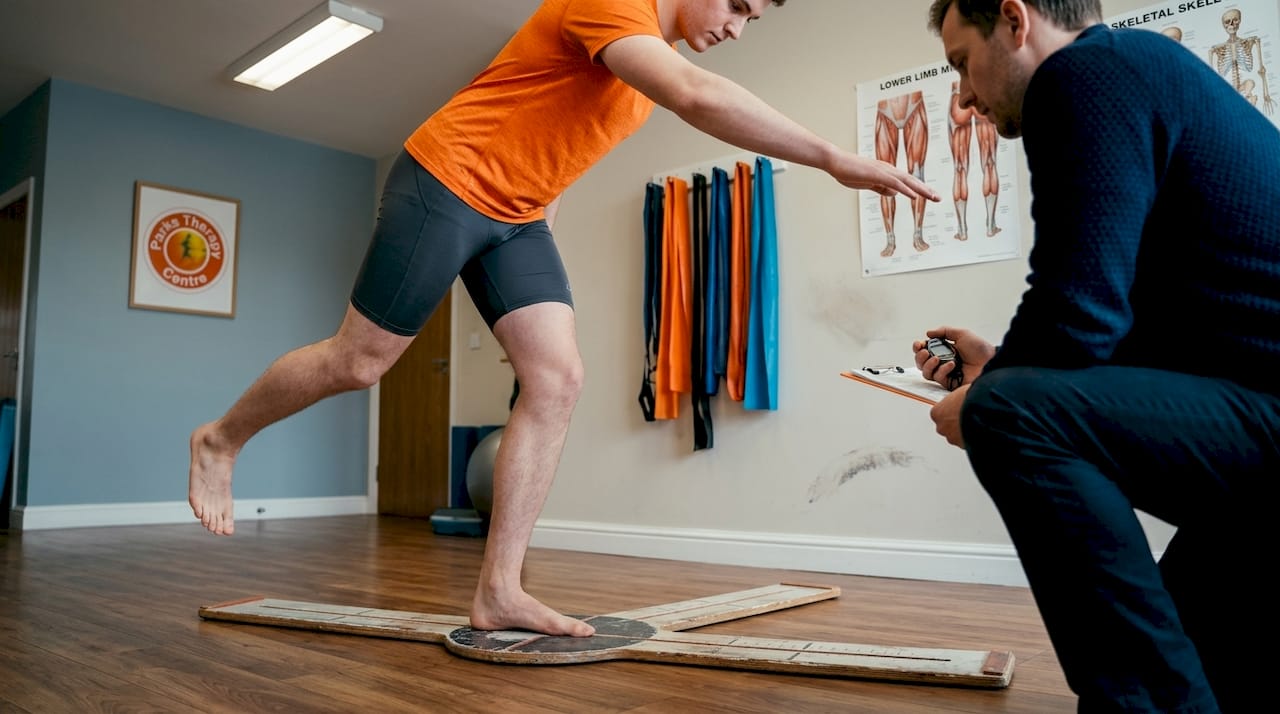
The Y-Balance Test (YBT) assesses dynamic balance and neuromuscular control. The athlete stands on one leg and reaches in three directions with the opposite foot, generating a composite score that reflects both mobility and stability. Research published in BMJ Open Sport and Exercise Medicine found that YBT asymmetry thresholds are clinically meaningful, with differences greater than four centimetres between limbs linked to elevated injury risk. It is particularly popular for screening lower limb injury risk in footballers and runners.
Biomechanical and orthopaedic assessments take a more clinical approach, examining joint mechanics, muscle activation patterns, and structural alignment. For musculoskeletal concerns, understanding biomechanics in injury screening provides crucial context that movement screen scores alone cannot offer.
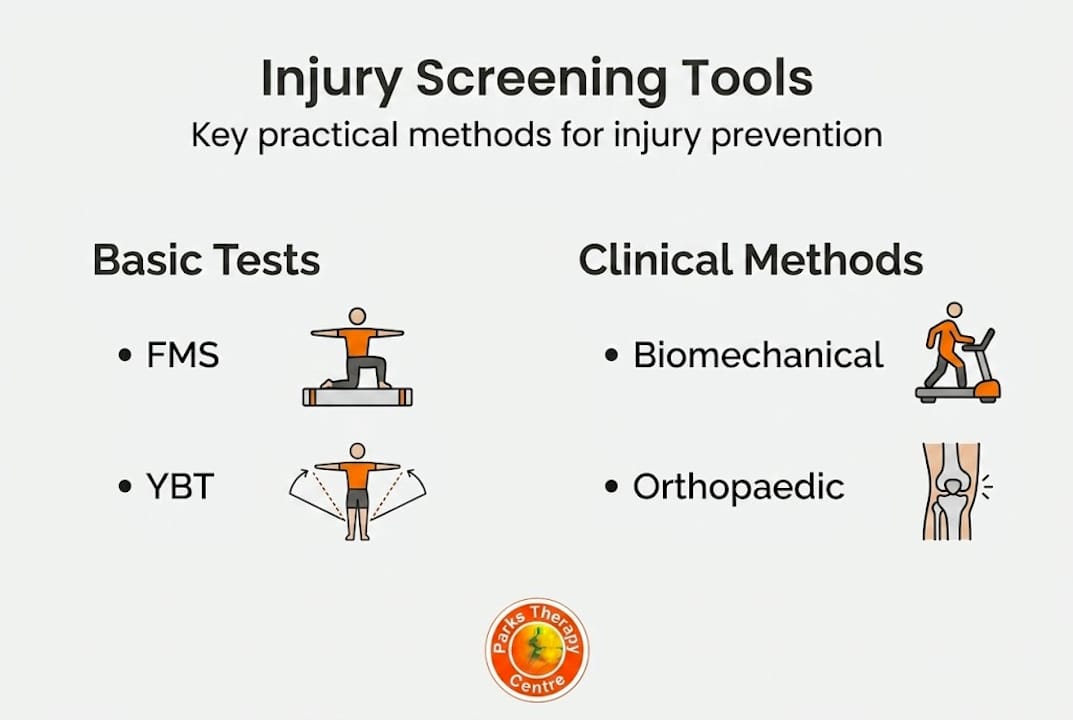
Here is a practical comparison of the three primary tools:
| Tool | What it measures | Strengths | Limitations | Best use |
|---|---|---|---|---|
| FMS | Movement quality across 7 patterns | Standardised, trackable over time | Limited sport specificity | General population, team screening |
| YBT | Dynamic balance, limb symmetry | Sensitive to asymmetry | Requires practice to administer | Lower limb risk, return-to-sport |
| Biomechanical assessment | Joint mechanics, muscle activation | Highly specific, clinical detail | Time-intensive, requires expertise | Musculoskeletal injury workups |
| Dynamometry | Muscle strength, bilateral ratios | Objective, quantifiable | Equipment cost, protocol variation | Hamstring/quad balance, post-injury |
A useful sequence for any screening session looks like this:
- Complete a detailed injury and training history review
- Administer the FMS to capture overall movement quality
- Use the YBT to assess dynamic balance and identify asymmetries
- Add orthopaedic or strength tests relevant to the individual's sport or complaint
- Combine all data to generate a risk profile before recommending interventions
Pro Tip: Resist the temptation to rely on just one score. A person who passes the FMS with 15 points but shows a 6-centimetre YBT asymmetry is still carrying meaningful risk. Using multiple tools together gives you a far more reliable picture, which is central to good injury prevention for athletes at every level.
Understanding results: Risk prediction, limitations and interpretation
Performing screening tests is only half the job. Knowing what the numbers mean for your actual risk of injury is where many people, and some practitioners, stumble.
For the FMS, a total score of 14 or below is associated with higher injury risk, with an odds ratio of 2.32 (95% CI 1.54 to 3.48). That means athletes scoring below 14 are more than twice as likely to sustain an injury compared to those above the threshold. However, cut-off points shift depending on sex: for men the meaningful threshold tends to sit at 11 to 12, while for women it is closer to 14 to 15. Prognostic accuracy is moderate in females but remains low in males, which is a critical nuance often glossed over.
For the YBT, an asymmetry of more than four centimetres between limbs carries an odds ratio of 2.16 for injury. When you combine both a low FMS score and a significant YBT asymmetry, the combined predictor reaches an odds ratio of 3.57, making it the strongest currently available composite predictor.
What does your risk score actually mean in practical terms?
- A score above threshold does not guarantee you will stay injury-free
- A score below threshold does not mean injury is inevitable
- Scores should always be interpreted alongside training load, fatigue levels, previous injury sites, and your specific sport's demands
- Re-screening after an intervention matters: exercise programmes can improve FMS scores by 1.7 to 2.9 points, but score improvement does not always translate to proportional injury reduction
The FMS and YBT nuances around population variability are also worth noting. A recreational runner in their forties and a semi-professional footballer at twenty-two may both score 13 on the FMS, but the clinical implications are entirely different.
A thorough step-by-step prevention guide will always contextualise screening data rather than treat it as a standalone verdict. Similarly, physiotherapy risk reduction works best when built around an individual's full clinical picture rather than a single test result.
Prevention strategies after screening: From results to action
Receiving your screening results is only valuable if those results lead to meaningful action. This is where many well-intentioned screening programmes fall short: the data is collected, the report is filed, and nothing changes in training or daily movement habits.
Effective prevention after screening involves a structured, personalised approach built around your specific findings. Research confirms that customised prehab plans incorporating strength work, core stability, neuromuscular training, load management, and gait analysis consistently outperform generic exercise protocols.
Here is a practical framework for turning results into action:
- Identify priority movement faults from your screening, focusing on the patterns with the lowest scores or greatest asymmetry
- Set a six-week targeted training block addressing those specific faults, such as single-leg strength work for a YBT asymmetry or hip mobility work for a failed deep squat
- Incorporate load management by tracking weekly training volume and ensuring rest-to-work ratios support tissue adaptation rather than cumulative overload
- Add gait analysis if you are a runner or walker with lower limb findings, since subtle foot strike or hip drop patterns often underlie recurring injuries
- Re-screen at six to eight weeks to measure whether the intervention is producing movement quality improvements
- Seek interdisciplinary input when findings are complex, as physiotherapy, podiatry, and sports conditioning each contribute different expertise
The benefits of a structured prehab approach go well beyond injury statistics:
- Improved neuromuscular control reduces load on passive structures like cartilage and ligaments
- Strength training around identified weaknesses builds resilience over time
- Early identification of individualised rehab needs prevents minor issues from becoming significant ones
- Regular monitoring keeps you accountable and ensures training adapts as your body changes
A good sports injury prevention guide will include load management alongside movement quality work. For athletes with previous knee problems, knee injury prevention tips provide specific guidance on protecting the most commonly screened joint.
Pro Tip: Start your prevention programme within two weeks of receiving your screening results. The longer the gap between assessment and action, the more likely life and training will fill the space. Set a specific appointment to review your findings with a physiotherapist rather than attempting to design your own plan from a printout.
A nuanced perspective on injury screening: Beyond the tests
Here is something mainstream screening articles rarely say plainly: injury screening carries real commercial pressures that can distort how it is sold and interpreted. The FMS, in particular, is a proprietary product. Its widespread adoption owes as much to effective marketing as it does to unambiguous clinical evidence. That does not make it useless. It does mean you should ask your practitioner not just "what did my score show?" but "how confident are you in this result and what else are we measuring?"
Edge cases in screening reveal where standard protocols genuinely struggle. Youth athletes going through growth spurts may score poorly on mobility tasks simply because their bones are growing faster than their soft tissue. Returning to sport post-injury requires achieving at least 90% symmetry between limbs before full clearance, yet many screening protocols do not build this threshold in automatically. Female athletes often require different FMS cut-offs to those applied to male athletes, and applying a blanket threshold misses this entirely.
Rater experience also matters far more than most resources acknowledge. Consistent FMS scoring requires more than 100 practice trials to achieve reliable inter-rater agreement.
"A single movement screen score, interpreted in isolation by an inexperienced rater, tells you almost nothing clinically useful. It is the pattern across multiple assessments, combined with history and load data, that creates genuine predictive power."
Our recommendation, informed by years of working with athletes and active adults across Bedfordshire and Buckinghamshire, is to treat screening as the beginning of a conversation rather than a verdict. Pair your results with a frank discussion of your training habits, past injuries, and goals. Use the step-by-step guide as a framework, but insist on ongoing reassessment rather than a one-off snapshot.
Connect with professional injury screening and preventative care
Understanding screening tools and risk scores is genuinely useful, but translating that knowledge into a structured, personalised prevention plan requires the right expertise and equipment.
At The Parks Therapy Centre, our physiotherapy and sports injury teams across Bedfordshire and Buckinghamshire offer thorough injury screening services using current, evidence-based assessment tools. We combine movement screening with clinical history review, strength testing, and biomechanical analysis to build a complete picture of your risk profile. From there, we design prehab and prevention programmes tailored specifically to your sport, lifestyle, and goals. Whether you are returning from injury, preparing for a new season, or simply want to understand your body better before pain becomes a problem, our team is ready to help you take that first step.
Frequently asked questions
What is the Functional Movement Screen (FMS) and how is it scored?
The FMS assesses seven movement patterns, scoring each from 0 to 3 for a maximum of 21 points, with lower scores indicating a higher likelihood of injury.
Are injury screening tools like FMS or YBT effective for everyone?
Screening tools show moderate predictive accuracy in some populations but limited and inconsistent validity across others, making clinical history and workload analysis essential alongside any score.
What should I do after receiving my injury screening results?
Use your results to build a personalised prehab programme with strength and neuromuscular training, as post-screening interventions such as load management and gait analysis consistently reduce risk more effectively than rest alone.
Can screening help prevent sports injuries in youth and older adults?
Yes, though with important caveats. Growth-related screening nuances in youth athletes and early overuse patterns in older adults mean that standard protocols need adjusting for these groups rather than applying a single approach across all ages.
Does improving FMS scores always reduce injury risk?
Not directly. While resistance training can raise FMS scores by 1.7 to 2.9 points, the evidence linking higher scores to proportionally fewer injuries remains mixed, which is why prevention plans must address the underlying movement and load factors, not just the number on the screen.