
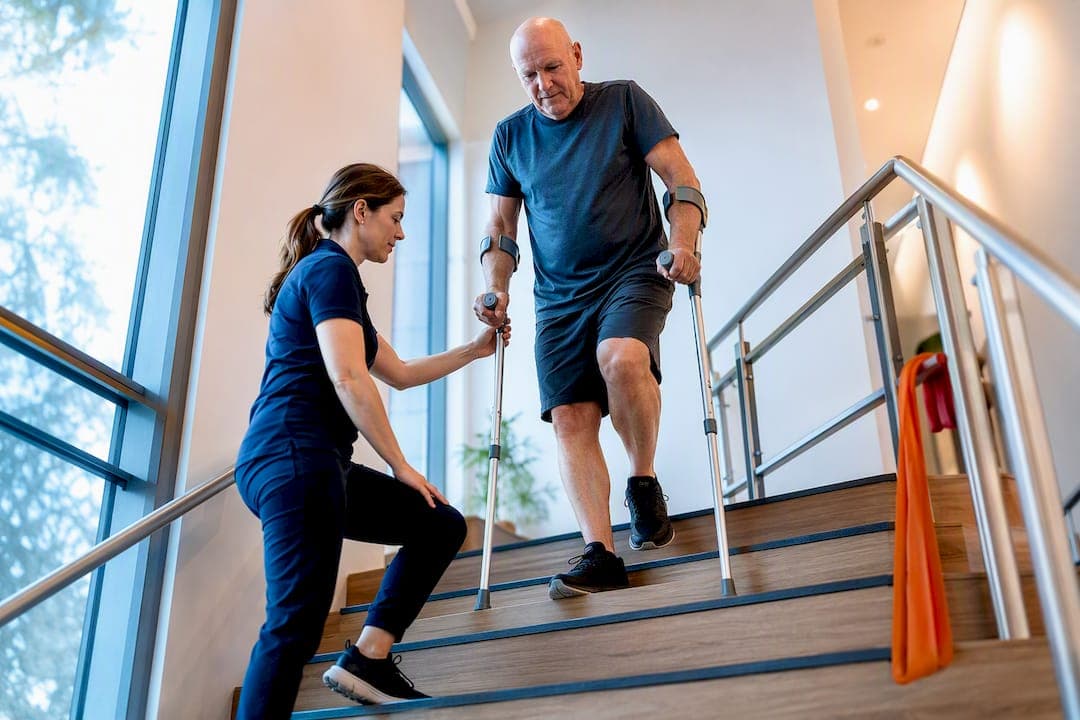
Most patients resume basic daily activities within 2 to 3 months of surgery, with full functional recovery typically arriving between three and six months. Hip replacement rehab begins on day one, with simple bed exercises and supported walking, then progresses through structured phases as strength and confidence return. The single most useful thing you can do now is start your supervised exercises straight away, follow your personalised home programme consistently, and keep your physiotherapist informed of anything that feels wrong.
TL;DR:
- Patients typically regain basic daily activities within 2 to 3 months, with full recovery often occurring between three and six months, depending on individual progress.
- The rehabilitation process follows specific phases: initial protection and early movement for 0 to 3 weeks, building active movement from 4 to 6 weeks, strengthening and normal activity from 7 to 12 weeks, and maintaining function beyond 12 weeks.
- Early exercises like ankle pumps, gluteal squeezes, and heel slides should be performed daily in the first weeks, with resistance and aerobic training gradually increasing as pain and swelling decrease.
- Safe movement techniques, including proper stair navigation and transfer methods, are crucial to avoid dislocation risks during the initial recovery period.
- Ongoing support from physiotherapists, including tailored assessments and supervised sessions, improves recovery outcomes and reduces the risk of setbacks.
Table of Contents
- What are the phases of hip replacement rehab?
- A progressive hip replacement exercise programme
- Moving safely: transfers, stairs and walking aids
- Precautions, warning signs and what's normal
- Choosing the right rehab setting and physiotherapy support
- How Parkstherapycentre approaches hip replacement rehab
- Nutrition and diet to support healing
- A clinician's view on rebuilding trust in your new hip
- Book your hip replacement rehab plan with Parkstherapycentre
- Sources
- FAQ
What are the phases of hip replacement rehab?
Hip replacement recovery follows a fairly predictable pattern, and knowing what belongs in each stage helps you judge whether you're progressing normally or need to flag something to your care team. Clinical guidance from the NHS and a peer-reviewed rehabilitation phases review both describe recovery as criterion-based rather than strictly calendar-based. Some people move through phases quicker; others need longer at each stage, and that's entirely normal.
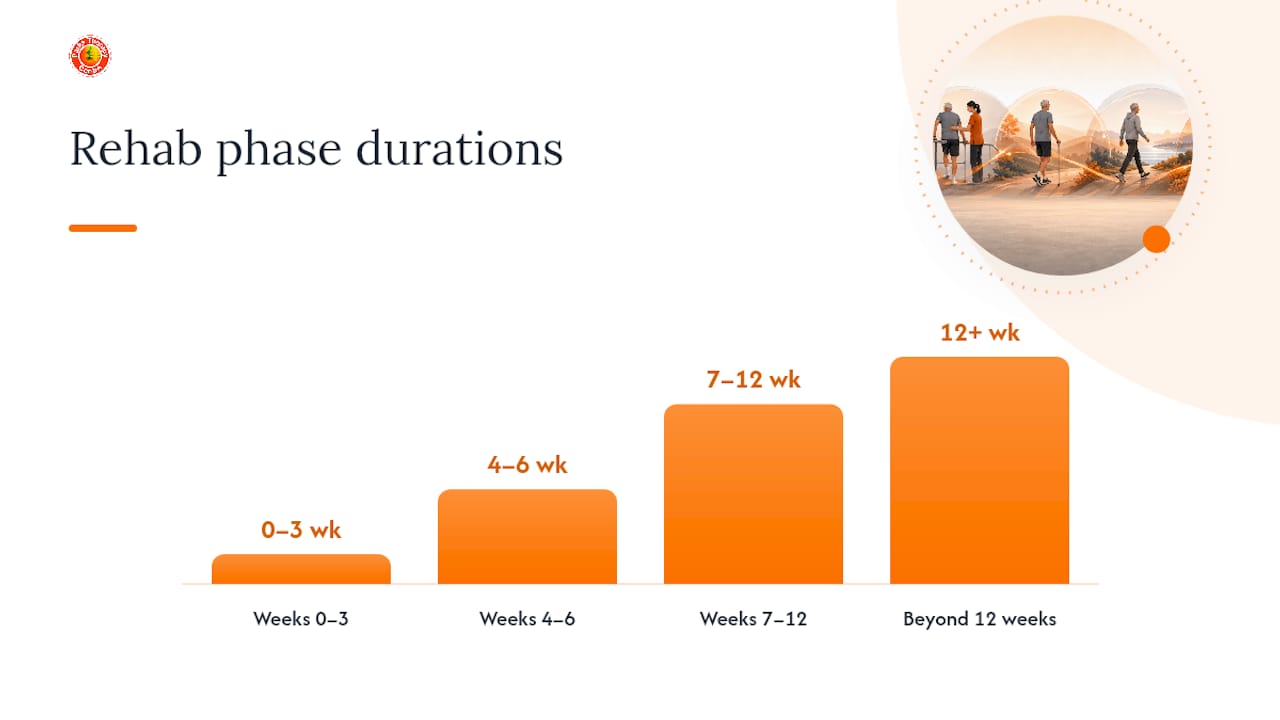
Weeks 0 to 3: protection and early movement. This phase is about controlling pain and swelling while restoring basic independence. You'll be doing bed exercises, learning safe transfers in and out of bed or a chair, and walking short distances with a frame or crutches. Most people are managing stairs with support and performing light household tasks by the end of this window.
Weeks 4 to 6: building active movement. Pain should be settling and your walking aid use reducing. This is when physiotherapists typically introduce more active range-of-motion work, standing balance drills, and gentle resistance or stationary cycling.
Weeks 7 to 12: strengthening and return to normal life. Expect advanced strengthening, proper balance training, and a gradual return to low or medium-impact activities such as swimming, golf, or longer walks. Supervised sessions often reduce in frequency once you're hitting functional targets consistently.
Beyond 12 weeks: maintenance and full function. Higher-demand activities, sport-specific conditioning, or a return to physically demanding work fit into this later stage. Continued strength work protects the joint long-term, even once you feel fully recovered.
- Weeks 0 to 3: pain control, bed exercises, safe transfers, short supported walks
- Weeks 4 to 6: active range of motion, standing exercises, light resistance and cycling
- Weeks 7 to 12: advanced strengthening, balance work, low or medium-impact activity return
- Beyond 12 weeks: long-term maintenance, higher-demand activity, sport-specific progression
A progressive hip replacement exercise programme
A good hip replacement rehab programme moves through distinct stages, each building on the strength and mobility gained in the last. What follows mirrors the exercise structure used in patient leaflets from the OrthoInfo/AAOS guide, the RNOH exercise pack, and hospital patient information such as the ULH total hip replacement exercise sheet.
- Ankle pumps. Point your toes up and down rhythmically. These get started almost immediately, often in the recovery room, and help circulation before you're even standing.
- Gluteal squeezes. Tighten your buttock muscles and hold for five seconds. Do 10 repetitions every couple of hours in the early days, exactly as most hospital exercise sheets recommend.
- Static quad sets. Push the back of your knee down into the bed and hold. This wakes up the thigh muscle that supports your new joint without stressing the hip itself.
- Heel slides. Slide your heel towards your buttock, bending the knee and hip within your comfort range, then slide back out.
- Mini-squats. Once you're standing confidently, shallow squats using a countertop or rail build functional strength for sitting and rising.
- Standing hip abduction. Holding support, lift the operated leg sideways without leaning your trunk. This targets the gluteal muscles that stabilise your pelvis and reduce limping.
- Marching in standing. Lift each knee gently while holding support, improving hip flexor control and balance simultaneously.
- Straight-leg raises. Lying down, keep the knee straight and lift the leg a few inches, building quad and hip flexor strength together.
Early bed exercises are usually done for 20 to 30 minutes, two to three times daily, matching the frequency recommended in OrthoInfo's exercise guide. As you move into weeks four to six, sets typically increase from one to two or three, and reps from 10 to 15 or 20, provided pain stays controlled.
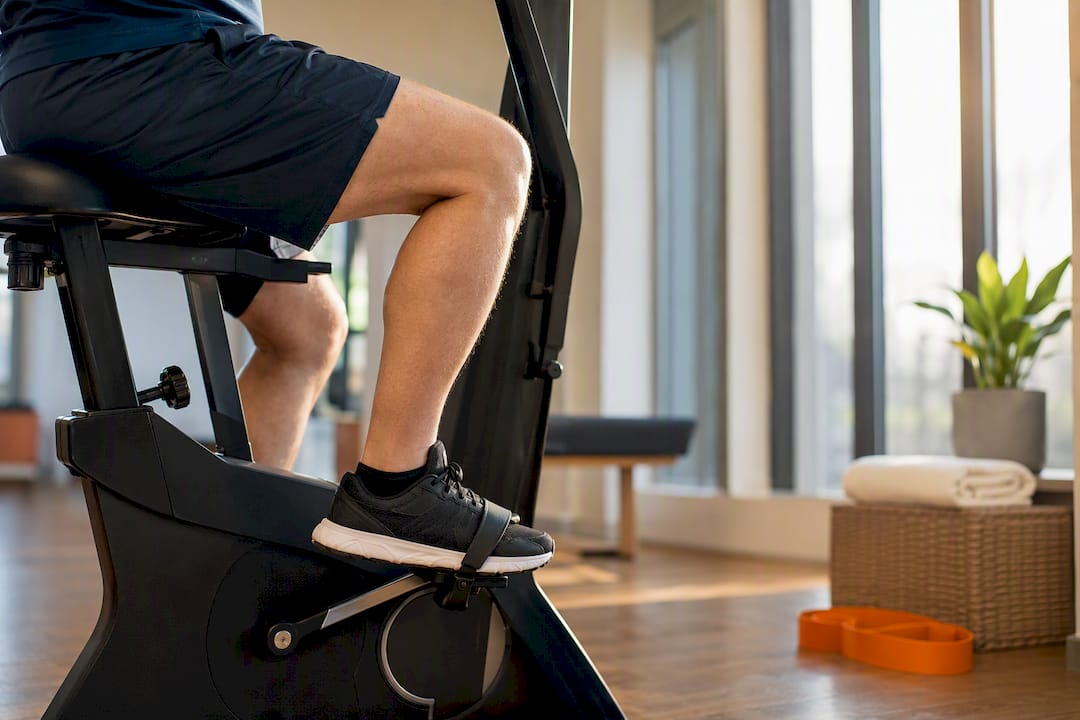
Cardiovascular work usually starts with a stationary bike. Set the seat higher than usual initially and pedal backwards before attempting forward pedalling, gradually lowering resistance and seat height as your range improves. Walking progresses from five or ten minutes at a time to 20 or 30 minutes as endurance builds.
Resistance bands or light ankle weights are generally introduced once pain is well controlled, your gait looks steady without a limp, and swelling has settled from its early peak. That's a clinical judgement your physiotherapist will make with you rather than a fixed date.
Pro Tip: Keep a simple tally of your reps and walking distance each day. Small numbers on paper make slow progress visible, and that visibility is often what keeps people consistent through the frustrating middle weeks.
Moving safely: transfers, stairs and walking aids
Everyday movement carries real risk in the early weeks if it's done carelessly, so technique matters as much as the exercises themselves.
- Sitting and standing: push up through the armrests rather than pulling on furniture, and slide the operated leg slightly forward before you sit down.
- Stairs: lead with your unoperated leg going up and your operated leg going down, following the standard rule of "up with the good, down with the bad." Practise on a single step before attempting a full flight.
- Walking aids: most patients move from a frame to crutches to a single stick as strength returns, holding the aid in the hand opposite the operated hip once you're down to one crutch or cane.
- Home adjustments: a raised toilet seat, a grabber tool, and a long-handled shoehorn all reduce the bending and twisting that can strain a new hip during ordinary tasks.
Getting these basics right early reduces falls risk and builds the confidence you'll need before tackling more demanding parts of your hip replacement rehab programme.
Precautions, warning signs and what's normal
Certain movements carry a genuine dislocation risk in the first weeks after surgery, and your surgical team will tell you which precautions apply to your specific approach and implant.
- Avoid bending the hip beyond roughly 90 degrees (deep chair seats and low sofas are common culprits)
- Don't cross your legs at the knee or ankle
- Avoid twisting or rotating the operated leg inward unless your team says otherwise
- Don't force range of motion through pain
Swelling around the hip and thigh is a normal part of recovery and can persist for three to six months after surgery. It doesn't mean healing has stalled. Elevation, compression, and ice, alongside continued gentle movement, manage it far better than resting completely.
When to seek urgent review: a fever, spreading redness, or discharge from the wound; sudden severe pain unrelated to activity; new numbness or weakness; calf swelling and tenderness; or breathlessness and chest pain. Any of these warrant a same-day call to your surgical team or GP rather than waiting for your next scheduled appointment.
Choosing the right rehab setting and physiotherapy support
Where you do your hip replacement rehab matters almost as much as what exercises you do. Inpatient rehabilitation suits people with limited home support or additional mobility complications, offering daily supervised sessions before discharge. Most patients, though, move straight to outpatient or community physiotherapy, typically starting within the first one to two weeks after surgery.
- NHS outpatient physiotherapy: structured, evidence-based, but appointment frequency can be limited by local demand.
- Private physiotherapy: faster access and often more frequent early sessions, useful if you want closer monitoring through the first six weeks.
- Home visits: valuable in the first fortnight if getting to a clinic is difficult, though they usually transition to clinic-based sessions once mobility improves.
Early on, two to three sessions a week is a common pattern, tapering as you progress. Physiotherapists commonly track progress using simple, repeatable measures such as gait speed, the 30-second chair stand, and the timed up-and-go test, which give an objective read on whether you're ready to reduce supervision. At your first assessment, bring details of your surgical approach, any imaging reports, and a list of current pain medication, and ask what functional milestones will determine your next phase.
How Parkstherapycentre approaches hip replacement rehab
Effective hip replacement physiotherapy depends on getting the assessment right before a single exercise is prescribed. At Parkstherapycentre, that means understanding your surgical approach, your baseline mobility, and your personal goals, whether that's walking the dog again or returning to the golf course.
Progress after hip replacement is rarely a straight line. The role of good physiotherapy is to keep adjusting the plan, scar tissue mobilisation here, swelling management there, so the exercises stay one step ahead of what the joint is ready for, not behind it.
A typical clinic workflow starts with an initial assessment, moves into a tailored home exercise programme, and includes regular review points where reps, resistance, and balance demands are increased based on how the hip is actually responding, not just how many weeks have passed. Practical modifications, such as gentle scar mobilisation once the wound has healed, or adjusting exercise order to manage swelling, are the kind of detail that separates a generic sheet from a plan that actually fits you.
Nutrition and diet to support healing
Tissue repair after major joint surgery has real nutritional demands, and what's on your plate genuinely affects how quickly you regain strength. Protein deserves particular attention, since muscle around the new joint has been disturbed during surgery and needs building blocks to rebuild. Lean meat, fish, eggs, dairy, and legumes at each meal give your body a steady protein supply through the early weeks.

Vitamin C and zinc both support wound healing, found in citrus fruit, peppers, leafy greens, nuts, and seeds. Calcium and vitamin D matter too, given bone remodels around the new implant; dairy, fortified plant milks, and oily fish cover much of this, though many people also benefit from a vitamin D supplement, particularly over autumn and winter months.
Fibre and fluid intake often get overlooked but matter enormously in the first fortnight, when reduced activity and pain medication can slow digestion considerably. Wholegrains, vegetables, and consistent water intake help avoid constipation, which is uncomfortable and can indirectly limit how much you want to move.
Weight matters mechanically too. Extra load through a new hip joint slows recovery and increases strain, so maintaining a steady, sensible calorie intake rather than over- or under-eating supports both healing and your exercise capacity.
A clinician's view on rebuilding trust in your new hip
Fear of "doing damage" is the most common barrier I see, and it's understandable. You've had major surgery, and every twinge feels significant. But people with anxiety about their recovery often report more pain, which can create a cycle that slows genuine progress.
Trust rebuilds through small, repeated wins, not one dramatic breakthrough. Track your walking distance or exercise reps in a simple diary rather than chasing perfection each session. If something feels persistently wrong, say so early. Your physiotherapist would always rather adjust the plan in week three than discover a problem in week ten.
— Ivan
Book your hip replacement rehab plan with Parkstherapycentre
A multidisciplinary approach supports patients through musculoskeletal recovery, providing coordinated care rather than piecing together separate specialists. For hip replacement rehab specifically, that means physiotherapy assessment and treatment sessions alongside Pilates classes for building the hip stability and control that standard exercise sheets can't always deliver on their own.

Your first appointment starts with a full assessment of your surgical history, current mobility, and pain levels, from which your physiotherapist builds a home exercise programme tailored to your actual progress rather than a generic timeline. Sessions run alongside major health insurance plans, and pricing is transparent: a Physiotherapy Assessment costs £76, with follow-up Physiotherapy Treatment sessions at £67, and Pilates Group Sessions available at £9 per class for those wanting ongoing hip stability work once formal rehab winds down.
If you're weeks into recovery and unsure whether you're progressing normally, or you're pre-surgery and want a plan ready for day one, get in touch to book an assessment and start a rehab programme built around your actual hip, not an average one.
This article is general information, not a substitute for advice from a qualified doctor. Consult a qualified healthcare professional about your own circumstances before acting on anything here.
Sources
- Recovering from a hip replacement (NHS)
- Total hip replacement exercises (ULH patient information PDF)
- Total hip replacement exercise guide (AAOS / OrthoInfo)
- Rehabilitation phases, precautions and mobility goals following total hip arthroplasty (PMC review)
- A patient's guide to total hip replacement exercise pack (RNOH)
FAQ
What is the rehab time for a hip replacement?
Most patients regain basic daily activities within 2 to 3 months, with full functional recovery typically reached between three and six months. Higher-demand activities and sport-specific conditioning can take longer, depending on your starting fitness and job demands.
What is the hardest part of hip replacement recovery?
Many patients find the psychological adjustment, trusting the new joint enough to move normally, harder than the physical exercises themselves. Anxiety during recovery is linked to reporting more pain, which is why steady, incremental progress and open communication with your physiotherapist matter as much as the exercises.
What can you never do again after hip replacement surgery?
There's no universal list of permanently banned activities; restrictions depend on your surgical approach and implant type, and most precautions like avoiding extreme hip flexion or crossing your legs are temporary rather than lifelong. Discuss your specific long-term precautions with your surgical team, since guidance genuinely varies by procedure.
Is it better to go to rehab after hip replacement surgery?
Structured rehab, whether inpatient, outpatient, or private physiotherapy, generally produces better and faster outcomes than recovering without professional guidance. Services like a Physiotherapy Assessment at Parkstherapycentre, priced at £76, give you a personalised programme with someone tracking your progress against functional targets rather than guesswork.