

Repetitive strain injury (RSI) is pain, weakness, or dysfunction caused by repeated strain on muscles, tendons, or nerves, most commonly in the shoulders, elbows, forearms, wrists, and hands. The NHS defines RSI as pain caused by repeated use of a body part, with symptoms that typically begin gradually and worsen without intervention. Understanding what RSI is, how it progresses, and what treatment options are available in the UK gives you the clearest path to recovery.
Table of Contents
- What is repetitive strain injury and how does it affect you?
- What causes repetitive strain injuries?
- How to manage RSI symptoms at home
- Professional treatment options for RSI in the UK
- How to prevent RSI through ergonomics and lifestyle changes
- What to expect during RSI recovery
- When should you see a GP or seek a referral in the UK?
- Parkstherapycentre: expert RSI care in Bedfordshire and Buckinghamshire
- Key takeaways
What is repetitive strain injury and how does it affect you?
RSI covers a broad range of conditions affecting muscles, tendons, and nerves. Common diagnoses include carpal tunnel syndrome, tendonitis, bursitis, tennis elbow (lateral epicondylitis), and trigger finger. Symptoms vary depending on which area is affected, but the NHS identifies the following as characteristic signs:
- Burning, aching, or throbbing pain in the affected area
- Stiffness and weakness
- Tingling, pins and needles, or numbness
- Muscle cramps
- Swelling
Symptoms usually start gradually and may only appear during the activity that causes them. Over time, they can become constant and interfere with everyday tasks. One important clinical point: RSI symptoms sometimes manifest without visible signs such as swelling, which can complicate early detection and delay diagnosis.
What causes repetitive strain injuries?

RSI develops when the body is subjected to repeated mechanical stress without adequate recovery time. Common causes include repetitive tasks, poor posture, use of vibrating tools, cold working environments, and forceful exertions. Psychological stress can also worsen symptoms.
Specific risk factors include:
- Repetitive tasks such as typing, assembly line work, hairdressing, or decorating
- Sports involving repeated movements, such as golf or tennis
- Poor posture when sitting or standing at a workstation
- Regular use of hand-held power tools
- Working in cold temperatures or with vibrating equipment
- Prolonged static postures without adequate breaks
Not everyone who performs repetitive work develops RSI. Individual factors, including physical conditioning, workstation setup, and how frequently rest breaks are taken, all influence whether injury occurs.
How to manage RSI symptoms at home
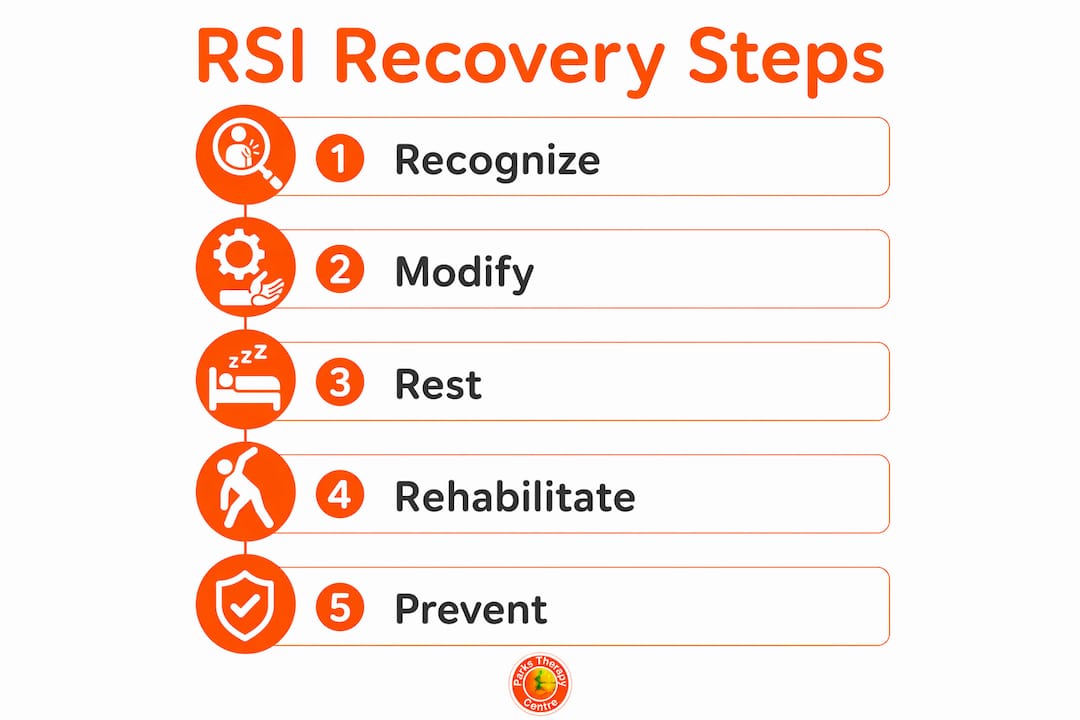
Early self-care is the first line of management for most people with RSI. The NHS recommends keeping active rather than resting completely, modifying the activity causing pain, and using over-the-counter pain relief. Practical steps include:
- Taking paracetamol or anti-inflammatory painkillers such as ibuprofen (available as tablets or topical gels)
- Applying a cold pack wrapped in a towel to the affected area periodically throughout the day
- Reducing or temporarily stopping the activity causing symptoms
- Speaking to your employer about adjusting your duties or working hours
- Maintaining gentle movement to prevent stiffness
Pro Tip: Avoid resting the affected area for more than a few days. The NHS advises that prolonged immobilisation leads to muscle weakness and reduced flexibility. A gradual return to gentle activity supports healing far more effectively than complete rest.
If symptoms do not improve within a few weeks of self-care, professional assessment is the appropriate next step.
Professional treatment options for RSI in the UK
When self-care is not enough, the UK healthcare system offers a clear pathway to specialist support. Your GP can refer you to a physiotherapist or occupational therapist, and in many areas you can access physiotherapy without a GP referral through self-referral services.
Physiotherapy is the cornerstone of RSI treatment. A physiotherapist will assess your movement patterns, prescribe strengthening and flexibility exercises, use manual therapy on the affected tissues, and advise on posture correction. For RSI-related conditions such as tennis elbow, physiotherapy exercises focus on progressive loading of the tendon to restore strength and reduce pain.
Occupational therapy takes a different angle. Rather than focusing solely on symptom relief, occupational therapists identify the root causes of RSI, particularly workplace ergonomics, and recommend workspace adjustments and personalised exercises to reduce recurrence. This distinction matters in practice: physiotherapy rehabilitates the injury, while occupational therapy addresses why it happened.
Treatment options available through the NHS and private providers include:
- Manual therapy and soft tissue massage
- Tailored strengthening and mobility exercises
- Ergonomic workplace assessments
- Splints or braces to offload the affected structure
- Steroid injections to reduce inflammation (used selectively)
- Surgery in rare, severe cases where conservative treatment has failed
Parkstherapycentre has been delivering physiotherapy and multidisciplinary care since 1986. The team works with patients presenting with RSI-related conditions including carpal tunnel syndrome, tennis elbow, and shoulder tendonitis, building personalised care plans that address both the injury and its underlying cause.
How to prevent RSI through ergonomics and lifestyle changes
Prevention is considerably easier than recovery. The Merck Manual recommends ergonomic workplace analyses, regular stretching breaks, and employer training programmes as the foundation of RSI prevention. Key strategies include:
- Setting up your workstation so your screen is at eye level and your elbows are in line with your keyboard
- Using an adjustable, supportive chair with your feet flat on the floor
- Keeping wrists straight (not bent) when typing or using a mouse
- Taking short movement breaks every 20–30 minutes
- Warming up before physical activity and cooling down afterwards
- Wearing appropriate protective equipment for manual tasks
- Reporting early symptoms to your employer before they worsen
Temperature also plays a role. Working in cold environments constricts blood flow and increases injury risk, so keeping the working area adequately warm is a practical preventive measure. For desk workers, ergonomics in injury prevention covers both workstation setup and movement habits in detail.
What to expect during RSI recovery
Recovery timelines vary considerably depending on the type and severity of injury. Most work-related repetitive motion injuries often improve with rest, but nerve compression injuries such as carpal tunnel syndrome may cause chronic pain if left untreated. Without treatment, repetitive motion disorders can progress to permanent injury and loss of function.
Recovery milestones patients typically experience include:
- Reduction in pain during rest within the first 1–2 weeks of activity modification
- Gradual improvement in strength and range of motion over weeks to months
- Return to modified duties at work before full duties are resumed
- Full recovery in most cases, provided the causative activity is addressed
Returning to full activity too soon is one of the most common reasons RSI recurs. Gradual return to work with light duties prevents re-injury; premature resumption of full duties delays overall recovery and restarts the injury cycle. In the UK, employees have legal rights under the Equality Act 2010 and Health and Safety at Work Act 1974 that require employers to make reasonable adjustments for workers with RSI, including modified duties, adapted equipment, and phased returns.
When should you see a GP or seek a referral in the UK?
See your GP if RSI symptoms are not improving after a few weeks of self-care, or if they are getting worse. You should seek urgent medical attention if you experience extreme pain, rapidly worsening swelling, discolouration, or sudden loss of movement in the affected area.
Your GP will conduct a physical examination and ask about your work and daily activities. Depending on the suspected diagnosis, they may arrange imaging such as an MRI, ultrasound, or X-ray, or request nerve conduction studies if nerve compression is suspected. A referral to a physiotherapist or occupational therapist will follow in most cases. For conditions such as carpal tunnel syndrome, a physiotherapy assessment can clarify the extent of nerve involvement and guide the treatment plan. You can also self-refer to physiotherapy in many NHS areas, or access private physiotherapy directly without waiting for a GP appointment.
Parkstherapycentre: expert RSI care in Bedfordshire and Buckinghamshire
Recovering from RSI requires more than rest. It requires the right clinical assessment, a treatment plan built around your specific injury, and guidance on preventing recurrence.

Parkstherapycentre has provided physiotherapy and multidisciplinary care since 1986, with clinics across Bedfordshire and Buckinghamshire. The team includes qualified physiotherapists and occupational therapists who assess RSI conditions, deliver hands-on treatment, and advise on workplace ergonomics and hand pain prevention. Parkstherapycentre accepts most major insurance providers and offers online booking for straightforward access to care. If your symptoms are persisting or you want a professional assessment without a long wait, book an appointment at Parkstherapycentre today.
Key takeaways
Early intervention and activity modification are the most critical factors in recovering from repetitive strain injury and preventing permanent damage.
| Point | Details |
|---|---|
| Symptoms start gradually | Pain, stiffness, tingling, and numbness typically worsen over time without treatment. |
| Self-care comes first | Activity modification, cold packs, and paracetamol or NSAIDs are the first-line response. |
| Avoid prolonged rest | The NHS advises against resting for more than a few days, as immobilisation weakens the affected area. |
| Gradual return prevents recurrence | Returning to full duties too early restarts the injury cycle; light duties protect recovery. |
| Parkstherapycentre offers specialist care | Physiotherapy and occupational therapy at Parkstherapycentre address both RSI symptoms and their root causes. |