
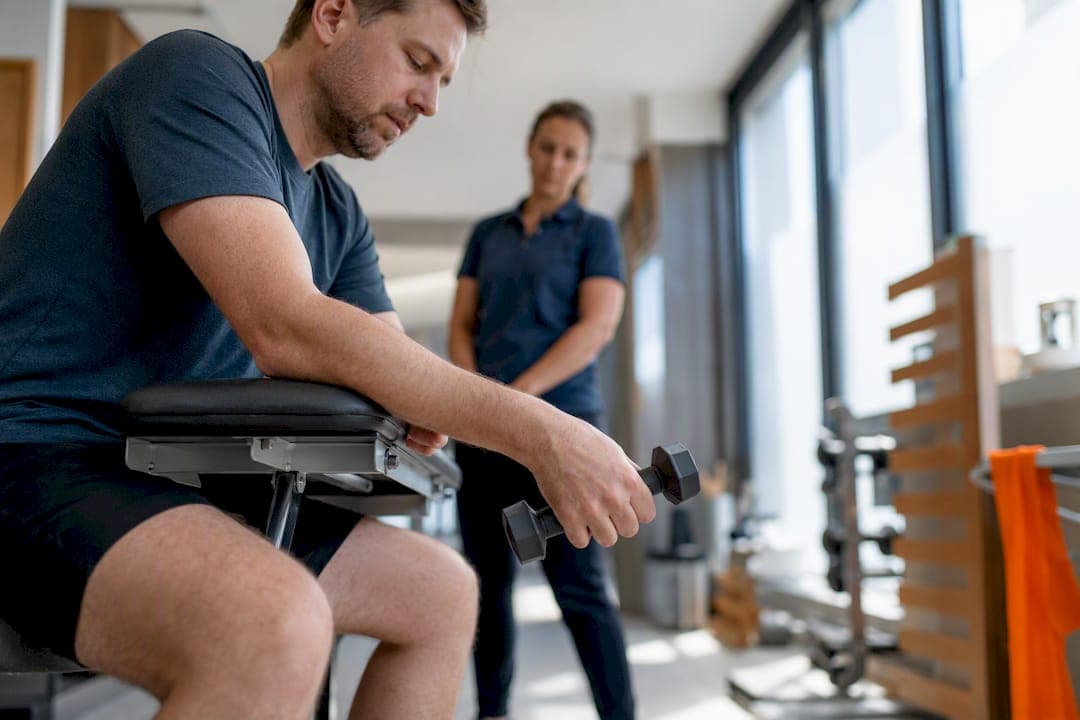
Graded wrist stretches combined with eccentric strengthening of the forearm flexors form the backbone of any effective golfer's elbow recovery plan, and most people notice a real difference within 8 to 12 weeks of consistent practice. Keep exercise pain at or below 5 out of 10, and never let it feel worse the next morning. Push past that, and you risk irritating the very tendon you're trying to heal.
TL;DR:
- Consistent eccentric strengthening and graded mobility exercises typically produce noticeable improvements within 8 to 12 weeks, provided pain stays below 5 out of 10.
- Daily short stretching sessions and controlled resistance work, with incremental progress, are essential to avoid aggravating the tendon and to maintain steady healing.
- Pain monitoring using the 0 to 10 scale guides safe progression, with treatment halting if sharp pain, swelling, numbness, or nerve symptoms occur.
- A gradual program from gentle mobility to heavier loading over six months minimizes setbacks and can be tailored further with physiotherapy assessments.
- Proper technique, small load increases, and a focus on control help prevent overloading the tendon and support successful recovery.
Table of Contents
- Movement and stretching exercises to restore mobility
- Eccentric strengthening exercises for the forearm flexors
- How to progress, frequency and programme structure
- Pain monitoring and safety rules
- When to stop and when to see a clinician
- Sample 8 to 12 week rehabilitation routine
- What physiotherapy adds beyond a home routine
- Staying consistent when progress feels slow
- Book an elbow assessment with Parkstherapycentre
- Sources
Movement and stretching exercises to restore mobility
Before any strengthening work begins, the elbow needs its range of motion back. Stiffness from guarding a painful joint often does more to limit function than the original injury, so gentle mobility work comes first.
Start with the wrist extension stretch, the cornerstone move recommended in NHS informs exercise guidance:
- Extend your affected arm in front of you, palm facing down.
- With your other hand, gently pull the fingers and wrist back towards you.
- Hold for 30 seconds, feeling a stretch along the inside of the forearm, not sharp pain.
- Repeat several times each session, multiple times daily.
Add palm up and palm down rotations, plus slow elbow bending and straightening, to keep the whole joint mobile rather than just the wrist.
Active stretches (where you move the joint yourself) build awareness and control. Passive stretches (where the other hand does the pulling) reach further into tight tissue but need a lighter touch. Support your forearm on a table or your thigh throughout, and never force a stretch into pain. A brief spell of ice after activity can settle irritation, while a warm compress before stretching helps loosen a stiff morning joint.
Pro Tip: Do your stretches little and often rather than one long session. Five short bouts spread across the day keep the tendon supple without provoking a flare.
Eccentric strengthening exercises for the forearm flexors
Eccentric strengthening exercises are where real tendon repair happens, and they're the reason golfer's elbow exercises differ from generic elbow pain relief exercises you might find elsewhere. This is why eccentric loading is repeatedly recommended for tendon conditions like this one.
Here's the technique:
- Rest your forearm on a table or your thigh, palm facing upward, wrist hanging just off the edge.
- Hold a light weight, a tin of beans or a 0.5 to 1kg dumbbell works well as a starting point.
- Use your opposite hand to help lift the wrist upward (the easy, assisted phase).
- Remove the assisting hand and lower the weight down slowly on your own, counting to three or four as you go.
That slow lowering phase is where the strengthening work happens. Typical protocols use 10 to 15 repetitions across two sets, performed twice daily when you're starting out. Choose a weight light enough that the last few reps feel controlled rather than shaky. Clinicians often describe this as working at a modest fraction of your maximum grip strength, well under full effort, because control matters more than load at this stage.
How to progress, frequency and programme structure
Progression should feel almost boring in how gradual it is. Early on, spread short bouts of movement across the day rather than one big session, then consolidate into the formal sets described above once your elbow tolerates daily loading.
- Master the current reps and sets pain-free for several days before changing anything.
- Increase repetitions before you increase weight.
- When you do add resistance, keep increases small, roughly 10 to 20% at a time, never doubling a load between sessions.
- Log your pain score and reps each day so patterns become obvious rather than guessed at.
- Pair a mobility session in the morning with a strengthening session in the evening, rather than cramming both together.
A simple notebook or phone note works fine for tracking. What matters is spotting the day pain crept upward before it becomes a setback.
Pain monitoring and safety rules
Treat the 0 to 10 pain scale as your main safety instrument. Mild discomfort up to 5 during exercise is generally acceptable; anything sharper, or pain that lingers into the next morning, means the load was too much for that session.
- Score your pain during and immediately after each session.
- Check again the following morning before you decide whether to progress or hold steady.
- Stop and seek advice for sharp new pain, swelling that's increasing, tingling or numbness, or spreading weakness.
- Use ice after activity for swelling, or ask a pharmacist about suitable pain relief if discomfort is limiting daily tasks.
Pro Tip: If two sessions in a row leave you worse the next morning, drop back to the previous week's load rather than pushing through. Regression for a few days is normal and doesn't undo your progress.
When to stop and when to see a clinician
Stop and get assessed if exercises trigger sharp or worsening pain, any numbness or tingling, or pain that disturbs your sleep. If you've followed a consistent programme for 6 to 12 weeks with no improvement, it's time for a physiotherapy assessment rather than more guesswork at home.
A physiotherapist can tailor your exercise progression precisely, add hands-on treatment where it helps, and only refer for imaging when there's a genuine clinical reason to.
Sample 8 to 12 week rehabilitation routine
- Weeks 1 to 2: Frequent short stretching sessions, gentle range-of-motion work, low-intensity movement practice several times daily.
- Weeks 3 to 6: Introduce eccentric wrist flexion properly, 10 to 15 reps, two sets, twice daily, with small, steady load increases once pain stays stable.
- Weeks 7 to 12: Move into heavier controlled loading and functional strengthening, then plan a graded return to golf, gripping tasks or other triggering activity.
Move forward a stage only when pain stays within your comfort range and function is genuinely improving. If either slips backward, hold at the current stage a little longer before pushing on.
What physiotherapy adds beyond a home routine
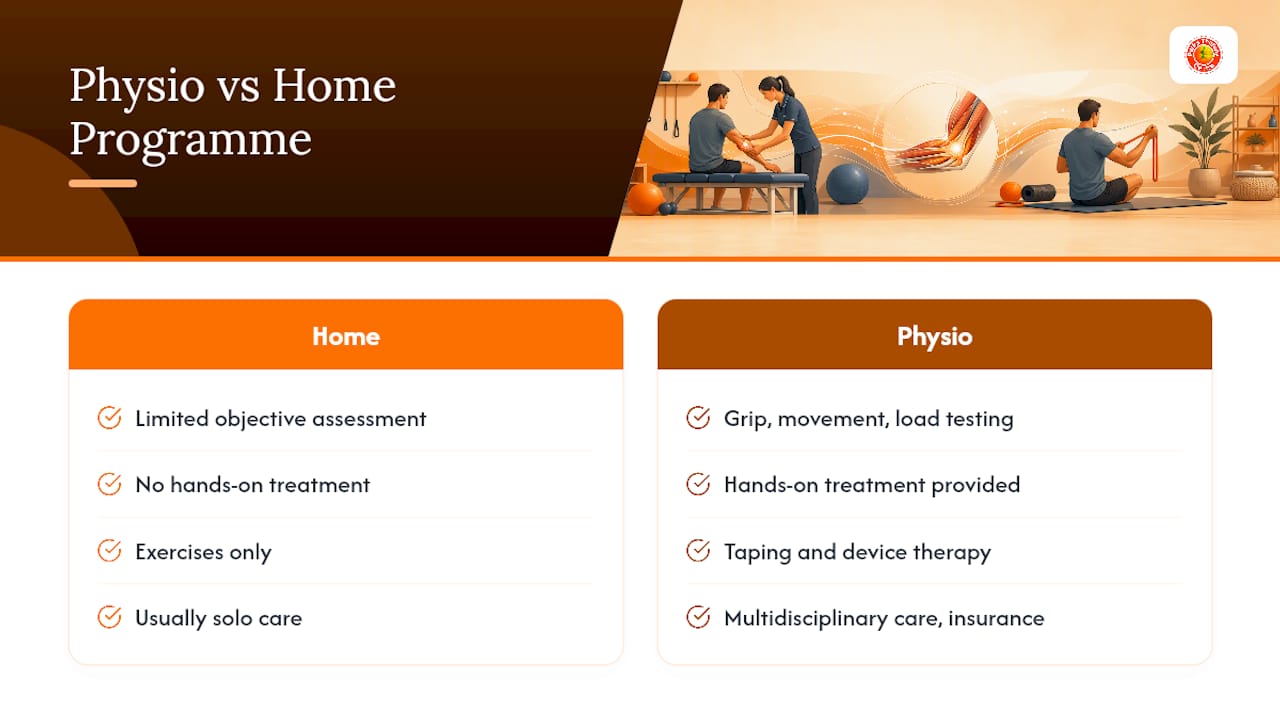
A physiotherapy assessment checks grip strength, functional movement patterns and how your elbow copes under real load, details a home programme alone can't measure. Hands-on treatment and adjuncts such as taping or targeted device therapy complement your exercises rather than replace them, refining a plan that's already working.
Parkstherapycentre has offered multidisciplinary care since 1986, with insurance acceptance and patient-centred assessment built into every plan, echoing the physiotherapy-led approach to elbow tendinopathy many patients find gets them back to full function sooner.
Staying consistent when progress feels slow
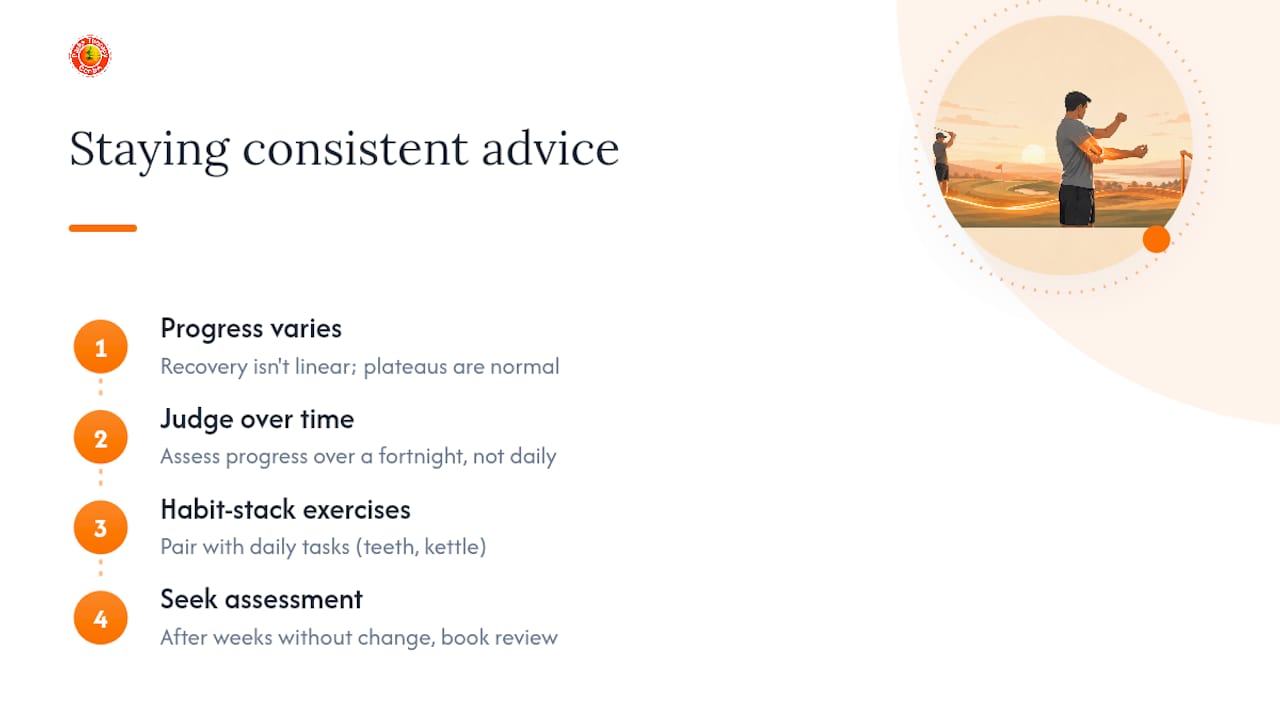
Tendon recovery rarely moves in a straight line, and that's genuinely normal rather than a sign something's gone wrong. Weeks of steady effort sometimes produce a plateau before the next real improvement shows up, so judge progress over a fortnight, not day by day.
Pair your exercises with something you already do daily, brushing your teeth, boiling the kettle, so they become automatic rather than another task competing for your attention. If you've stuck with a sensible routine for weeks without change, that's the moment to book an assessment rather than push harder alone.
— Ivan
Book an elbow assessment with Parkstherapycentre
A physiotherapist can check your grip, movement pattern and loading tolerance in person, then adjust your programme as you improve. Health insurance acceptance alongside private bookings can help reduce cost barriers to proper assessment rather than guessing at exercises from home.

If your golfer's elbow exercises aren't shifting things after several weeks, or you'd rather start with a proper assessment than trial and error, read more about how physiotherapy supports elbow injury recovery and book a session through Parkstherapycentre's online booking.
Sources
- Tennis elbow and golfer's elbow: strengthening and stretching exercises (NCBI Bookshelf)
- Exercises for golfers elbow (NHS inform)
- Golfer's elbow patient leaflet (Leicestershire Partnership NHS Trust)
This article is general information, not a substitute for advice from a qualified doctor. Consult a qualified healthcare professional about your own circumstances before acting on anything here.