
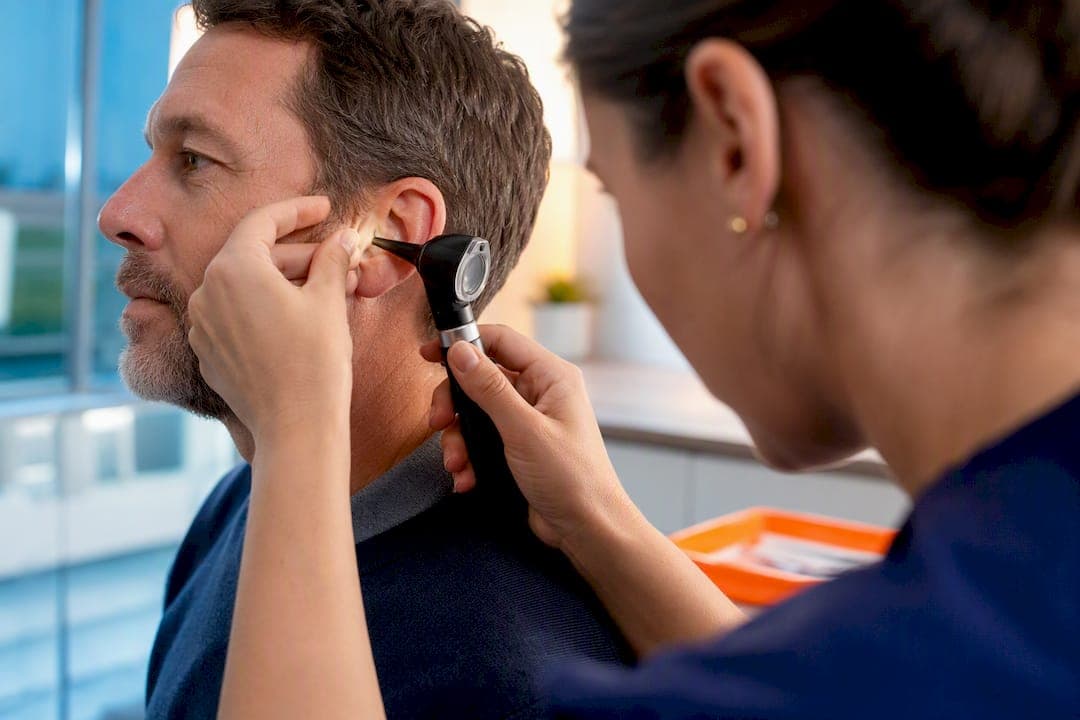
Start with softening drops for three to seven days if you have mild wax build-up. If your ears still feel blocked, painful, or you have any risk factor such as a perforated eardrum or previous ear surgery, book a professional assessment rather than reaching for irrigation or cotton buds. Microsuction and manual removal under visualisation remain the safest routes when home care does not clear things up.
TL;DR:
- Softening drops are effective for mild wax but should be used for three to seven days before considering irrigation or professional removal.
- Home irrigation must be done carefully, with warmed fluid and avoiding sharp or inserting objects, and should be stopped if pain or dizziness occurs.
- Professional removal methods like microsuction or manual extraction are quicker, safer, and preferable for impacted wax, fragile eardrums, or previous ear surgery.
- Signs such as perforated eardrum, ongoing discharge, or sudden hearing loss require immediate clinical assessment rather than DIY techniques.
- Regular maintenance should avoid inserting objects into the ear and utilize preventative measures like periodic professional cleaning if prone to impaction.
Table of Contents
- What are the main ear wax removal methods?
- How do you safely soften and irrigate ear wax at home?
- What happens during professional ear wax removal?
- When should you see a clinician instead of self-treating?
- How can you prevent ear wax building up again?
- Parks Therapy Centre's clinical approach to ear wax removal
- Book professional ear wax removal at Parkstherapycentre
- Sources
- FAQ
What are the main ear wax removal methods?
Three approaches cover almost every case of wax build-up, and knowing which one fits your situation matters more than which one sounds most thorough.
Cerumenolytics are softening agents, and they split into two families. Water-based options include saline drops and diluted hydrogen peroxide; oil-based options include olive oil and mineral oil. Both work by breaking down the wax so it can migrate out on its own or come away more easily during later removal. Typical use is a few drops in the affected ear once or twice a day for three to seven days, often with docusate sodium or carbamide peroxide as the active softener.
Irrigation, or syringing, flushes the ear canal with a controlled stream of water or saline to dislodge softened wax. It works well in the right hands, but only when the tympanic membrane can be seen and confirmed intact beforehand and when the fluid is warmed to body temperature.
Professional removal covers microsuction and manual extraction. A clinician uses a curette, hook, or fine forceps, often under microscopic magnification, after an otoscopic exam has ruled out perforation or infection.
Each method suits a different scenario:
- Mild, uncomplicated wax: softening drops alone often resolve it within a week.
- Moderate build-up with no contraindications: drops followed by controlled irrigation.
- Impacted wax, fragile eardrums, or prior ear surgery: microsuction or manual removal under direct vision.
- Recurrent blockages: periodic clinic review rather than repeated DIY attempts.
How do you safely soften and irrigate ear wax at home?
Home care works for plenty of adults, but the sequence and the safety checks matter more than the products themselves.
- Apply softening drops as directed, usually a few drops twice daily for three to seven days. Lie on your side for a few minutes afterwards so the liquid stays in the canal rather than running straight out.
- Warm any irrigation fluid to body temperature, roughly 37°C. Cold or hot water can stimulate the vestibular system and trigger sudden dizziness, which is unpleasant and occasionally dangerous if you're standing.
- Use gentle, low pressure only if you attempt self-irrigation with a proprietary kit, and stop immediately if you feel pain, spinning, or resistance.
- Tilt your head and let the ear drain fully, then dry the outer ear gently with a towel. Don't pack it with cotton wool.
Stop and seek assessment if you notice sharp pain, bleeding, sudden hearing loss, ongoing discharge, or severe dizziness. Home irrigation is not appropriate if you have a known or suspected perforated eardrum, grommets, a recent ear infection, or previous ear surgery.
Cotton buds, hairpins, and ear candles have no place in this process. Health authorities strongly discourage all three, because they tend to push wax deeper, scratch the delicate canal skin, or in the case of candling, offer no proven benefit while carrying a real burn risk.
Pro Tip: Check the temperature of irrigation fluid against the inside of your wrist before use, the same test used for a baby's bottle. If it feels neutral rather than warm or cool, you're close to the 37°C mark that keeps the inner ear settled.
What happens during professional ear wax removal?
A clinic visit for wax removal is quicker and less dramatic than most people expect, and the method chosen depends on what the clinician sees during the initial otoscope examination.
Microsuction uses a fine suction device under magnification to lift wax directly from the canal. It's usually the fastest option, involves no fluid, and many patients find it more comfortable than irrigation because there's no wet sensation or vertigo risk.
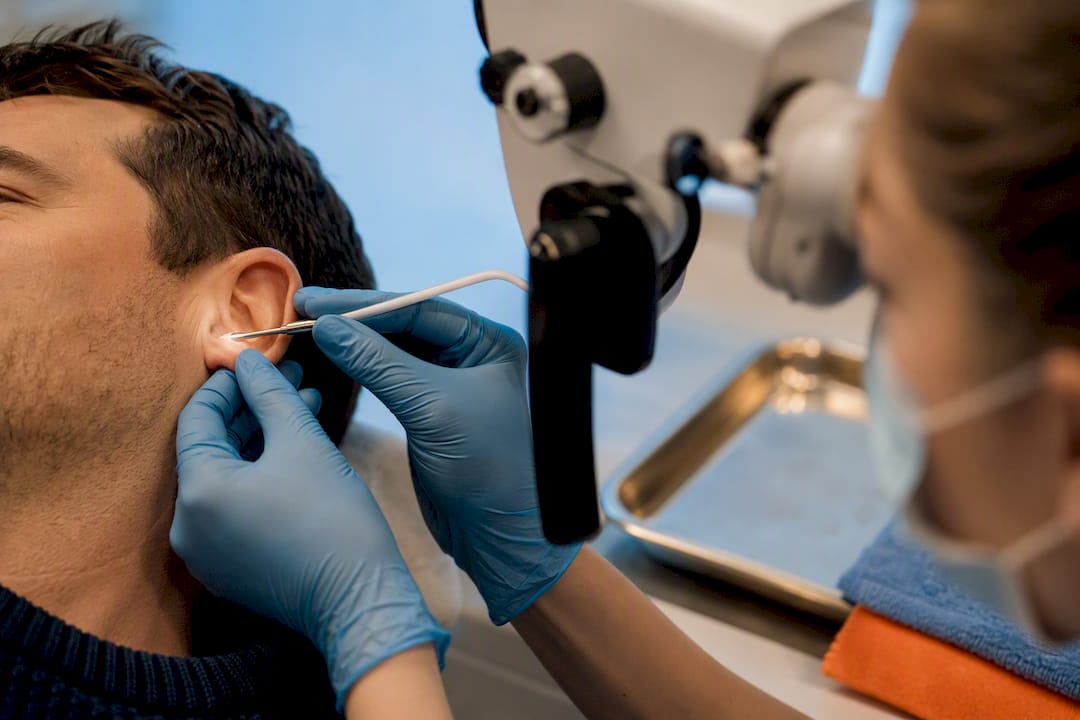
Manual removal with a curette or fine forceps, performed under a microscope or endoscope, is often the preferred choice for patients with a history of ear surgery, chronic skin conditions in the canal, or a perforated eardrum, because it avoids introducing moisture that irrigation would involve.
Clinic-based irrigation still has a place. It's performed with controlled temperature and pressure, always after the otoscopic exam confirms it's appropriate, and clinicians frequently pre-treat with softening drops beforehand so the wax clears faster and with less discomfort.
A typical appointment covers:
- An otoscopic exam to check the ear canal and eardrum before anything else happens.
- A quick discussion of your history, including past ear surgery, infections, or hearing aid use.
- The chosen removal method, usually completed within 15 to 30 minutes.
- A brief check afterwards to confirm the canal is clear and the eardrum looks healthy.
Minor after-effects can include short-term tenderness or a feeling of wateriness in the ear. Persistent pain, bleeding, or hearing changes after treatment warrant a referral to ENT for further assessment.
When should you see a clinician instead of self-treating?
Certain signs mean home methods should be paused entirely, not adjusted.
- A known or suspected perforated eardrum, or a history of one.
- Grommets or previous ear surgery of any kind.
- Active ear infection or discharge, including a smelly or coloured fluid.
- Immunosuppression or conditions affecting healing.
- Anticoagulant use, which raises bleeding risk if the canal is irritated.
- Sudden hearing loss, severe vertigo, or intense pain at any point.
If any of these apply, arrange an assessment rather than attempting drops or irrigation yourself. The NHS guidance sequence is sensible for most adults: try softening drops first, ask a pharmacist if you're unsure, then see a GP or clinic if things don't improve or a risk factor is present. At assessment, expect an otoscopic exam first. The clinician then decides between microsuction, manual removal, or a short course of drops before any procedure, and refers on to ENT if the picture is more complicated than routine wax build-up.
How can you prevent ear wax building up again?
Ear wax isn't dirt. It's a protective coating that traps dust and discourages infection, and clinical guidance consistently warns against routine over-cleaning because it strips that protection and can irritate the canal.
Sensible maintenance looks like this:
- Wipe the outer ear with a flannel during a shower; never insert anything into the canal itself.
- Remove hearing aids each evening to let the canal air and clear naturally.
- Use mineral oil drops occasionally only if a clinician has suggested it for your specific pattern of build-up.
- Book periodic professional cleaning if you're prone to recurring impaction, wear hearing aids daily, or are over 65, since wax naturally becomes drier and more prone to blockage with age.
Parks Therapy Centre's clinical approach to ear wax removal
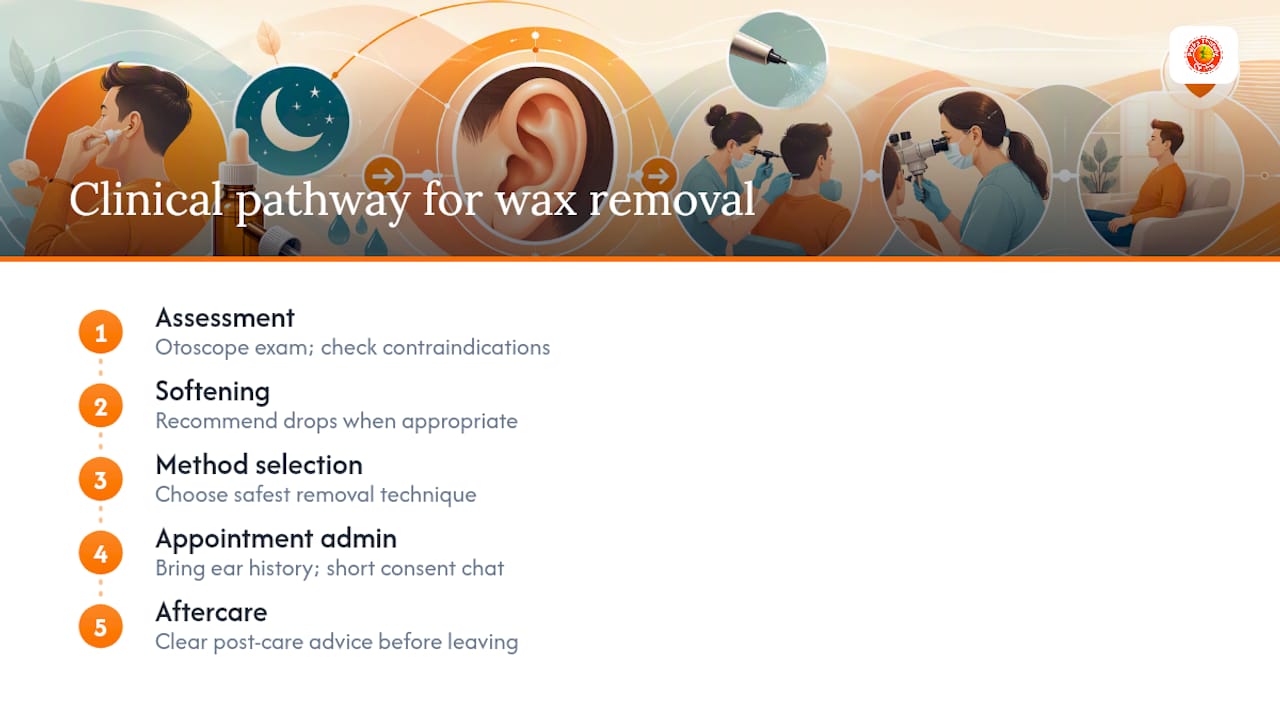
The therapy centre has provided multidisciplinary clinical care and ear wax removal follows the same structured pathway used for every treatment. Assessment starts with an otoscope exam to check for contraindications, then softening is recommended where appropriate before choosing the safest removal method. At your appointment, bring details of any past ear surgery or infections, expect a short consent discussion, and receive clear aftercare advice before you leave.
Book professional ear wax removal at Parkstherapycentre
If drops and careful home care haven't cleared the blockage, or you've spotted one of the red flags above, the next sensible step is a clinical assessment rather than another attempt at DIY removal. The clinic provides an alternative to guesswork or risky home irrigation: a qualified clinician examines your ear with an otoscope first, checks for contraindications, then carries out the safest removal method for your specific ear, whether that's microsuction or manual removal under visualisation.

Appointments run alongside the centre's wider physiotherapy and multidisciplinary services, so booking is straightforward whether ear wax removal is your only concern or part of a broader visit. Book your ear wax removal appointment online to get a clear assessment and the right treatment for your ears without the trial and error.
Sources
- Earwax blockage - Diagnosis & treatment (Mayo Clinic)
- Cerumen impaction - StatPearls (NCBI Bookshelf)
- Earwax build-up (NHS)
- Are There Safe Ways to Remove Earwax? | Northwestern Medicine
This article is general information, not a substitute for advice from a qualified doctor. Consult a qualified healthcare professional about your own circumstances before acting on anything here.
FAQ
What Is the Best Method of Ear Wax Removal?
There's no single best method for everyone. Softening drops work well for mild build-up, while microsuction or manual removal under visualisation is safest for impacted wax or anyone with contraindications to irrigation.
Is Microsuction or Syringing Better?
Microsuction is generally preferred because it uses no fluid and carries less risk of vertigo or infection, while syringing (irrigation) can still work well when the eardrum is confirmed intact and the water is kept at body temperature.
What Is the Ear Wax Trick People Talk About?
Most versions of this "trick" involve warm oil or saline drops left in the ear for a few minutes to soften wax before it drains or is removed, which lines up with the standard cerumenolytic approach rather than anything unusual.
What Does the NHS Use to Remove Ear Wax?
NHS pathways start with softening drops and pharmacist advice, moving to clinician-performed irrigation or manual removal if home measures don't clear the blockage.
Can Parkstherapycentre Remove Impacted Ear Wax?
Yes, Parkstherapycentre offers professional ear wax removal, including an otoscope assessment and clinician-led treatment for cases where home softening alone hasn't worked.