
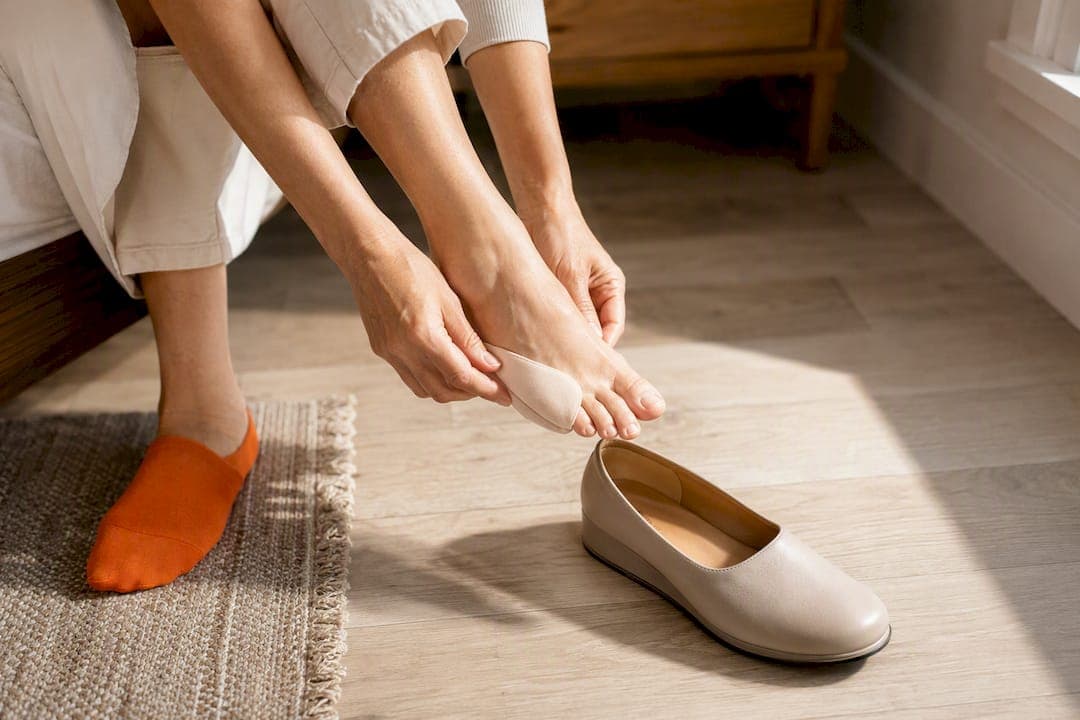
Most bunion pain responds well to conservative measures: supportive footwear, padding, insoles and targeted exercises reduce pressure and discomfort even though they cannot remove the bony bump itself. Start with simple, low-risk steps at home. If pain is severe, worsening or affecting your mobility, a GP or podiatrist can guide you towards more structured treatment.
TL;DR:
- Supportive footwear with a wide, deep toe box and soft upper can significantly reduce bunion pain by alleviating pressure and friction.
- Regular, gentle exercises like toe spreads and towel scrunches improve joint mobility and can lessen discomfort over time, but require consistent practice over weeks.
- Ice, rest, and over-the-counter analgesics can manage flare-up pain, while activity modifications, weight management, and padding help prevent aggravations.
- Conventional treatments mainly offer pain relief, as orthoses and splints improve comfort but rarely correct the deformity or change the bunion angle.
- A failure to improve after using conservative measures or the development of new symptoms warrants professional assessment for further intervention options.
Table of Contents
- Footwear, padding and orthoses to reduce pressure
- Exercises and stretches for pain relief and joint mobility
- Self-care at home: ice, analgesia and activity modification
- Supports and devices: splints, toe separators and night aids
- When to see a GP, podiatrist or physiotherapist and what to expect
- What the evidence says about non-surgical bunion treatments
- Types of bunion pain and underlying causes
- Lifestyle modifications beyond footwear
- Topical treatments and their effectiveness
- Alternative therapies and complementary treatments
- Long-term management strategies to prevent worsening pain
- A clinician's view on realistic expectations
- Getting a professional assessment at Parks Therapy Centre
- Sources
- FAQ
Footwear, padding and orthoses to reduce pressure
The shoe is usually the first thing to change. A "wide and deep" fit means a roomy toe box that does not squeeze the bunion joint, a soft or stretchy upper, a low heel height, and a stable heel counter that stops your foot sliding forward into the narrow part of the shoe. Many shoe ranges now carry width indicators that can help you find the right fit, which are more useful than a vague "wide fit" label when matching a shoe to a specific bunion, according to tailor's bunion guidance from North Cumbria Integrated Care.
Padding is the quickest way to cut friction between the bunion and the shoe. Options include:
- Gel sleeves that slide over the forefoot and cushion the whole joint.
- Bunion pads or moleskin cut to sit directly over the bony prominence.
- Commercial bunion guards that combine padding with a light toe spacer.
Prefabricated insoles can redistribute pressure away from the joint and are worth trying before anything custom-made. If off-the-shelf insoles do not settle things, a podiatrist can assess your gait and foot structure and refer you for bespoke orthoses, though these tend to improve comfort rather than reverse the deformity. Our podiatry-led injury prevention approach starts with exactly this kind of structured assessment.
Pro Tip: Trial padding or insoles for at least two weeks before deciding they haven't helped: friction and pressure changes often take that long to show up as reduced soreness.
Exercises and stretches for pain relief and joint mobility
Gentle, regular movement keeps the big toe joint mobile and can ease pain over time. A few exercises cover most of what's needed:
- Towel scrunches: use your toes to pull a towel across the floor, 10 repetitions, once or twice daily.
- Toe spreads: actively fan your toes apart and hold for a few seconds, 10 repetitions.
- Ball rolls: roll a small ball under the arch of your foot for one to two minutes to loosen the surrounding tissue.
- Range-of-motion mobilisations: gently move the big toe up and down by hand, 10 repetitions, to maintain joint flexibility.
Swimming and cycling are useful low-impact alternatives when standing exercise aggravates the joint, and calf stretches help because tight calves can alter how weight passes through the forefoot.
Local NHS materials recommend pacing exercises using a green, amber and red pain zone: work comfortably in the green zone, ease off in amber, and stop completely if you hit red-zone pain, according to Bradford District Care NHS Foundation Trust. Noticeable improvement from a consistent routine typically takes 6 to 12 weeks, so give the plan time before judging it.
Pro Tip: Do a short session little and often rather than one long session; joints respond better to frequent, gentle loading than to occasional intense effort.
Self-care at home: ice, analgesia and activity modification

Flare-ups respond to the same basic first-aid principles as most joint pain. Apply ice wrapped in a towel for up to 20 minutes every two to three hours while the joint is inflamed, and rest with the foot elevated when you can, as recommended in NHS bunion guidance.
For pain relief:
- Paracetamol is a reasonable first choice for most adults.
- NSAIDs such as ibuprofen can help with inflammation, but check for interactions with other medicines or health conditions, and ask a pharmacist or GP if you're unsure.
- Avoid prolonged standing where possible, and switch high-impact activity for low-impact options such as swimming or cycling during a flare.
Carrying extra weight increases load through the forefoot with every step, so gradual weight management can be a useful supporting strategy alongside footwear and exercise changes, rather than a treatment on its own.
Supports and devices: splints, toe separators and night aids
Night splints hold the big toe in a straighter position while you sleep and can ease nighttime aching, though they usually don't shift the underlying bunion angle in any lasting way, a point echoed in guidance on tailor's bunion and bunionette. Dynamic splints worn during the day work on the same principle but have similar limits: comfort rather than correction.
- Toe separators and gel spacers reduce friction between the big and second toe and often make shoes feel roomier straight away.
- Sleeves and pads sit over the joint itself and protect the skin from rubbing.
- Fit matters more than material: a device that pinches or slips will be abandoned within days, whatever it's made from.
Pro Tip: If an off-the-shelf splint or spacer doesn't sit comfortably after a few nights, a podiatrist can fit or prescribe an alternative rather than you persisting with something uncomfortable.
When to see a GP, podiatrist or physiotherapist and what to expect
Get it checked if pain is severe, getting worse, limiting how far or how comfortably you can walk, or if swelling persists or the skin over the bunion breaks down.
- Footwear and gait review: a clinician checks your current shoes and how your foot moves under load.
- Trial of insoles and padding: often started at the first appointment to see what changes comfort.
- Exercise prescription: a tailored version of the stretches above, progressed over weeks.
- Imaging referral: used selectively when the picture is unclear or symptoms don't respond as expected.
Conservative measures are recommended before surgery is discussed, and surgery becomes a serious conversation only when pain is severe, mobility is genuinely impaired, or conservative care has been tried properly and failed, according to Guy's and St Thomas' NHS Foundation Trust.
What the evidence says about non-surgical bunion treatments
A systematic review and meta-analysis of non-surgical interventions for hallux valgus found that conservative care is more likely to ease pain than to change the bunion angle itself, with overall certainty ranging from low to moderate depending on the intervention. Orthoses showed the more consistent evidence for intermediate-term pain reduction, and multifaceted programmes combining several measures appeared to offer more benefit than any single treatment used alone.
The practical takeaway matches what clinics see day to day: combine sensible footwear, insoles and exercises rather than relying on one fix, and expect improved comfort rather than a straightened toe.
Types of bunion pain and underlying causes
Not all bunion pain feels the same, and the cause shapes what helps. Sharp, localised soreness over the bump is usually mechanical: skin and soft tissue irritated by shoe pressure. This settles well with padding and better-fitting footwear.
A more generalised, throbbing ache with visible redness or swelling points to inflammation of the joint capsule (bursitis), often triggered by a flare of activity or an unforgiving shoe. Ice and short-term rest tend to help most here.
Burning, tingling or numbness spreading into the toes suggests nerve irritation, sometimes from a splayed forefoot pressing on nearby structures. This pattern is worth flagging to a clinician rather than self-treating indefinitely.
Stiffness and deep, aching pain that's worse after rest and eases slowly with movement can indicate developing arthritis in the joint itself. NHS guidance notes that many people have bunions with no pain at all, so the presence and character of pain, rather than the size of the bump, is what should guide how you respond, according to NHS advice on bunions. Distinguishing between these patterns helps decide whether padding, ice, or a clinical review is the right next step.

Lifestyle modifications beyond footwear
Footwear gets most of the attention, but daily habits shape how much load the joint takes on. Standing for long stretches, whether at work or during chores, keeps constant pressure through the forefoot; building in short seated breaks reduces cumulative strain across a day.
Switching high-impact activities, such as running on hard surfaces, for lower-impact options like swimming or cycling takes repetitive pounding off the joint while still keeping you active. This matters more during a flare, when the joint is already irritated, than during quiet periods.
Body weight also plays a supporting role. Every extra kilogram carried adds proportionally more force through the forefoot with each step, so gradual, sustainable weight management can ease the day-to-day load on the joint alongside footwear and exercise changes. None of these adjustments replace footwear or insoles as the primary lever, but stacked together they reduce how often the joint gets provoked.
Topical treatments and their effectiveness
Anti-inflammatory creams and gels applied directly over the joint are a reasonable option for short-term flare-ups, working on the same principle as oral NSAIDs but with less systemic exposure. They suit people who want localised relief without taking tablets, though check with a pharmacist first if you're on other medication.
Cooling gel patches offer a similar effect to ice, providing temporary numbing and comfort rather than treating the underlying joint changes. Some people find them convenient for use at work or during travel, when a proper ice pack isn't practical.
None of these topical options address the mechanical cause of bunion pain, pressure and friction from footwear, so they work best as a short-term add-on to padding, correct shoe fit and pacing, not as a stand-alone strategy.
Alternative therapies and complementary treatments
Acupuncture is sometimes used alongside conservative footwear and exercise measures for joint pain generally, though the specific evidence for hallux valgus pain relief is limited compared with orthoses and structured exercise programmes. Anyone considering it should treat it as a complement to, not a replacement for, the core conservative measures already covered.
Ultrasound therapy, delivered by a physiotherapist, is occasionally used for soft tissue irritation around the joint. As with acupuncture, it sits as an adjunct within a broader plan rather than a treatment that changes the joint itself. Clinics will typically only suggest these once footwear, padding and exercise have been tried, and only where they fit a patient's wider treatment plan.
Long-term management strategies to prevent worsening pain
Bunions tend to progress gradually, so the aim of long-term management is to keep symptoms controlled and slow that progression rather than expect a cure. Sticking with wide, low-heeled shoes as a permanent habit, rather than only during flare-ups, does more for long-term comfort than any single treatment tried in isolation.
Keep the exercise routine going even once pain settles: intrinsic foot strength and joint mobility tend to drift backwards quickly once stretches stop. Revisit your insoles or orthoses periodically, since foot shape and pressure patterns can shift over months and years, particularly with weight changes or new activity levels. Our flat feet strengthening plan follows a similar structured approach and is worth a look if you want a template for ongoing foot conditioning.
Watch for warning signs that mean it's time to revisit a clinician: increasing pain despite consistent self-care, new numbness, or skin changes over the joint. Catching a change early usually means more conservative options remain on the table.
A clinician's view on realistic expectations
Most people who commit to footwear changes, padding and a consistent exercise routine notice steadier improvement within 6 to 12 weeks, in line with what NHS pacing guidance describes. Conservative care works best as a combined approach rather than a single fix, and it manages pain well even though it will not straighten the toe. If your bunion pain isn't settling with the steps in this article, an assessment can clarify what's driving it and what's worth trying next.
— Ivan
Getting a professional assessment at Parks Therapy Centre
If self-care has plateaued, a proper assessment can pinpoint what's really driving your bunion pain and which conservative measures are worth pursuing further. A multidisciplinary team can offer footwear and gait review, exercise prescription, and referral for bespoke orthoses when prefabricated insoles are insufficient.
A typical first visit may include a physiotherapy assessment covering footwear, gait and joint mobility, a tailored exercise plan progressed over subsequent sessions, and therapies such as shockwave treatment where clinically appropriate for stubborn soft tissue pain around the joint.
You can view current appointment types and prices, including Physiotherapy Assessment and Treatment options, and book online when you're ready to move beyond self-care.
This article is general information, not a substitute for advice from a qualified doctor. Consult a qualified healthcare professional about your own circumstances before acting on anything here.
Sources
- Bunions | NHS
- Effectiveness of nonsurgical interventions for hallux valgus: systematic review and meta-analysis (QUT ePrints / ACR)
- Pain in your big toe - bunion | Bradford District Care NHS Foundation Trust
FAQ
Why does my bunion hurt?
Bunion pain usually comes from pressure and friction where the bony prominence rubs against your shoe, though inflammation, nerve irritation or developing arthritis in the joint can also cause pain. Many people have bunions with no pain at all, so the pattern of your symptoms matters more than the size of the bump, according to NHS guidance.
What flares up bunion pain?
Tight or narrow shoes, prolonged standing, and sudden increases in walking or activity are common triggers for a flare. Reducing pressure with wider footwear and resting the joint with ice usually settles a flare within a few days.
What exercises are recommended by the NHS for bunions?
NHS-aligned advice recommends simple movements such as toe curls, toe spreads and gentle range-of-motion mobilisations, done regularly and paced using a green, amber and red pain zone system. Noticeable improvement from consistent exercise typically takes 6 to 12 weeks, according to Bradford District Care NHS Foundation Trust.
What are some natural remedies for bunions?
Ice, rest, wider footwear and padding are the main self-care measures that reduce bunion pain without medication, though they won't change the shape of the joint. NHS advice frames these as ways to relieve symptoms rather than correct the underlying deformity, according to NHS bunion guidance.