
TL;DR:
- Shockwave therapy uses acoustic pulses to stimulate healing in stubborn tendinopathies, promoting tissue repair and pain relief. It is most effective when combined with load management and physiotherapy, especially for chronic injuries unresponsive to conservative care. Suitable for in-season athletes, it offers a non-invasive, rapid treatment option with minimal downtime.
If you've been nursing a stubborn tendon injury for months, you'll know how demoralising it feels to hear "just rest and do your exercises" for the third appointment running. Rest has its place, but for many athletes in Bedfordshire and Buckinghamshire, chronic sports injuries resist standard physiotherapy and simply won't shift. Shockwave therapy, or extracorporeal shockwave therapy (ESWT), offers a clinically grounded alternative that is changing how sports injuries are managed. This article explains how it works, what the evidence shows, who benefits most, and how to decide whether it belongs in your recovery plan.
Table of Contents
- What is shockwave therapy and how does it work?
- The evidence: Effectiveness of shockwave therapy for sports injuries
- Choosing shockwave therapy: Who benefits most?
- Radial vs. focused shockwave: Which is right for you?
- Our perspective: What most guides on shockwave therapy miss
- Ready for recovery? Next steps with expert care in Bedfordshire and Buckinghamshire
- Frequently asked questions
Key Takeaways
| Point | Details |
|---|---|
| Science-backed healing | Shockwave therapy stimulates tissue repair and pain reduction through proven physiological processes. |
| Effective for chronic injuries | Best suited for persistent tendinopathies and injuries not responding to standard care. |
| Minimal downtime | Suitable for in-season athletes, shockwave therapy enables rapid return to activity. |
| Part of integrated care | Combining shockwave therapy with physiotherapy enhances recovery beyond what either provides alone. |
| Evidence-based decisions | Understanding the latest research helps athletes confidently choose the right treatment option. |
What is shockwave therapy and how does it work?
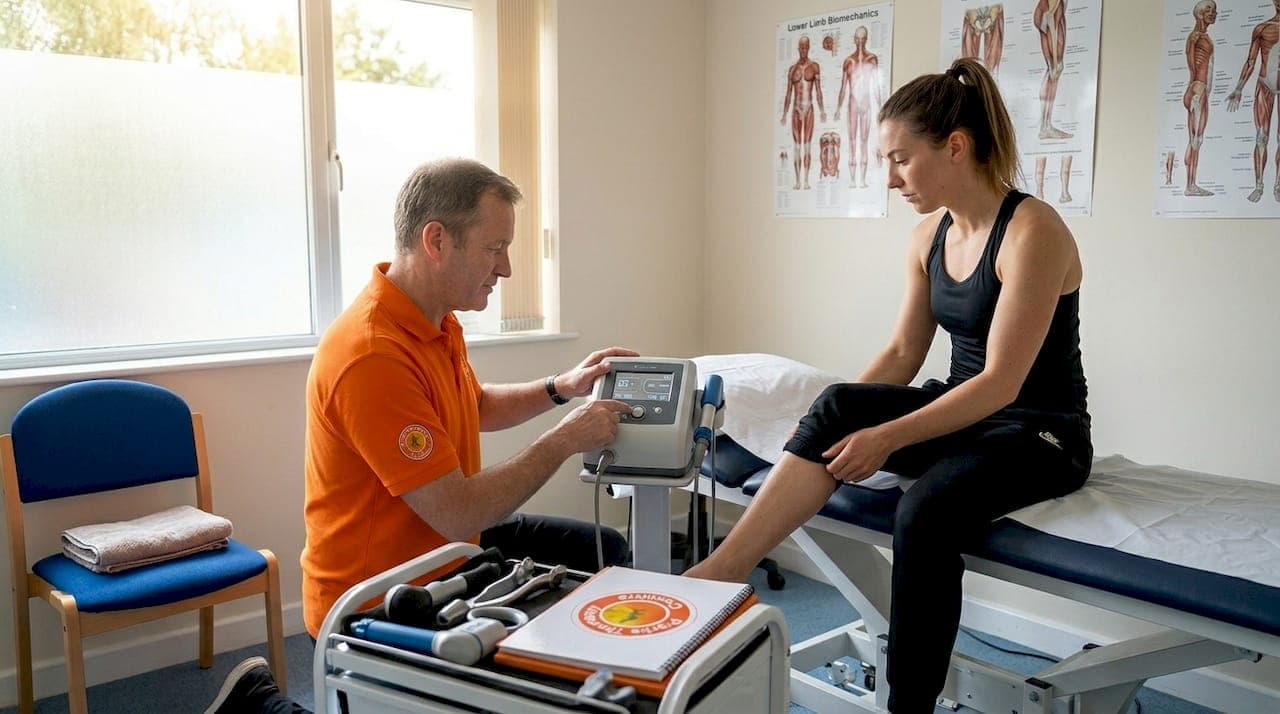
Shockwave therapy uses focused or radial acoustic pulses delivered through the skin to injured tissue. Unlike electrical or thermal treatments, it works through a process called mechanotransduction: the conversion of mechanical energy into biological signals that trigger healing. Think of it as sending a very precise wake-up call to tissue that has gone dormant or become chronically inflamed.
When the shockwaves reach damaged tissue, they stimulate a cascade of physiological responses. As shockwave therapy explained on our website outlines, this is far more than vibration on the surface. Research confirms that ESWT triggers mechanotransduction, leading to:
- Increased expression of VEGF (vascular endothelial growth factor) and eNOS (endothelial nitric oxide synthase), promoting new blood vessel formation, known as neoangiogenesis
- Enhanced collagen synthesis and cell proliferation, which rebuilds damaged tendon and connective tissue
- Reduction of Substance P, a neuropeptide involved in pain signalling, providing genuine analgesia rather than simply masking discomfort
- Modulation of chronic inflammation, shifting tissue from a stuck, destructive state into active repair
Key insight: ESWT does not simply numb the area. It changes the biological environment of the injured tissue, encouraging it to do the repair work it was failing to complete on its own.
The treatment is non-invasive, requires no anaesthesia, and typically lasts between 10 and 20 minutes per session. For active individuals who cannot afford long periods off the pitch or track, that combination is significant. You return to daily activity almost immediately, with guided restrictions rather than blanket rest.
The evidence: Effectiveness of shockwave therapy for sports injuries
Understanding the science is one thing. Knowing whether it actually works in practice is another. The evidence base for ESWT has grown substantially over the past two decades, and while it is not without nuance, the overall picture is encouraging for athletes with specific injury types.
Research confirms that ESWT is recommended for a range of sports-related tendinopathies and bone stress injuries, including:
- Patellar tendinopathy (jumper's knee)
- Achilles tendinopathy
- Hamstring tendinopathy
- Rotator cuff tendinopathy
- Greater trochanteric pain syndrome (lateral hip pain)
- Plantar fasciopathy (heel pain)
- Bone stress injuries
Meta-analyses show that ESWT outperforms placebo for short-term pain relief in several tendinopathies, and performs better than ultrasound therapy and corticosteroid injections for conditions such as lateral epicondylitis (tennis elbow). Corticosteroid injections, while fast-acting, carry risks of tissue weakening with repeated use. Shockwave therapy avoids those risks entirely.
| Treatment option | Short-term pain relief | Tissue repair | Downtime | Suitable in season? |
|---|---|---|---|---|
| Shockwave therapy (ESWT) | Strong | Yes, promotes repair | Minimal | Yes |
| Corticosteroid injection | Very fast | No (may weaken tissue) | Minimal | Yes, with caution |
| Ultrasound therapy | Moderate | Limited | None | Yes |
| Surgical intervention | Variable | Structural | Significant | No |
| Rest alone | Slow | Passive only | High | Rarely |
It is worth noting that results are not uniform across all tendinopathies. For patellar tendinopathy, some randomised controlled trials show only a small effect on recovery speed. The benefit is most pronounced in Achilles tendinopathy and lateral epicondylitis. For athletes managing Achilles injury prevention and ongoing load management, ESWT can be a valuable part of keeping training consistent while the tendon heals.
A sports injury specialist recovery approach matters here. The evidence is strongest when ESWT is combined with appropriate loading programmes rather than used as a passive treatment in isolation.
Pro Tip: If you have a chronic tendinopathy that has not responded to at least six weeks of physiotherapy-guided loading, that is typically the point at which ESWT becomes a clinically appropriate next step. Don't wait a year before considering it.
Choosing shockwave therapy: Who benefits most?
Not every sports injury is a candidate for shockwave therapy. Identifying the right patient profile is essential, and this is where experienced clinical judgement matters as much as the technology itself.
Shockwave therapy delivers the strongest outcomes for athletes whose injuries tick the following boxes:
- Chronic rather than acute: Injuries that have been present for more than three months and have not resolved with conservative care
- Tendinopathy or fasciopathy: Structural changes in tendon or fascia tissue that are no longer responding to load management and manual therapy
- No contraindications: No blood clotting disorders, no active infection in the treatment area, not over growth plates in younger athletes, and no pregnancy
Expert consensus supports choosing ESWT for chronic injuries that are unresponsive to conservative care, citing its non-invasive nature, capacity for rapid pain relief, and ability to promote tissue regeneration without significant disruption to training schedules. This makes it particularly useful for athletes mid-season who need to keep competing while managing a persistent injury.
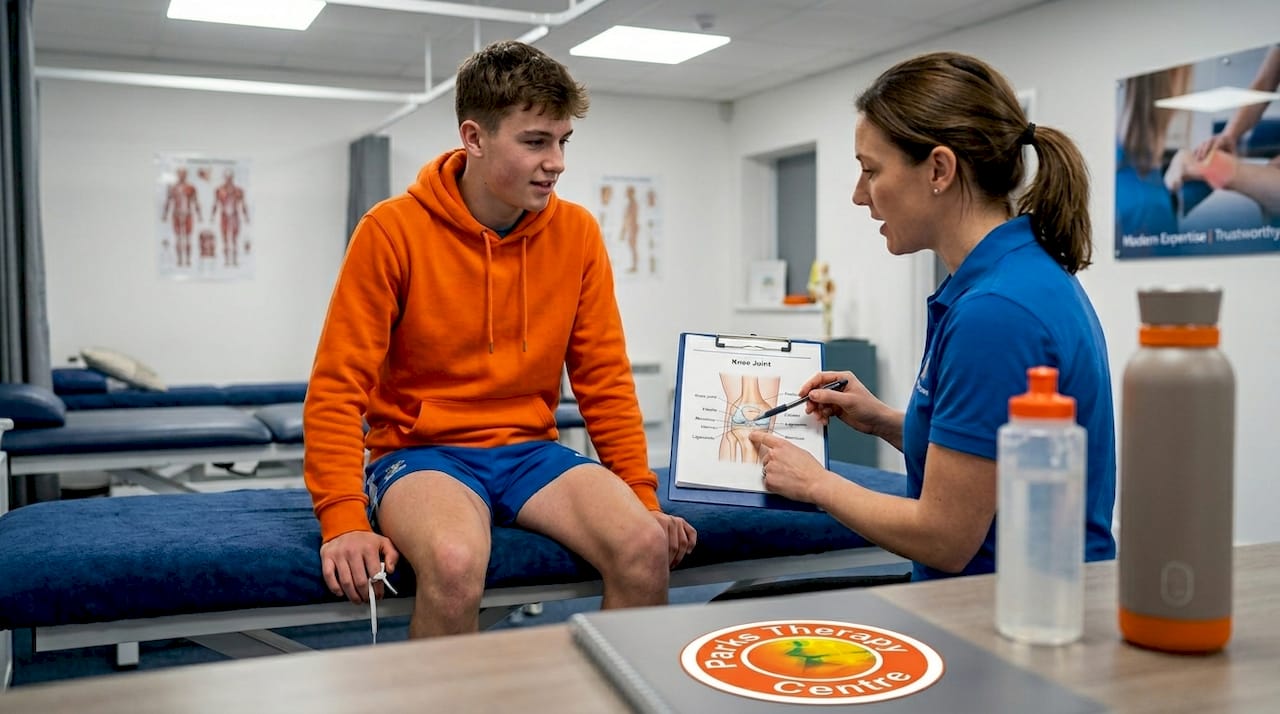
However, clinical guidance is equally clear about the boundaries. High-energy settings above 0.28 mJ/mm² carry a risk of provoking increased inflammation, and transient pain and mild swelling following treatment are documented side effects to monitor. ESWT is also not the right tool when physiotherapy alone is likely to resolve the injury, or when the injury is genuinely acute (within the first few weeks of onset).
The best results emerge when ESWT is embedded within a broader physiotherapy programme. Understanding sports physiotherapy and recovery helps clarify why this matters: the shockwave addresses the biological environment, while physiotherapy addresses movement patterns, load tolerance, and the neuromuscular factors that often perpetuate injury. Learning about sports therapy recovery frameworks reinforces this message, showing that integrated care consistently outperforms any single modality on its own.
Think of ESWT as the scaffolding that allows repair work to begin. Physiotherapy is the skilled work that completes the renovation. You need both.
Radial vs. focused shockwave: Which is right for you?
Once you have decided that shockwave therapy is appropriate for your injury, a further question arises: which type? The two most common forms available in clinical practice are radial shockwave therapy (RSWT) and focused shockwave therapy (FSWT), and they are meaningfully different.
Radial shockwave therapy generates pressure waves that spread out from the probe tip in a cone-like pattern. The energy is distributed across a wider surface area, making it well suited to superficial or broad injuries like plantar fasciopathy and proximal Achilles tendinopathy. It is generally lower in energy density and more commonly available in outpatient physiotherapy settings.
Focused shockwave therapy concentrates the acoustic energy at a precise focal point beneath the skin. This allows treatment of deeper structures such as the rotator cuff or deep hamstring origin. The energy is higher and more targeted, making it the preferred option when the injury lies at a specific depth that radial waves cannot reliably reach.
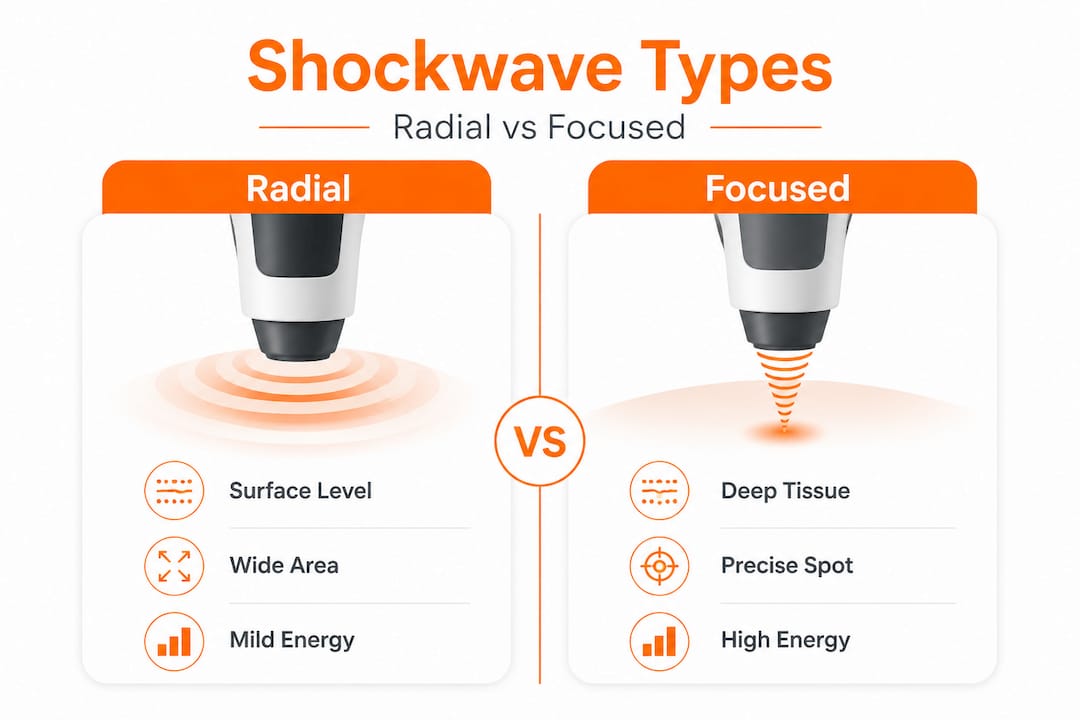
| Feature | Radial (RSWT) | Focused (FSWT) |
|---|---|---|
| Energy distribution | Broad, surface-level | Concentrated at focal depth |
| Best for | Plantar fascia, proximal Achilles, lateral epicondyle | Rotator cuff, deep hamstring, bone stress |
| Session comfort | Generally well tolerated | Can be more intense at higher settings |
| Equipment availability | Widely available | More specialist settings |
| Evidence quality | Moderate | Moderate to good for deeper injuries |
Research shows no clear superiority between RSWT and FSWT for pain or function outcomes in tendinopathies overall, with evidence rated as low to very low certainty. One notable finding is that RSWT may improve wrist strength in tennis elbow, which is clinically useful given how common that injury is among racket sport players. Contrasting evidence also confirms that ESWT works best as an adjunct, not as a standalone treatment, regardless of the modality used.
Here is a practical framework for deciding which option to discuss with your clinician:
- Identify injury depth: Is the painful structure within 3 centimetres of the skin surface? Radial is likely sufficient. Deeper than that? Ask about focused.
- Consider injury type: For physiotherapy for Achilles recovery, radial shockwave is typically used successfully. For rotator cuff issues, focused may offer more precision.
- Review your treatment history: If radial shockwave has been tried without sufficient effect, focused shockwave may be the next logical step.
- Discuss energy settings: Ensure your clinician uses appropriate energy levels and adjusts based on your response session by session.
- Confirm integration with physiotherapy: Whichever modality is used, it should be paired with a structured rehabilitation programme for best results.
Our perspective: What most guides on shockwave therapy miss
Most articles about ESWT focus heavily on the mechanics and the research statistics. They answer the question "does it work?" but rarely address the more important question: "how do you make it work for you?"
In our experience at The Parks Therapy Centre, the athletes who get the most from shockwave therapy are not those who treat it as a quick fix. They are the ones who see it as one tool in a deliberately constructed recovery programme. We regularly see patients arrive having been told by well-meaning sources that a few sessions of shockwave will "sort the tendon out." When three sessions pass without dramatic improvement, they feel let down by the treatment, when in reality the treatment was never being used in the right context.
The science behind shockwave therapy is genuinely exciting. But the clinical reality is that tissue regeneration takes time, and the signals ESWT sends to damaged cells need to be supported by progressive loading. Rest after shockwave is not the answer. Controlled, graduated exercise most certainly is.
There is also a tendency to underestimate the role of complementary therapies in supporting recovery. Acupuncture for sports injuries can address pain sensitisation and muscle tension that shockwave does not directly target. Manual therapy influences joint mechanics and movement patterns. Podiatry can correct the biomechanical loading that caused the tendinopathy in the first place. Athletes who engage with this broader thinking tend to recover more fully and stay recovered longer.
The uncomfortable truth is that shockwave therapy is only as effective as the overall plan it sits within. Demand integrated care, not just a machine.
Ready for recovery? Next steps with expert care in Bedfordshire and Buckinghamshire
If any of the injuries described in this article sound familiar, the most important next step is getting a proper clinical assessment rather than self-diagnosing from an article alone.
At The Parks Therapy Centre, established since 1986 and operating across multiple locations in Bedfordshire and Buckinghamshire, our team of physiotherapists and sports injury specialists will assess whether shockwave therapy is appropriate for your specific injury and history. We offer integrated sports physiotherapy programmes that combine ESWT with manual therapy, targeted exercise rehabilitation, podiatry, and acupuncture where appropriate. We accept most major insurance providers, and our online booking system makes it straightforward to get an initial appointment at a time that suits your training schedule. Don't let a stubborn injury define your season. Book your assessment with our team today.
Frequently asked questions
Is shockwave therapy painful?
Treatment is generally well tolerated, though some patients may experience transient discomfort during the session and mild swelling afterwards, particularly at higher energy settings. Your clinician will adjust intensity to keep the session manageable.
How long does recovery take after shockwave therapy?
Most athletes notice improvement within a few sessions, though ESWT outcomes vary depending on injury severity, duration, and whether treatment is combined with a structured rehabilitation programme.
Can shockwave therapy be used during sports season?
Yes. One of its key advantages is that ESWT suits in-season athletes across a range of tendinopathies and bone stress injuries, with minimal downtime required after each session.
Is shockwave therapy suitable for acute injuries?
No. It is most effective for chronic injuries unresponsive to conservative care. For acute injuries where physiotherapy alone is likely sufficient, ESWT is not the recommended approach.