
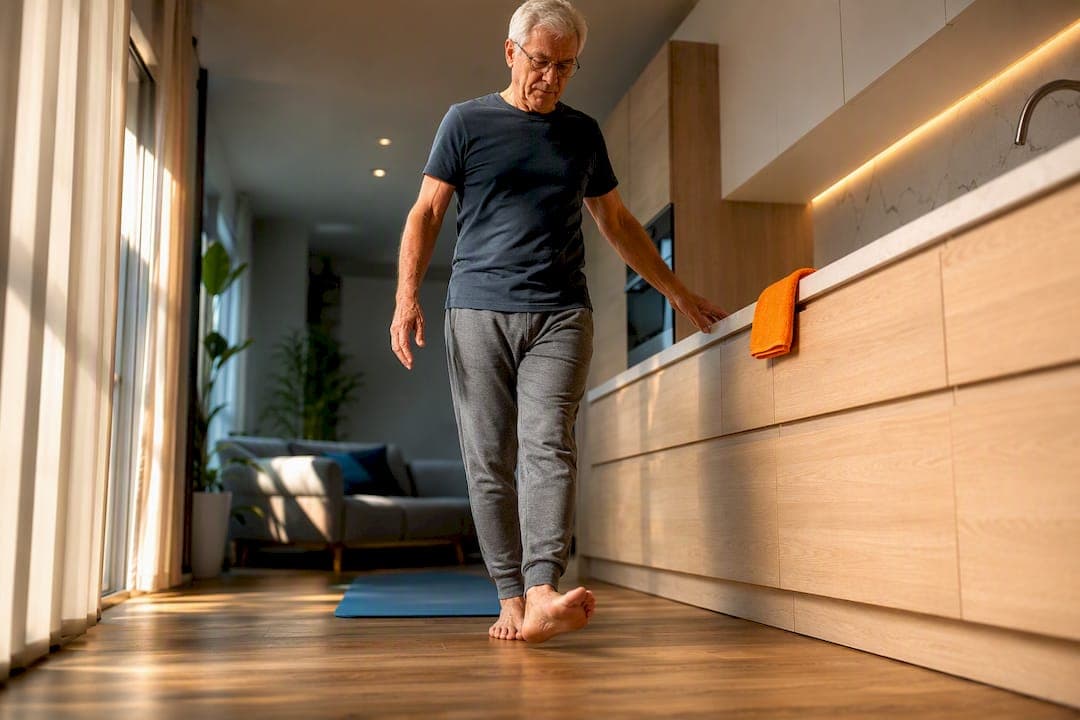
Five exercises make the real difference: heel-to-toe walking, one-leg stands, sideways walking, sit-to-stands, and toe stands. Practise them regularly for short sessions several times per week, near a wall or sturdy chair you can hold if needed. That modest commitment, done consistently, is what NHS guidance on fitness and physiotherapists recommend for reducing fall risk. Stop and rest if you feel dizzy or unwell.
TL;DR:
- Regular practice of heel-to-toe walking, one-leg stands, sideways walking, sit-to-stands, and toe stands significantly reduces fall risk in older adults.
- Exercises should be performed near a sturdy support and gradually increased in difficulty, with safety checks such as clearing clutter and wearing grip shoes.
- A three-day weekly routine including warm-up, main exercises, and cool-down can effectively improve balance over time.
- Balance training is most effective when combined with lower-body strength exercises and incorporated into daily activities.
- Seek physiotherapy if experiencing frequent falls, persistent dizziness, or sudden weakness to receive personalized assessment and guidance.
Table of Contents
- How to do each balance exercise at home safely
- What safety checks should you make before starting?
- A simple 3-day weekly balance routine
- Does the evidence actually back this up?
- When should you see a physiotherapist about balance?
- Balance is trainable well into later life
- Sources
How to do each balance exercise at home safely
These five moves cover the balance skills that matter most for daily life: standing steady, shifting weight, and recovering when you wobble. Do them in this order, always with a chair or wall within reach.
- Heel-to-toe walking. Stand tall, place one foot directly in front of the other so the heel touches the toes of the back foot, then walk forward for 10 steps. Start along a wall with fingertips trailing it for support, and progress by walking further, slowing your pace, or trying a slightly uneven surface such as grass once you're confident indoors.
- One-leg stands. Hold onto a chair back with both hands, lift one foot slightly off the floor, and hold for several seconds, gradually increasing hold time per side, then progress to one-finger support, then no support at all. Only close your eyes once you can hold the position for 30 seconds unaided; removing vision too early is a common way people lose confidence and fall.
- Sideways walking (the grapevine). Step one foot out to the side, bring the other foot to meet it, and repeat for 10 steps each direction. This move trains the hip muscles that keep you upright when you turn or step off a kerb, something forward-only walking never touches.
- Sit-to-stands. From a firm chair, stand up without using your hands if you can, then sit back down with control. Ten repetitions, twice through, builds the leg strength that catches you during a stumble. This is one of the most functional exercises going, because it mimics getting up from the sofa, the toilet, or the car dozens of times a day.
- Toe stands. Holding the chair, rise onto your toes, hold for two seconds, then lower slowly. Aim for 10 to 15 repetitions to strengthen the calves that make constant tiny adjustments to keep you balanced while standing still.
If standing for extended periods is uncomfortable, do seated marching, ankle circles, and seated weight shifts instead, and work towards the standing versions gradually, as MedlinePlus suggests for those with limited tolerance.
Pro Tip: Practise heel-to-toe walking during daily tasks to help integrate balance work into your routine. Folding balance work into tasks you already do daily makes it far more likely to stick than a separate "exercise session" you have to remember.
What safety checks should you make before starting?
A few minutes of preparation prevents most of the risk in balance training.
- Clear the floor of rugs, cables, and clutter before you begin.
- Keep a sturdy chair or wall within arm's reach throughout.
- Wear flat, well-fitted shoes with grip, not socks or slippers.
- Practise in a well-lit room, never in dim light.
- Ask a family member to be nearby for your first few sessions if you feel unsteady.
Start with the seated variations if standing feels precarious, holding with both hands and reducing to shorter holds of five seconds. Progress only once a position feels genuinely stable, not just manageable. According to NHS guidance on falls, older adults should speak to a healthcare provider before starting a new exercise programme, particularly after recent surgery, a fall, or with a heart condition.
Once you're steady, progress by reducing how much you hold on to, extending hold times, or adding a second task, such as counting backwards or turning your head while standing on one leg. ACE Fitness guidance calls this dual-tasking, and it's what makes balance improvements transfer to real situations, like carrying shopping while crossing a road.
Stop and contact a clinician if you experience: new or worsening dizziness, chest pain, sudden weakness down one side, or a fall during practice. These are not signs to push through.
A simple 3-day weekly balance routine
A short, repeatable structure beats an ambitious one you abandon after a fortnight.
- Warm up (2 minutes): March on the spot, holding the chair if needed.
- Main set (8 to 10 minutes): Choose 3 to 5 exercises from the list above. Beginners hold each position for 5 to 10 seconds and complete 8 repetitions; stronger readers extend holds to 30 seconds and add dual tasks.
- Cool down (2 minutes): Gentle ankle and shoulder stretches while seated.
Do this on non-consecutive days each week, for example three times weekly. On the other days, a short walk or seated stretching keeps you moving without overloading the same muscles, and standing on one leg briefly while waiting for a bus or in a queue counts too.
Does the evidence actually back this up?
That's the core finding behind NHS advice on staying active, which pairs balance work with recommended amounts of aerobic activity weekly for the fullest benefit. Balance drills alone aren't the whole picture, either. The glutes, quadriceps, hamstrings, and calves do the physical work of catching you during a trip, which is why NHS exercise guidance treats lower-body strength as inseparable from balance training rather than a separate task.
At the programme level, the evidence is stronger still. A systematic review found multi-component programmes, including approaches like Otago and tai chi, reduce fall risk more than no structured exercise at all. The pattern that keeps showing up is consistency over intensity: short, regular sessions beat occasional strenuous ones.
When should you see a physiotherapist about balance?
See a clinician if you've fallen more than once in the past year, feel persistent dizziness, notice sudden weakness, or your walking pattern has changed without an obvious cause.
A physiotherapy assessment typically covers gait analysis, muscle strength testing, and, where relevant, a vestibular assessment to rule out inner-ear causes of dizziness. From there, a therapist builds a programme matched to your specific weaknesses rather than a generic list.
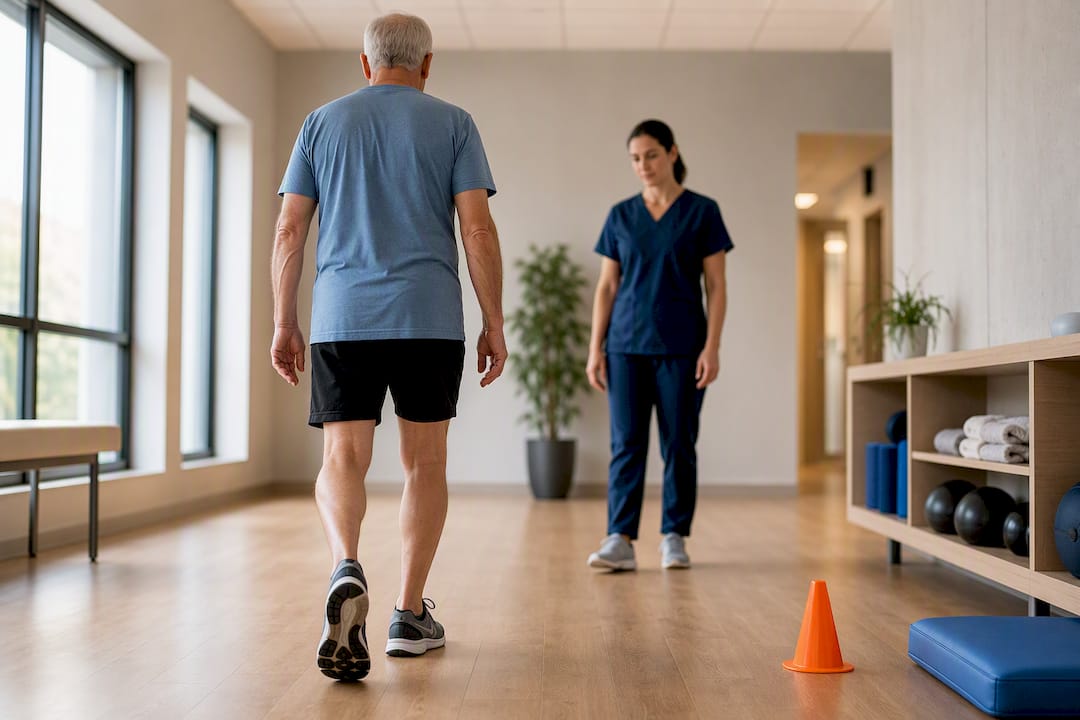
Parkstherapycentre has offered multidisciplinary physiotherapy and rehabilitation across Bedfordshire and Buckinghamshire since 1986, with online booking available for anyone wanting a tailored balance assessment.
Balance is trainable well into later life
Balance responds to practice at any age. The muscles and reflexes involved don't stop adapting just because you're older; they simply need consistent input. A few minutes of practice most days will do more for you than one long session every few weeks. If you're ever unsure whether an exercise is right for your situation, ask a clinician rather than guessing.
— Ivan
This article is general information, not a substitute for advice from a qualified doctor. Consult a qualified healthcare professional about your own circumstances before acting on anything here.
Sources
- Keeping fit and mobile
- PMC systematic review (example)
- How to design balance training programmes for older adults (ACE Fitness, 2026)
- MedlinePlus: Balance and fall prevention patient instructions