
TL;DR:
- Achilles injuries are common but often preventable with targeted strategies.
- Strengthening exercises, gait analysis, and appropriate footwear significantly reduce injury risk.
- Ongoing awareness and professional guidance support long-term Achilles health.
Achilles injuries have a frustrating habit of appearing at the worst possible moment: mid-season, mid-training block, or just as you've built real momentum. For athletes and active individuals across Bedfordshire and Buckinghamshire, the Achilles tendon is one of the most commonly strained structures in the body, yet many injuries are preventable with the right approach. This article brings together evidence-based prevention strategies, from identifying your personal risk profile to choosing the right footwear and building smarter recovery habits, so you can stay active, perform well, and avoid the lengthy setbacks that Achilles problems so often cause.
Table of Contents
- Understand your risk factors for Achilles injury
- Strengthen and protect your Achilles with tailored exercise
- Master biomechanics, gait and footwear choices
- Build recovery habits and injury awareness
- Why blanket prevention plans miss the mark for Achilles injuries
- How to get expert advice for your Achilles health
- Frequently asked questions
Key Takeaways
| Point | Details |
|---|---|
| Know your risks | Individuals over 35 or those rapidly increasing training need greater vigilance for Achilles injuries. |
| Prioritise progressive loading | Mixing contraction types and gradual progression offers better protection than focusing on one exercise style. |
| Get your biomechanics right | Strength and gait training plus supportive footwear are essential for Achilles safety. |
| Recovery routines matter | Consistent rest and early symptom tracking prevent minor aches becoming chronic Achilles problems. |
| Personalised plans win | Expert-guided, tailored approaches work best to keep you active and injury-free. |
Understand your risk factors for Achilles injury
Knowing your risk profile is the first step towards meaningful prevention. Not everyone faces the same level of threat, and understanding what puts you personally at risk allows you to make targeted changes rather than following generic advice that may not apply to your situation.
Research consistently shows that Achilles injuries affect 10 to 19% of runners, with risk factors including age over 35, rapid increases in training load, poor footwear, and biomechanical issues such as stiff ankles. That is a significant proportion of the running community, and it underlines why injury prevention matters for anyone who trains regularly.
The most common risk factors include:
- Age over 35: Tendon tissue becomes less elastic and slower to recover as we age, making load management increasingly important.
- Sudden increases in training volume or intensity: The tendon adapts slowly. A rapid spike in mileage or effort outpaces its ability to cope.
- Poor or worn footwear: Shoes that offer inadequate support or cushioning place extra stress on the tendon with every stride.
- Stiff ankles: Restricted ankle dorsiflexion (the ability to flex your foot upward) forces the Achilles to work harder during movement.
- Biomechanical issues: Excessive rearfoot eversion (rolling inward at the heel) and high running volume are particularly significant contributors.
Local terrain can also play a role. Athletes in Bedfordshire and Buckinghamshire who regularly train on hard tarmac roads or hilly countryside paths may experience different loading patterns compared to those on track or grass. Understanding the types of sports injuries linked to your specific sport and environment helps you tailor your prevention strategy more precisely.
It is worth noting that risk is cumulative. A 38-year-old runner who has recently increased weekly mileage, trains on concrete, and wears ageing trainers is stacking multiple risk factors simultaneously. Identifying and addressing even one or two of these can meaningfully reduce your overall risk.
Strengthen and protect your Achilles with tailored exercise
Once you understand your risks, the next step is to act proactively with exercises designed to build resilience and protect your Achilles. Strength work is the single most effective tool available, but the type of exercise matters as much as the effort you put in.
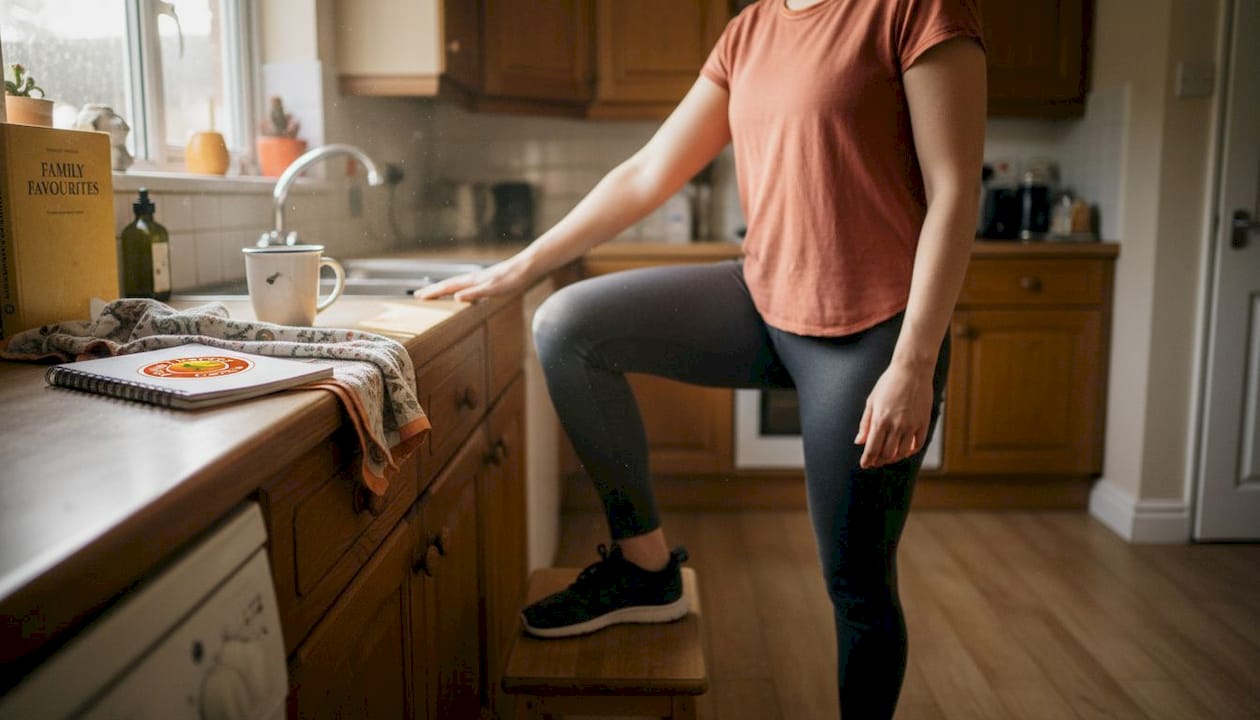
For years, eccentric heel drops were considered the gold standard for Achilles rehabilitation and prevention. The evidence base has evolved. Progressive loading with eccentric heel drops, combined with attention to high load and time under tension, remains valuable, but current best practice supports a blend of contraction types for optimal results.
A well-rounded Achilles strengthening programme should include:
- Isometric exercises: Holding a static calf contraction (such as a wall sit with heel raise) reduces pain quickly and is an excellent starting point, particularly when symptoms are present.
- Isotonic exercises: Slow, controlled heel raises through a full range of motion build tendon capacity and muscle strength simultaneously.
- Eccentric exercises: Lowering slowly from a raised position places the tendon under load as it lengthens, which is especially effective for midportion Achilles issues.
- Plyometric exercises: Once you have built a solid strength base, adding spring-loaded movements like calf jumps improves the tendon's ability to store and release energy efficiently.
For midportion Achilles problems (pain in the middle of the tendon), time under tension is the key variable. Slow, heavy repetitions are more effective than fast, light ones. For insertional Achilles issues (pain where the tendon meets the heel bone), you should restrict ankle dorsiflexion during exercises and consider using heel lifts to reduce compression at the insertion point.
"The tendon responds to load, not rest. Structured, progressive exercise is both the treatment and the prevention."
Pro Tip: Track your symptoms using a simple morning stiffness scale of one to ten. If stiffness exceeds five out of ten before training, reduce your load that session rather than pushing through. This small habit helps you manage sports injuries well before they escalate.
Gradual progression is non-negotiable. Increase resistance or volume by no more than ten per cent per week, and always let your symptom response guide the pace of progression.
Master biomechanics, gait and footwear choices
Alongside direct strengthening, it is equally important to optimise how you move and what you wear. Even the best exercise programme will have limited effect if your running mechanics are placing excessive strain on the Achilles with every step.
Biomechanical risks including excessive rearfoot eversion, low ankle inversion moment, and high running volume can all be addressed through a combination of strength training and gait retraining. Working with a physiotherapist or sports therapist to analyse your gait can reveal compensatory movement patterns you may not even be aware of.
Gait retraining typically involves cues to increase cadence (step rate), reduce overstriding, or shift foot strike position. These adjustments reduce the peak forces travelling through the Achilles on each landing. For biomechanical injury prevention, small changes in technique can produce significant reductions in tendon load over time.
Footwear is equally influential. Here is a practical comparison to guide your choices:
| Footwear type | Achilles load | Best suited for |
|---|---|---|
| Supportive cushioned shoe | Lower | Most Achilles-prone athletes |
| Minimalist / zero-drop shoe | Higher | Low-risk, experienced runners only |
| Motion control shoe | Moderate | Those with excessive pronation |
| Heel-lifted running shoe | Reduced at insertion | Insertional Achilles tendinopathy |
For most athletes in Bedfordshire and Buckinghamshire, a well-cushioned, supportive shoe is the safer choice. Minimalist footwear increases Achilles demand and should only be considered by those with no history of tendon problems and excellent calf strength.
Surface choice also matters. Softer ground such as grass or trail paths reduces the microtrauma that accumulates from repeated impact on tarmac or concrete. Where possible, vary your training surfaces to distribute load more evenly across the tendon. Dancers and multidirectional sport athletes often benefit from naturally varied loading patterns, which may partly explain their lower rates of Achilles tendinopathy compared to road runners. Consulting an injury prevention guide tailored to your sport can help you apply these principles more specifically.
Build recovery habits and injury awareness
Even with excellent exercise and biomechanics, ongoing vigilance and recovery habits will determine your long-term Achilles health. Prevention is not a one-off intervention. It is a daily practice.
Developing a routine for early symptom tracking is one of the most underrated prevention tools available. Bodily awareness is linked to lower running-related injury incidence, and learning to notice subtle changes in tendon stiffness, soreness, or swelling before they become significant problems gives you a critical head start.
Key recovery habits to build into your routine:
- Sleep: Tendons repair primarily during deep sleep. Consistently getting seven to nine hours supports tissue recovery and reduces injury risk.
- Hydration: Dehydrated tendons are less pliable and more vulnerable to strain. Aim to maintain consistent fluid intake throughout the day, not just around training.
- Nutrition: Adequate protein (around 1.6 to 2.0 grams per kilogram of body weight daily) supports tendon collagen synthesis. Vitamin C also plays a role in collagen production.
- Cross-training: Swimming, cycling, or rowing maintain cardiovascular fitness while offloading the Achilles during high-symptom periods.
- Flexibility work: Gentle calf stretching and ankle mobility exercises support range of motion, though they should complement rather than replace strength work.
Pro Tip: Learn to spot early warning signs such as morning stiffness that lasts more than ten minutes, localised tendon thickening, or pain that worsens during the first few minutes of a run and then eases. These are signals to act, not to ignore.
Seeking professional input early, rather than waiting until pain becomes severe, consistently leads to faster recovery and fewer training days lost. A step-by-step recovery guide can help you understand when self-management is appropriate and when it is time to seek expert assessment.
Why blanket prevention plans miss the mark for Achilles injuries
It is worth considering why many well-meaning Achilles prevention routines fall short, even when athletes follow them diligently. The answer, in our experience, is that generic programmes are built around average populations, not individual athletes.
No single exercise or routine is universally best. Your injury history, sport, weekly training volume, and daily life load all determine what your Achilles actually needs. A 45-year-old recreational runner in Leighton Buzzard has very different requirements from a 22-year-old rugby player in Aylesbury, yet both might receive the same standard eccentric heel drop protocol.
Expert consensus has moved clearly towards blending contraction types and using symptom-guided progression rather than rigidly following traditional eccentric-only loading. The evidence supports flexibility in approach, not adherence to a single method. Tailored athlete advice that accounts for your specific sport, history, and goals will always outperform a one-size-fits-all plan. Long-term Achilles health comes from tracking warning signs, adapting your programme over time, and working with professionals who understand your individual picture.
How to get expert advice for your Achilles health
If you are looking to build or fine-tune your prevention plan, professional advice can make a real difference to your outcomes.
At The Parks Therapy Centre, our team of physiotherapists and sports injury specialists across Bedfordshire and Buckinghamshire provide individualised assessments that go beyond generic advice. We look at your movement patterns, training history, and symptom profile to design a prevention or rehabilitation programme that actually fits your life. Whether you are managing early warning signs or want to get ahead of a recurring problem, expert Achilles support is available at multiple local clinics. You can also explore our detailed injury prevention steps online to start building your plan today.
Frequently asked questions
How often should I do Achilles injury prevention exercises?
Perform prevention exercises two to three times a week, adapting frequency based on your symptoms and activity load. Progressive loading with eccentric heel drops remains a core component, and consistency over weeks matters more than daily intensity.
What footwear is best for preventing Achilles injuries?
Choose supportive, cushioned shoes over minimalist styles, especially if you are at higher risk or have biomechanical issues. Supportive shoes reduce ankle loads compared to minimalist alternatives, making them the safer default for most athletes.
Can I prevent Achilles injuries by stretching alone?
Stretching helps maintain range of motion but is not sufficient on its own. Biomechanical risks like rearfoot eversion require a combination of strengthening, load management, and gait adjustment for full protection.
Who is most likely to sustain an Achilles injury?
Athletes over 35, runners making rapid training changes, and those with poor footwear or stiff ankles are most at risk. Achilles injuries affect 10 to 19% of runners, making proactive prevention essential for anyone in regular training.